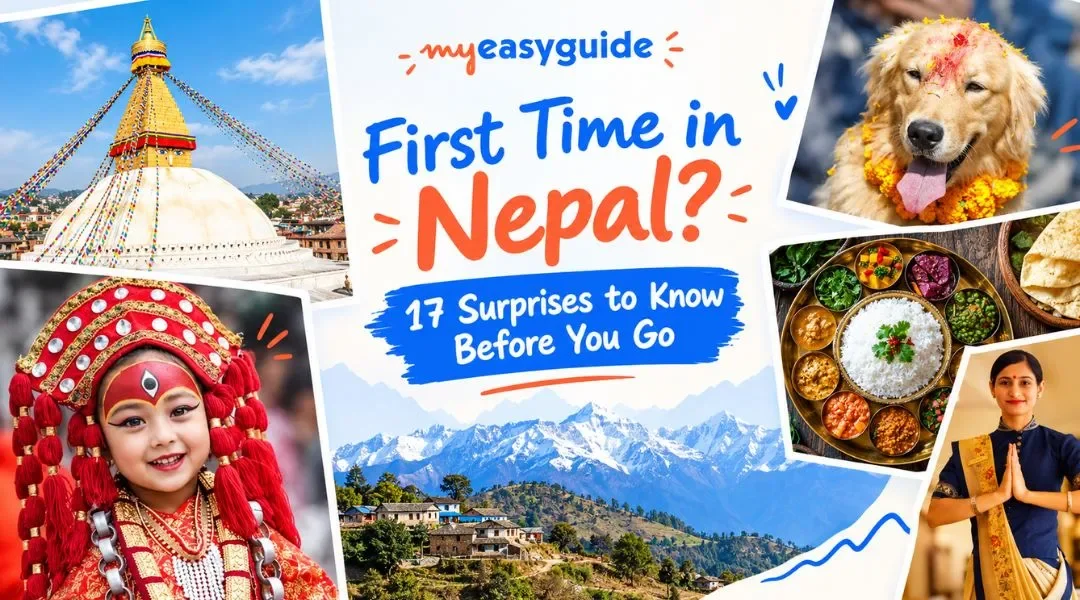
What Surprises First-Time Visitors to Nepal? (17 Things to Know)
My Easy Guide
Contents
Most people come to Nepal for Everest. Then the surprises start. The year here is 2083. A real girl in Kathmandu is worshipped as a living goddess. And dogs get flower garlands on their own festival day. Now imagine landing with no clue about any of it.
Or imagine this instead. You know the one hand gesture that can offend your host. You know why lunch comes at 10 a.m. You know how locals cross streets full of motorbikes and cows.
This guide gets you there. Here are the biggest surprises first-time visitors to Nepal face, starting with the one that hits the moment you land.
Nepal Surprises at a Glance
Clock is 15 minutes off. Nepal runs on UTC+5:45.
It’s 2083 here. Nepal’s calendar is about 56 years ahead.
Saturday is the weekend. Sunday is a work day.
Flag isn’t a rectangle. It’s two stacked triangles, the only one like it.
Traffic runs on horns. Honking means “I’m here,” not “I’m mad.”
Short trips take long. 200 km can take 8 hours on mountain roads.
Mountain flights get delayed. Bad weather can ground planes for days.
Dal bhat, twice a day. Lunch and dinner. Refills are free.
Momos are everywhere. Nepal’s favorite snack.
Tea comes with every visit. Saying yes is polite.
Right hand only. Eat, give, and take with your right hand.
“Jutho” is a big deal. Don’t share food or sips from your mouth.
Head shake can mean yes. A side-to-side tilt usually means “okay.”
Temple rules. Shoes off, walk clockwise, some areas are Hindu-only.
Dress modest, no PDA. But male friends holding hands is normal.
A living goddess. A young girl in Kathmandu, the Kumari, is worshipped.
Dogs get a festival day. During Tihar, dogs get garlands and treats.
Cows rule the road. They’re sacred, so traffic waits.
Cash beats cards. Outside cities, bring rupees.
Bargaining is normal. At markets and taxis, not restaurants.
SIM cards are easy. Grab one at the airport with your passport.
Guides required for most treks. Solo trekking is limited.
Altitude hits fit people too. Go slow up high.
People are super kind. The biggest surprise of all.
Time, Dates and Nepal’s One-of-a-Kind Flag
Nepal Is 15 Minutes Off (UTC+5:45)
Most countries set their clocks by the full hour or half hour. Nepal doesn’t. It’s 5 hours and 45 minutes ahead of UTC. That puts it 15 minutes ahead of India.
Why? Nepal set its time by a mountain, Gauri Shankar, east of Kathmandu. It wanted its own time, not India’s.
Tip: Your phone updates on its own. But if you work out flight times by hand, check twice.
Nepal’s Calendar Is 56 Years Ahead
In Nepal, it’s not 2026. It’s 2083.
Nepal uses the Bikram Sambat calendar, or “BS” for short. It runs about 56 to 57 years ahead. The new year starts in mid-April, and some months have 32 days! You’ll see BS dates on bus tickets, bills, and newspapers.
Tip: If a date looks way off, ask, “What’s the English date?” Locals use both.
Saturday Is the Weekend, Not Sunday
In Nepal, Saturday is the day off. Sunday is a normal work day.
So banks and government offices close on Saturday and open again Sunday morning. Many shops and restaurants stay open, but anything official has to wait.
Tip: Need a bank counter, a trekking permit, or a visa change? Get it done by Friday.
The Flag Isn’t a Rectangle
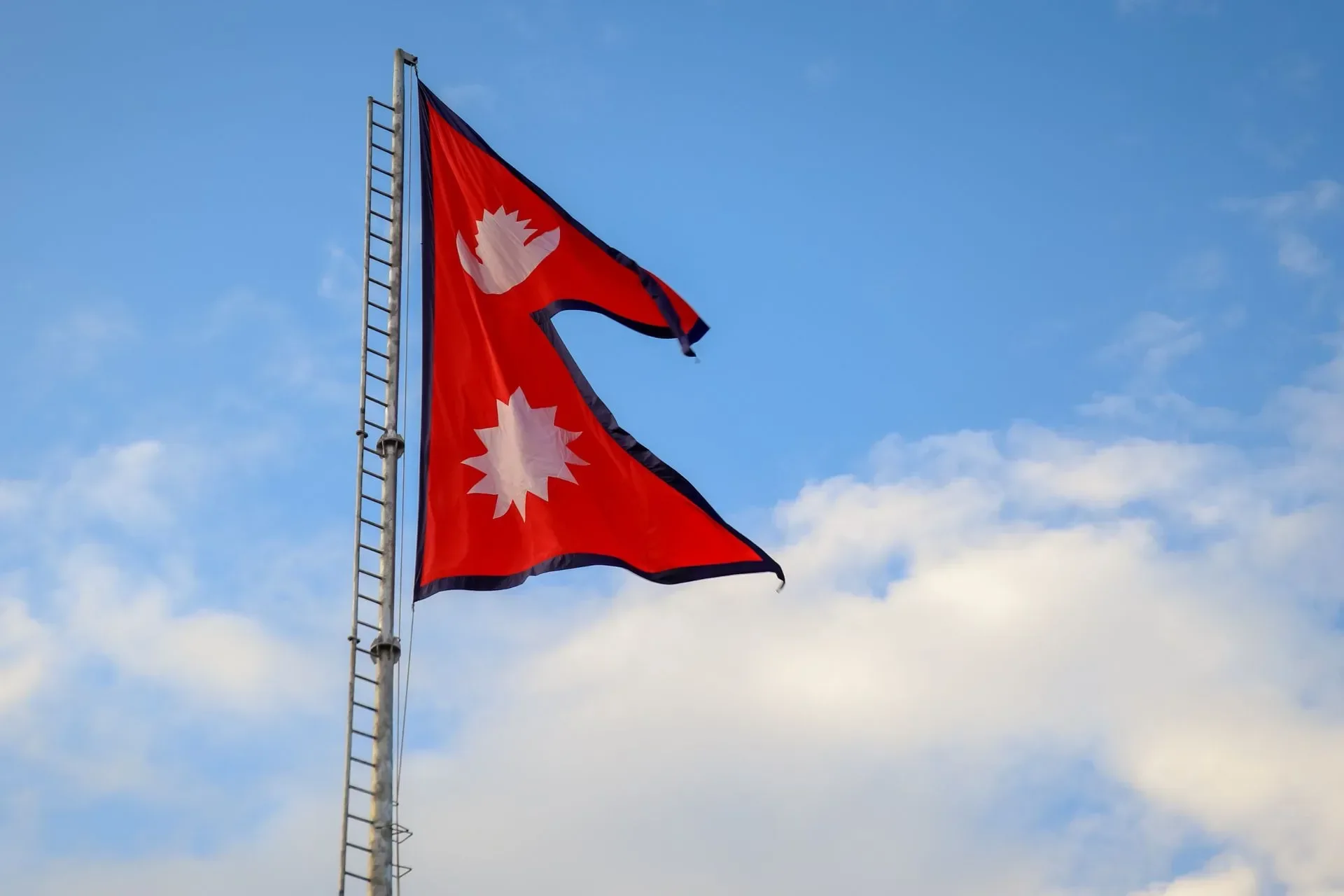
Look up at any flagpole and you’ll spot it. Nepal’s flag is two red triangles stacked on top of each other, with a blue border. It’s the only national flag in the world shaped like this. The moon and sun on it stand for a wish: that Nepal lasts as long as they do
Tip: A small flag makes a cheap, fun souvenir.
Getting Around: Traffic, Roads and Flights
Traffic Runs on Horns
Kathmandu traffic looks wild at first. Cars, buses, motorbikes, dogs, and cows all share the road. Lanes are more of an idea than a rule. And everyone honks. But honking isn’t angry here. It just means, “Hey, I’m here!” Vehicles drive on the left.
Tip: To cross, walk slow and steady, the way locals do. Don’t stop or run. Drivers will steer around you. Carry a mask, since the air gets dusty.
Short Trips Take a Long Time
On a map, Kathmandu to Pokhara looks close, about 200 km. But the bus takes 6 to 8 hours. Mountain roads are narrow, twisty, and often under repair. In the rainy season (June to September), landslides can block roads for hours or days.
Tip: Don’t pack your plan too tight. Or take a short domestic flight when time matters.
Mountain Flights Get Delayed
Flying to Lukla, the gateway to Everest, is a thrill. But planes only fly in clear weather. Clouds or wind can delay flights for hours, even days. In busy seasons, many Lukla flights leave from Ramechhap, a 4 to 5 hour drive from Kathmandu.
Tip: Keep one or two spare days before your flight home. Check where your flight really leaves from.
Food Surprises in Nepal
Dal Bhat, Twice a Day
Meet your new best friend: dal bhat. It’s rice (bhat), lentil soup (dal), veggie curry, and spicy pickle. Many Nepalis start the day with just tea and a snack. Then the first big meal comes around 10 a.m. Dinner? Dal bhat again. Refills are usually free. Trekkers even say, “Dal bhat power, 24 hour!”
Tip: Eat where locals eat. Busy places mean fresh food.
Momos Are Everywhere
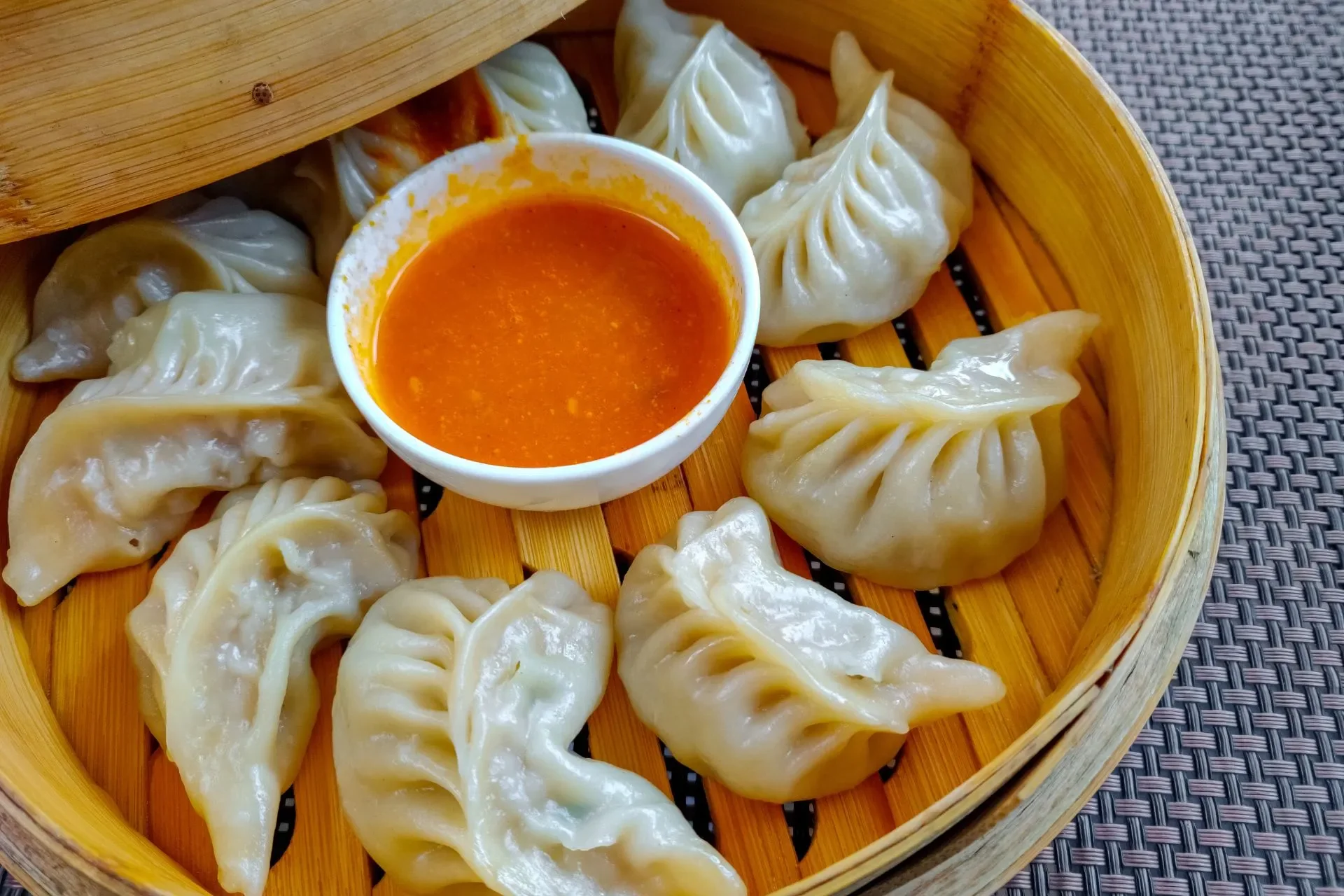
Momos are Nepal’s favorite snack. They’re little dumplings stuffed with chicken, buffalo, veggies, or cheese. They come with a spicy tomato dip called achar. You’ll find them in fancy cafes and tiny street stalls. Try them steamed, fried, or in hot soup (jhol momo).
Tip: “Buff” on a menu means water buffalo, not beef.
Tea Comes With Every Visit
In Nepal, tea is how people say hello. Walk into a shop, a home, or a trekking lodge, and someone may offer you chiya. It’s black tea boiled with milk, sugar, and sometimes spices. Saying yes is polite. It’s also a great way to make friends.
Tip: Don’t want sugar? Ask for “chini nahaleko” (no sugar) before they make it.
Nepal Etiquette and Culture Shock
Use Your Right Hand Only
In Nepal, the left hand is used for washing in the bathroom. So it’s seen as unclean. Eat with your right hand. Give and take money, food, and gifts with your right hand too. To be extra polite, touch your left hand to your right elbow while giving.
Tip: Many locals eat dal bhat with their fingers. Give it a try! Spoons are always there if you ask.
“Jutho” Is a Big Deal
Here’s a rule most visitors never hear. In Nepal, anything touched by your mouth becomes “jutho,” or impure. So no sharing bites from your plate. No sipping from someone’s bottle. You’ll see locals pour water into their mouths without the bottle touching their lips.
Tip: Want to share snacks? Put some on a clean plate first.
A Head Shake Can Mean Yes
This one confuses almost everyone. In Nepal, a side-to-side head wobble often means yes or okay. It doesn’t mean no. So if you ask, “Is this the bus to Pokhara?” and get a wobble, that’s probably good news.
Tip: When it matters, like prices or directions, wait for a spoken answer.
Temple Rules to Know
Nepal has thousands of temples and stupas. Take off your shoes before going in. Walk clockwise around stupas and temples. Don’t touch statues or offerings. Some Hindu temples don’t allow leather. And some areas, like the main temple at Pashupatinath, are for Hindus only.
Tip: At Pashupatinath, watch from across the river. Stay quiet, since cremations happen there.
Dress Modest, Skip the PDA
Nepal is friendly but traditional. Cover your shoulders and knees, especially at temples. Couples rarely hug or kiss in public. But you might see two male friends walking hand in hand. That’s just friendship here, and it’s totally normal.
Tip: Pack light, loose clothes that cover you. They keep you cool and respectful.
Festivals and Traditions That Wow Visitors
Meet the Living Goddess
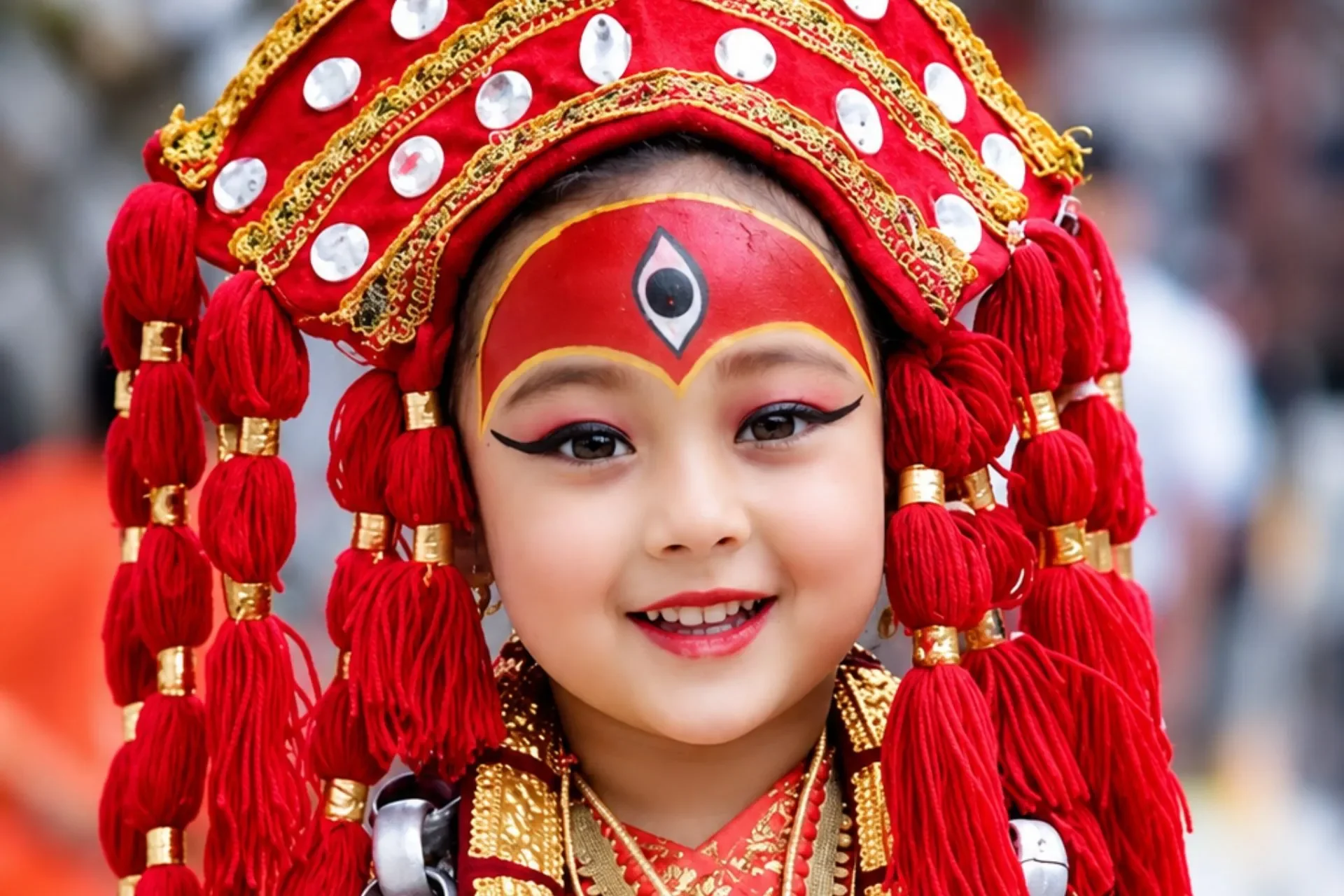
In Kathmandu Durbar Square, a living goddess lives in an old palace house. She’s called the Kumari.
She’s a young girl from a Newar family, worshipped as a goddess until she reaches her teens. Then a new Kumari is chosen. Sometimes she appears at her window for just a few seconds.
Tip: You can visit her courtyard. But never take photos of the Kumari herself.
Dogs Get Their Own Festival Day
Tihar is Nepal’s festival of lights, held in October or November. One day is just for dogs, called Kukur Tihar. Dogs get flower garlands, a red tika on their forehead, and lots of treats. Even street dogs get the royal treatment! Other days honor crows, cows, and brothers.
Tip: Visiting in autumn? Keep your camera ready. It’s one of the happiest sights in Nepal.
Cows Rule the Road
Cows are sacred in Nepal, and the cow is the national animal. They wander city streets and nap in the middle of roads. Traffic simply waits. Hurting a cow is against the law. During Tihar, cows are also worshipped with garlands and food.
Tip: Give cows plenty of space. Never push or scare them.
Money, Bargaining and Staying Connected
Cash Beats Cards
Cards work in big hotels and tourist restaurants, often with an extra fee. But teahouses, buses, and small shops want cash in Nepali rupees. ATMs limit how much you can take out at once and charge a fee. In the mountains, ATMs are rare.
Tip: Take out enough cash before trekking. Keep small notes for tea, snacks, and tips.
Bargaining Is Normal
At markets and souvenir stalls, the first price is often just a starting point. Smile, offer less, and meet in the middle. But don’t bargain in restaurants, grocery stores, or fixed-price shops. That would be rude.
Tip: For taxis, agree on the price before you get in. Or use a ride app like Pathao or inDrive.
SIM Cards Are Easy
Staying connected is easier than most people think. You can buy a tourist SIM from Nepal Telecom or Ncell, often right at Kathmandu airport. You’ll need your passport. Data is cheap, and coverage reaches many trekking routes. In the mountains, lodges may charge for Wi-Fi and phone charging.
Tip: Carry a power bank for long treks.
Trekking Surprises for First-Timers
Most Treks Need a Licensed Guide
Dreaming of a solo trek? Think again. Since 2023, foreign trekkers in most of Nepal’s national parks and conservation areas need a licensed guide. You’ll also need permits for each area. Rules can differ by region, so check before you go.
Tip: Book through a registered agency like Walk Through Nepal. A good guide keeps you safe, finds you stay, and enlightens you with local stories.
Altitude Hits Fit People Too
Being fit doesn’t protect you from altitude sickness. Above about 2,500 meters, the air has less oxygen. Headaches, upset stomach, and dizziness are warning signs. Climbing too fast makes it worse.
Tip: Go slow. Take rest days, drink lots of water, and skip alcohol. If symptoms get worse, go down right away.
The Biggest Surprise: Nepali Kindness
Ask anyone back from Nepal what they loved most. Many won’t say the mountains. They’ll talk about the people.
Strangers walk you to the right bus. Lodge owners refill your plate without asking. Kids wave and shout “Namaste!” from rooftops. Nepalis are warm, patient, and proud to share their home.
Tip: Learn two words. “Namaste” (hello) and “Dhanyabad” (thank you) open a lot of hearts.
First-Time Nepal Checklist
Before you zip up your bag, run through this quick list. It pulls together the most useful tips from this guide, so nothing catches you off guard.
Before you fly
Tell your bank you’re traveling to Nepal so your card doesn’t get blocked.
Buy travel insurance that covers flight delays and helicopter rescue.
Talk to your doctor about altitude sickness if you plan to trek.
Download Hamro Patro (calendar), Pathao or inDrive (rides), and an offline map.
Book a licensed guide through a registered agency for most treks.
What to pack
Slip-on shoes for temples and homes.
A light scarf to cover shoulders and block dust.
A face mask for city smog.
A power bank and a universal adapter.
Motion sickness tablets for long bus rides.
A reusable water bottle with a filter or purifying tablets.
When you land
Set your watch to Nepal time (UTC+5:45).
Pick up a SIM card at the airport with your passport.
Withdraw the maximum from one ATM to save on fees.
Keep small notes for tea, snacks, and tips.
Everyday habits
Use your right hand to eat, pay, and give.
Don’t share bitten food or sip from shared bottles.
Walk clockwise around temples and stupas.
Agree on prices before rides and purchases.
FAQs
What is the best time to visit Nepal?
October and November are best, with clear skies and mild days. March to April is next, when rhododendrons bloom. Skip June to September unless you like rain.
Do I need a visa for Nepal?
Most visitors get one on arrival: $30 for 15 days, $50 for 30, or $125 for 90. Indians need none. Fill the form online first to skip lines.
Can I trek in Nepal without a guide?
Not in most areas. Since 2023, national parks and conservation areas require a licensed guide. The Everest region is the main exception, but guides still help first-timers.
Can I drink tap water in Nepal?
No. Tap water isn’t safe, even in hotels. Drink boiled, filtered, or treated water. A filter bottle saves money and cuts plastic waste on trails.
Do I need travel insurance for Nepal?
Yes. Nepal won’t cover foreigners’ medical bills. Choose a plan with medical evacuation, helicopter rescue at your trek’s altitude, and flight delay cover.
Are credit cards accepted in Nepal?
Only in bigger hotels, tourist restaurants, and agencies, often with a 3–5% fee. Teahouses, buses, and small shops want cash, so carry rupees.
How many days do I need in Nepal?
Plan 10 to 14 days for a first visit: Kathmandu Valley, Pokhara, and a short trek or Chitwan. Longer treks like Everest Base Camp need about three weeks.
Conclusion
Nepal will turn a few things upside down. The clock runs 15 minutes off. The year is 2083. Lunch shows up at 10 a.m., dogs wear flower garlands, and a cow might decide when traffic moves.
But here’s the secret. These surprises aren’t problems. They’re the best part of the trip. They’re the stories you’ll tell for years.
Now you know what to expect. You know how to greet people, what to eat, how to handle cash, and how to stay safe up high. So pack light, keep an open mind, and say yes to that cup of tea.
Nepal is ready for you. Are you ready for Nepal?
A little inspiration for your next trip
Get travel ideas and local experiences from My Easy Guide in your inbox.
Spam free. Unsubscribe anytime. We respect your privacy.