The question we get most often through our Pokhara coordination desk isn't about altitude sickness or weather windows, it's about money. How much does the Annapurna Base Camp trek actually cost in 2026, and where does every rupee go? After Nepal's 2023 guide mandate and the latest municipality fee adjustments, the old USD 500 backpacker budgets are gone. But ABC remains one of the most accessible high-altitude treks in Nepal, and with honest planning, you can still hit the 4,130-meter sanctuary without overspending.
This guide breaks down every line item, permits, guides, porters, transport, lodging, food, gear, and the sneaky trail upcharges that catch first-timers off guard. We'll also compare solo (guided) versus group pricing so you can see exactly where economies of scale kick in.
The 2026 ABC Trek Cost at a Glance
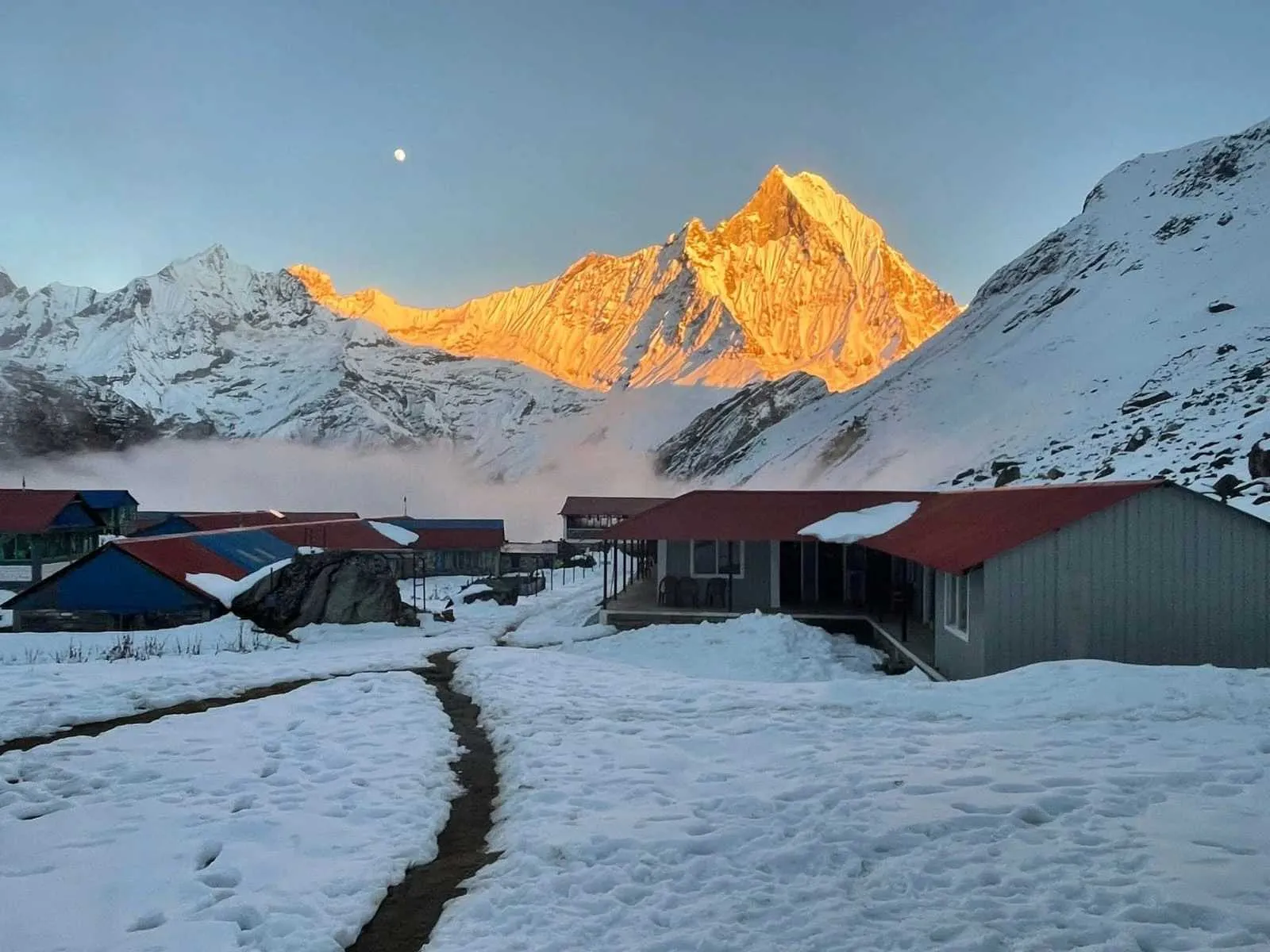
Trekking trails covered in fresh white snow leading up to Annapurna Base Camp.
The Annapurna Base Camp trek in 2026 costs between USD 900 and USD 2,500 per person, depending on group size and service level. Budget trekkers with a licensed guide spend around USD 950, mid-range packages average USD 1,500, and premium guided experiences with private transport and upgraded lodges run USD 2,200+.
Tier
Cost (USD)
Duration
Inclusions
Budget
$650 – $1,000
7-10 days
Shared lodges, local transport, licensed guide
Mid-Range
$1,100 – $1,700
9-11 days
Better lodges, guide + porter, tourist bus
Premium
$1,800 – $2,500
10-12 days
Best available lodges, private jeep, senior guide, helicopter return option
Helicopter returns from ABC are weather-dependent and frequently delayed by afternoon cloud buildup in the sanctuary. Morning departures are significantly more reliable than afternoon pickups.
Nepal Entry Costs: Visa and Insurance
Before you even step onto the trail, two non-negotiable expenses apply. Nepal's tourist visa-on-arrival at Tribhuvan International Airport costs $30 USD for 15 days, $50 USD for 30 days, or $125 USD for 90 days. High-altitude travel insurance covering emergency helicopter evacuation up to at least 5,000-6,000 meters is strongly recommended for the ABC trek. Rescue evacuations from Deurali, Machhapuchhre Base Camp, and ABC itself can cost thousands of dollars without proper coverage.
Travel Insurance — Don't Cut This Corner
Standard travel insurance won't cover you above 4,000 meters. You need a policy that explicitly covers emergency helicopter evacuation up to 6,000m and treatment for AMS, HAPE, and HACE. Expect to pay $80-150 USD for a 10-day policy from providers like World Nomads, IMG Global, or Global Rescue.
Our field contacts have seen multiple evacuations from Machhapuchhre Base Camp and Deurali in the past two seasons. A single helicopter rescue without insurance can cost $5,000-8,000 USD, a financial disaster compared to the small premium upfront.
Permit Fees for Annapurna Base Camp 2026
ABC requires two permits, both processed in Kathmandu or Pokhara. The ACAP permit costsNPR 3,000 (roughly $23 USD) for foreign nationals and NPR 1,000 for SAARC nationals. The e-TIMS card costs NPR 2,000 (about $15 USD) for individual foreign trekkers booking through a registered agency.
How and Where to Get Permits
Both permits are issued through the Nepal Tourism Board offices in Kathmandu (Bhrikutimandap) or Pokhara (Damside). The e-TIMS QR system replaced the old paper card in 2023, you'll receive a digital permit linked to your passport. Carry printouts; trail checkpoints at Birethanti, Chhomrong, and Sinuwa still verify physical copies.
Most agencies bundle permit processing into their package. If booking independently through our marketplace, expect a small service fee of NPR 500-1,000 for document handling.
The Mandatory Guide Cost
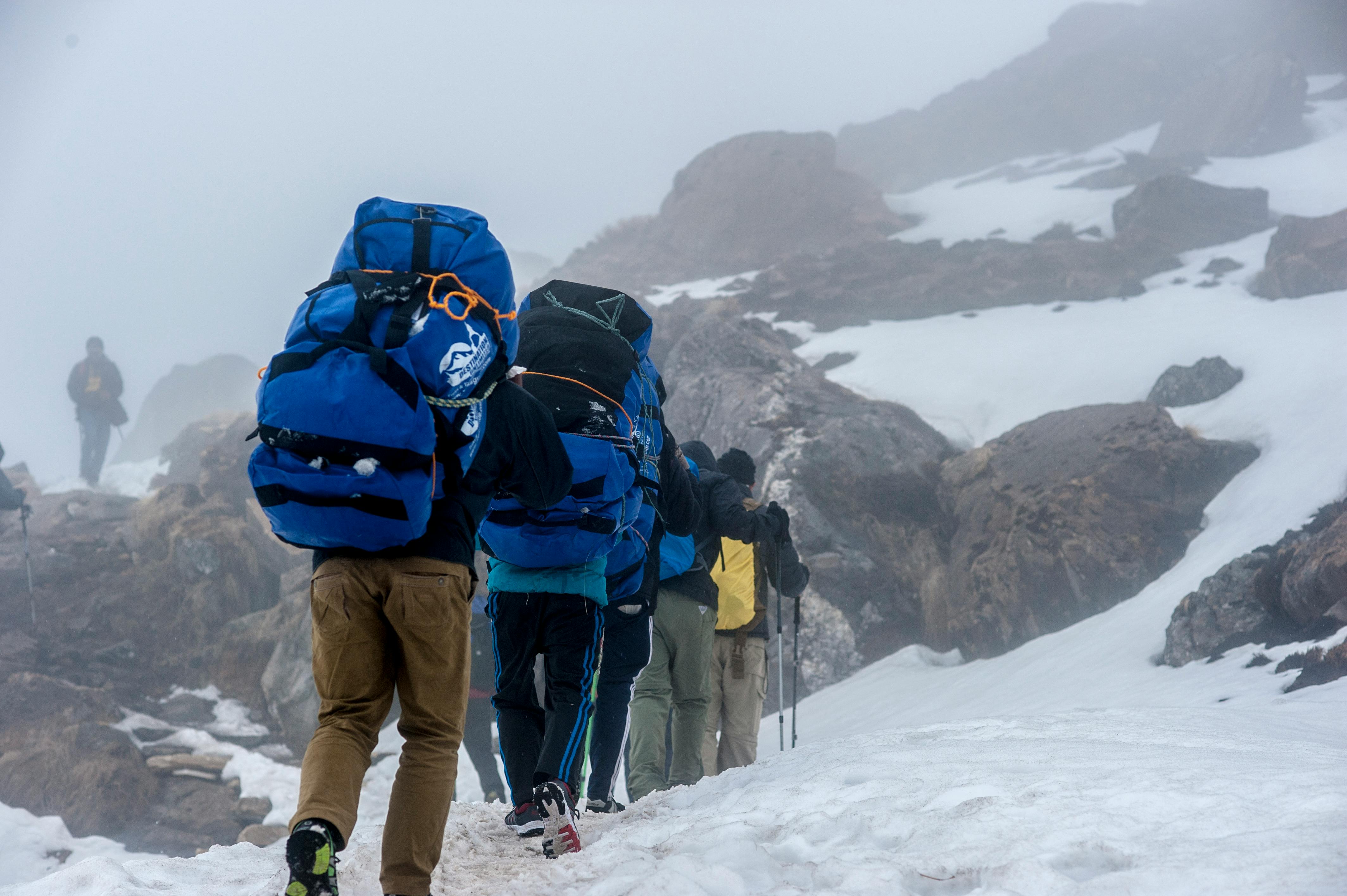
Source: Sherine, A group of hikers ascending a snowy mountain trail in Nepal, during a misty day.
Since 2023, Nepal's tourism authorities and trekking associations have pushed stronger licensed-guide requirements across the Annapurna region, including the ABC route. Enforcement levels can vary by season, checkpoint, and local authorities, so travelers should verify the latest rules before departure. Regardless of regulations, hiring a licensed guide remains strongly recommended for navigation, safety, weather decisions, and emergency support.
This is the single biggest line-item shift in 2026 budgeting. A licensed ABC guide costs $25-35 USD per day, which includes their food, lodging, insurance, and trail allowance.
For a standard 10-day itinerary, your guide fee alone runs $250-350 USD. Senior guides with English fluency, Wilderness First Responder certification, and 5+ ABC seasons command the higher end. Newer guides at the lower end are perfectly competent but may have less polished communication.
Do You Need a Porter Too?
Responsible trekking agencies cap porter loads at around 20-25 kg total, often shared between two trekkers. Ethical operators also provide proper footwear, insurance, meals, and accommodation for their porter teams, and costs $20-25 USD per day. For most travelers, splitting one porter between two trekkers (about $12 USD each per day) is the sweet spot. Hiring a porter is also an ethical choice, it directly supports rural household income in Lamjung, Kaski, and Myagdi districts.
If you're trekking solo (with a guide), consider a porter-guide hybrid for around $28-32 USD per day. They carry your bag and handle navigation, but expect less detailed cultural commentary than a senior guide.
Why October and April Cost More
Peak trekking months, especially October, November, March, and April, increase prices across the ABC trail. Transport fills early, guides charge premium rates, and popular lodges in Chhomrong, Deurali, and ABC itself often prioritize agency groups with advance bookings. Last-minute trekkers during peak season may pay significantly more for private rooms, transport, and domestic flights.
Transportation: Kathmandu to Pokhara to Nayapul
Pokhara is your launchpad. The Kathmandu-to-Pokhara leg offers three pricing tiers, and our coordinators see travelers regularly underestimate this expense.
Option
Cost (One-Way)
Duration
Tourist Bus
$10 – $15 USD
6-8 hours
Greenline / Deluxe Bus
$25 – $35 USD
6-7 hours
Domestic Flight (Buddha/Yeti Air)
$110 – $140 USD
25 minutes
Private Jeep
$180 – $250 USD
5-6 hours
Verify live flight rates through your agency, as domestic airfares fluctuate seasonally. From Pokhara, the trailhead at Nayapul (or sometimes Siwai for shorter itineraries) requires a local jeep, expect NPR 2,500-4,000 for a shared vehicle or NPR 8,000-12,000 for a private one-way ride.
How Difficult Is the ABC Trek?
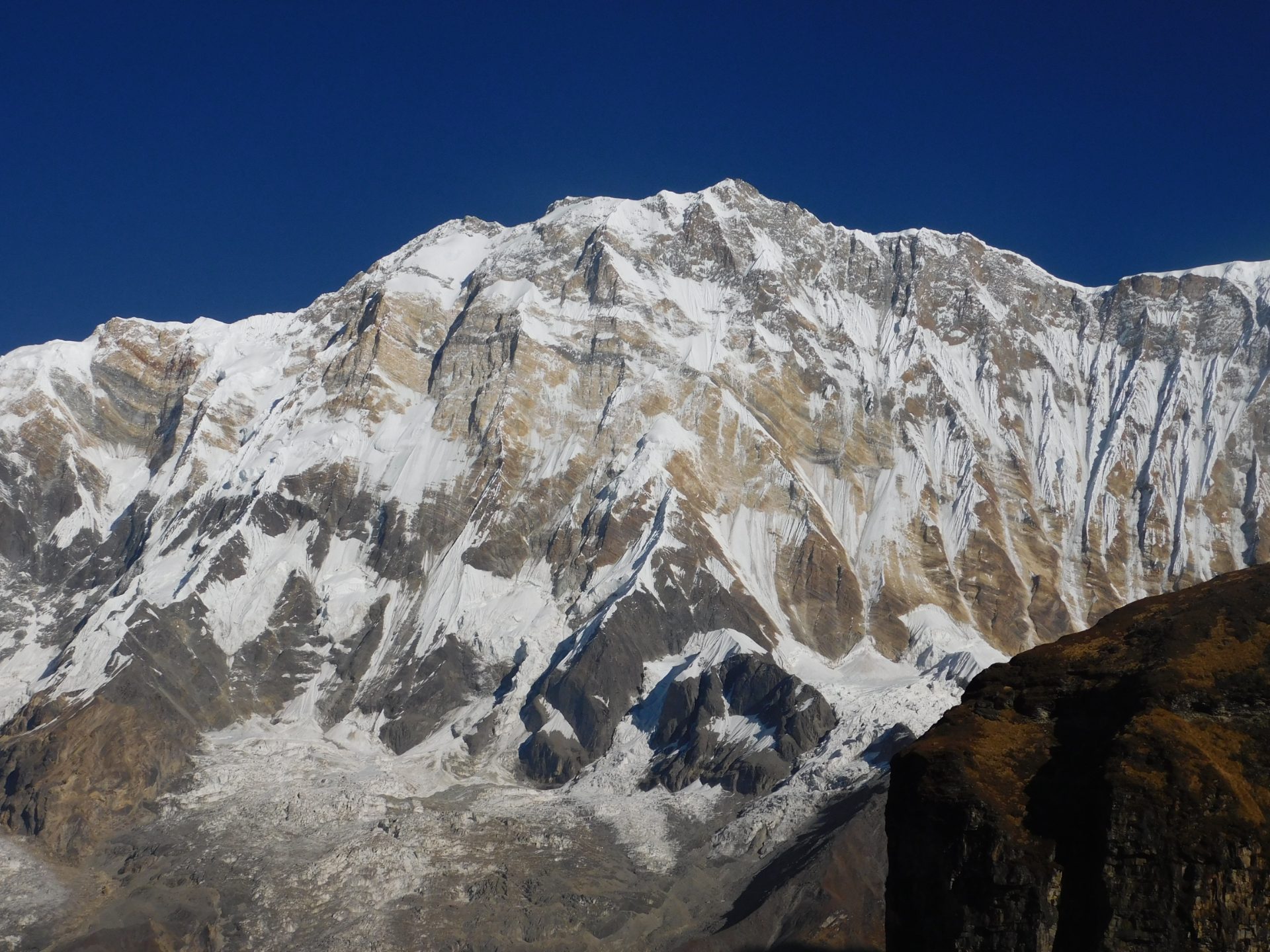
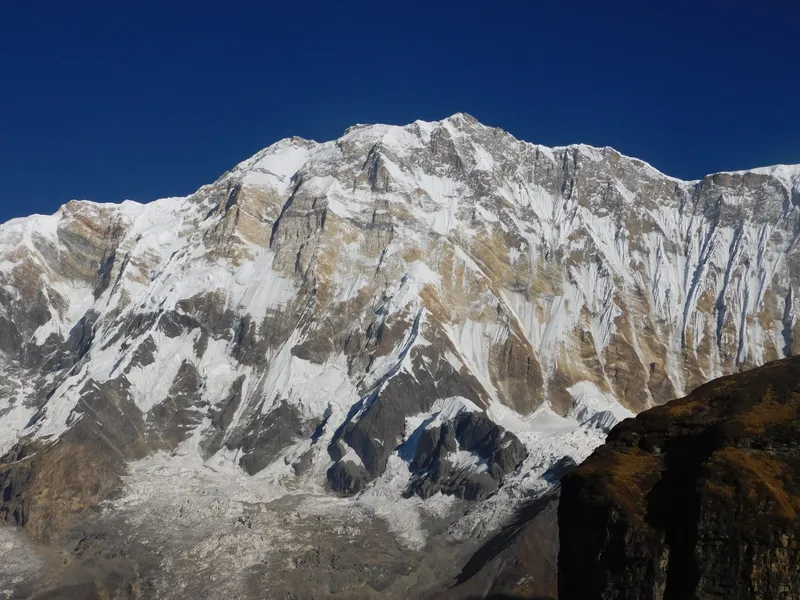
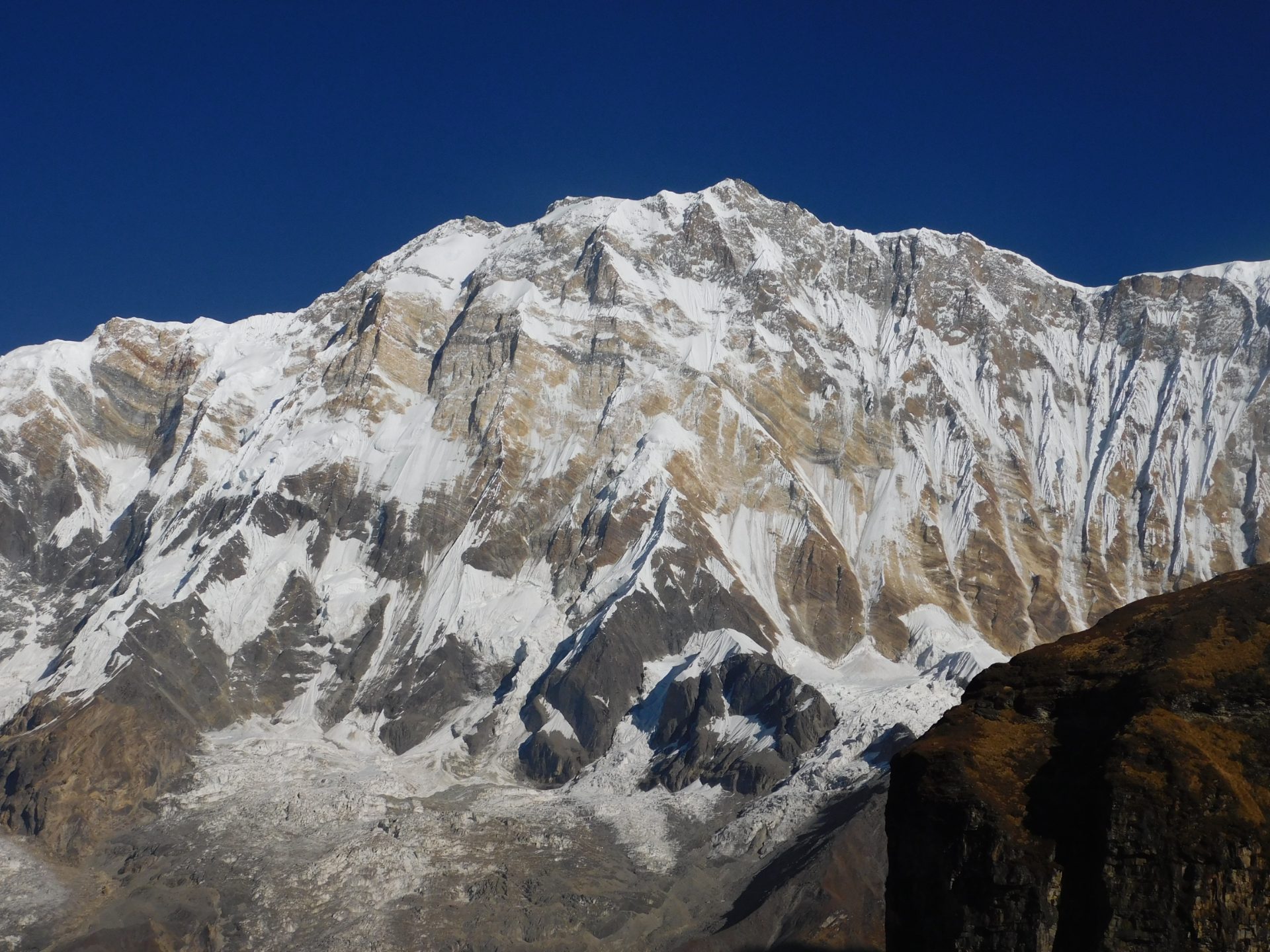
The massive, icy South Face of Annapurna I viewed from the Annapurna Sanctuary trail.
The Annapurna Base Camp trek is considered moderate-to-hard for first-time high-altitude trekkers. Most trekking days involve 5-7 hours of walking, long stone staircases, and repeated elevation gain and loss through the Modi Khola valley. The route does not require technical climbing skills, but altitude and cumulative fatigue become noticeable above Deurali.
The Staircase Reality
First-time trekkers often underestimate how physically demanding the ABC trail's endless stone staircases can be. Sections between Ulleri, Chhomrong, and Bamboo involve thousands of steep stone steps that place heavy stress on knees and calves, especially during descent days.
Lodging Costs on the ABC Trail
Teahouse lodging along the ABC route is heavily subsidized when you eat dinner and breakfast at the same lodge. A basic twin-share room with shared bathroom costs NPR 300-800 per night (around $3-7 USD), provided you take meals there. Premium lodges in Chhomrong and Jhinu Danda offer attached bathrooms and hot showers for NPR 1,500-3,000.
The Real Cost: Food on the Trail
Food, not lodging, is where your trail budget lives. Prices climb steadily with altitude due to porter transport costs. At Chhomrong (2,170m), a plate of Dal Bhat runs NPR 600-800. By the time you reach Annapurna Base Camp, Dal Bhat typically costs NPR 900–1,300 depending on season and lodge.
Budget NPR 3,500-5,000 per day for three meals plus tea and snacks. That translates to roughly $28-40 USD per day for food alone. Many experienced guides recommend sticking primarily to vegetarian meals above Chhomrong because meat is often transported long distances without refrigeration.
Room Availability in Peak Season
During October and November, trekkers arriving late at Deurali, MBC, or ABC may struggle to secure private twin rooms. Some lodges fill by mid-afternoon, and overflow trekkers occasionally sleep in dining halls during exceptionally busy weeks.
Most teahouses above Chhomrong use shared squat or Western-style bathrooms, and hot showers are usually gas-heated rather than continuously available. Expect basic facilities at higher elevations.
The Hidden Trail Upcharges Nobody Tells You About
This is where solo trekkers blow their budgets. Once you pass Ghandruk, almost every comfort costs extra cash, and there are effectively no reliable ATMs anywhere on the Annapurna Base Camp trail beyond Pokhara. Withdraw enough Nepalese Rupees before leaving the city and carry small denominations for teahouses, charging fees, showers, and tips.
Hot shower (gas-heated): NPR 300-700 per use
Charging phone/power bank: NPR 200-500 per device
Wi-Fi access (Everest Link or local network): NPR 300-600 per session
Bottled water: NPR 100-300 per liter (avoid this — use a filter)
Boiled water for bottles: NPR 100-200 per liter
Heated dining room (above Deurali): Often a minimum order requirement
Total trail incidentals over a 10-day trek typically run NPR 6,000-10,000, or roughly $45-75 USD.
Telecom and Connectivity
The Annapurna region has excellent Ncell coverage on most of the lower trail up to Chhomrong. Above Deurali and at MBC/ABC, coverage drops significantly. Pick up an Ncell tourist SIM in Pokhara for around NPR 1,500-2,000 with a 10GB data package, far cheaper than paying for trail Wi-Fi every evening.
Sustainable Water: Skip the Plastic Bottles
Bottled water purchases alone can add $3-5 USD per day to your trek. More importantly, ACAP has been pushing hard to eliminate single-use plastics on the trail. Bring a reusable bottle paired with a Sawyer squeeze filter, Steripen UV purifier, or chlorine dioxide tablets. Initial investment of $30-80 USD pays for itself in three days and reduces trail waste dramatically.
Gear Costs: Buy, Rent, or Borrow?
Pokhara's Lakeside neighborhood is gear paradise. You can rent or buy everything from down jackets to sleeping bags at prices far below Western markets, though much of the inventory is replica gear rather than authentic brands.
Item
Rental (per day)
Buy (Replica)
Down jacket (-10°C)
NPR 100-200
NPR 3,500-6,000
Sleeping bag (-15°C)
NPR 100-200
NPR 4,000-7,000
Trekking poles (pair)
NPR 50-100
NPR 1,500-3,000
Duffel bag (70L)
NPR 50-100
NPR 2,000-3,500
Bring your own broken-in trekking boots and quality moisture-wicking base layers from home. Don't gamble with foot blisters or hypothermia to save a few dollars on critical items.
Solo vs. Group Trekking: The Real Cost Difference
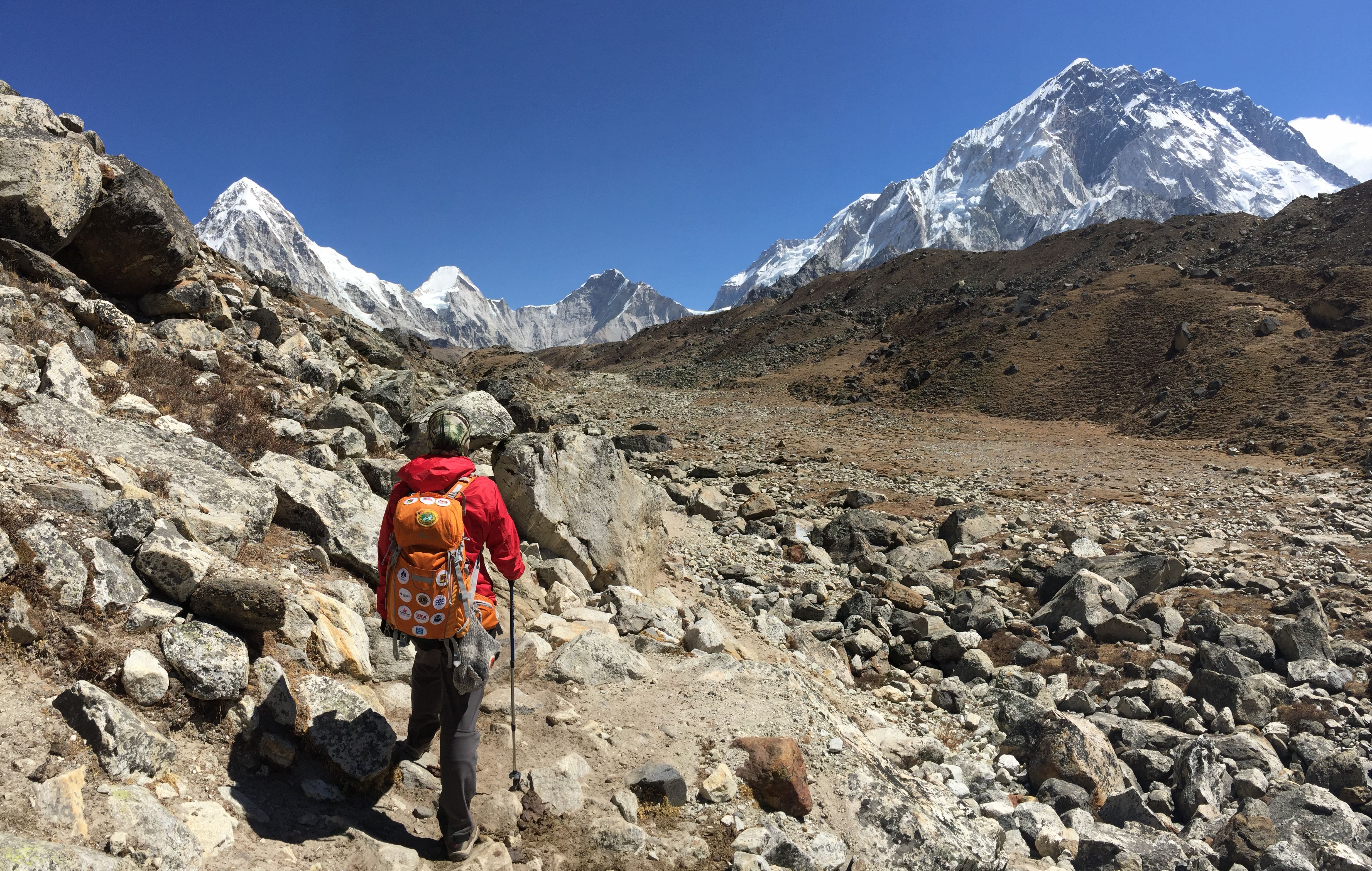
Source: Sherine, Trekker explores rocky Himalayan trail in Khumjung, Nepal with snow-capped peaks.
Group trekking dramatically reduces per-person costs because guide and transport fees are split. A solo trekker (with a mandatory guide) pays roughly 40-60% more per day than someone in a group of 4-6 trekkers.
Group of Four Trekkers (10 Days, Mid-Range, Per Person)
Permits: $38 USD
Guide (split 4 ways): $80 USD
Two porters shared (split 4 ways): $110 USD
Transport: $75 USD
Lodging: $50 USD
Food and water: $320 USD
Trail incidentals: $60 USD
Tips (split): $95 USD
Per-Person Total: ~$830 USD
Joining a group through a marketplace platform can save you $300-400 USD per trek without sacrificing service quality.
Tipping: The Cultural Closing Cost
Tipping is culturally expected in Nepal and forms a vital part of crew income. Standard practice is 10–15% is common, though larger tips are always appreciated for exceptional service.For a $1,200 USD trek, expect to tip around $180-240 USD total. Hand the tips personally in an envelope on the final evening.
Sample 10-Day ABC Itinerary with Daily Cost Estimates
Day
Route
Elevation
Daily Cost (USD)
1
Pokhara → Nayapul → Tikhedhunga
1,540m
$40
2
Tikhedhunga → Ghorepani
2,860m
$50
3
Poon Hill → Tadapani
2,630m
$50
4
Tadapani → Chhomrong
2,170m
$50
5
Chhomrong → Bamboo
2,310m
$55
6
Bamboo → Deurali
3,230m
$60
7
Deurali → MBC → ABC
4,130m
$70
8
ABC → Bamboo
2,310m
$55
9
Bamboo → Jhinu Danda (hot springs)
1,780m
$55
10
Jhinu → Siwai → Pokhara
820m
$45
Daily costs above exclude guide, porter, and tips, which are typically pre-paid as part of your package.
Altitude Safety: A Cost You Can't Skip
Above 3,000 meters, your sleeping elevation should never increase by more than 300-500 meters per day. The classic ABC itinerary respects this except on Day 7, where you climb from Deurali to ABC, about 900m of net gain. Many trekkers underestimate this and rush. We strongly recommend an extra night at MBC (3,700m) to acclimatize properly, which adds $50-60 USD but dramatically reduces AMS risk.
Although Annapurna Base Camp reaches only 4,130 meters, lower than Everest Base Camp, altitude sickness is still common because trekkers gain elevation rapidly through the narrow Modi Khola valley. Slow pacing and hydration remain essential.
Trek
Duration
Max Altitude
Difficulty
ABC Trek
7–11 days
4,130m
Moderate
Everest Base Camp
12–14 days
5,364m
Hard
Mardi Himal
5–7 days
4,500m
Moderate
Manaslu Circuit
14–18 days
5,106m
Hard
Cultural Etiquette on the Trail
The ABC route passes through Gurung and Magar villages with strong Buddhist and animist traditions. When you encounter mani stones, chortens, or prayer wheels, always pass them on the LEFT side, keeping the structure to your right. Walk clockwise around all religious monuments.
If you visit monasteries in Ghandruk or Chhomrong, remove shoes and hats before entering. Photography inside prayer halls is strictly prohibited unless a resident monk gives explicit permission.
When to Trek: How Season Affects Cost
Peak seasons (October-November and March-April) bring crowded lodges and slightly inflated food prices. Off-season (December-February and June-August) sees lower lodge rates but harsher conditions. Monsoon (June-August) on the ABC route means leeches, landslides, and reduced visibility, we don't recommend it. If you want to trek during monsoon, consider Upper Mustang instead, which lies in the Himalayan rain shadow.
During monsoon season, the ABC trail becomes extremely wet and slippery, with frequent leeches below Chhomrong and occasional landslides along the Modi Khola valley. Flights into Pokhara may also face weather delays. Visibility is often poor despite the lush scenery.
Buffer Money Matters
Landslides, road delays, heavy rain, or illness can unexpectedly extend your itinerary by 1-2 days. Always carry an emergency reserve of at least NPR 10,000-15,000 beyond your planned budget.
The cheapest ABC trek is not always the safest or most enjoyable one. Reliable guides, realistic acclimatization pacing, ethical porter treatment, and buffer days matter far more than shaving a few dollars off your final budget.
Frequently Asked Questions
Can I trek to Annapurna Base Camp solo in 2026?
No. Since April 2023, the Nepal Tourism Board mandates that all foreign trekkers in ACAP regions, including ABC, must hire a licensed guide. Solo independent trekking is no longer permitted on this route, and the rule continues to be enforced strictly at checkpoints in 2026.
How much cash should I carry on the ABC trek?
Plan for NPR 50,000-70,000 per person in cash for a 10-day trek, covering all food, incidentals, and tips. There are no ATMs past Pokhara on the ABC route. Withdraw money in Pokhara before departure and split it across multiple secure pockets.
Is Wi-Fi available at Annapurna Base Camp?
Yes, but it's slow and costs NPR 300-600 per session. Most lodges from Chhomrong onward sell Wi-Fi vouchers through local networks. Ncell mobile data works reliably until Deurali; coverage becomes patchy at MBC and ABC.
What's the cheapest way to do the ABC trek in 2026?
Join a small group through a verified marketplace platform. Group bookings of 4-6 trekkers reduce per-person costs by $300-400 USD compared to solo guided treks. Take tourist buses instead of flights, share a porter, and stick to Dal Bhat for meals.
Do I need to book my ABC trek in advance?
For peak season (October-November), book at least 6-8 weeks ahead to secure your preferred guide, lodge bookings at Chhomrong and ABC, and any domestic flights. Off-season treks can be arranged with just a few days' notice through local agencies.
Are credit cards accepted on the ABC trail?
Almost never. A handful of lodges in Chhomrong and Jhinu Danda accept cards with a 4-6% surcharge, but reliability is poor. Treat the trail as a cash-only economy from the moment you leave Pokhara.