Asmita Karki
The ultimate guide to planning your dream web travel adventure with the experts from myeasyguide.
Spam free. Unsubscribe anytime. We respect your privacy.
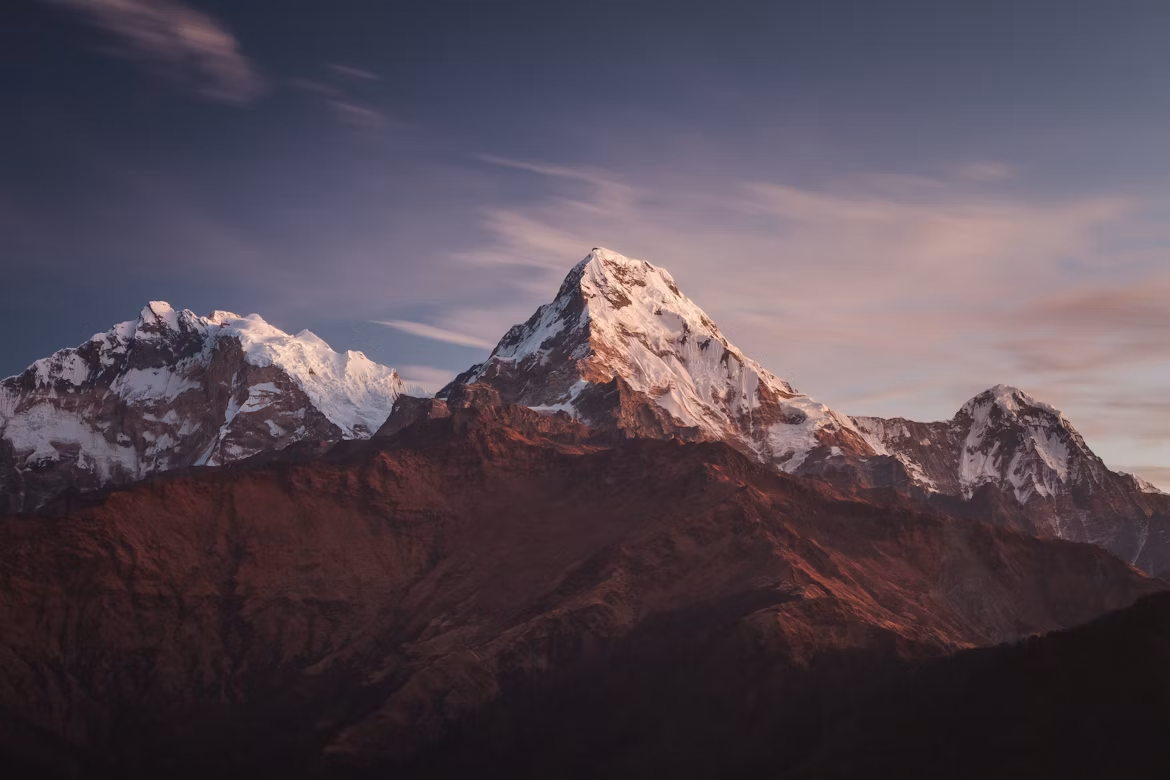

The Ghorepani Poon Hill Trek is one of Nepal's most rewarding short treks. In just four days, it takes you through rhododendron forests, traditional Gurung and Magar villages, and some of the finest mountain viewpoints in the Annapurna region. The highlight is Poon Hill (3,210m), where trekkers gather before sunrise to watch the first light spread across peaks such as Dhaulagiri (8,167m), Annapurna South (7,219m), and Machhapuchhre. With no technical climbing and no need for high-altitude acclimatization, the trek remains a popular choice for first-time visitors, families, and travelers on a budget.
The Ghorepani Poon Hill loop remains Nepal's most accessible classic trek, ideal for travelers with limited time, families, and first-time Himalayan walkers. Our Pokhara-based coordinators run dozens of these treks each season, and we've built this guide to help you budget accurately, choose the right month, and avoid the common pitfalls that turn a 4-day gem into a rushed slog.

The Ghorepani Poon Hill Trek is a 4-day, 36 kilometer loop starting and ending near Pokhara. It reaches a maximum elevation of 3,210 meters at Poon Hill viewpoint, requires two permits (ACAP and e-TIMS), and now legally requires a licensed guide. Total budget runs $280-$450 USD per person.
You get a genuine Himalayan teahouse experience without the altitude risk, expensive flights, or two-week commitment of Everest or Annapurna Base Camp. The trail winds through Magar and Gurung villages, terraced millet fields, and the world's largest rhododendron forest which explodes in red and pink blooms every March and April.
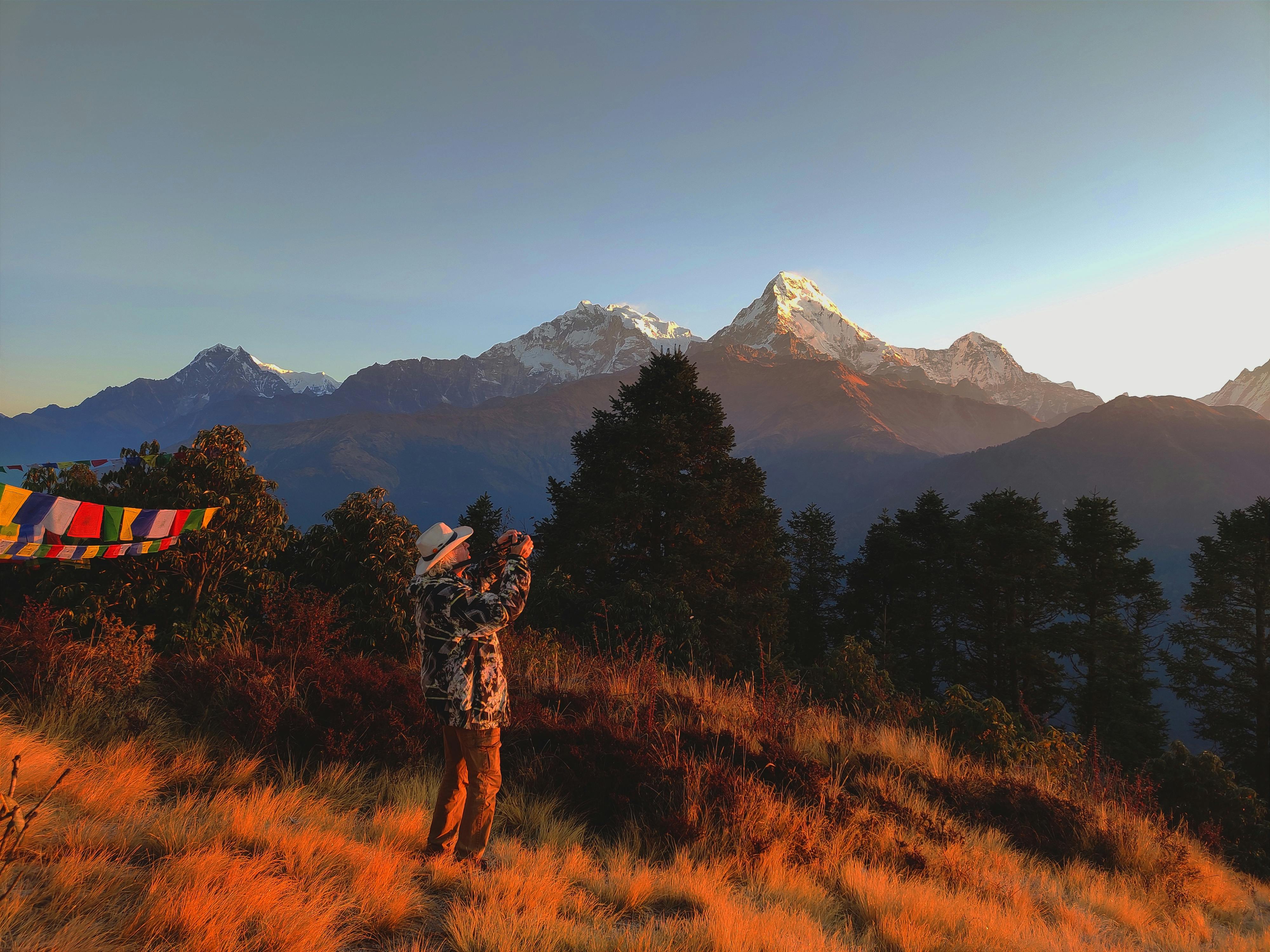
From Poon Hill itself, you see a 180-degree panorama covering Dhaulagiri, the Annapurna massif, Machhapuchhre (Fishtail), Hiunchuli, and Nilgiri. Few viewpoints anywhere in Nepal deliver this much horizon for this little effort.

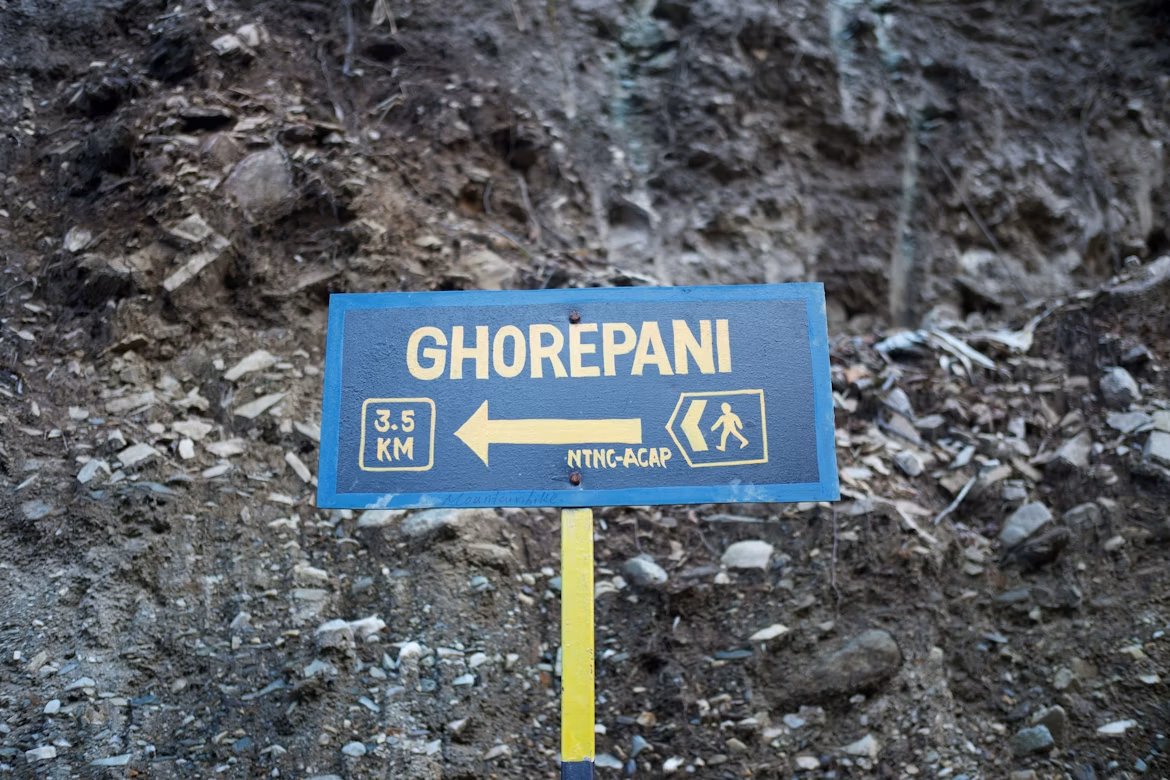
The Poon Hill trek sits inside the Annapurna Conservation Area, so you need two specific permits before stepping onto the trail. Both are checked at entry posts in Birethanti and again at Ghorepani.
Since April 2023, independent solo trekking is banned across Nepal's conservation areas. You must trek with a government-licensed guide. The guide arranges your permits, so you don't need to visit the NTB office yourself, just send a passport scan and two passport photos to your agency.
On arrival at Tribhuvan International Airport, tourist visa fees are $30 USD for 15 days, $50 USD for 30 days, and $125 USD for 90 days. Bring crisp USD bills and a passport photo to speed up the queue.

The classic loop runs Nayapul → Tikhedhunga → Ghorepani → Poon Hill → Tadapani → Ghandruk → Pokhara. Some operators reverse it, starting from Ghandruk for a gentler initial ascent. Both directions work; the standard version below front-loads the steep climbing.
A 1.5-2 hour drive from Pokhara takes you to Nayapul (1,070 meters), the standard trailhead. Private taxis run roughly NPR 4,000-6,000, while a local bus from Baglung Bus Park costs around NPR 300-500. We recommend checking live rates with your agency since fuel pricing shifts seasonally.
From Nayapul, you walk along the Bhurungdi Khola through Birethanti (permit checkpoint) and gain elevation gradually to Tikhedhunga. It's a soft introduction, stone paths, suspension bridges, and pine forest. Lodge dinner usually means Dal Bhat by 7:00 PM and lights out by 9:00 PM.
This is the hardest day. Within the first 90 minutes, you climb the legendary 3,280+ stone steps up to Ulleri village at 2,070 meters. Pace yourself, drink water every 15 minutes, and take micro-breaks rather than long sits.
Above Ulleri, the trail enters cool rhododendron forest with regular tea stops at Banthanti and Nangethanti. You'll reach Ghorepani by mid-afternoon. Choose a lodge in Upper Ghorepani (Deurali), it's closer to the Poon Hill trailhead and saves you 15 minutes of climbing at 4:30 AM.
Wake at 4:15 AM. The climb to Poon Hill takes 45-60 minutes on a well-maintained stone staircase. There's a NPR 100 viewpoint entry fee collected at the base. Bring a headlamp, gloves, and a thermos of tea pre-dawn temperatures sit between -5°C and 5°C depending on season.
After sunrise, descend to Ghorepani for breakfast, then begin the long, undulating traverse to Tadapani and down to Ghandruk. This is the longest walking day; expect tired knees by the time you see Ghandruk's slate-roofed houses below.
A relatively gentle descent through Gurung villages and terraced fields to Syauli Bazaar, where your jeep or taxi meets you. You'll be back in Pokhara by lunchtime, perfect timing for a lakeside meal at Phewa Tal and a hot shower.
Below is a realistic breakdown for a foreign trekker in 2026, based on our marketplace data and current municipal pricing. Live transport rates shift, so verify with your booking agency.

Lodge prices look cheap at face value NPR 500-1,000 for a twin room because lodges make their margin on food, drinks, and add-ons. Expect these recurring extras:
ATMs do not exist past Pokhara. Withdraw enough Nepalese Rupees in Pokhara before departure, we recommend NPR 15,000-20,000 in cash per person to cover food, drinks, tips, and emergency expenses.
Do not buy plastic bottled water. The Annapurna region has a serious plastic waste problem, and many lodges now refill bottles for a small fee. Carry a reusable bottle paired with a Sawyer squeeze filter, SteriPen UV purifier, or chlorine dioxide drops. You'll save money, cut waste, and stay safer in case of stomach issues.
Order Dal Bhat at least once a day. The traditional Nepali set meal of lentil soup, rice, vegetable curry, fermented greens, and pickle delivers clean carbohydrates and protein, and most lodges offer free refills. Expect to pay NPR 600-900 per plate at Ghorepani altitude.
Avoid meat dishes on this trail. While Ghorepani is not in a strictly Buddhist zone like Khumbu, refrigeration is unreliable and meat is carried up by mule over multiple days. Stick to vegetarian options, fresh local potatoes, eggs, and noodles for the safest stomach.
If you're trekking during monsoon and want dry conditions, consider Upper Mustang instead. It sits in the Himalayan rain shadow and stays largely dry through July and August, a fact most short-trip travelers don't realize.
Arrive at least 30 minutes before official sunrise to claim a spot on the observation tower's east side. The first light hits Dhaulagiri first, then sweeps east to Annapurna South and Machhapuchhre. Bring a wide-angle lens (16-35mm) or use your phone's panorama mode.
Carry a microfiber cloth, condensation forms quickly when warm hands touch cold glass. Skip the tripod unless you're shooting astrophotography before dawn; the platform gets crowded and there's no space to set up.
You'll pass mani stones, prayer wheels, and small chortens in villages like Ghorepani and Ghandruk. Always walk past them on the left side, keeping the structure to your right. Spin prayer wheels clockwise. Remove your shoes and hat before entering any monastery or gompa, and never photograph monks or prayer halls without explicit permission.
Ncell provides strong 4G coverage across most of the Annapurna region, including Ghorepani and Ghandruk. Nepal Telecom (NTC) works as a backup. Buy a tourist SIM at Kathmandu or Pokhara airport for around NPR 1,000-1,500 with a data package. Signal at Poon Hill itself is surprisingly decent, perfect for sharing that sunrise shot.
While Poon Hill sits below the AMS danger zone, you still need proper travel insurance. Confirm your policy covers:
Standard travel insurance often excludes trekking. Look for policies from World Nomads, IATI, or Global Rescue that explicitly cover Himalayan trekking activities.
Tipping is culturally expected and forms a significant part of guide and porter income. Standard practice is 15%-20% of your total trek cost, distributed between guide and porter. On a 4-day Poon Hill trek, this typically means $30-$50 for your guide and $20-$30 for your porter, handed over personally on the final day with thanks.
No. Nepal's Tourism Board mandates licensed guides for all foreign trekkers in conservation areas, including Annapurna. Solo independent trekking is no longer legal on this route.
Easy to moderate. Max elevation 3,210 meters, daily walks 4-6 hours, with one tough section: the 3,200+ stone steps from Tikhedhunga to Ulleri on Day 2.
October-November for crisp skies and stable weather. March-April for rhododendron blooms with good but slightly hazier visibility.
Yes, most lodges offer paid Wi-Fi at NPR 200-400 per day. Ncell 4G also works well across most of the route.
Absolutely. We've coordinated treks with children as young as 7. The route is one of Nepal's most family-friendly, though porters for kids' gear and an extra rest day in Ghandruk make a big difference.
No mandatory vaccines, but Hepatitis A, Typhoid, and Tetanus boosters are recommended. Consult a travel clinic at least 6 weeks before departure.