Note that during monsoon, while most of Nepal is wet, regions like Upper Mustang and Upper Dolpo remain dry in the Himalayan rain shadow. If you're locked into a June-August trip, consider switching destinations rather than slogging through Mardi Himal in the rain.
Altitude Safety on the Mardi Himal Trail
Mardi Himal's altitude profile is deceptively aggressive. You move from 1,770m at Kande to sleeping at 3,580m at High Camp within three days. The safe sleep-elevation increase above 3,000m is 300-500m per day, and the standard itinerary pushes the edge of this guideline.
Recognizing AMS
Watch for headache, nausea, dizziness, loss of appetite, and disturbed sleep starting at Low Camp. If symptoms worsen overnight, descend immediately, do not push to Upper View Point. HAPE (pulmonary edema) and HACE (cerebral edema) can develop fast at 4,500m.
Helicopter Insurance is Non-Negotiable
Your travel insurance must explicitly cover emergency helicopter evacuation up to 5,000m minimum and treatment of altitude-related illness. Standard policies usually exclude this. We see preventable medical bills of USD $5,000-8,000 every season because trekkers assumed their basic insurance applied.
Food, Water, and Cash on the Trail
Stick to Dal Bhat, lentil soup, rice, and seasonal vegetable curry, which comes with free refills and provides clean, high-energy fuel. Most lodges serve simple trekking staples using a mix of local produce and supplies transported up the trail, and Dal Bhat is what your guides and porters eat for a reason.
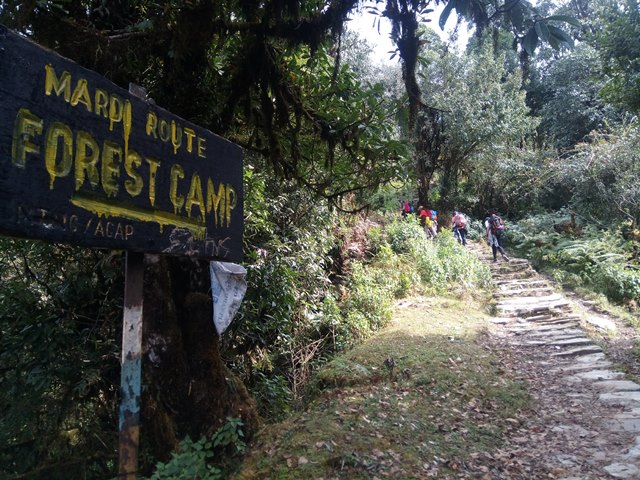
Avoid meat at higher elevations. Above Forest Camp, meat is carried up by mule or porter over multiple days without refrigeration. Vegetarian meals are safer and easier on your digestion at altitude.
Water Strategy
Do not buy plastic bottled water. Carry a reusable bottle and use a UV purifier, Sawyer Squeeze filter, or chlorine dioxide drops. Teahouses sell boiled water for NPR 100-200 per liter, which is the next best option.
Carry Cash
There are no ATMs past Pokhara. Withdraw enough Nepalese Rupees in Pokhara to cover the entire trek plus a 20% buffer. Budget roughly NPR 3,000-4,000 per day for meals, snacks, hot showers, and charging fees.
Connectivity and Charging
Ncell provides the strongest mobile coverage on the Mardi Himal trail, with reliable 4G up to Forest Camp and intermittent signal at Low Camp and Badal Danda. Above High Camp, expect weak or inconsistent signal. Charging your phone or power bank at teahouses costs NPR 200-400 per device.
Electricity and Heating Realities
Electricity becomes increasingly limited above Low Camp. Most teahouses rely on small solar systems, meaning charging queues are common during cloudy weather and winter. Dining halls are usually heated with wood or yak-dung stoves during evenings, but bedrooms remain unheated. Condensation and frozen water bottles are common at High Camp in late autumn and winter, so keep batteries and electronics inside your sleeping bag overnight.
Weather Changes Fast on Mardi
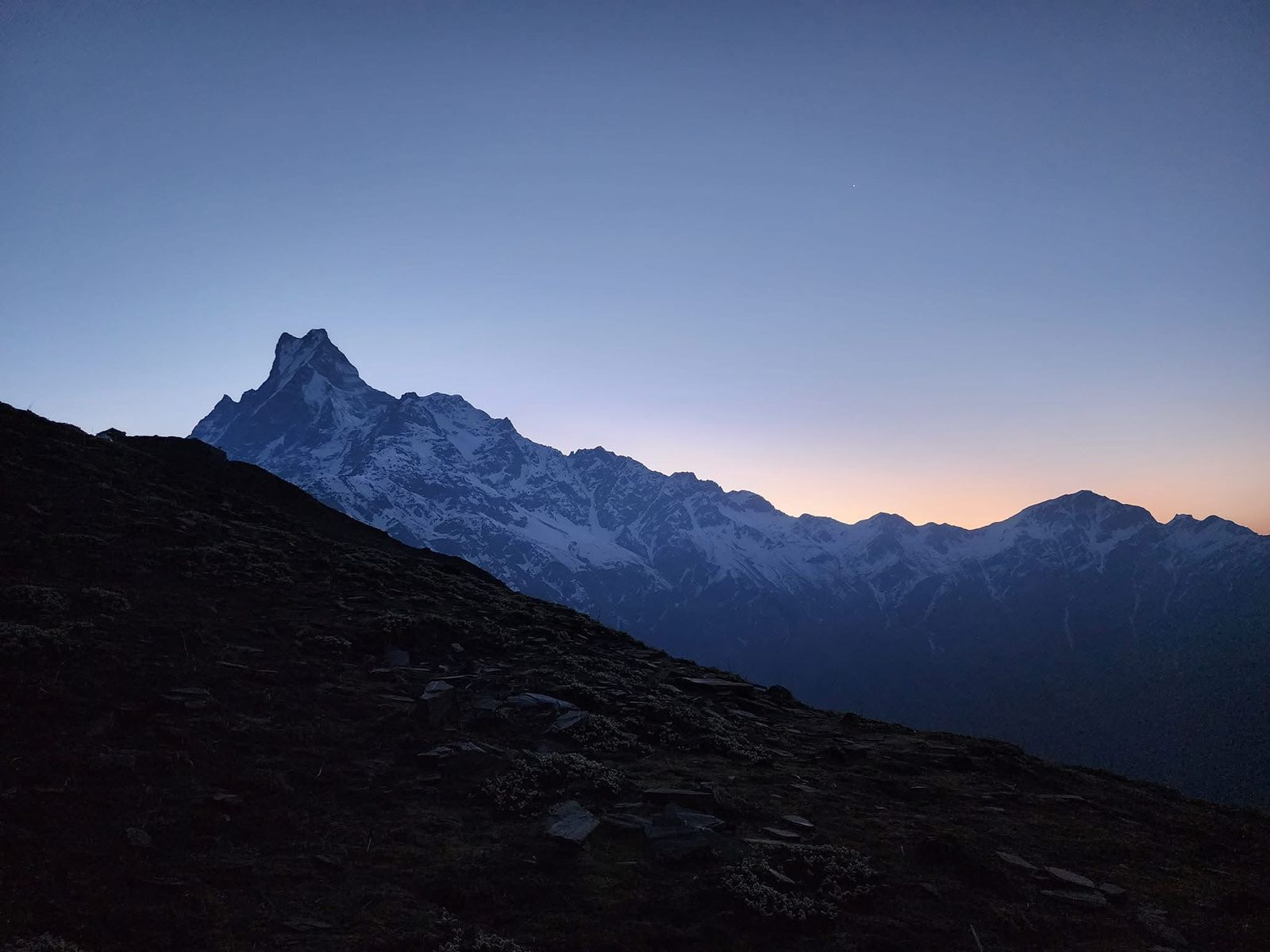
Mardi Himal's exposed ridge system creates fast-moving weather patterns. Clear mornings can turn into whiteout cloud by early afternoon, especially during spring and post-monsoon transitions. Our guides typically aim to leave High Camp before sunrise not only for the views, but because wind speeds and cloud buildup intensify sharply after 10:00 AM.
Cultural Etiquette on the Trail
The lower trail passes through Gurung villages with strong Buddhist influence near the upper sections. Always pass mani stones, chortens, and prayer wheels on the left side, keeping them to your right. Walk clockwise around all religious structures.
Remove shoes and hats before entering any monastery. Photography inside prayer halls is prohibited unless a resident monk explicitly grants permission. Ask before photographing locals, especially elders.
Tipping Your Crew
Tipping is culturally expected and forms a vital part of guide and porter income. The standard marketplace guideline is 15-20% of your total trek cost, distributed among your crew. For a typical 5-day trek, plan for roughly USD $50-80 for your guide and USD $30-50 for your porter as a starting reference.
Packing Essentials for Mardi Himal