Sandeep Shrestha
The Mardi Himal Trek is the trail our Pokhara-based coordinators recommend most often to travelers who want raw Himalayan scenery without the crowds of Annapurna Base Camp. Tucked on a hidden ridge directly beneath Machhapuchhre (Fishtail Mountain), this route delivers panoramic views of the Annapurna massif, rhododendron forests dripping with moss, and a final ridge walk that feels closer to the mountains than almost any other short trek in Nepal.
Our field team has refined this guide based on the latest 2026 Nepal Tourism Board regulations, current teahouse conditions, and weekly reports from licensed guides operating the trail. Whether you have 5 days or 7 days to spare from Pokhara, here is what you actually need to know.
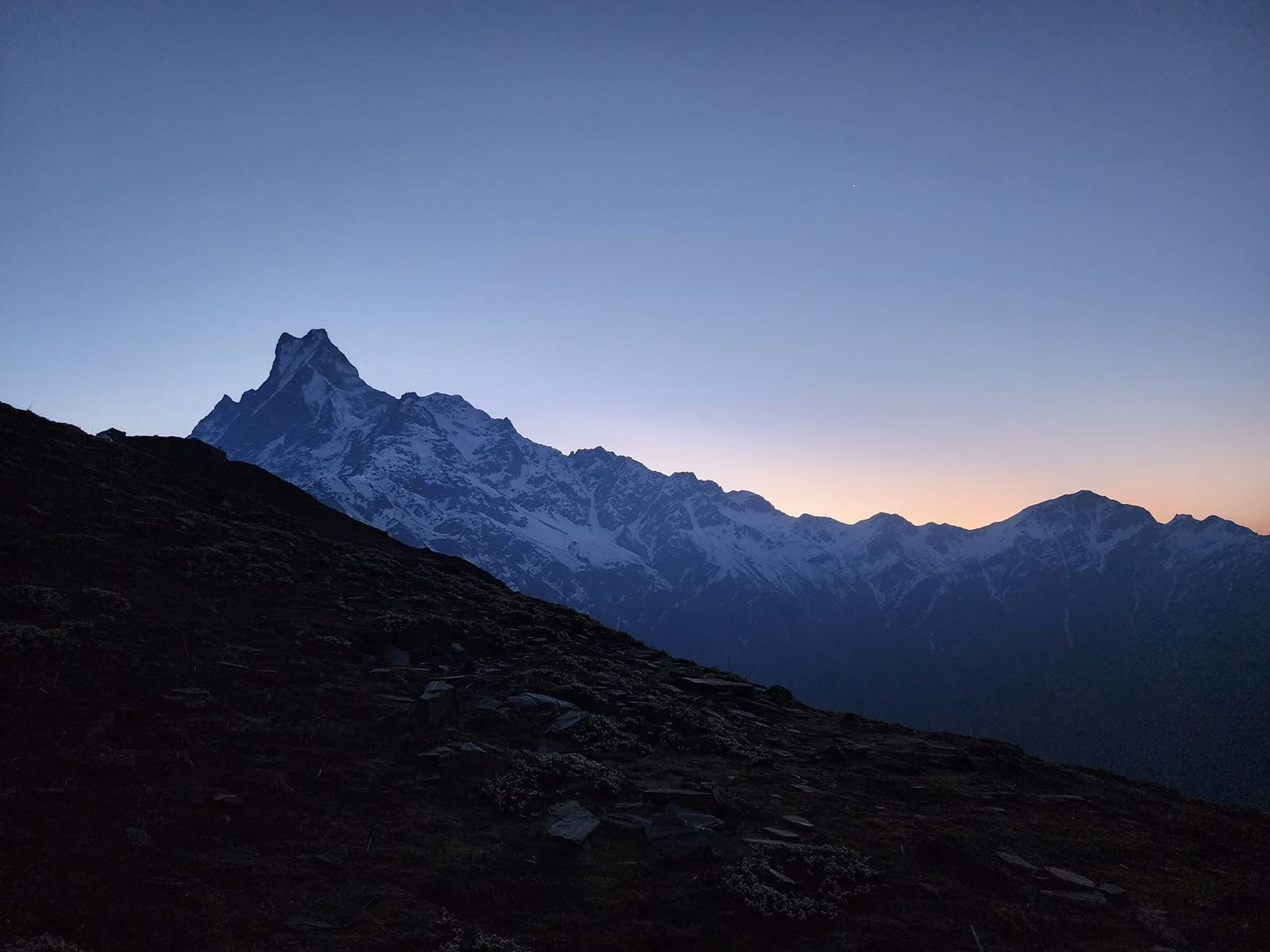
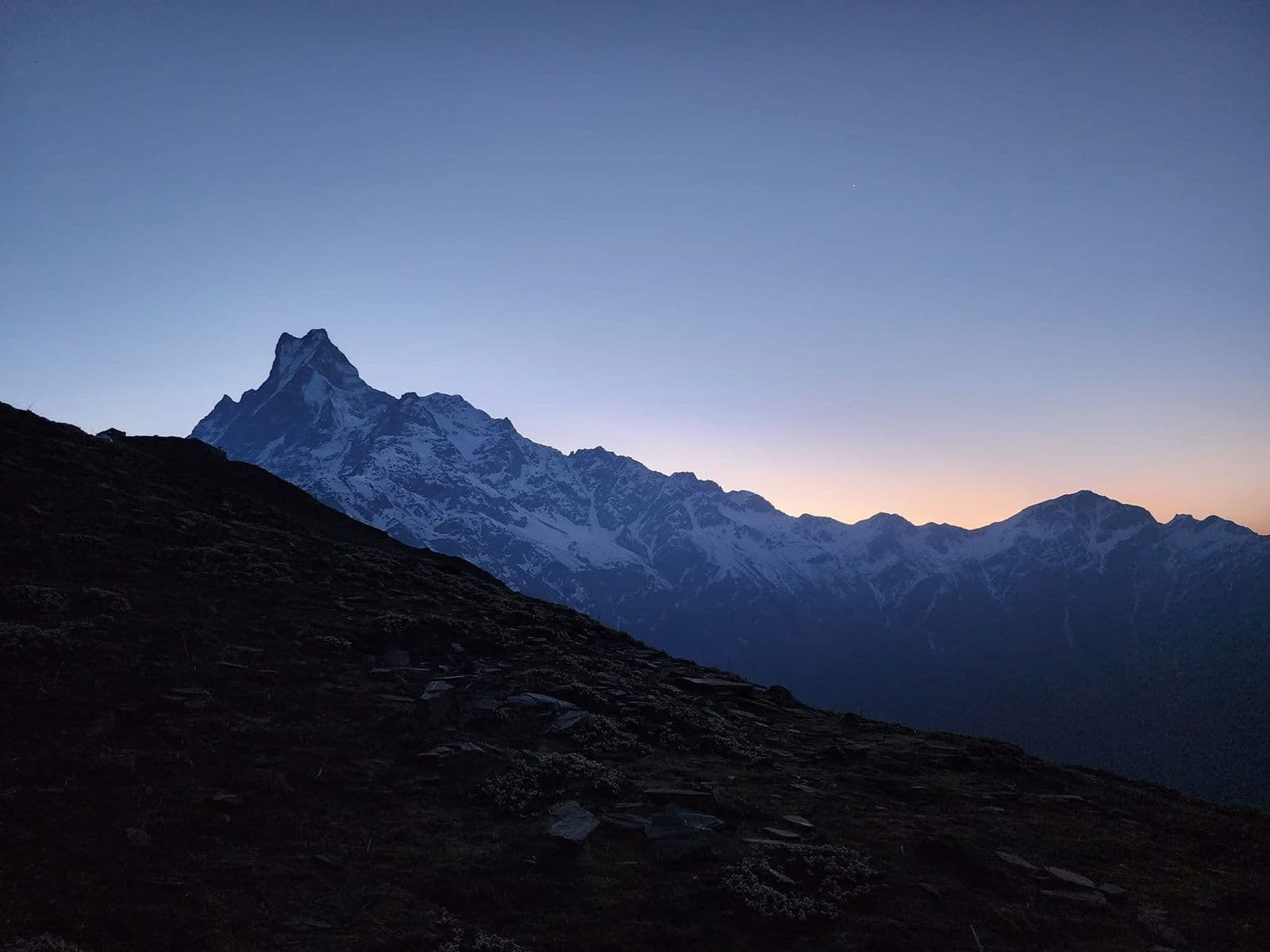
Sunset seen on Machhapuchhre mountain during Mardi himal trek.
The Mardi Himal Trek is a 5-7 day moderate trek starting and ending in Pokhara, reaching a maximum elevation of 4,500 meters at Upper View Point. It requires two permits (ACAP and a TIMS card), a licensed guide as of 2023 rules, and approximately USD $350-900 total budget depending on package tier.
The ultimate guide to planning your dream web travel adventure with the experts from myeasyguide.
Spam free. Unsubscribe anytime. We respect your privacy.
Mardi Himal sits in a sweet spot: short enough to fit into a two-week Nepal holiday, high enough to feel like a serious Himalayan expedition, and quiet enough that you won't be queuing for tea at lodges. The trail only opened formally to teahouse trekking in 2012, making it one of the youngest established routes in the Annapurna region.
The defining feature is the ridge walk from Badal Danda to High Camp. ou follow an exposed alpine ridge with Machhapuchhre's twin peaks looming so close you can pick out individual ice ribs. Our guides regularly tell us this is the most photographed stretch on any short trek in Nepal.
The Mardi Himal Trek requires the Annapurna Conservation Area Permit (ACAP), which currently costs NPR 3,000 for foreign trekkers. Depending on your trekking agency and the latest TAAN implementation policies, a TIMS/e-TIMS registration may also be arranged alongside the permit. Both are mandatory and checked at Dhampus and Forest Camp checkpoints.
Nepal introduced mandatory licensed-guide rules for most major trekking regions in 2023, including the Annapurna Conservation Area. In practice, enforcement can vary by checkpoint and route, but trekking with a licensed guide is strongly recommended and increasingly expected. You must hire a licensed guide registered with the Trekking Agencies' Association of Nepal (TAAN). Our marketplace verifies all guide licenses before assigning them to trips.
This rule applies even though Mardi Himal is not a Restricted Area. Porters alone do not satisfy the requirement, you need a guide with current government licensing.
Permits can be issued at the Nepal Tourism Board office in Damside, Pokhara, usually within 30 minutes. Bring two passport-sized photos, a passport copy, and travel insurance details. Most agencies arrange permits on your behalf as part of the package, saving you the queue.
The classic 5-day Mardi Himal itinerary balances acclimatization with efficient progress. Our local operators consider this the safest minimum duration. Adding a buffer day at Low Camp or High Camp is wise if you're new to altitude.
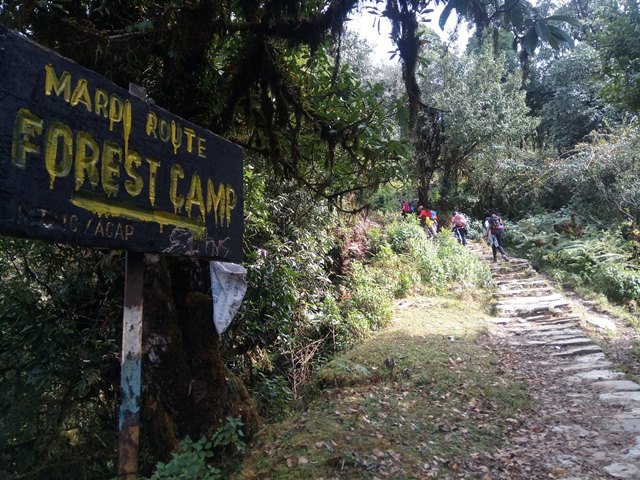
Rustic wooden sign board at Forest Camp along the forested Mardi Himal trek route.
Drive 1.5 hours from Pokhara to Kande (1,770m). The trail climbs steeply through Australian Camp and Pothana, then enters dense oak and rhododendron forest. Expect 5-6 hours of walking ending at Forest Camp, also called Kokar. You'll hear langur monkeys and the trickle of hidden streams the whole way up.
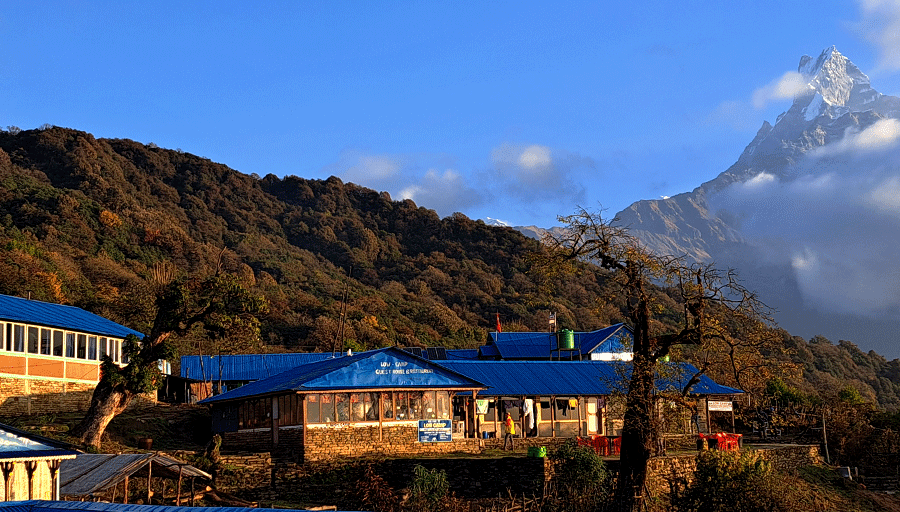
Cozy mountain lodges at Low Camp on the Mardi Himal ridge trail, surrounded by mist and trees.
A shorter day of 3-4 hours through moss-draped jungle. The gradient is gentler, allowing your body to start adjusting. Low Camp offers your first wide view of Machhapuchhre and Mardi Himal peak. Sleep here is critical for acclimatization since you're crossing the 3,000-meter threshold.
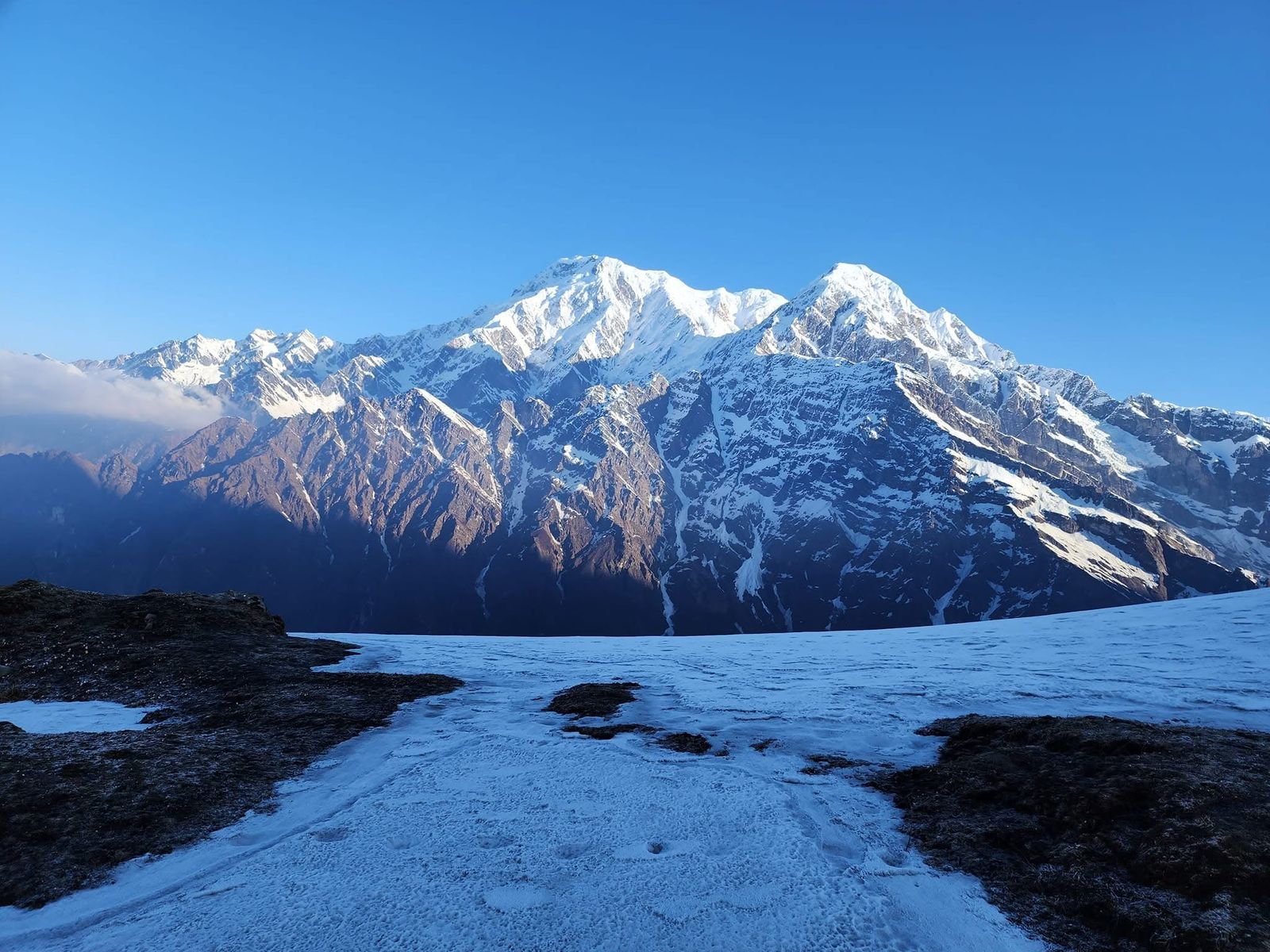
View of the mountain peaks seen on the way to high camp.
This is the showstopper day. The forest thins into juniper and then open alpine grassland at Badal Danda (3,210m), where the full Annapurna panorama explodes into view. Continue along the ridge for 4-5 hours total to High Camp. The ascent is steady but the altitude gain of 610m sits at the edge of safe sleep-elevation increase, so move slowly and hydrate.
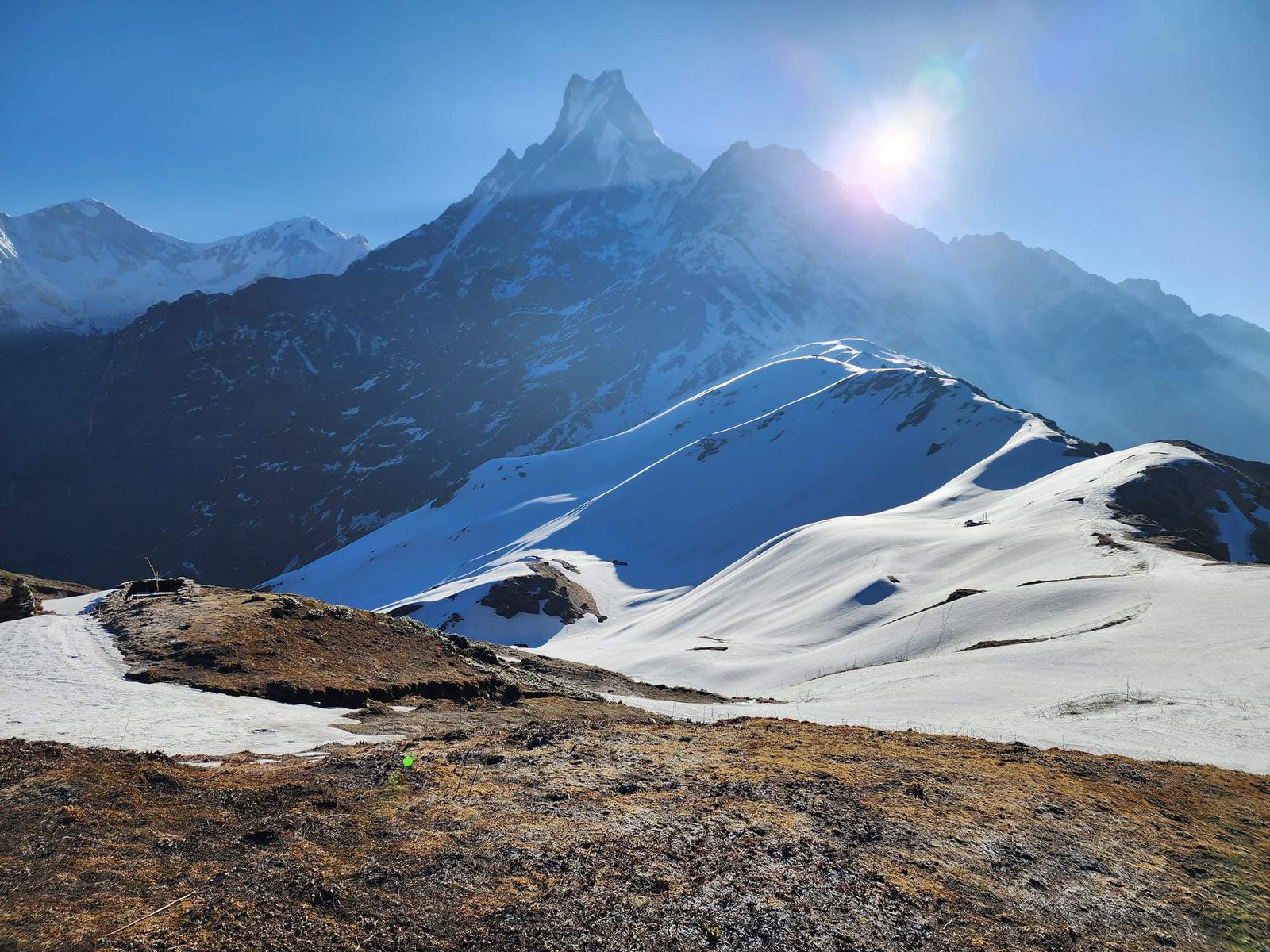
View of the Mount Fishtail seen from the upper view point.
Start at 4:00 AM with headlamps for the climb to Upper View Point (4,500m). The final section can become icy and slippery in winter or after snowfall, occasionally requiring cautious scrambling across loose scree and snow patches. Sunrise here is unmatched, Dhaulagiri, Annapurna South, Hiunchuli, Machhapuchhre, and Mardi Himal itself all glow simultaneously.
Descend back to High Camp for breakfast, then a long 6-7 hour descent to Siding Village. Your knees will feel this one.
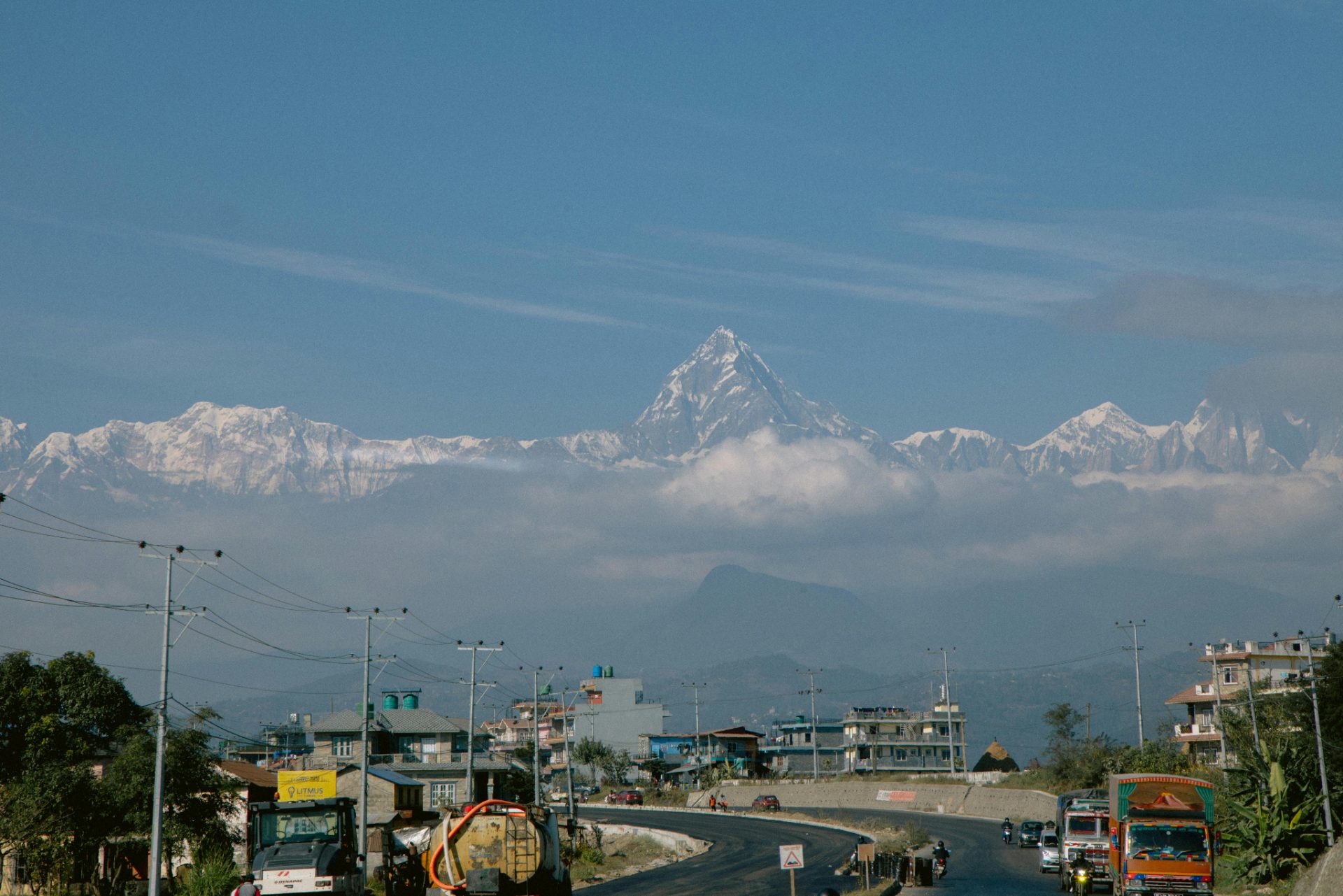
On the way back from Siding village to Pokhara.
A 3-4 hour jeep ride on a rough mountain road back to Pokhara. Some packages include a short walk to Lumre before the drive. You'll be back at your lakeside hotel by lunchtime.
The total cost of the Mardi Himal Trek in 2026 ranges from USD $350 to $900 per person depending on group size, season, and service level. Budget independent-style trips with shared guides land at the lower end, while premium private packages with senior English-speaking guides and private transport reach the upper range.
We've intentionally not invented exact package prices because transport, fuel costs, and lodge pricing shift seasonally. Always verify live rates through your booking agency.
The two prime seasons for Mardi Himal are spring (March-May) and autumn (September-November). Spring brings blooming rhododendron forests in pinks and reds across the lower trail, while autumn delivers the clearest mountain views with crisp, dry air after the monsoon.
Note that during monsoon, while most of Nepal is wet, regions like Upper Mustang and Upper Dolpo remain dry in the Himalayan rain shadow. If you're locked into a June-August trip, consider switching destinations rather than slogging through Mardi Himal in the rain.
Mardi Himal's altitude profile is deceptively aggressive. You move from 1,770m at Kande to sleeping at 3,580m at High Camp within three days. The safe sleep-elevation increase above 3,000m is 300-500m per day, and the standard itinerary pushes the edge of this guideline.
Watch for headache, nausea, dizziness, loss of appetite, and disturbed sleep starting at Low Camp. If symptoms worsen overnight, descend immediately, do not push to Upper View Point. HAPE (pulmonary edema) and HACE (cerebral edema) can develop fast at 4,500m.
Your travel insurance must explicitly cover emergency helicopter evacuation up to 5,000m minimum and treatment of altitude-related illness. Standard policies usually exclude this. We see preventable medical bills of USD $5,000-8,000 every season because trekkers assumed their basic insurance applied.
Stick to Dal Bhat, lentil soup, rice, and seasonal vegetable curry, which comes with free refills and provides clean, high-energy fuel. Most lodges serve simple trekking staples using a mix of local produce and supplies transported up the trail, and Dal Bhat is what your guides and porters eat for a reason.
Avoid meat at higher elevations. Above Forest Camp, meat is carried up by mule or porter over multiple days without refrigeration. Vegetarian meals are safer and easier on your digestion at altitude.
Do not buy plastic bottled water. Carry a reusable bottle and use a UV purifier, Sawyer Squeeze filter, or chlorine dioxide drops. Teahouses sell boiled water for NPR 100-200 per liter, which is the next best option.
There are no ATMs past Pokhara. Withdraw enough Nepalese Rupees in Pokhara to cover the entire trek plus a 20% buffer. Budget roughly NPR 3,000-4,000 per day for meals, snacks, hot showers, and charging fees.
Ncell provides the strongest mobile coverage on the Mardi Himal trail, with reliable 4G up to Forest Camp and intermittent signal at Low Camp and Badal Danda. Above High Camp, expect weak or inconsistent signal. Charging your phone or power bank at teahouses costs NPR 200-400 per device.
Electricity becomes increasingly limited above Low Camp. Most teahouses rely on small solar systems, meaning charging queues are common during cloudy weather and winter. Dining halls are usually heated with wood or yak-dung stoves during evenings, but bedrooms remain unheated. Condensation and frozen water bottles are common at High Camp in late autumn and winter, so keep batteries and electronics inside your sleeping bag overnight.
Mardi Himal's exposed ridge system creates fast-moving weather patterns. Clear mornings can turn into whiteout cloud by early afternoon, especially during spring and post-monsoon transitions. Our guides typically aim to leave High Camp before sunrise not only for the views, but because wind speeds and cloud buildup intensify sharply after 10:00 AM.
The lower trail passes through Gurung villages with strong Buddhist influence near the upper sections. Always pass mani stones, chortens, and prayer wheels on the left side, keeping them to your right. Walk clockwise around all religious structures.
Remove shoes and hats before entering any monastery. Photography inside prayer halls is prohibited unless a resident monk explicitly grants permission. Ask before photographing locals, especially elders.
Tipping is culturally expected and forms a vital part of guide and porter income. The standard marketplace guideline is 15-20% of your total trek cost, distributed among your crew. For a typical 5-day trek, plan for roughly USD $50-80 for your guide and USD $30-50 for your porter as a starting reference.
Mardi Himal rewards trekkers who choose quiet trails over crowded ones. With the right guide, sensible acclimatization, and accurate planning, this is one of the most satisfying short treks in Nepal and our Pokhara coordinators are ready to match you with verified, licensed local guides who know every twist of this ridge.
Browse curated Mardi Himal itineraries, compare verified guides, and customize your dates directly on our marketplace platform. Every operator listed has been vetted for license validity, safety standards, and crew welfare practices.
No. The mandatory licensed guide rule applies across the Annapurna Conservation Area, and Mardi Himal is no exception. You must trek with a guide registered through a TAAN-affiliated agency.
Moderate cardio fitness is enough. If you can walk 5-6 hours on uneven terrain with elevation gain for several consecutive days, you'll manage. Pre-trip hill training for 4-6 weeks is highly recommended.
Yes. Many travelers pair Mardi Himal with Poon Hill (Ghorepani) for a 9-10 day combined itinerary, or use it as acclimatization before Annapurna Base Camp. Our marketplace operators design these hybrid routes regularly.
Yes, at most teahouses up to High Camp, but it's gas-heated and costs extra at NPR 300-500 per shower. Above Low Camp, expect bucket showers or skip entirely.
Your guide will assess conditions at 3:30 AM. If snow or high winds make the ascent unsafe, you'll stop at Lower View Point (4,200m), which still offers spectacular views. Safety takes precedence over the summit attempt.
No. All payments on the trail are cash only in Nepalese Rupees. Withdraw cash before leaving Pokhara.