Prabesh Tamang
Most travelers blow past Bandipur. They sit on the Kathmandu–Pokhara bus, eyes on the prize, and never notice the small ridge town hovering 700 meters above the highway at Dumre. That's their loss, and your opportunity. Bandipur is the rare Nepali hill town that has held onto its Newari soul while quietly polishing itself into one of the most rewarding stops in the country.
Our field coordinators in Pokhara have been routing slow-travel clients through Bandipur for years, and the feedback is always the same: "I wish we'd booked three nights instead of one." This guide walks you through exactly why, and how to do it right.
Source: Samrat Khadka
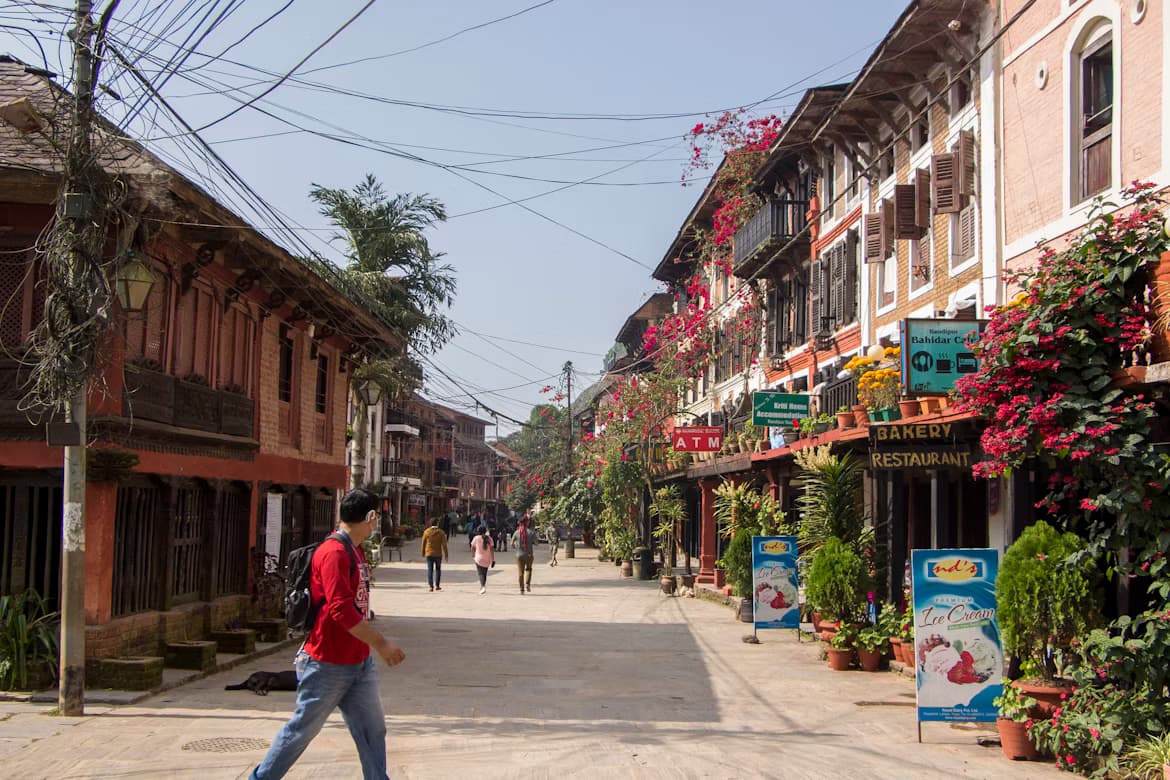
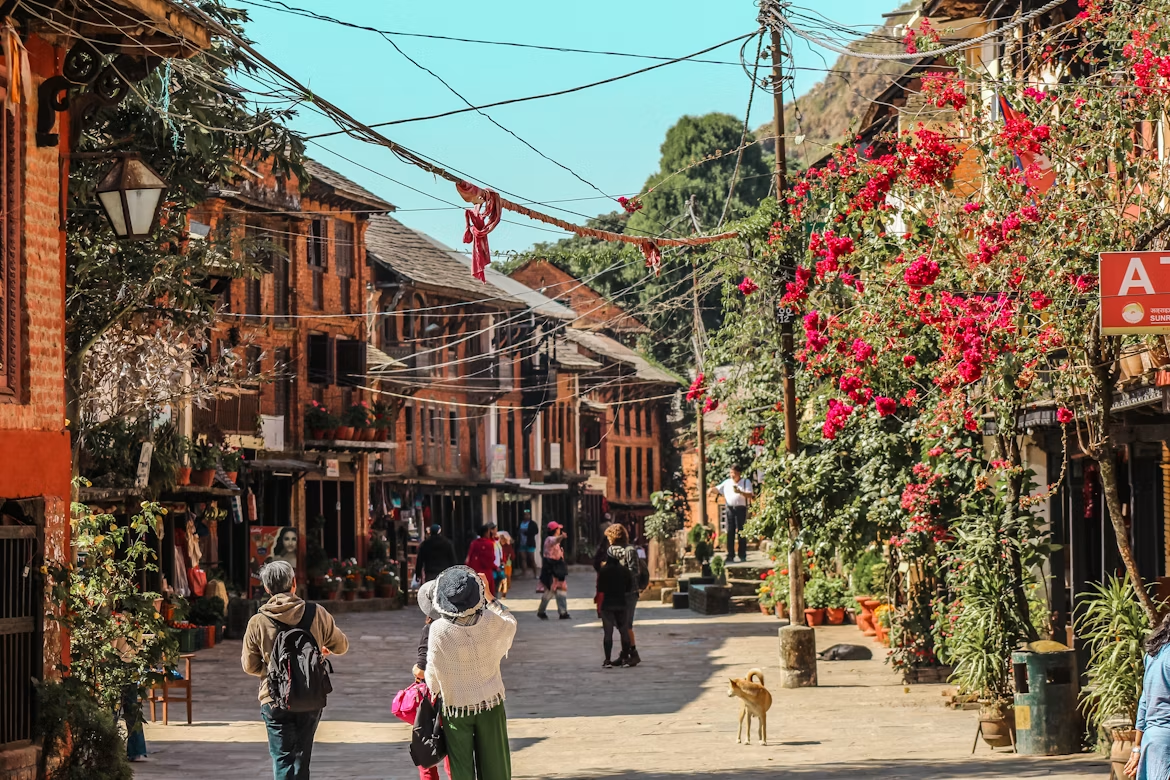
Beautiful scenery of Bandipur Nepal
Bandipur is a preserved Newari trading town perched on a saddle at 1,030 meters in Tanahun district, roughly halfway between Kathmandu and Pokhara. Its cobblestoned main bazaar is closed to vehicles, its 18th-century shophouses are intact, and on clear autumn and winter mornings it delivers one of central Nepal’s finest Himalayan panoramas, often stretching from Dhaulagiri to Langtang.
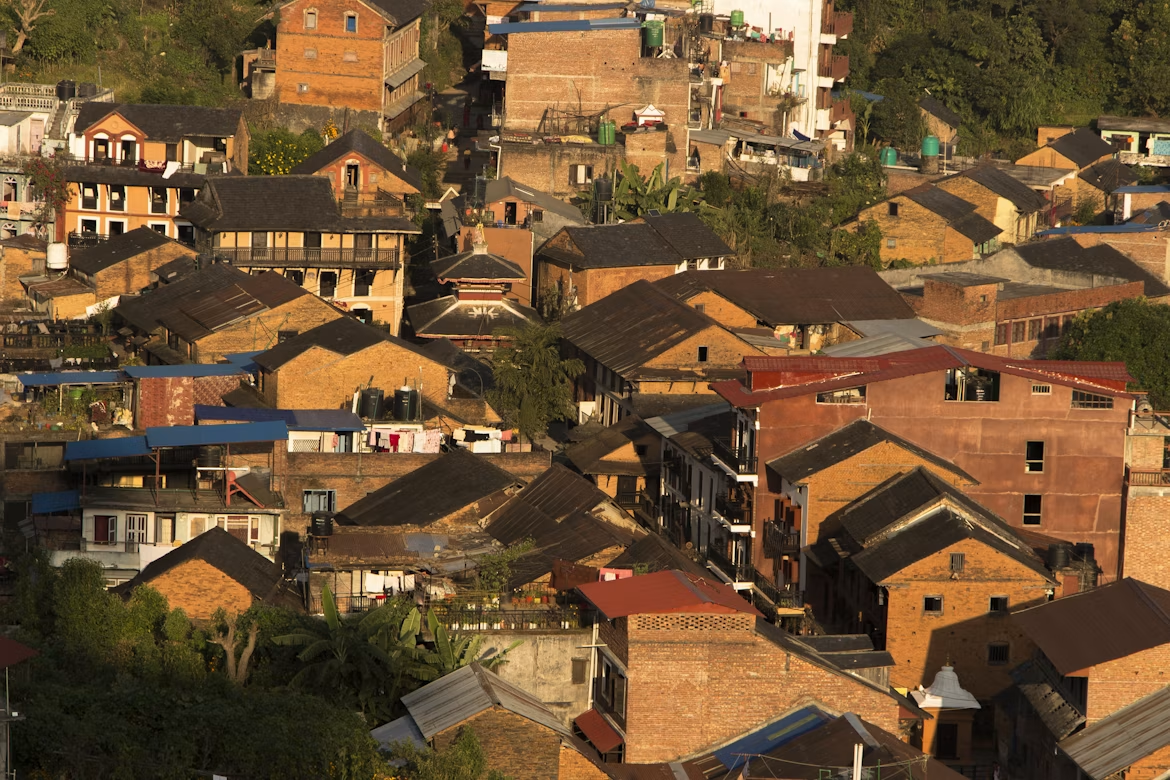
The town's history explains its character. When the British-built India–Tibet trade route shifted to the Prithvi Highway in the 1970s, Bandipur's Newari merchants were bypassed economically. The village froze in time. Carved wooden windows, slate roofs, and temple courtyards that would have been demolished in a richer town simply stayed where they were. Restoration efforts since the 2000s, many funded by returning diaspora families, turned that accidental preservation into a deliberate heritage identity.
You walk the bazaar at dusk and hear conversation, not engines. That alone makes Bandipur worth the climb.
Source: Rojan Kc
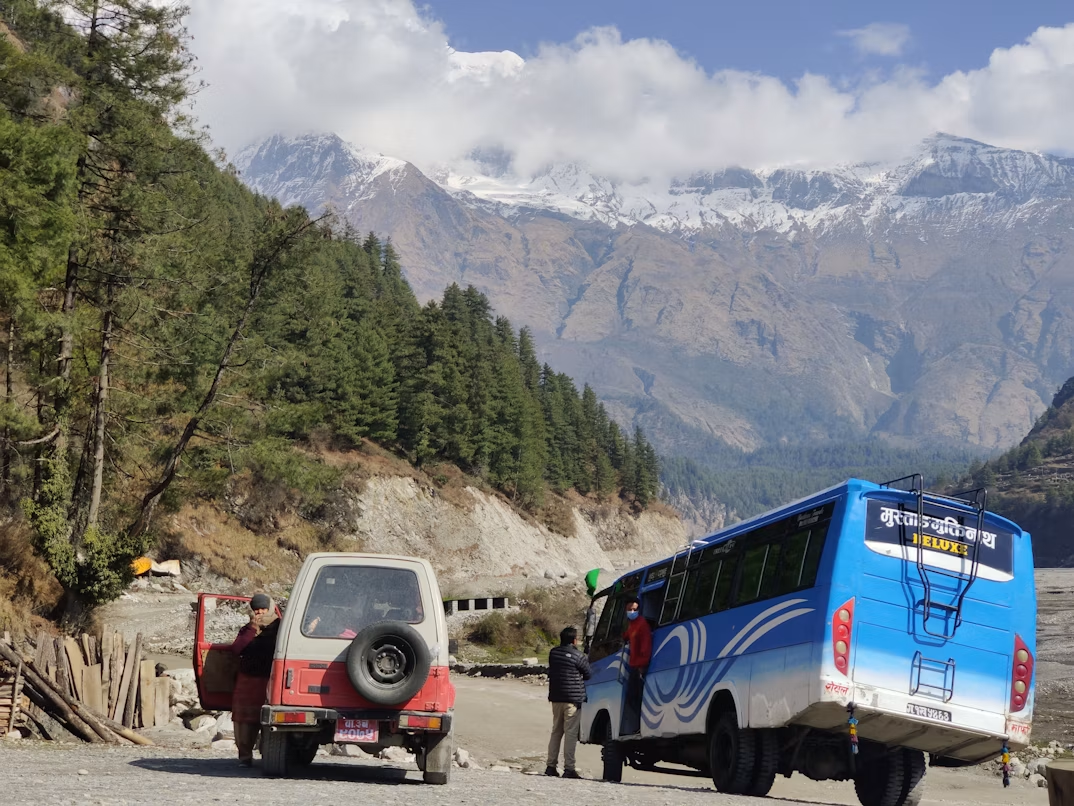
A Blue tourist bus and a jeep on the way to Bandipur
Bandipur sits 8 kilometers uphill from the Dumre junction on the Prithvi Highway. From Kathmandu, it's roughly 5–7 hours depending on Prithvi Highway traffic and ongoing roadworks, and from Pokhara, around 2.5–4 hours depending on road conditions. The final stretch is a steep, switchback-heavy paved road that any taxi or jeep can handle in dry conditions.
The simplest option is to take a Kathmandu–Pokhara tourist bus and disembark at Dumre. From there, a shared jeep costs around NPR 150–250 per seat, or you can hire a private taxi up for roughly NPR 1,500–2,500. Private cars with driver from Kathmandu or Pokhara typically run in the $70–120 USD range one-way, verify live rates with your booking agency, as fuel surcharges shift seasonally.
Fly Kathmandu to Pokhara (a 25-minute hop) and then drive east to Bandipur. This cuts the day in half and is what we recommend for clients with limited time. Flight prices fluctuate; we don't quote fixed figures because they genuinely change week to week.
The clearest mountain views and most stable weather fall between October and early April. Spring brings rhododendrons; autumn delivers Dashain and Tihar festival energy in the bazaar. Monsoon (June–August) turns the hills emerald but obscures the Himalayas for days at a stretch. Spring mornings in March and April can develop haze by late morning, so sunrise viewpoints deliver the clearest mountain visibility.
The ultimate guide to planning your dream web travel adventure with the experts from myeasyguide.
Spam free. Unsubscribe anytime. We respect your privacy.
Source: Bina Subedi
Aerial view of Bandipur Nepal
Bandipur rewards slow walkers. A solid itinerary blends one sunrise viewpoint, one short hike, one temple, and a long evening in the bazaar. You can fit the highlights into 24–36 hours, but two full days is more honest.
Bandipur is best experienced slowly. The town rewards unstructured time, long breakfasts overlooking the Himalayas, afternoon tea in restored Newari courtyards, and quiet walks through back alleys where old wooden balconies still lean above stone lanes. Unlike Pokhara or Kathmandu, the appeal here is atmosphere rather than a checklist of attractions.
A flat, grassy promontory a 10-minute walk from the bazaar, Tundikhel is the showpiece. It was historically the town's parade ground. Today, from this single ledge, you can see Dhaulagiri (8,167 m), the Annapurna massif, Machhapuchhre (6,993 m), Manaslu (8,163 m), Ganesh Himal, and on the clearest mornings, the Langtang range. Arrive before 6:30 AM in winter, earlier in summer.
One of the largest caves in Nepal, Siddha Gufa is a 1.5-hour downhill hike from Bandipur — or a short drive followed by a 15-minute walk. The cave entry fee is around NPR 200–300 for foreigners, and a local guide with a headlamp is strongly recommended because sections of the cave are slippery and unlit. The chamber is genuinely huge, stalactites, bat colonies, the works. Wear shoes with grip; the descent inside is slick.
A 2-hour walk along a ridge trail west of Bandipur takes you to Ramkot, a traditional Magar village with round thatched houses that feel a century removed from the bazaar. This is one of our favorite half-day add-ons for travelers who want a taste of rural Nepal without committing to a multi-day trek.
A steep 20-minute climb up stone steps from Tundikhel ends at Thani Mai temple, the best sunset spot in town. The light hits the western Himalayas first, then bleeds across the Marsyangdi valley. Bring a layer; it cools fast once the sun drops.
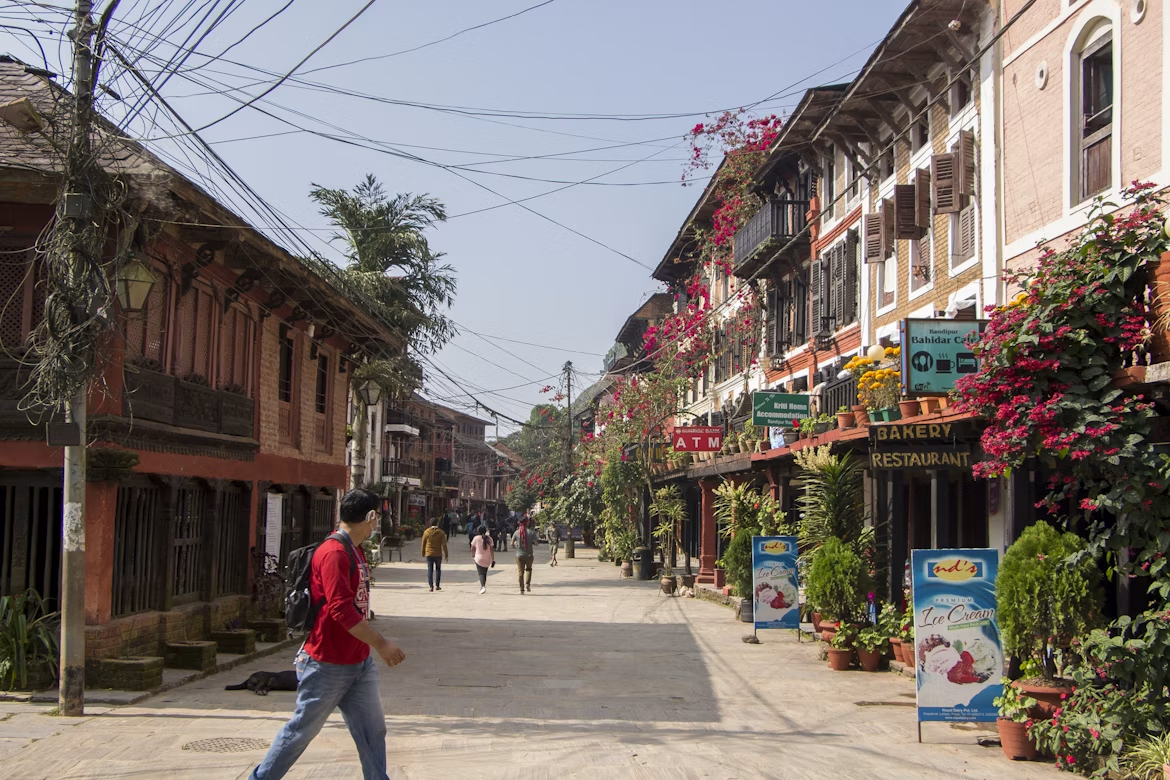
The main street is the attraction. Newari shophouses now hold cafés, heritage hotels, weaving cooperatives, and a few small museums. The Bindebasini temple anchors the upper end. Take an hour, then take another.
Source: Bina Subedi
Lodges and resturants located in bandipur
Bandipur's accommodation runs from restored 200-year-old Newari mansions to modern boutique lodges on the village edge. We don't list fixed rates here, pricing shifts dramatically between weekday off-season and Dashain peak, but expect a realistic range of $30–150 USD per night depending on category.
Book at least 2–3 weeks ahead for October and November weekends. Heritage rooms in the bazaar sell out first.
Bandipur eats well. The bazaar has a surprising spread of Newari thalis, wood-fired pizzas, and proper espresso for a town this size. Our standing advice: try the Newari sets at least once. Bara (lentil pancakes), chatamari, and aalu tama (bamboo-shoot potato curry) are worth the trip alone.
For trail food and energy, stick with traditional Dal Bhat, unlimited refills, fresh, and perfectly fueled for hill walks. Skip the bottled water habit. Carry a reusable bottle with a Sawyer filter, UV purifier, or chlorine dioxide tablets. The plastic problem in rural Nepal is real and you don't need to add to it.
ATMs in Bandipur are unreliable. Withdraw NPR cash in Kathmandu, Pokhara, or Dumre before heading up. Plan on NPR 3,000–5,000 per day per person for meals, drinks, entry fees, and small shopping.
Most cafés and heritage hotels accept digital payment methods like eSewa or Fonepay for Nepali travelers, but foreign cards remain unreliable and often incur extra fees. International visitors should still plan on using Nepalese Rupees cash for most purchases.
Mobile coverage is solid across both major carriers. Ncell and Nepal Telecom (NTC) both work reliably in the bazaar and at Tundikhel. Most hotels offer Wi-Fi included in the room rate, a welcome change from teahouse trails where you'll pay NPR 200–700 for connectivity. Power is generally reliable, though short outages still occur during storms and monsoon periods.
Bandipur is a living town, not a museum. A few small habits go a long way:
Bandipur shines as a strategic stop, not a standalone destination. Our most popular routings:
Bandipur also works exceptionally well as a remote-work or recovery stop. The slower pace, stable internet in most heritage hotels, and cool hill climate make it popular with travelers looking to decompress between major trekking regions.
Yes, especially if your Nepal trip is currently overloaded with transit days, big cities, or high-altitude trekking.
Bandipur offers something increasingly rare in Nepal: a hill town where the experience is the destination. You are not rushing toward a base camp, fighting traffic, or navigating crowds. Instead, you slow down into morning mountain views, candlelit Newari courtyards, and quiet evenings where the loudest sound is usually conversation drifting across the bazaar.
For trekkers, Bandipur works best as a decompression stop before or after the Annapurna region. For cultural travelers, it is one of the strongest alternatives to Bhaktapur outside Kathmandu Valley. And for photographers, the combination of preserved Newari architecture and Himalayan backdrops makes it one of the most visually rewarding small towns in Nepal.
The key is expectation. Bandipur is not an activity-heavy destination. If you need constant movement, nightlife, or adventure sports, Pokhara is the better fit. But if you value atmosphere, heritage, mountain scenery, and slower travel, Bandipur is absolutely worth carving out two nights for in 2026.
Verify live rates with your booking platform, transport and lodging prices shift seasonally and we'd rather give you ranges than fictional precision.
Two nights and one full day is the sweet spot. This gives you a sunrise at Tundikhel, a hike to Siddha Cave or Ramkot, and a slow evening in the bazaar without rushing.
Yes, Bandipur is among the safer destinations in Nepal for solo women. The bazaar is small, well-lit until late evening, and locals are protective of guests. Standard travel precautions apply.
Technically yes, but we don't recommend it. The magic of Bandipur is the evening bazaar and the morning Himalayan view. A day trip skips both. Stay one night minimum.
Very. Minimal vehicle traffic in the bazaar makes Bandipur feel safer and calmer for families than most Nepali towns, the hikes are short, and heritage hotels are used to family bookings. Bring layers for cool evenings.
Not for the village itself. For hikes to Siddha Cave or Ramkot, a local guide adds historical context and ensures safety on the cave descent. We can arrange licensed local guides through our marketplace.
Light layers, a warm fleece for evenings (October–March), comfortable walking shoes with grip, sunscreen, a reusable water bottle with filter, and cash in Nepalese Rupees.