Prabesh Tamang
Mount Everest is no longer just the world's highest peak, it has also become one of the world's most visible high-altitude waste crises. Behind every iconic summit photo lies a darker truth our field coordinators witness every season: discarded oxygen bottles glinting in the sun at the South Col, frozen tent shreds flapping at Camp 4, and human waste accumulating on glacial terrain that is now rapidly melting and exposing decades of buried debris. The mountain that humbles climbers is choking on the ambitions of those who climb it.
We've spent years coordinating expeditions and treks across the Khumbu, and the conversation around Everest's waste crisis has shifted dramatically heading into the 2026 season. New rules, mandatory poop bags, and stricter deposits are reshaping how climbers and trekkers engage with Sagarmatha. Here's the unvarnished reality, and what you need to know before stepping onto that trail.

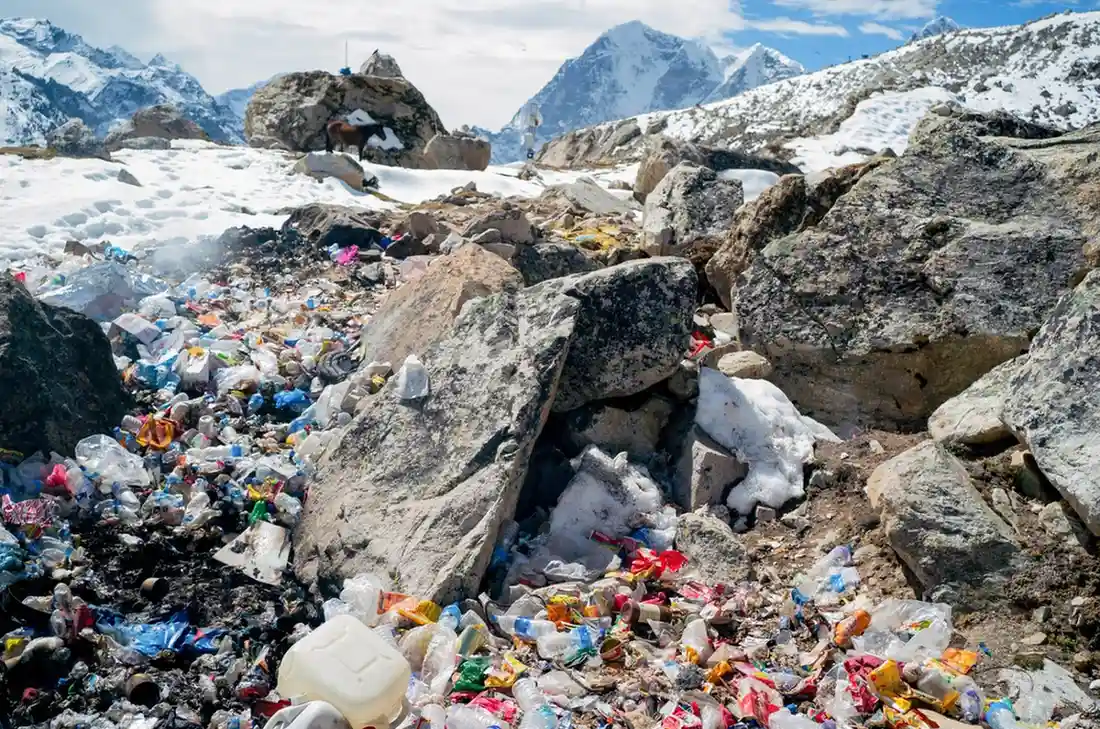
Source: One Globe Nepal
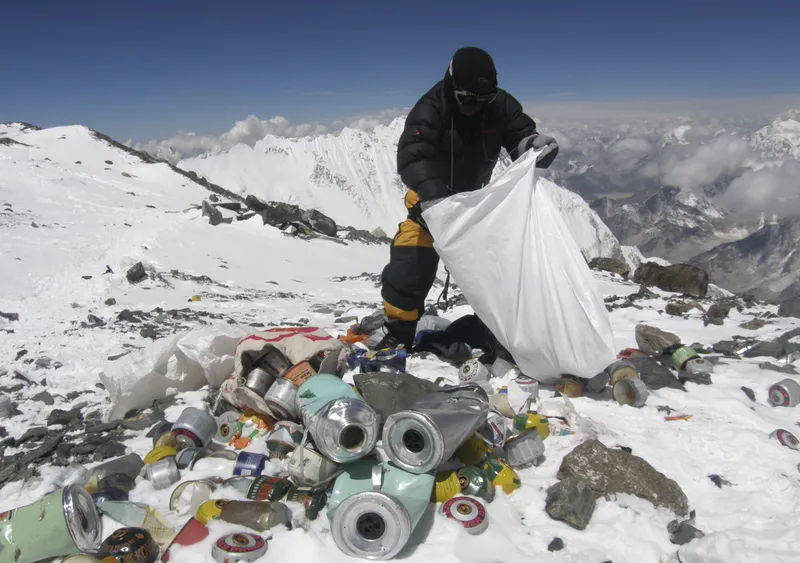
Accumulation of plastic waste and abandoned mountaineering equipment on the snow-covered slopes of Everest.
Mount Everest is estimated to contain tens of tonnes of accumulated waste, including discarded oxygen cylinders, torn tents, ropes, food packaging, human excrement, and along with the remains of more than 200 climbers who never descended. Decades of commercial expeditions above 5,364 meters have transformed sacred slopes into a high-altitude dumping ground that melting glaciers are now exposing.
The numbers our local contacts share are sobering. Since Sir Edmund Hillary and Tenzing Norgay's 1953 first ascent, more than 6,000 people have summited Everest. Each expedition leaves behind a footprint that the mountain cannot absorb. Above 8,000 meters, the Death Zone - climbers operate on borrowed time and oxygen, and packing out gear becomes a survival liability.
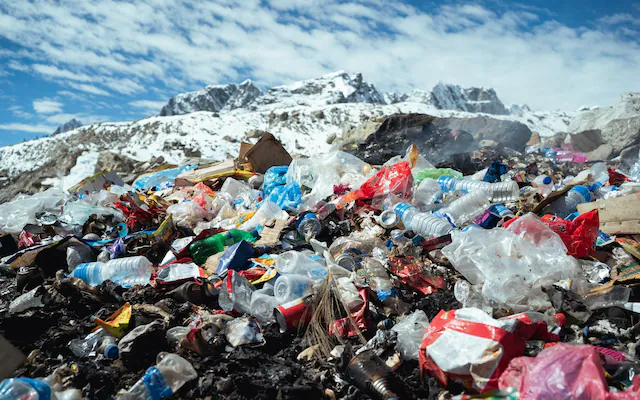
Spent oxygen cylinders alone number in the thousands. A single climber on a summit push uses 4-7 bottles, and Sherpas often have no choice but to leave empties behind when racing against weather windows. Add abandoned fixed ropes, frozen ladders, broken crampons, and shredded high-altitude tents from Camps 2, 3, and 4, and you begin to grasp the scale.

Source: The Telegraph
Discarded oxygen cylinders, torn tents, and climbing gear left behind at a high-altitude camp on Mount Everest.
Several tonnes of human waste are believed to accumulate around Everest each climbing season, particularly near high camps and commonly used toilet zones. For decades, this waste was buried in crevasses or simply left on the ice. As the Khumbu Glacier retreats due to climate change, this frozen sewage is re-emerging downstream, contaminating water sources that feed villages all the way to Lukla.
In response, Nepal's Khumbu Pasang Lhamu Rural Municipality introduced a landmark rule for the 2024 season: every Everest and Lhotse climber must carry biodegradable poop bags and return their waste to Base Camp for proper disposal. Local authorities and expedition operators continued enforcing the biodegradable waste-bag system through the 2025 and 2026 climbing seasons, though implementation standards still vary between teams.
Like much of the Himalaya, the Khumbu region is warming rapidly, accelerating glacial melt and exposing waste long buried beneath snow and ice. Bodies and waste once entombed in ice are surfacing. Nepal Army cleanup campaigns in recent years have reportedly recovered multiple bodies and more than 10 tonnes of garbage from Everest’s upper slopes. What melts out tomorrow could be anything from a 1996 expedition's oxygen tank to a climber's remains.

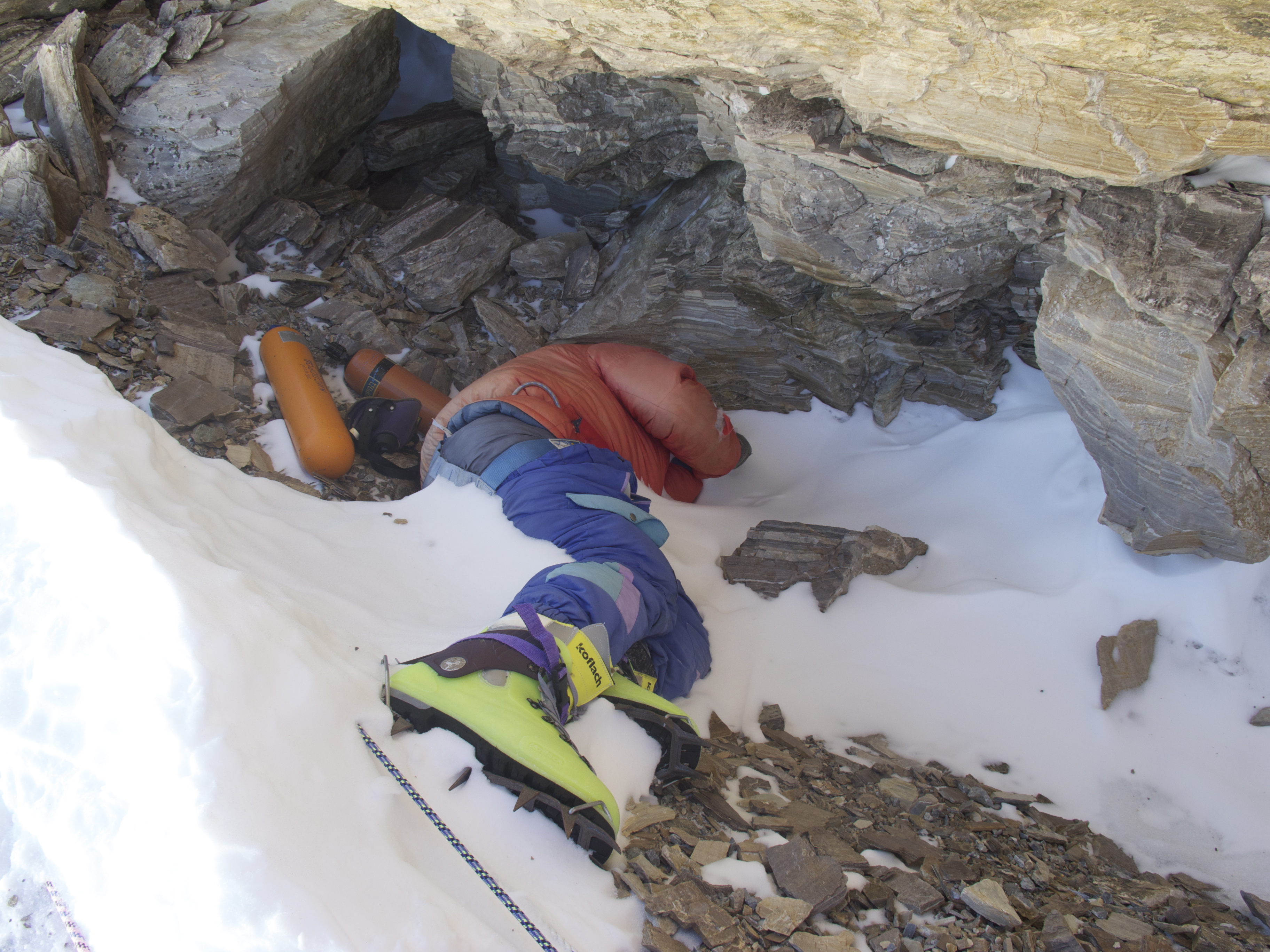
Source: Wikipedia
A stark reminder of high-altitude climbing risks showing an old, snow-covered dead body in the Everest death zone.
Over 200 bodies remain on Mount Everest, with many lying in the Death Zone above 8,000 meters. Recovery operations cost between $30,000 and $70,000 USD per body and put rescue Sherpas at extreme risk. Some bodies became grim landmarks for climbers over the years, including the well-known ‘Green Boots’ cave near the Northeast Ridge route.
The ethics here are brutal. Families often request recovery, but lowering a frozen, 150-kilogram body through the Khumbu Icefall is one of the most dangerous tasks in mountaineering. Nepal's army cleanup teams in recent years have begun prioritizing visible bodies near climbing routes, both for dignity and to remove psychological barriers for future climbers.
Nepal's Department of Tourism requires every Everest climbing team to pay a refundable $4,000 USD garbage deposit. Each climber must bring down at least 8 kilograms of personal waste, roughly the amount one person generates above Base Camp, to reclaim it. In practice, the system is improving but remains imperfect.
Here's the issue our coordinators see: Critics argue the current deposit remains relatively small compared to the total cost of a commercial Everest expedition, which often exceeds $50,000 USD per climber. Critics within Nepal’s climbing industry argue the system still lacks strong enough incentives to ensure every expedition fully removes its waste. The deposit needs teeth, and Nepalese authorities have periodically discussed stricter reforms, including larger deposits and stronger waste-linked summit certification requirements.
The ultimate guide to planning your dream web travel adventure with the experts from myeasyguide.
Spam free. Unsubscribe anytime. We respect your privacy.
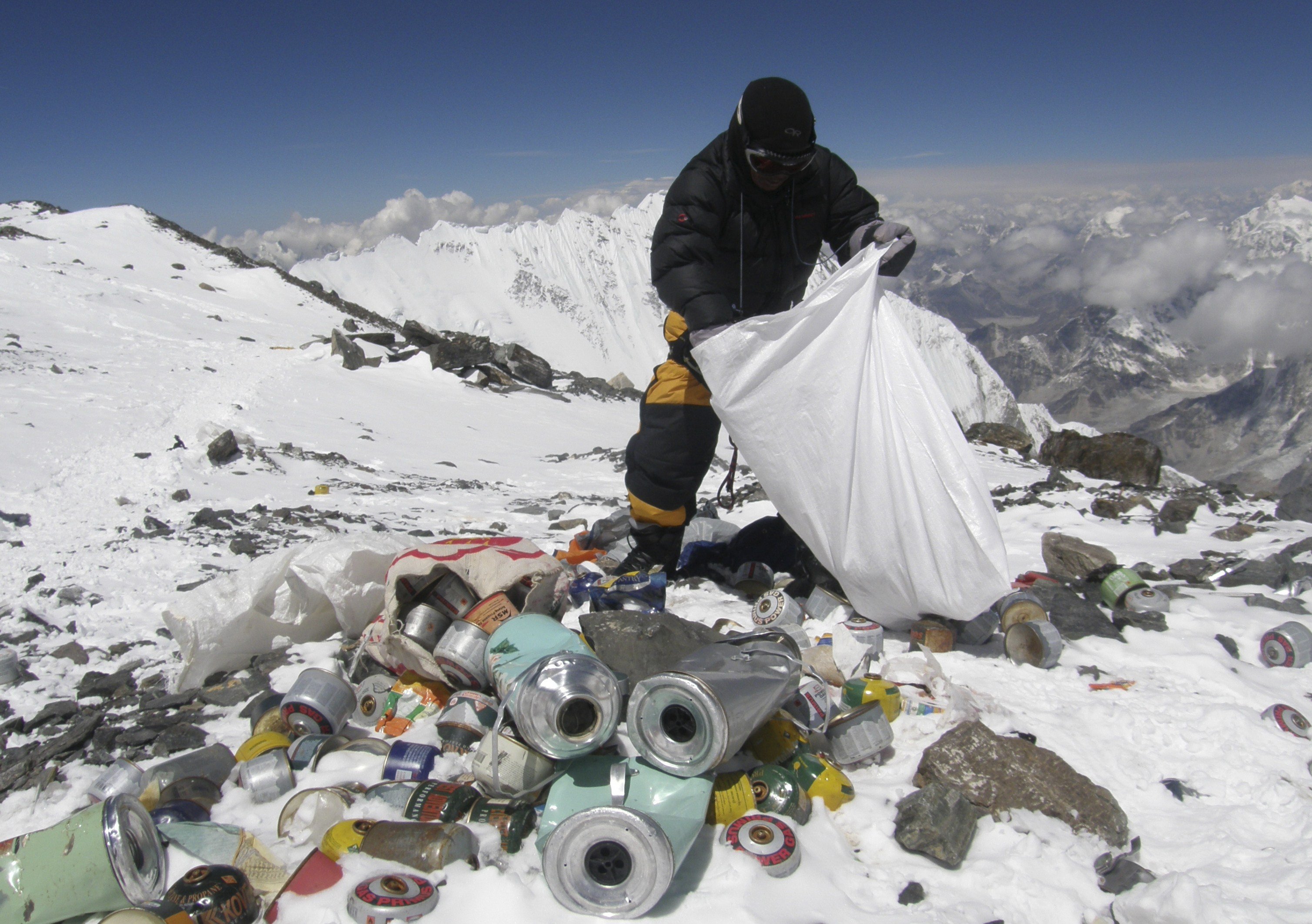
Source: TIME
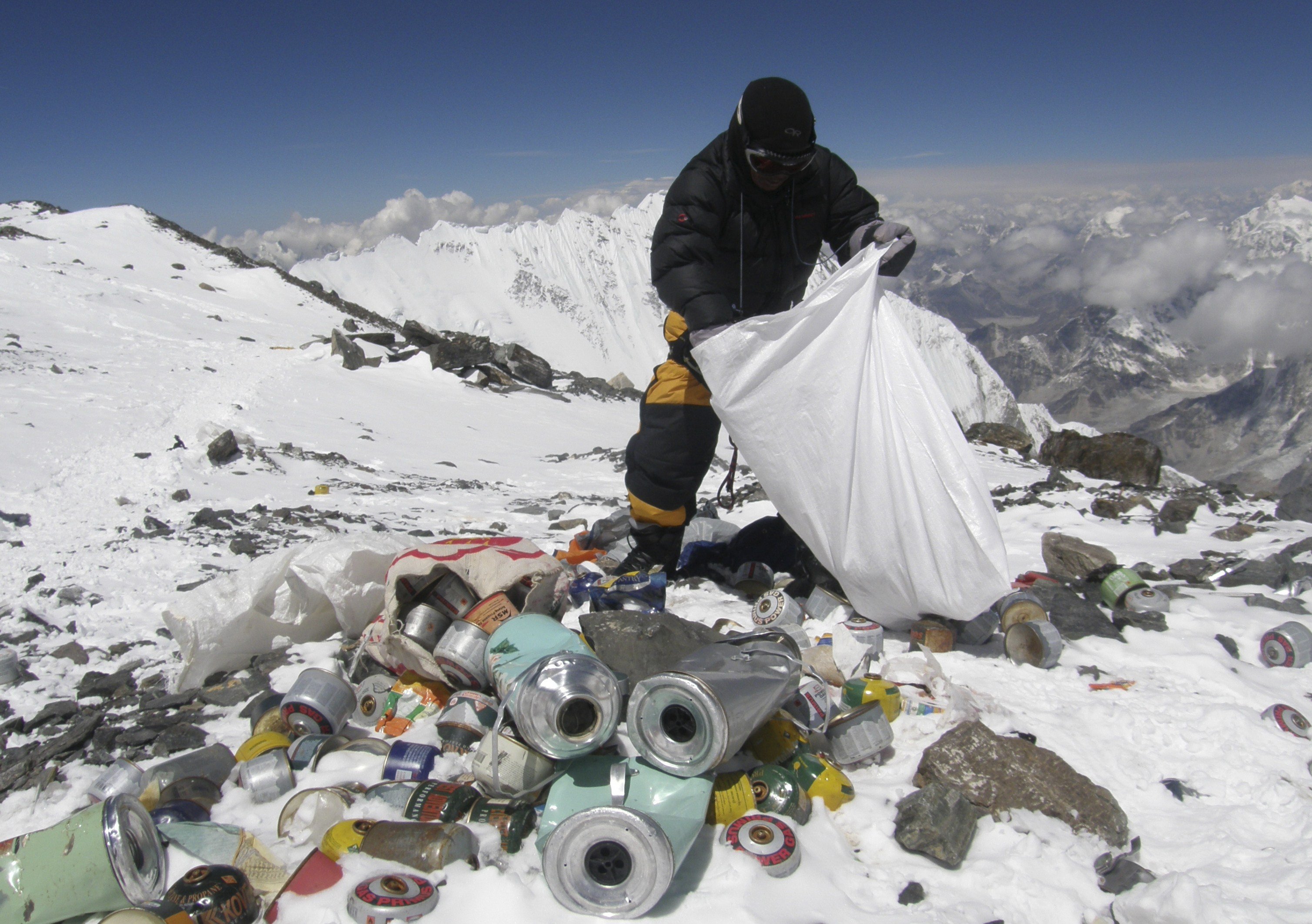
Eco-expedition volunteer collecting and bagging garbage during an environmental clean-up campaign on Mount Everest.
The Sagarmatha Pollution Control Committee (SPCC), founded in 1991, leads waste management across the Khumbu. Combined with annual Nepal Army cleanup campaigns launched in 2019, these operations have removed over 100 tonnes of garbage and multiple bodies from Everest, Lhotse, and Nuptse, the unsung backbone of Himalayan conservation.
The SPCC operates checkpoints from Lukla to Gorak Shep, weighing trekker trash, managing trail waste systems, collection points, and local disposal infrastructure across the Khumbu. Cleanup Sherpas, often the same elite climbers who guide commercial clients, risk their lives to retrieve garbage from camps above 7,000 meters. They deserve global recognition, not just gratitude.
Items below 6,500 meters are relatively recoverable. Above the South Col at 7,906 meters, every kilogram extracted costs immense effort. Discarded fixed ropes, anchored ladders in the Khumbu Icefall, and shredded tent fabric remain the hardest categories. Many climbers and conservation workers believe fully removing decades of accumulated waste from Everest’s highest camps may never be completely achievable.
Everest Base Camp trekkers do not climb above 5,364 meters, but the tens of thousands of annual trekkers entering the Khumbu generate enormous waste pressure on villages with limited disposal infrastructure. Plastic bottles, energy bar wrappers, and wet wipes account for the bulk of trail litter from Lukla to Gorak Shep.
If you're flying into Lukla during peak seasons (March-May and September-November). During peak trekking seasons, many Lukla flights are rerouted through Manthali Airport in Ramechhap to reduce Kathmandu air traffic congestion. You'll drive 4-5 hours from Kathmandu starting around 1:00 AM to catch the early flight, and we always recommend building 1-2 buffer days for inevitable weather delays.
Responsible Everest trekking requires zero plastic bottles, active water purification, packing out all personal trash to Lukla, and choosing operators that pay fair wages and participate in SPCC initiatives. Small individual choices, multiplied across 50,000 trekkers annually, shape the long-term sustainability of tourism in the Khumbu region.
Sagarmatha, "Forehead of the Sky" in Nepali, "Chomolungma" or "Mother Goddess of the World" in Tibetan, is sacred. The Khumbu is dotted with mani walls, chortens, and the iconic Tengboche Monastery at 3,867 meters. Always walk to the LEFT of mani stones and chortens, keeping them on your right, and circle stupas clockwise.
Photography inside monastery prayer halls requires explicit permission from a resident monk. Remove shoes and hats before entering. Treating the mountain with reverence is inseparable from treating it cleanly, Sherpa culture sees waste left on the mountain as a spiritual offense, not just an environmental one.
Above 3,000 meters, sleep elevation must not increase by more than 300-500 meters per day. Mandatory acclimatization days at Namche Bazaar (3,440m) and Dingboche (4,410m) are considered essential for safe ascent. Skipping them invites AMS, HAPE, or HACE, and helicopter evacuation isn't always possible above 6,000 meters.
Standard travel insurance is insufficient. You need a policy explicitly covering high-altitude helicopter evacuation up to 6,000m and treatment for altitude illnesses. This is non-negotiable for any reputable operator and commonly required by reputable expedition operators.
Nepal is debating a permit cap, climber experience requirements (minimum high-altitude experience requirements), and steeper waste penalties for the 2026 climbing season. Public pressure following viral images of summit-day traffic jams and exposed corpses has finally forced policy momentum. Whether enforcement matches ambition remains the question.
For now, every climber and trekker carries personal responsibility. The mountain doesn't care about Instagram. But the Sherpa families who've lived in its shadow for generations do, and they're the ones cleaning up after us.
Everest's future depends on who you trek with as much as how you trek. Our marketplace connects you directly with verified, licensed Khumbu guides and operators who actively participate in SPCC cleanup initiatives, pay fair Sherpa wages, and run zero-waste itineraries. Browse curated Everest Base Camp treks, compare transparent pricing, and book directly with the local experts who call this mountain home. Explore verified Everest itineraries and connect with our Pokhara-based coordinators today.
Regulations, fees, and logistical procedures in Nepal can change seasonally. Travelers should confirm current permit requirements and climbing regulations with licensed trekking agencies or official Nepal Tourism Board sources before departure.
Conservative estimates suggest over 50 tonnes of waste remain scattered across Mount Everest, including oxygen cylinders, tents, human waste, food packaging, and climbing equipment accumulated since the 1953 first ascent. Cleanup campaigns since 2019 have removed over 100 tonnes cumulatively.
Yes. An estimated 200+ bodies remain on Mount Everest. Recovery is extremely dangerous and costs $30,000-$70,000 USD per body. Some have served as macabre trail markers in the Death Zone above 8,000 meters for years before being moved.
Nepal requires each Everest climbing team to deposit $4,000 USD, refundable only upon proof that each climber brought down at least 8kg of waste. In 2024, mandatory biodegradable poop bags were also introduced for all climbers above Base Camp.
Most heavy waste sits at higher camps above Base Camp, invisible to trekkers. However, you will see overflowing bins, plastic litter, and informal dumps near Lobuche and Gorak Shep, particularly at the end of peak seasons.
Yes, and you should avoid it entirely. Use a Sawyer filter, UV purifier, or chlorine dioxide tablets with teahouse tap water or boiled water. This single choice eliminates dozens of plastic bottles per trekker and saves NPR 200-400 per liter.
Standard practice is 15-20% of the total trek cost distributed among the crew. For a 14-day EBC trek, expect to tip your guide roughly $150-250 USD and your porter $100-150 USD, paid in NPR cash on the final day.