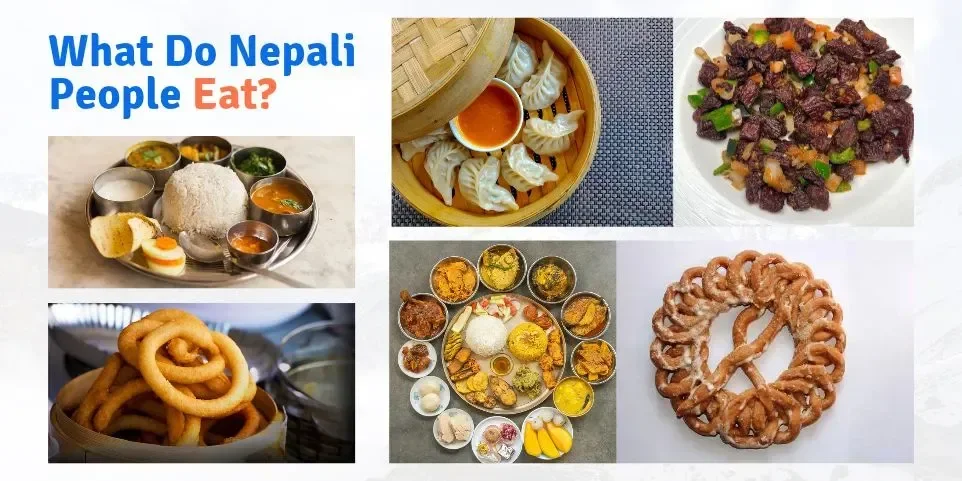
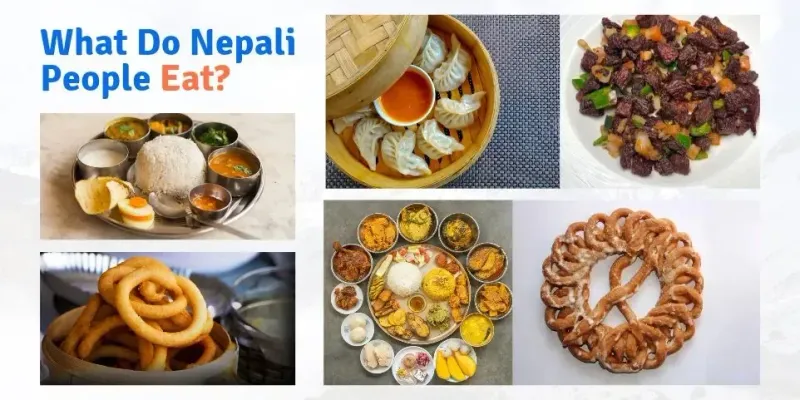
What Do Nepali People Eat? A Local Guide to Dal Bhat, Momo and Trail Food
Asmita Karki
Contents
Dal bhat is the most popular and most eaten food in Nepal.
Ask any Nepali what they ate today, and the answer will almost always be “dal bhat.” Ask what they ate yesterday, and you will hear the same thing.
Momo may be the most famous dish outside Nepal, but at home most people do not feel they have properly eaten until they have had a plate of dal bhat. That is just the culture here.
In this guide, we cover two things: what Nepalis eat at home, and what that means for the plate you will be handed on a trek.
The Short Answer: What Nepalis Eat Every Day
Most Nepalis eat dal bhat twice a day.
Steamed rice, lentil soup, vegetable curry, greens and a pickle. This combo is what we take for our nutrients.
Tea fills the gaps, and a light snack like Momo, chowmin or a roti, called khaja covers the afternoon.
That is the whole system. Two big rice meals, tea in between, and a snack that changes with the neighborhood.
What Is Actually on a Dal Bhat Plate
Whenever you hear about Dal bhat, think about it as a full-plate meal, not one dish. Bhat is rice and dal is lentil soup, but the plate usually holds more:
Dal (Dāla): thin lentil soup, often tempered with cumin, garlic and jimbu, a dried Himalayan herb.
Tarkari (Tarakārī): seasonal vegetable curry, such as potato, cauliflower, pumpkin or beans.
Saag (Sāga): stir-fried leafy greens, often mustard leaves.
Achar (Acāra): pickle made from tomato, radish or timur, a citrusy peppercorn that numbs your tongue slightly.
Masu (Māsu): meat curry, usually saved for special days or a better-off household.
How to Eat Dal Bhat?
Eat dal bhat with your right hand: pour a little dal over the rice, add a bit of curry and pickle, mix a small portion with your fingertips, and push it into your mouth with your thumb. Spoons are always available if you ask. Nobody will judge you either way.
Step by step
Wash your hands first. Most eateries have a sink in the corner or near the door.
Pour dal over only part of the rice. Do not flood the whole plate. Keep one side dry so the rice does not turn to mush.
Add a little of everything. Take a bit of tarkari (curry), saag (greens) and achar (pickle) from the plate. Pickle is strong, so a small dab goes a long way.
Mix with your fingertips. Work a small portion into a loose ball, not the whole plate at once.
Scoop it in with your thumb. Your fingers hold the food and your thumb pushes it toward your mouth.
Finish what you take. Leaving a lot of rice on the plate is seen as wasteful, so start small and go back for more.
At local eateries (bhojanalaya) and in most trekking lodges, the staff will usually offer rice and dal refills without being asked. Policies vary by lodge, so ask when you order if you are unsure. To get more, say “aru dinus” (more, please). To stop, put a hand over your plate and say “pugyo” (enough).
A Normal Day of Eating in Nepal
Nepali households follow a two-meal rhythm, not breakfast, lunch and dinner. The first rice meal lands around 9 to 10 am, the second around 7 to 8 pm. Tea and khaja fill the hours between.
In Kathmandu and Pokhara, bread and eggs for breakfast are becoming common. Outside the cities, rice still runs the clock.
Other Snacks Worth Knowing
Nepali snacks (khaja) range from fried and spicy street bites to sweet festival treats and traditional Newari plates. Most cost a small amount, you can eat them standing at a stall or sitting in a tea shop, and many are vegetarian.
Street food and tea-shop favourites
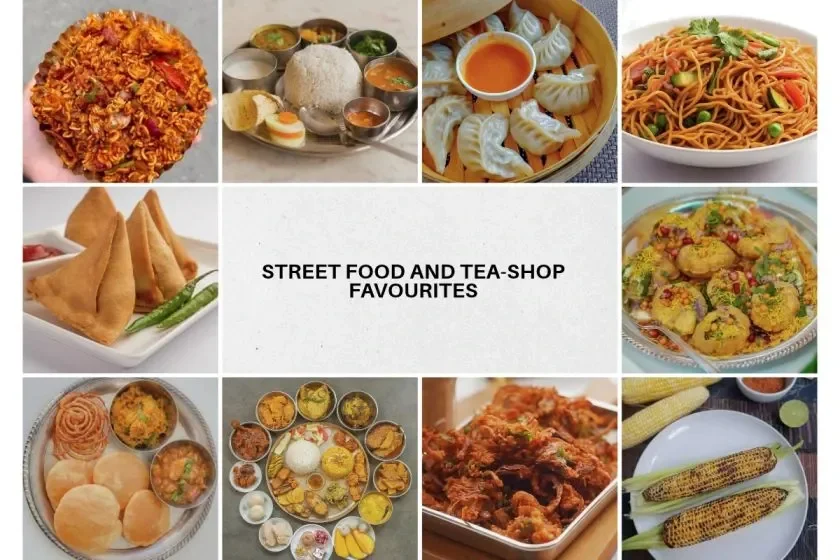
Momo: dumplings filled with buffalo, chicken, pork or vegetables, served steamed, fried (kothey) or in a spicy soup (jhol momo), with a tomato-sesame dipping sauce.
Chatpate: puffed rice mixed on the spot with onion, chili, lemon, coriander and spices.
Pani puri: crisp hollow puris filled with spiced potato and tangy water. Very popular in Kathmandu.
Samosa: fried pastry stuffed with spiced potato, often served with a chickpea curry or chutney.
Pakoda: vegetable or onion fritters, best with tea on a cold afternoon.
Puri tarkari: deep-fried puffed bread with a potato curry, common for a heavier snack or breakfast.
Chowmein: stir-fried noodles with vegetables or meat, a cheap student lunch.
Roasted corn (makai): grilled on charcoal by roadside sellers, rubbed with lemon and chilli.
Boiled or fried eggs: sold at tea shops and stalls everywhere.
Rice-based snacks
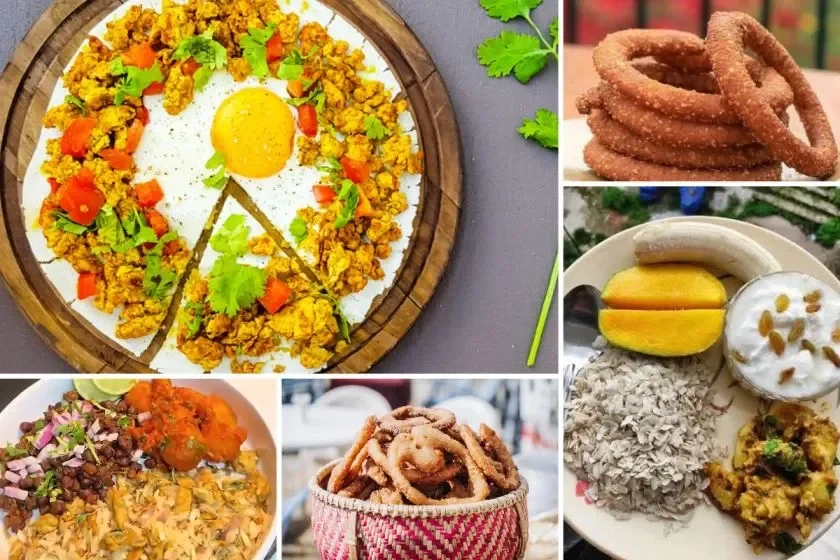
Sel roti: a ring-shaped, slightly sweet rice bread, deep-fried. It is the signature food of Tihar but eaten year-round.
Chiura and aloo: beaten rice with spicy potato curry, quick and filling.
Dahi chiura: beaten rice with yogurt, sometimes sweetened.
Chatamari: a thin rice-flour crepe from the Newari community, topped with minced meat, egg or vegetables. It is often called Nepali pizza.
Newari snacks
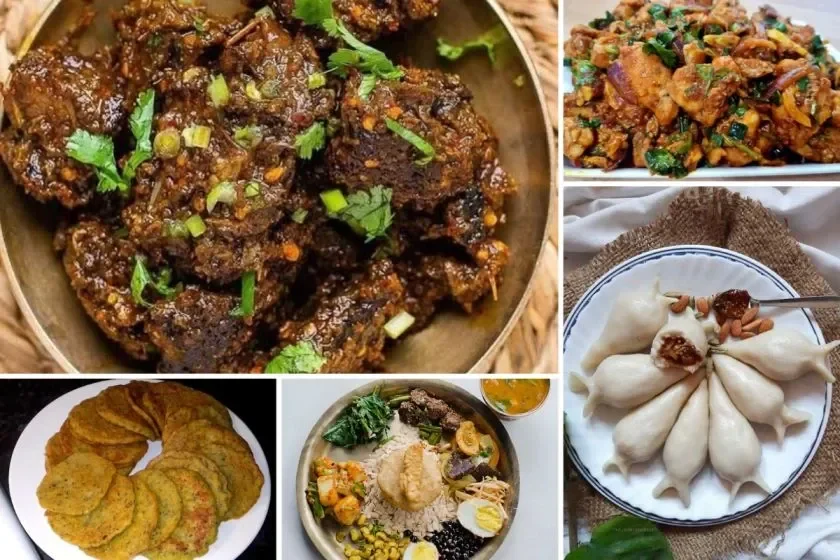
Bara (wo): a lentil pancake, plain or topped with egg or minced meat.
Choila: spiced grilled buffalo meat with ginger, garlic and chilli. Very popular at Newari restaurants.
Bhuteko and sadeko: fried or spiced meat and vegetable dishes, often served as bar snacks.
Samay baji: a platter of beaten rice with choila, black soybeans, egg, ginger and pickles.
Yomari: a steamed rice-flour dumpling with sweet molasses filling, eaten during the Yomari Punhi festival.
Tibetan and Himalayan snacks
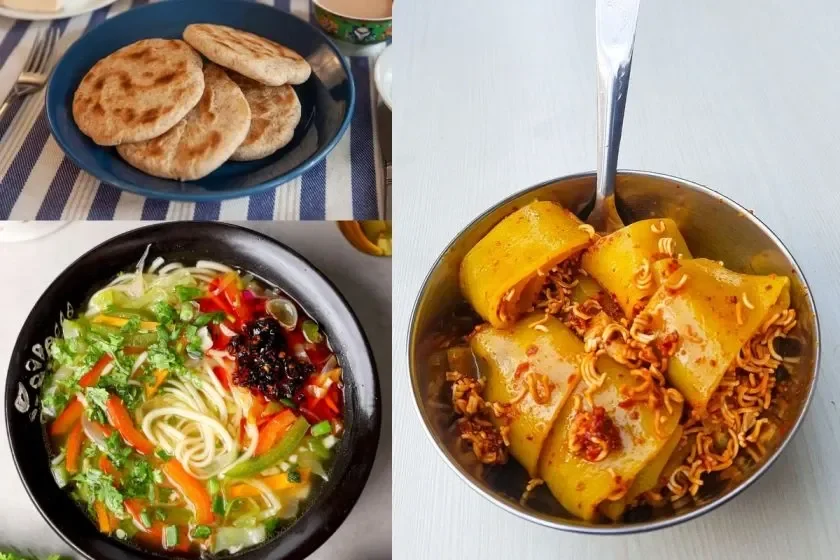
Laping: a cold, spicy mung bean jelly noodle dish from Tibetan kitchens, popular around Kathmandu.
Thukpa: noodle soup with vegetables or meat, a warming snack in cold weather.
Tibetan bread: fried flatbread, served plain, with honey or with egg.
Grilled and meat snacks
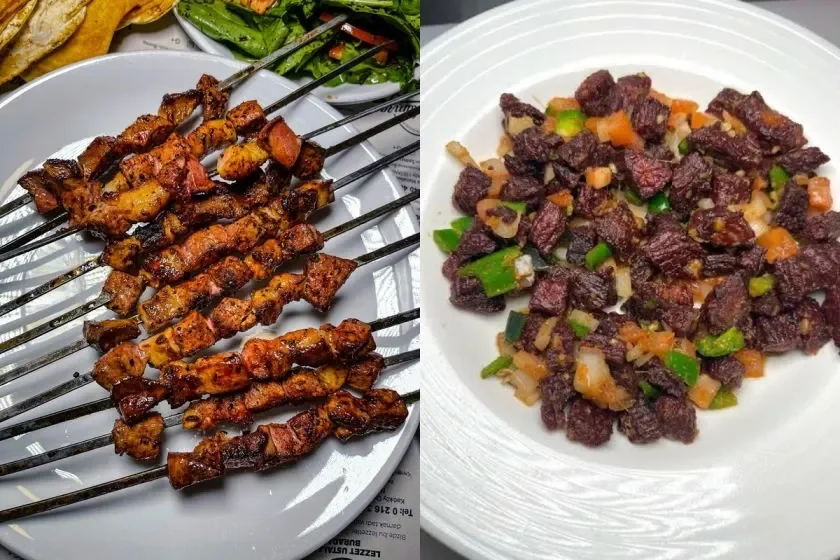
Sekuwa: marinated meat grilled over wood fire, especially loved in the eastern hills.
Sukuti: dried, spiced meat, usually buffalo or goat, often sold at bars with a chopped onion and chilli mix.
Sweet snacks
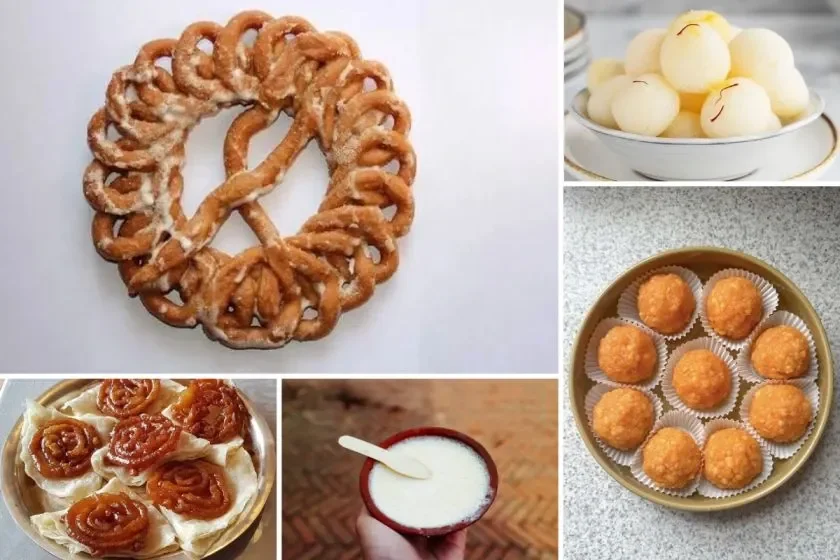
Jeri swari: a spiral of fried sweet jalebi paired with a fried flatbread, a classic Terai combination.
Lakhamari: a sweet, hard Newari bread, often given at weddings and festivals.
Rasbari and laddu: milk-based sweets common in the plains and at festivals.
Juju dhau: Bhaktapur’s creamy “king curd” set in clay pots. It works as a dessert or snack.
One Country, Many Kitchens
Nepali food changes with altitude, climate and community. The Kathmandu Valley, the Himalayan highlands and the southern plains each have their own staple foods and their own way of cooking.
Where rice does not grow well, people eat dhido: a thick porridge of millet, maize or buckwheat flour, eaten by hand with dal, meat(often mutton) and greens. It was once seen as poor man’s food and is now sold as a health food in city restaurants.
Hill kitchens also lean on fermentation. Gundruk (fermented greens) and sinki (fermented radish) are dried for winter and turned into sour soups and pickles.
What to Eat on a Trek (and What to Skip)
While trekking, ordering dal bhat can be a best option, as it is cooked fresh in volume, refills are common and it gives a good amount of carbohydrates which makes you refuel energy for next climb.
The longer a dish has to travel up the trail, the less reason there is to order it.
Why we say skip the meat
In Buddhist areas like the Khumbu, animals are generally not slaughtered locally. Meat on the menu is carried up on backs and mules over several days, without refrigeration. We recommend vegetarian meals on the trail: fresh, local, and safer for your stomach.
Water and money
Carry a reusable bottle and a purifier such as a Sawyer squeeze filter, UV purifier or chlorine dioxide tablets. Buying plastic bottles on the trail adds to the waste problem on the mountain.
Food costs rise with altitude because everything is carried up. A trail dal bhat can run roughly NPR 500 to 1,500 depending on region and elevation, so check current lodge rates before you go. Carry enough Nepali rupee cash, because there are no ATMs facilities in higher altitude destinations.
Alcohol at altitude
Tongba and chhyang are enjoyable at festivals and family gatherings. On a trek, wait until you are properly acclimatized, and skip alcohol while you are still climbing above 3,000 meters.
Eating Etiquette in Nepal
Eat with your right hand and do not share food from your own plate. Nepalis treat food touched by someone’s mouth as jutho (ritually impure). That rule shapes most table behaviour.
Right hand only. The left hand is considered unclean for eating. Spoons are easy to get if you ask.
Do not share bites or sips. Pour water into your mouth without touching the bottle to your lips.
Say “pugyo” (enough). Hosts keep adding food until you stop them. Put a hand over your plate and say it with a smile.
Beef is sensitive. The cow is sacred for many Hindus, and cow slaughter is illegal in Nepal.
Festival menus change. Dashain brings goat, Tihar brings sel roti and sweets, and Newari feasts bring long platters.
Frequently Asked Questions
1. What is the national food of Nepal?
Dal bhat is the everyday staple for most Nepalis. Momo is the most famous snack but is not the main meal.
2. Is Nepali food spicy?
It is flavourful rather than fiery. Chilli shows up in pickles and sauces. Ask for less with “piro kam” or “less spicy.”
3. Is Nepali food good for vegetarians?
Yes. Dal bhat, vegetable curry, greens, pickles and many snacks are meat-free.
4. What do Nepalis eat for breakfast?
Most eat tea with biscuits or beaten rice early, then a full dal bhat around mid-morning. Bread and eggs are growing in cities.
5. Can I get free refills of dal bhat on a trek?
Rice and dal refills are common in lodges, though policies vary. Ask before you order if you are hungry.
6. Is it safe to eat street food in Nepal?
Choose busy stalls with freshly cooked hot food. Skip raw salads and anything that has been sitting out.
7. Is dal bhat enough fuel for trekking?
Yes. It is carbohydrate-heavy and cooked fresh. Most trekkers find it easy to eat twice a day on a multi-day trek.
A little inspiration for your next trip
Get travel ideas and local experiences from My Easy Guide in your inbox.
Spam free. Unsubscribe anytime. We respect your privacy.