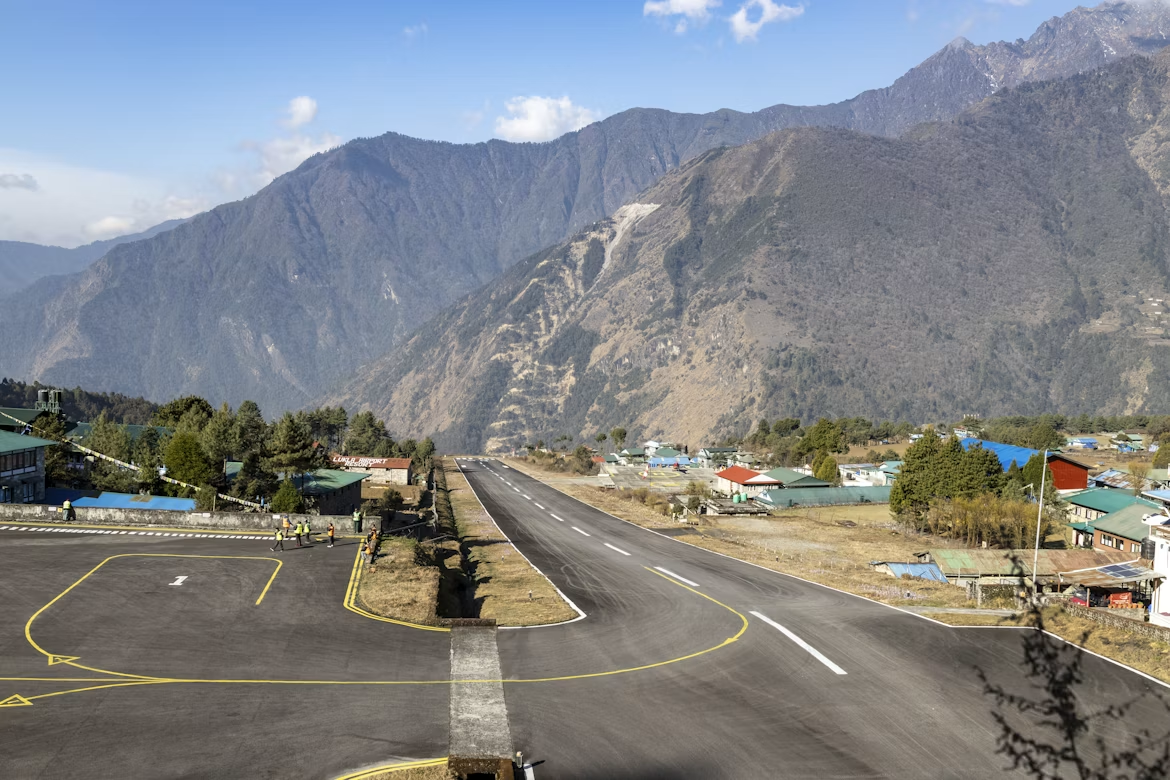
The wheels touch the asphalt, the pilot slams the brakes, and the runway tilts upward into a stone wall less than 500 meters ahead. Welcome to Tenzing-Hillary Airport in Lukla, the gateway to Everest and arguably the most demanding commercial airstrip on the planet. This airport is the gateway to some of Nepal's most famous trekking routes, but its procedures and schedules are constantly evolving. Here's what you need to know before flying in 2026.
Why Lukla Earned Its Fearsome Reputation
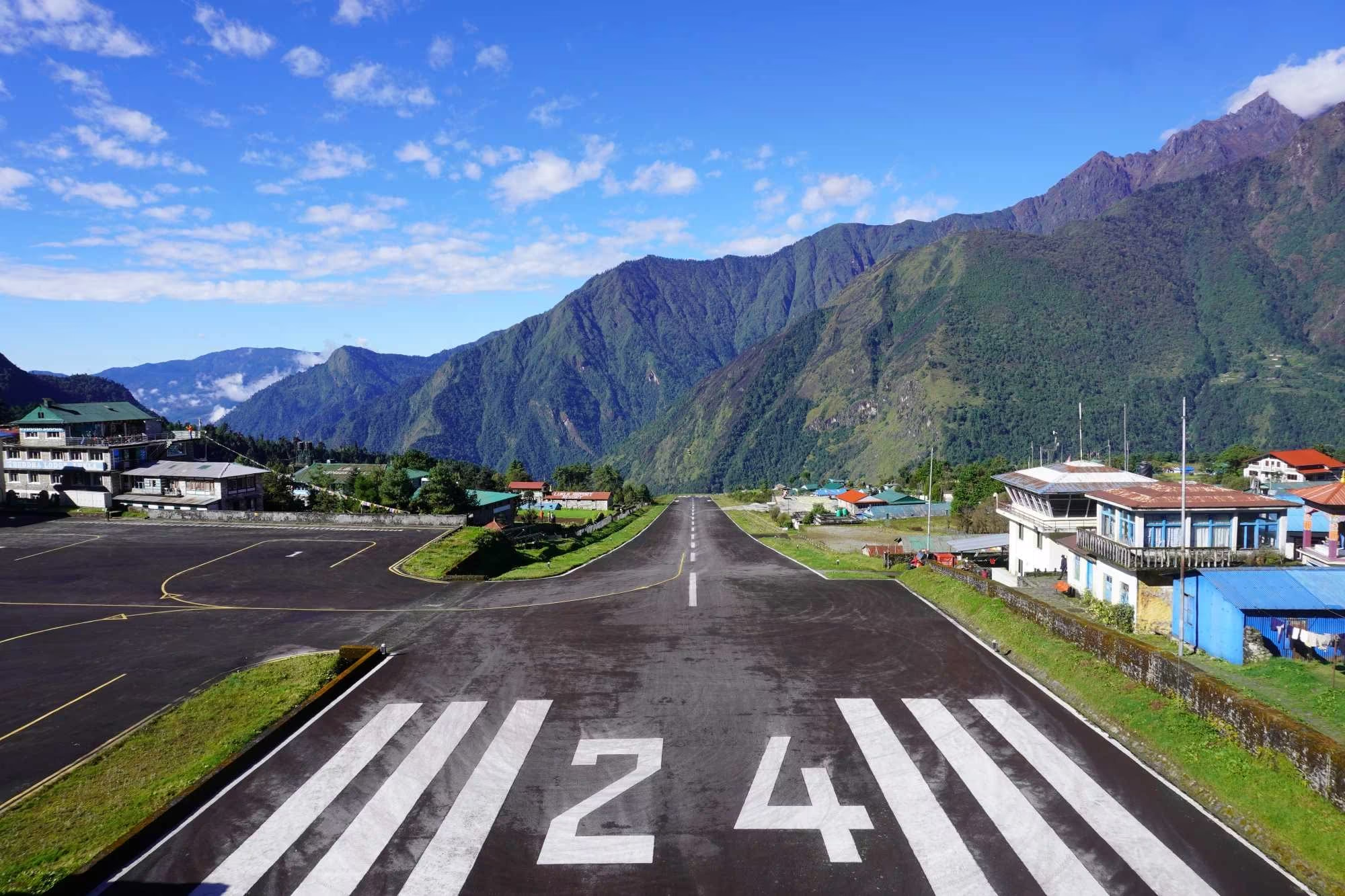
Ground-level view looking up the short tarmac runway of Lukla Airport towards the terminal building.
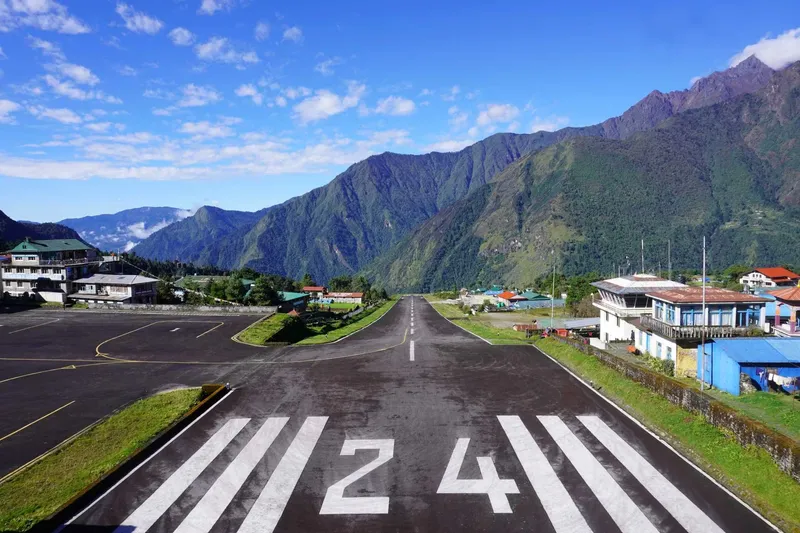
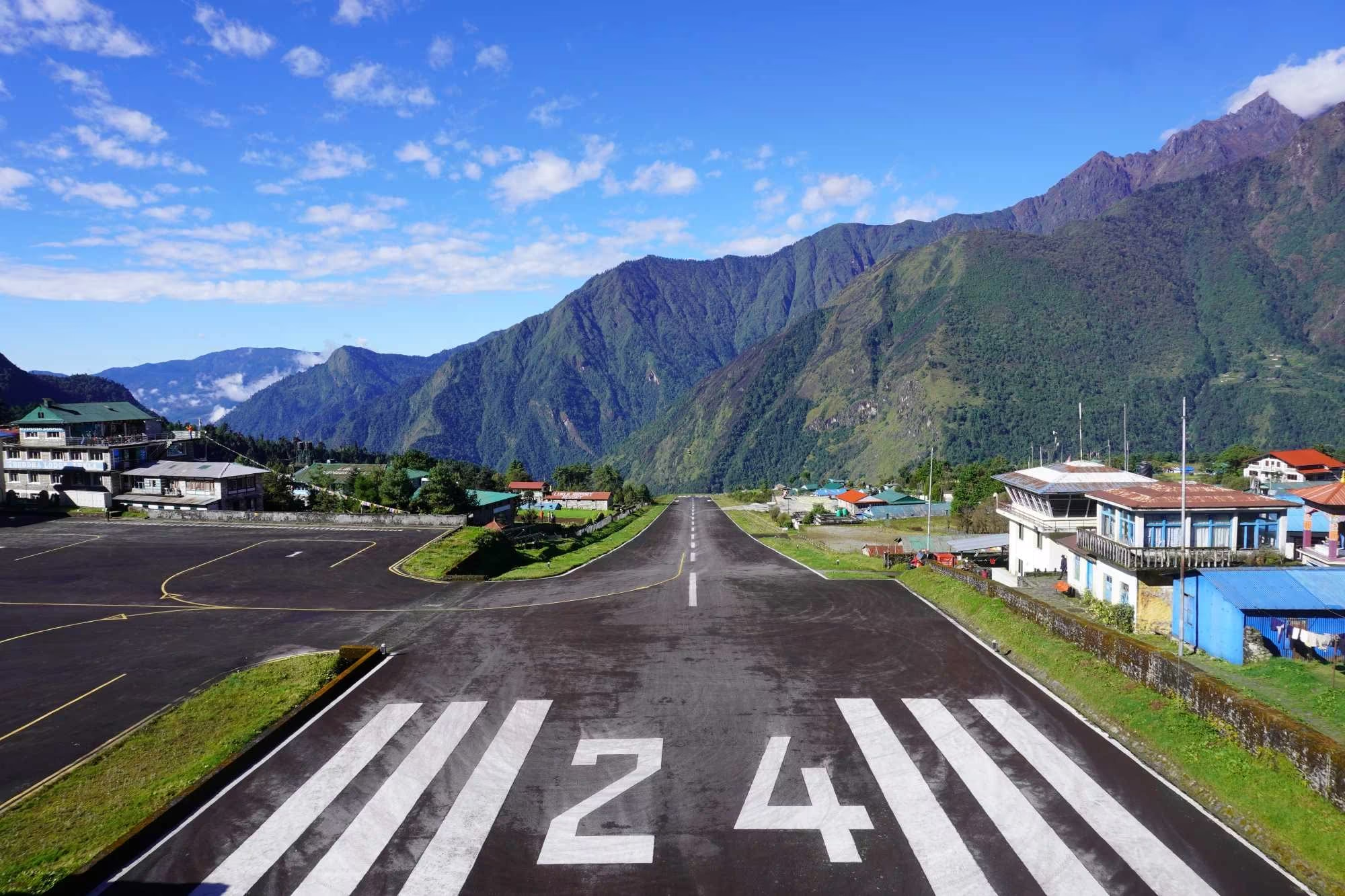
Lukla Airport is dangerous because its 527-meter runway is angled at a 11.7% gradient, sits at 2,860 meters elevation, ends at a mountain wall, and begins at a 600-meter cliff drop. There is no radar, no instrument landing system, and pilots must approach visually through a narrow Himalayan valley with rapidly shifting weather.
Built in 1964 under the supervision of Sir Edmund Hillary to support Sherpa communities, the airstrip was originally a dirt patch. It was paved in 2001 and officially renamed Tenzing-Hillary Airport in 2008 to honor the first summiteers of Everest.
What makes it uniquely unforgiving is the lack of a go-around option. Once a pilot commits to the final approach, there is no second chance. They land uphill into the mountain on arrival and take off downhill off the cliff edge on departure. Crosswinds, fog rolling in from the Dudh Koshi valley, and sudden cloud banks can shut the airport for hours or days.
The 2026 Reality: You're Probably Flying from Ramechhap, Not Kathmandu
During peak trekking seasons (March-May and September-November), virtually all fixed-wing Lukla flights operate from Manthali Airport in Ramechhap, not Kathmandu. Trekkers must drive 4-5 hours from Kathmandu, departing around 1:00 AM, to catch a dawn flight. This is the single biggest logistical surprise for first-time visitors.
The reason is air traffic congestion at Tribhuvan International Airport in Kathmandu, combined with morning weather windows that close by 10 AM in the mountains. Off-season (December, January, June-August), flights sometimes resume directly from Kathmandu, but never count on it.
Typical Ramechhap Morning Logistics
12:30 AM - Hotel pickup in Thamel by jeep or shared vehicle
1:00 AM - 5:30 AM - Drive along winding mountain roads to Manthali
6:00 AM - 9:00 AM - Flight boarding window (subject to weather)
20-minute flight over hills and ridges into Lukla
Flight Costs, Carriers, and Booking Reality
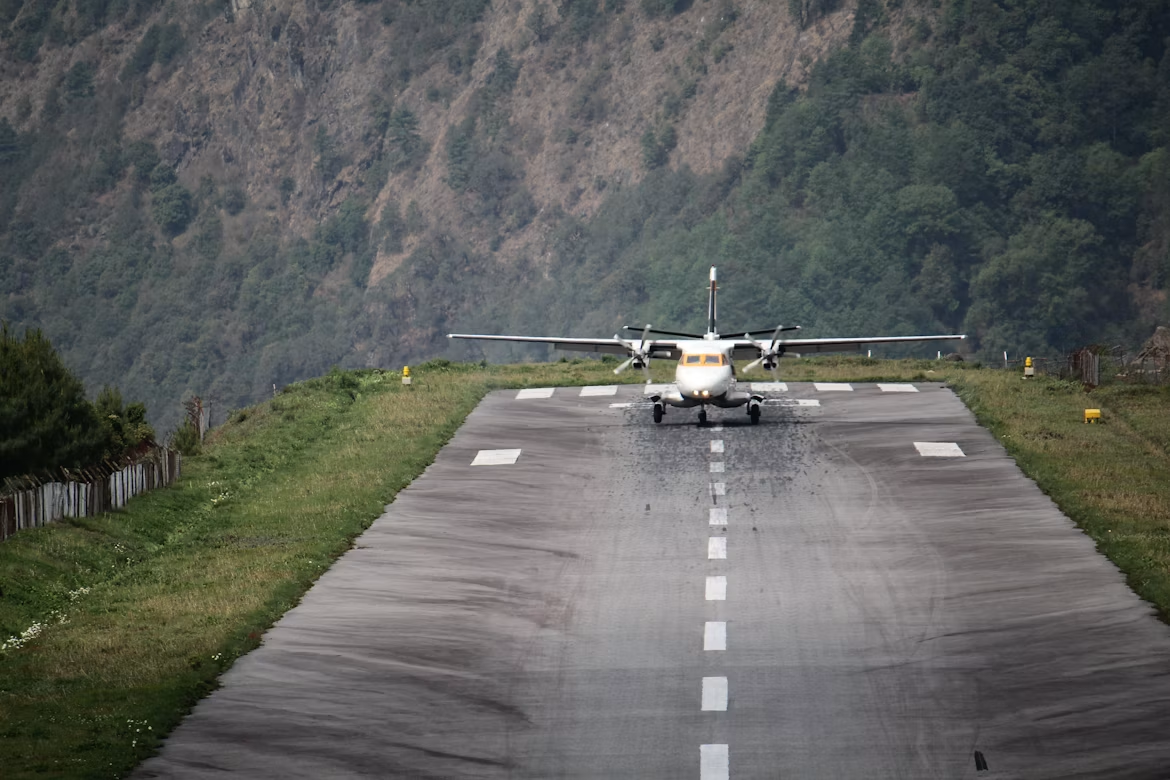
Source: Siddharth Jadhav , A small twin-otter passenger plane landing on the steep mountain runway at Lukla Airport, Nepal.
Three carriers dominate the Lukla route in 2026: Tara Air, Summit Air, and Sita Air. They operate Twin Otter and Dornier 228 aircraft, each carrying around 15-19 passengers. Foreign passenger fares typically fall in the USD 180-220 range one-way, though prices shift with fuel and season.
A little inspiration for your next trip
Get travel ideas and local experiences from My Easy Guide in your inbox.
Spam free. Unsubscribe anytime. We respect your privacy.
Route Segment
Approximate Cost (USD)
Flight Duration
Kathmandu - Lukla (off-season)
USD 200-220
35 minutes
Ramechhap - Lukla (peak season)
USD 180-200
20 minutes
Kathmandu - Ramechhap ground transfer
USD 25-40 per person (shared jeep)
4-5 hours
Shared helicopter (Kathmandu-Lukla)
USD 500 per person
50 minutes
We always recommend booking through a registered trekking agency rather than directly with the airlines. Agencies handle rebooking during cancellations, coordinate Ramechhap transfers, and have priority allocations during peak congestion. Verify live pricing closer to your departure date.
Weather Windows and Seasonal Flight Reliability
The general rule for Lukla flights is that mornings are flyable and afternoons are not. By 10:00 AM, valley winds and cloud buildup typically close the airport for the day. Plan your itinerary around this reality.
Season-by-Season Flight Reliability
Season
Months
Reliability
Notes
Autumn
Sept-Nov
High
Best visibility, Ramechhap diversion active
Winter
Dec-Feb
Moderate
Cold but clear; possible snow delays
Spring
Mar-May
High
Peak season, Ramechhap diversion active
Monsoon
Jun-Aug
Low
Frequent cancellations, heavy clouds
We strongly advise building 1-2 buffer days on both ends of your trek. If you have a tight international flight home, plan to fly back to Kathmandu at least 2 days before your departure date. Trekkers who stack their schedules tightly often end up paying USD 500+ for emergency helicopter exits.
Your Nepal tourist visa is a separate cost paid on arrival at Tribhuvan International: USD 30 for 15 days, USD 50 for 30 days, or USD 125 for 90 days. Bring USD cash for smoother visa processing.
What to Expect Inside Lukla Airport
Source: Thomas de Fretes, Wide angle shot of the short, angled runway at Tenzing-Hillary Airport in Lukla, gateway to Everest Base Camp.
The airport terminal is small, essentially a single hall with a check-in desk, a security scanner, and a tea stall. There is no jet bridge, no luggage carousel, and minimal seating. Bags are hand-loaded onto the aircraft, and the weight allowance is strict: 10 kg for checked baggage plus 5 kg for carry-on. Excess weight costs around NPR 150-200 per kg.
Pack your trekking essentials into a duffel bag for the porters and keep valuables, electronics, and documents in your daypack. If your bags exceed the limit, agencies can store extra gear in Kathmandu hotels at no cost.
Altitude Reality Check on Day One
Lukla sits at 2,860 meters, which is already at the altitude threshold where acclimatization rules kick in. Above 3,000 meters, sleep elevation should not rise more than 300-500 meters per day, with mandatory rest days at Namche Bazaar (3,440 m) and again before Dingboche (4,410 m) or Lobuche (4,940 m).
Many trekkers feel mild headaches or shortness of breath within hours of landing. Hydrate aggressively, walk slowly, and skip alcohol entirely for the first three days. Trekkers pushing too fast toward Everest Base Camp (5,364 m) or Kala Patthar (5,545 m) are the ones who end up in helicopter evacuations.
Mandatory Insurance Coverage
Standard travel insurance is insufficient for the Everest region. You need a policy explicitly covering high-altitude helicopter evacuation up to 6,000 meters and treatment for AMS, HAPE, and HACE. Without this documentation, no reputable agency will issue you trekking permits.
Cash, Connectivity, and Trail Economy
ATMs exist in Lukla and Namche Bazaar but are unreliable and often offline. Carry sufficient Nepalese Rupees (NPR) cash for your entire trek, we recommend budgeting NPR 2,500-3,500 per day for food, lodging, and incidentals beyond Namche.
Common upcharges that catch trekkers off guard:
Phone or power bank charging: NPR 200-500 per device
Hot shower (gas-heated): NPR 400-700
Everest Link Wi-Fi card: NPR 600-2,000 depending on data
Bottled drinks above Namche: NPR 200-400
For mobile connectivity, Nepal Telecom (NTC) is essential in the Everest region. Ncell coverage drops off quickly above Namche. Buy a NTC SIM in Kathmandu before flying.
Sustainable Trekking from Lukla
Skip plastic water bottles entirely. Carry a reusable bottle paired with a UV purifier (SteriPen), Sawyer squeeze filter, or chlorine dioxide tablets. Lodges sell boiled water for NPR 100-200 per liter, which is cheaper and greener than bottled water.
On the food side, prioritize vegetarian meals. The Khumbu is a Buddhist region where slaughtering animals is prohibited by local law, meaning all meat is carried up by foot or mule over multiple days without refrigeration. Stick with Dal Bhat, lentil soup, rice, and vegetable curry, which comes with free refills and delivers clean energy for trekking.
Cultural Etiquette on the Trail
From Lukla onward, you'll pass mani walls, chortens, and prayer wheels. Always walk to the LEFT of these structures, keeping them on your right. Walk clockwise around stupas. Remove shoes and hats before entering monasteries, and never photograph inside prayer halls without explicit permission from a resident monk.
Greet locals with a soft Namaste or Tashi Delek. The Sherpa community is famously warm but values quiet respect over loud enthusiasm.
Tipping Your Crew After the Trek
Tipping is a cultural expectation in Nepal, not a bonus. Guides and porters earn modest base wages, and tips form a vital part of their annual income. Standard marketplace guidance is to set aside 15%-20% of your total trek cost for crew tips, distributed proportionally between your guide and porter(s) on the final evening of the trek.
Safer Alternatives to Flying into Lukla
If the flight risk feels unacceptable, two alternatives exist:
Drive to Salleri or Phaplu and trek 2-3 additional days into Lukla. This adds time but eliminates the flight gamble.
Charter a helicopter from Kathmandu. Shared seats run around USD 500 per person; private charters cost USD 3,000-3,500 for up to 5 passengers.
Ready to Trek Nepal?
Flying into Lukla is one of the most thrilling experiences in mountain travel, but the logistics demand local expertise. Our marketplace connects you with vetted, licensed Sherpa guides and trekking agencies who handle Ramechhap transfers, permit paperwork, weather rebooking, and emergency response. Browse curated Everest Base Camp itineraries, Three Passes routes, and Gokyo Lakes treks tailored to your fitness level and timeline. Connect with our verified local operators today and trek the Khumbu the smart way.
Frequently Asked Questions
Can I fly into Lukla as a solo trekker without a guide?
You can fly in solo, but as of 2026, the Nepal Tourism Board and local authorities strictly enforce that all foreign trekkers in National Parks must be accompanied by a licensed guide registered with a TAAN agency. Independent trekking (true solo) is officially banned.
What's the baggage weight limit on Lukla flights?
The strict limit is 10 kg checked plus 5 kg carry-on. Excess baggage costs roughly NPR 150-200 per kg. Leave non-essential items in your Kathmandu hotel storage.
How early should I arrive at Manthali Airport in Ramechhap?
Arrive by 5:30 AM for boarding around 6:00 AM. The drive from Kathmandu starts at 1:00 AM. Pack snacks and water for the journey.
What happens if Lukla airport closes for multiple days?
You either wait it out at a teahouse, hike back down toward Phaplu for ground transport, or charter a helicopter exit. Buffer days save trips here.
Is travel insurance with helicopter evacuation really mandatory?
Yes. Reputable agencies will not issue permits without proof of coverage up to 6,000 meters. World Nomads, Global Rescue, and IMG Signature are commonly accepted providers.
Can I use credit cards in Lukla or beyond?
Some lodges in Lukla and Namche accept cards with a 4-5% surcharge, but reliability is poor. Cash is king above Namche Bazaar.