Kathmandu hits every first-time visitor in the same way, a swirl of incense, motorbike horns, prayer flags snapping over narrow lanes, and the sudden hush inside a centuries-old Newari courtyard. But the city you experience depends entirely on when you arrive. A misty October morning in Patan feels nothing like a sweltering July afternoon in Thamel.
We've coordinated thousands of arrivals at Tribhuvan International Airport (TIA) across every season, and the timing question comes up before any other. So here's our honest, month-by-month breakdown to help you choose the window that matches your travel style, budget, and tolerance for monsoon puddles.
Kathmandu's Climate at a Glance
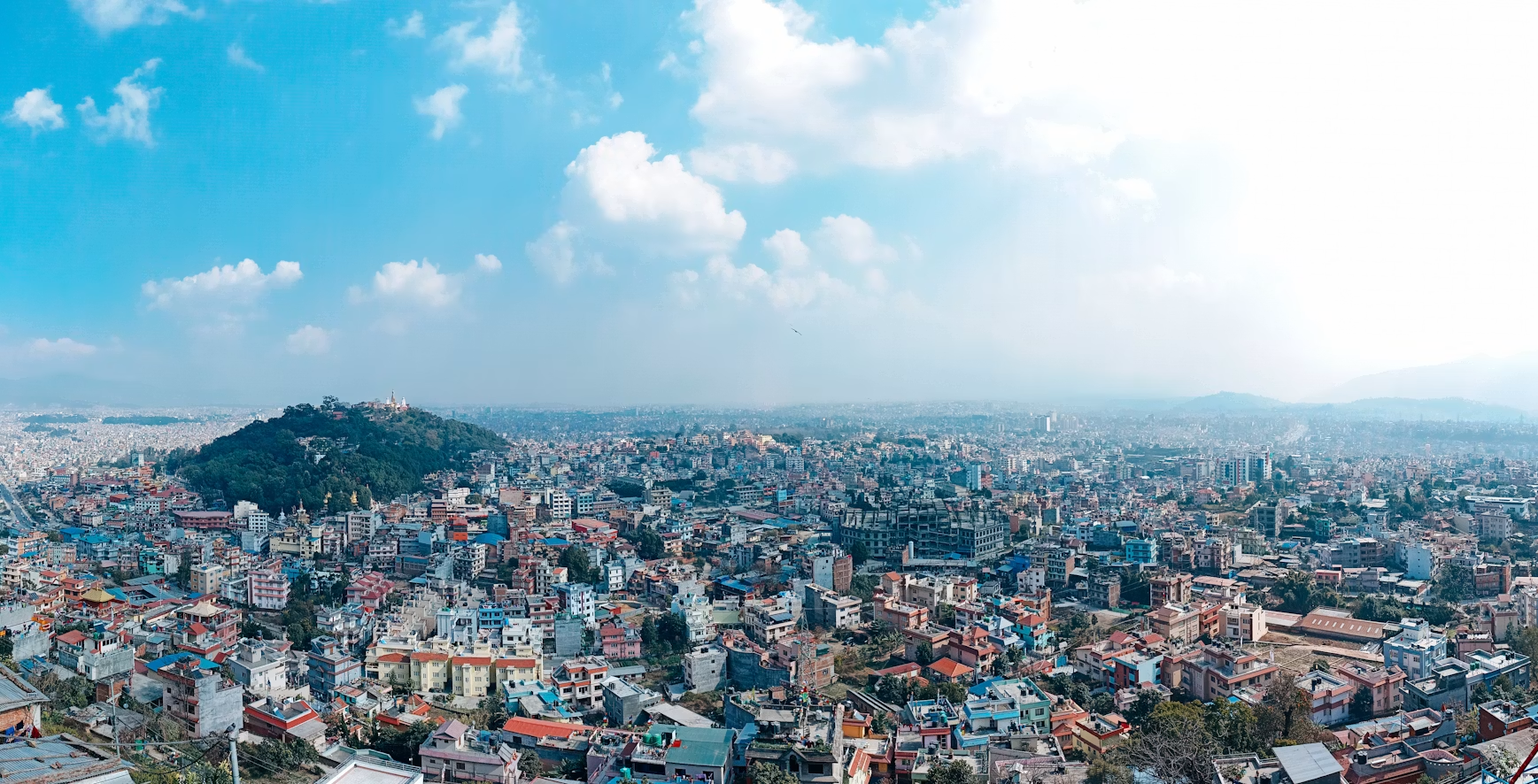
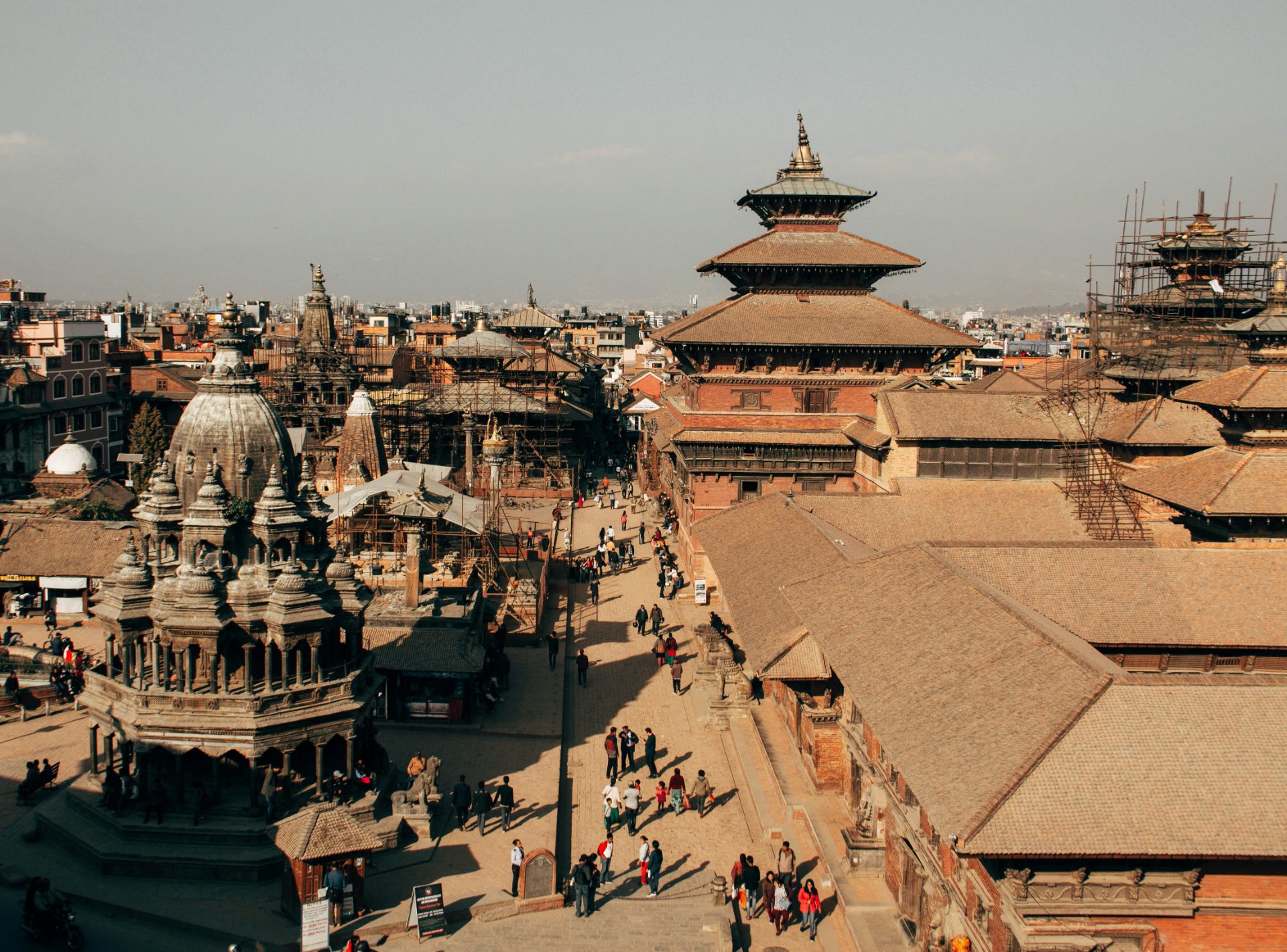
Source: Pritush Munankarmi, A panoramic view of the city of Kathmandu, Nepal
Kathmandu sits at 1,400 meters elevation in a bowl-shaped valley, giving it a a mild subtropical highland climate with four distinct seasons. The best overall months are October, November, March, and April, offering the clearest skies, comfortable temperatures, active festivals, and the best balance between mountain visibility and stable weather.
Quick Seasonal Snapshot
A little inspiration for your next trip
Get travel ideas and local experiences from My Easy Guide in your inbox.
Spam free. Unsubscribe anytime. We respect your privacy.
Season
Months
Avg Temp
Verdict
Autumn (Peak)
Oct – Nov
10–25°C
Best overall
Winter
Dec – Feb
2–20°C
Clear but cold
Spring (Peak)
Mar – May
12–28°C
Excellent
Pre-Monsoon
Late May
18–30°C
Hazy, hot
Monsoon
Jun – Aug
20–29°C
Wet, lush, cheap
Post-Monsoon
Sep
18–27°C
Transition month
January: Crisp, Quiet, and Underrated
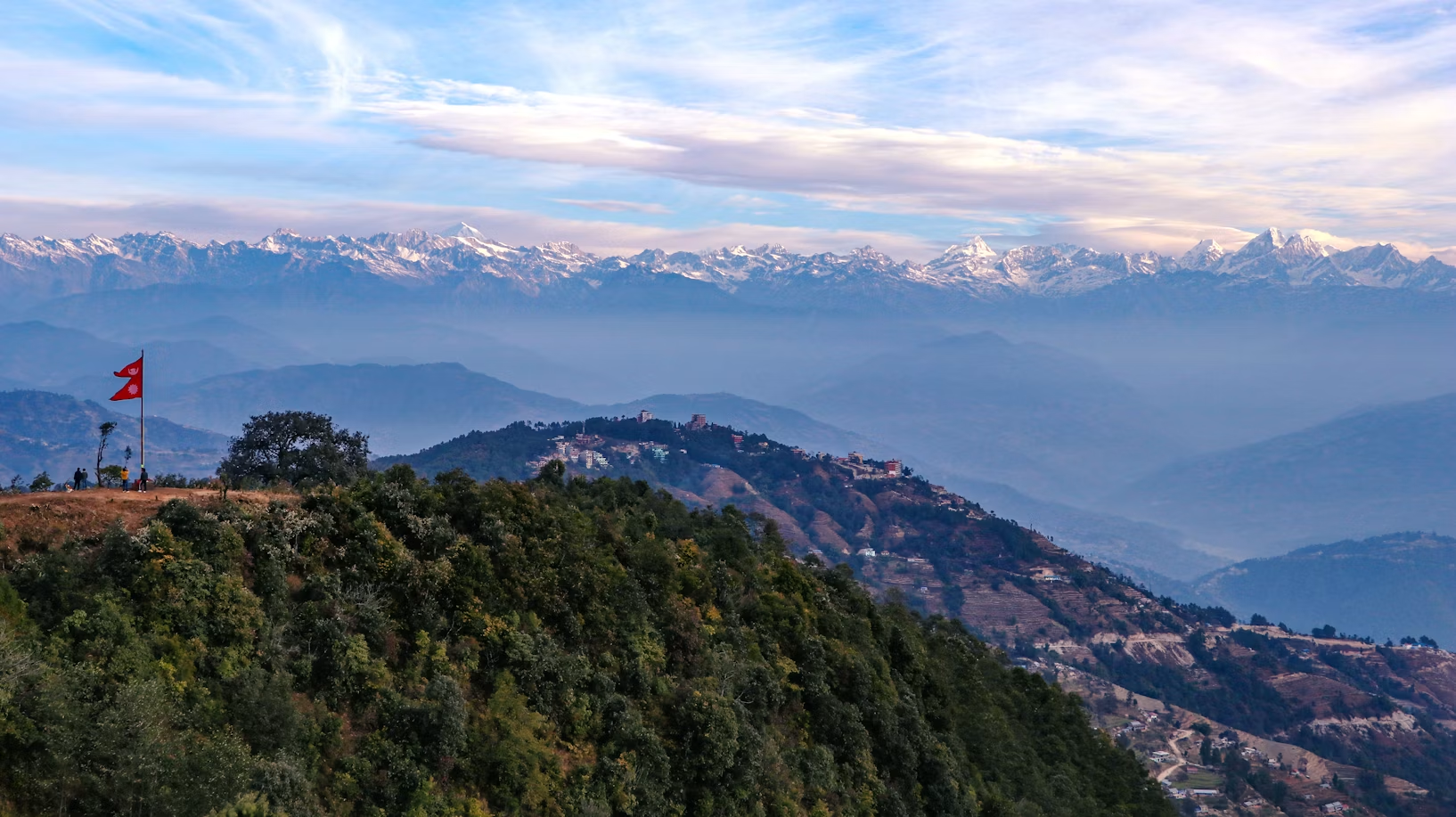
Source: Ghana Shyam Khadka, Himalayas view from Nagarkot, Kathmandu
January is Kathmandu's coldest month, with morning lows around 2–5°C and afternoon highs of 17–20°C. Skies stay remarkably clear, tourist sites are uncrowded, and hotel rates drop by 20–30% compared to October peaks.
The city wakes up slowly in January. Fog blankets the valley until about 10 AM, then burns off into brilliant sunshine. This is when our team recommends day trips to Nagarkot (2,175m)or Chandragiri Hills, winter often brings some of the clearest Himalayan visibility of the year, especially after cold fronts pass through the valley.
Watch out for: Most budget guesthouses don't have heating. Bring a fleece, thermal base layer, and warm socks. Restaurants in Thamel often run small gas heaters but they shut off after 9 PM.
January Highlights
Maghe Sankranti festival (mid-January) at Sankhamul Ghat
Clearest mountain views of the year from valley rim viewpoints
Lowest crowds at Pashupatinath, Boudhanath, and Swayambhunath
February: Shoulder Season Sweet Spot
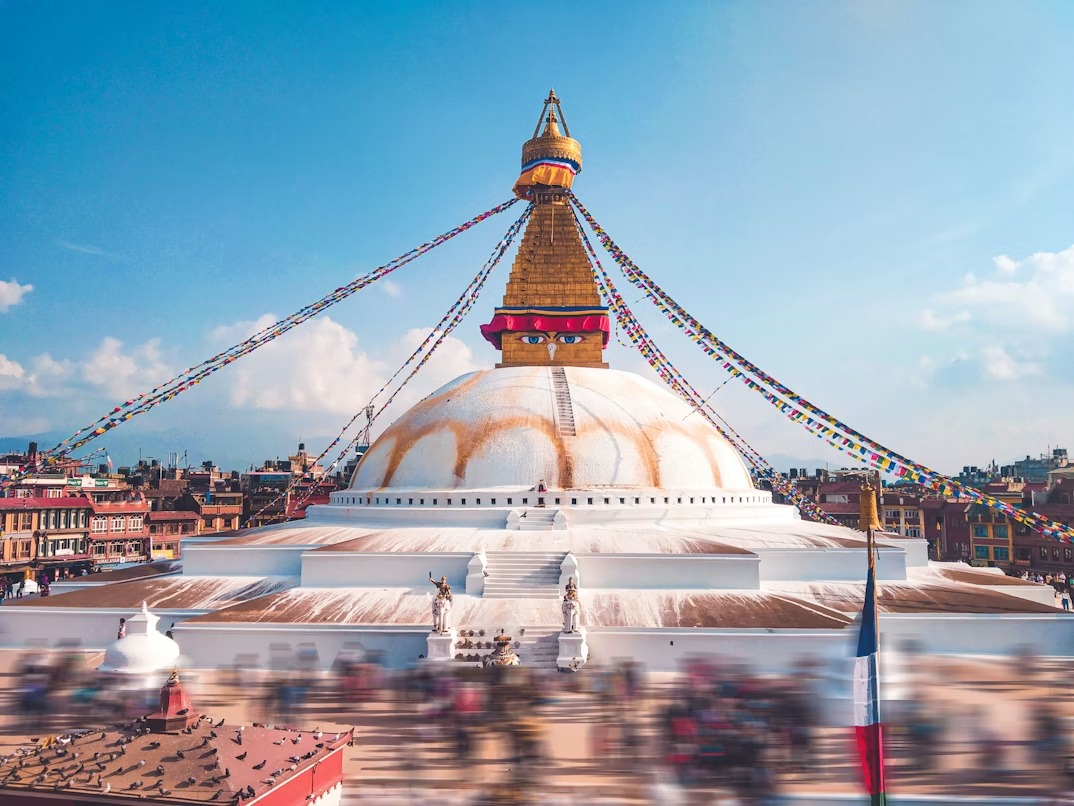
Source: Meghraj Neupane, The massive white dome of Boudhanath Stupa with fluttering colorful prayer flags in Kathmandu.
February warms gradually. Daytime temperatures climb to 20–22°C, nights remain chilly at 5–8°C, and rhododendrons begin blooming in the surrounding hills. This is one of our favorite under-the-radar months for first-timers who want autumn weather without autumn crowds.
Losar (Tibetan New Year) usually falls in February, transforming Boudhanath Stupa into a sea of maroon-robed monks, juniper smoke, and ceremonial dances. If you have any interest in Himalayan Buddhist culture, this is the moment.
March: Spring Arrives in Full Color
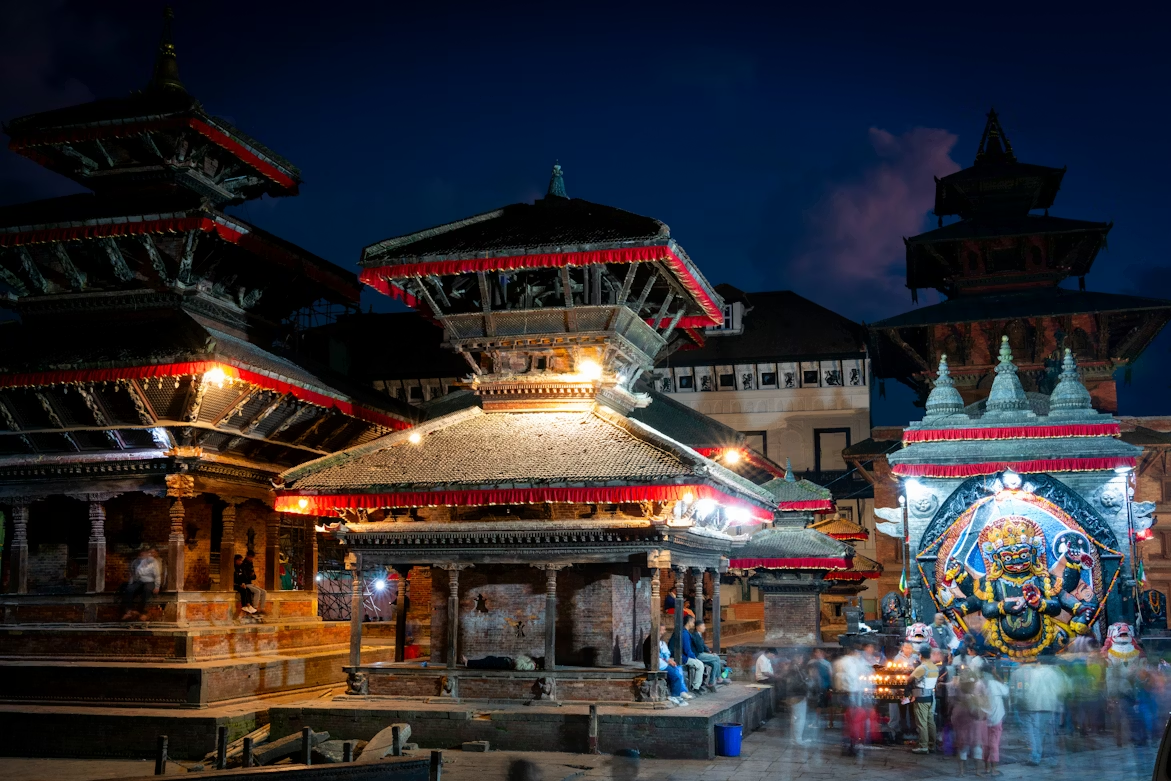
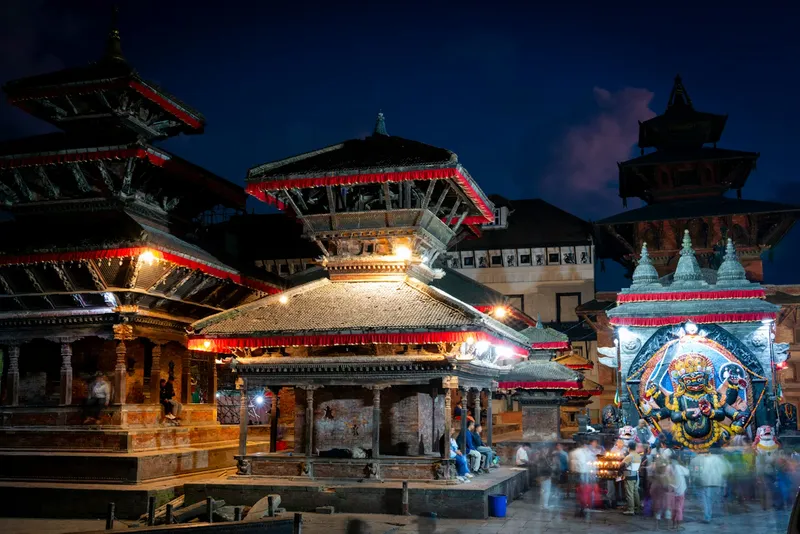
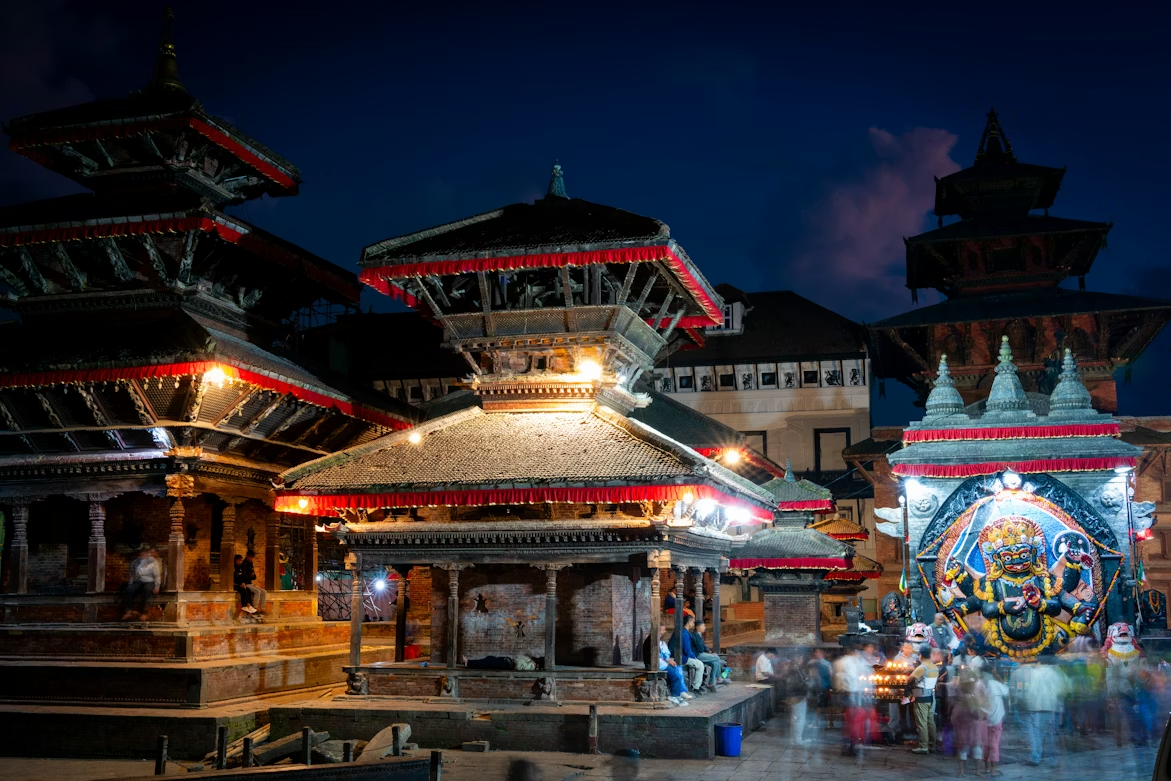
Source: Jochen van Wylick, Illuminated ancient pagoda temples and the large Kal Bhairav statue at Basantapur square in Kathmandu at night.
March is the unofficial start of Kathmandu's second peak season. Temperatures range from 10°C to 25°C, rhododendron forests around Shivapuri National Park explode in red and pink, and Holi (the festival of colors) takes over the streets, usually falling in March.
Holi in Kathmandu is messier and rowdier than in many parts of India. Locals throw colored powder and water balloons from rooftops. Wear clothes you'll throw away, protect your camera, and embrace the chaos. Our coordinators recommend joining an organized rooftop event in Thamel for a safer first experience.
Trekking note: If you're combining Kathmandu with a trek, March kicks off the spring trekking window. During peak trekking seasons, many Lukla flights are rerouted through Manthali Airport in Ramechhap to reduce congestion at Kathmandu airport. This often requires a 4–5 hour overnight drive departing around 1:00 AM.
April is arguably the best spring month for combining Kathmandu sightseeing with Himalayan trekking. City temperatures sit at a pleasant 15–28°C, jacaranda trees bloom purple across Patan, and visibility remains strong until late afternoon haze rolls in.
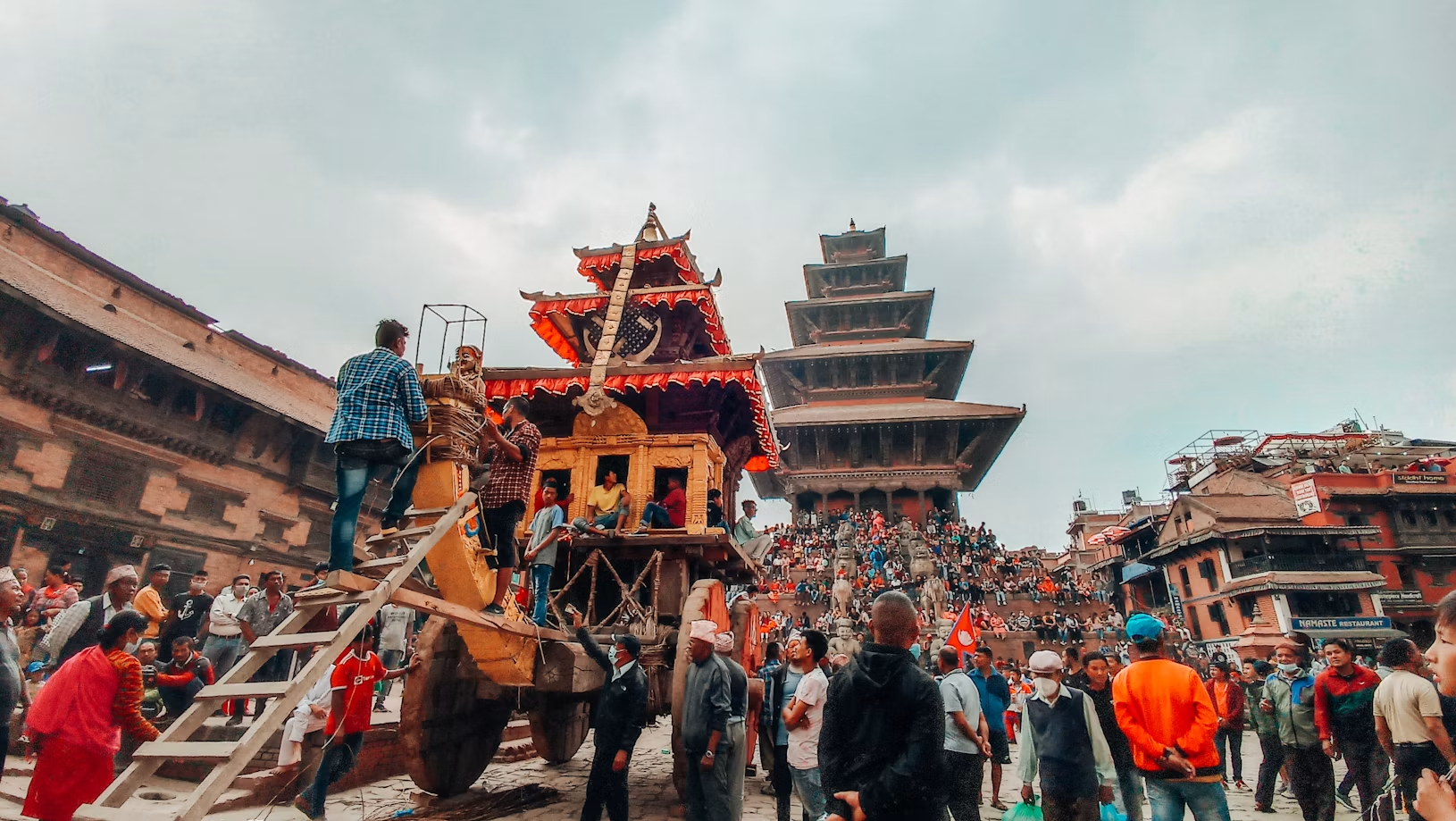
Nepali New Year (Bisket Jatra) falls on April 13 or 14, and the celebration in Bhaktapur is genuinely spectacular, a massive wooden chariot is pulled through the medieval squares while crowds tug on competing ropes. If you only see one festival in your life, make it this one.
May: Hot, Hazy, Pre-Monsoon
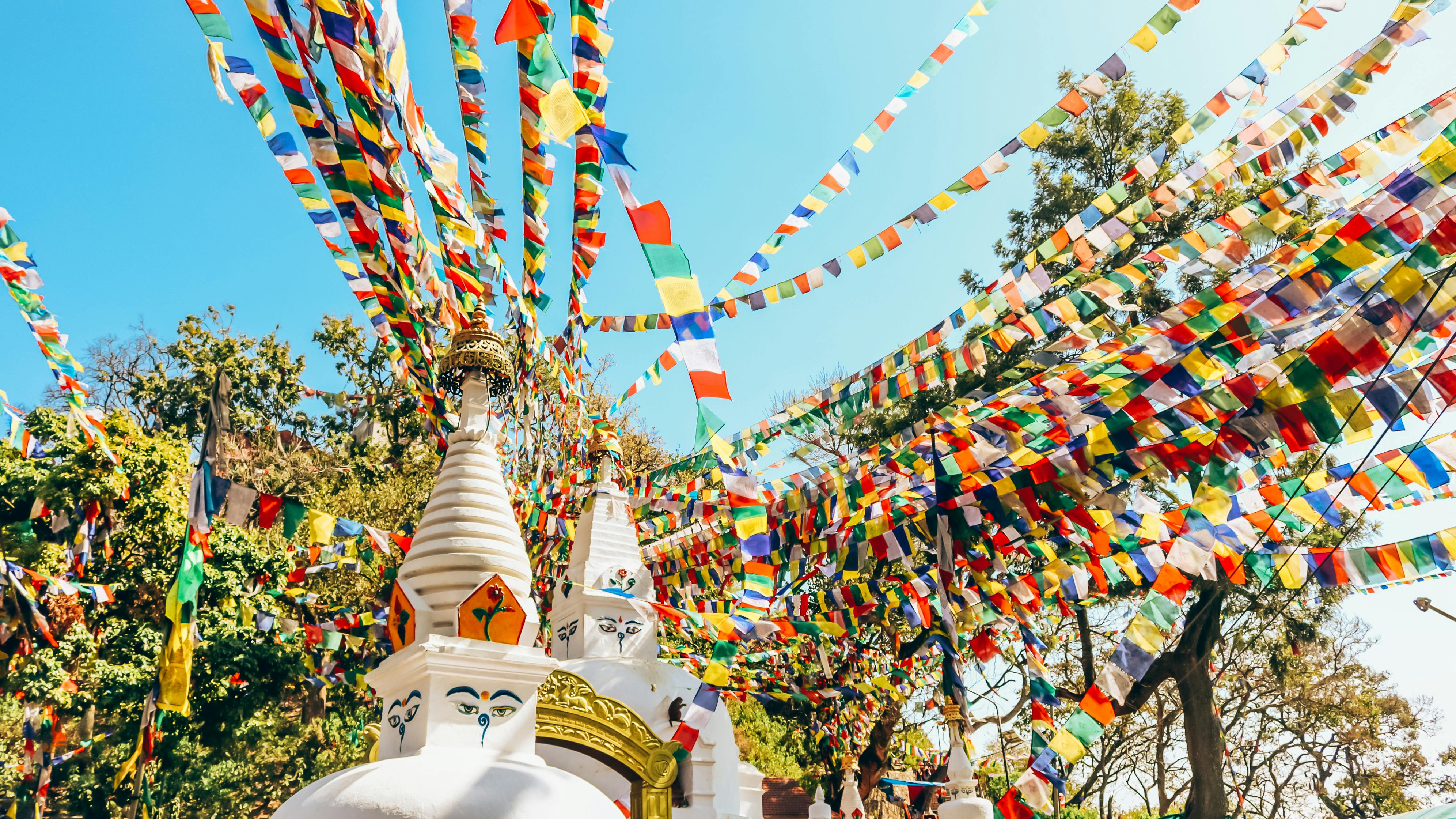
Buddhist stupas adorned with thousands of colorful fluttering prayer flags under a clear blue spring sky in Kathmandu.
May is when the valley starts to feel heavy. Temperatures climb to 28–30°C, pre-monsoon haze blocks mountain views, and afternoon thunderstorms become common. Pollution settles low in the bowl, and air quality dips.
That said, May still offers genuine advantages: fewer tourists than April, lush green hills, and some of the year's best mango lassi. Book hotels with AC or strong fans, and plan sightseeing for early mornings.
June – August: Monsoon Reality Check
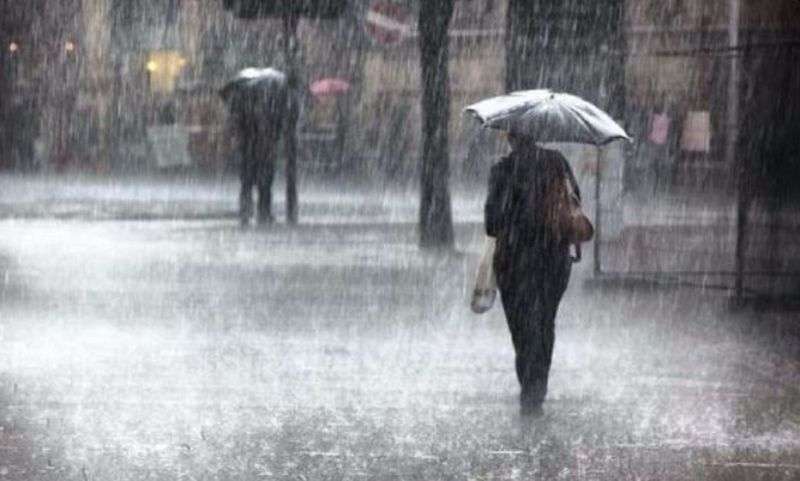
Source: New Business Age, Pedestrians walking with umbrellas on a blurred city street during a heavy monsoon rainfall in Kathmandu.
Most of Kathmandu Valley’s annual rainfall arrives during the June–August monsoon, with daily downpours typically arriving in late afternoon or overnight. Kathmandu doesn't shut down, but logistics get complicated.
What Monsoon Actually Looks Like
Streets flood briefly after heavy rain, especially in older neighborhoods
Domestic flights to Pokhara and Lukla face frequent cancellations
Mountain views vanish for weeks at a time
Leeches become common on forested hikes around the valley during monsoon
Hotel prices drop 40–50% below October rates
The rain shadow exception: Monsoon is actually the premier season to trek Upper Mustangand Upper Dolpo. Both regions sit in the Himalayan rain shadow and stay bone-dry while the rest of Nepal drowns. If you're considering a monsoon trip, this is the inside move.
September: The Transition Month
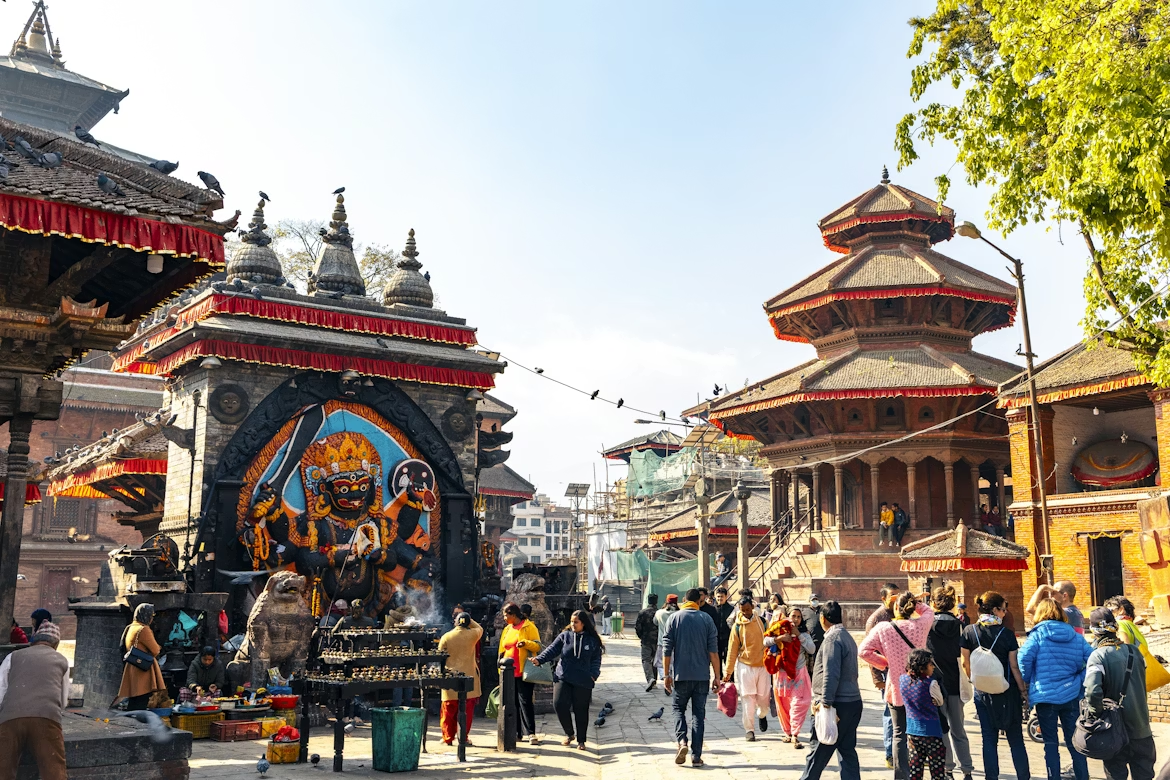
Source: Martjin Vonk, Tourists and local devotees walking past the historic stone Kal Bhairav monument in Kathmandu Durbar Square.
Early September remains wet, but by the third week, the monsoon retreats. Temperatures hover at 20–27°C, the air clears dramatically, and the valley turns vivid green from months of rain. Hotel rates start climbing back up around September 20.
Indra Jatra, an 8-day chariot festival honoring the rain god Indra, lights up Kathmandu Durbar Square in mid-September. The Kumari (living goddess) makes one of her rare public appearances. Few foreign tourists witness this, it's one of the city's most authentic experiences.
October: The Undisputed Best Month
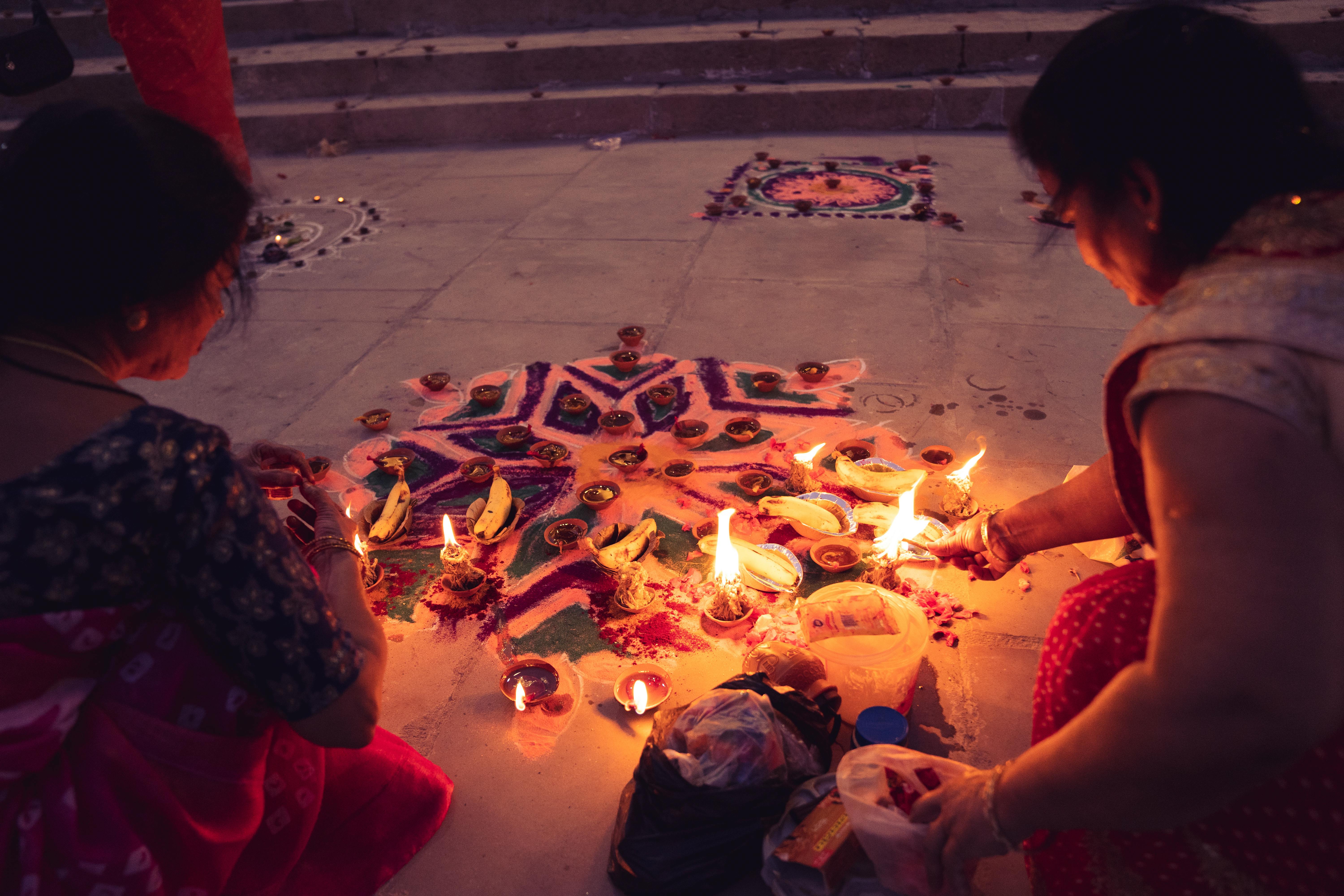
Source: Yogendra Singh, Nepali women creating a colorful Rangoli artwork and lighting oil lamps (diyas) on the ground during the Tihar festival.
If you can only choose one month, choose October. Skies are crystalline, temperatures sit at a postcard-perfect 15–25°C, and Nepal's two largest Hindu festivals, Dashain and Tihar, anchor the calendar.
Dashain partially empties the city as many residents return to ancestral homes outside Kathmandu as locals return to ancestral villages. Some shops close for a week, but tourist sites stay fully operational. Tihar (the festival of lights, late October) follows two weeks later, draping every home and storefront in marigolds, oil lamps, and colored rangoli patterns at the threshold.
Plan ahead: October hotels in Thamel and Patan book out 2–3 months in advance. International flights into TIA sell at peak prices. Reserve early.
November: Crisp, Clear, and Still Glorious
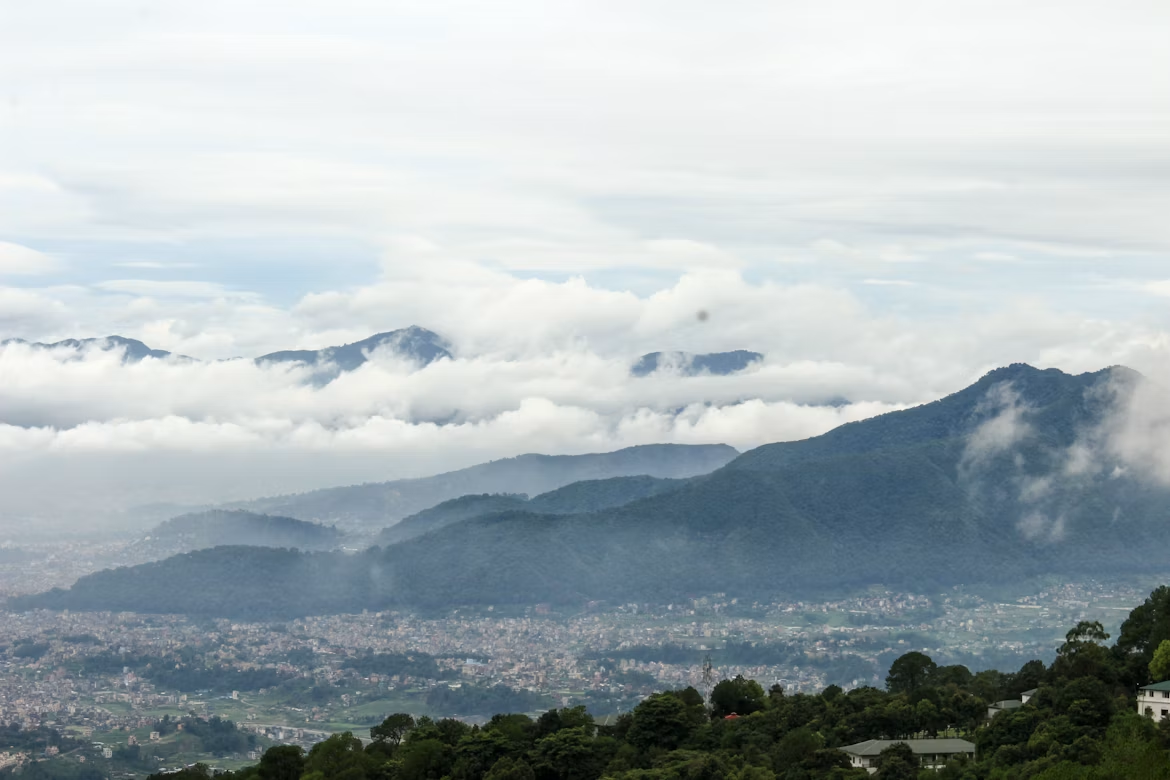
Source: Sashi Shrestha, View from the hills of Kathmandu
November carries October's clarity with thinner crowds and cooler nights. Daytime stays at 18–22°C, nights drop to 5–8°C, and the post-festival energy gives Kathmandu a relaxed, settled feel.
This is the second peak trekking window. If you're flying to Lukla for an Everest region trek, expect the Ramechhap detour to still be active through November. Build in 1–2 buffer days for weather delays, this is non-negotiable.
December: Cold Mornings, Bright Afternoons
Source: Aaron Santelices Intricate Newari architecture and stone temples of Patan Durbar Square in Lalitpur.
December eases into winter. Mornings can dip to 3–6°C, but afternoons remain pleasant at 18–20°C. Christmas and New Year bring a small bump in Western tourist traffic, but it's nothing like the October surge.
December is excellent for cultural immersion, courtyards quiet down, museums become contemplative, and the late-afternoon light on Patan Durbar Square's brick stupas is unforgettable.
Practical First-Timer Logistics
Current Visa on Arrival Fees (subject to change)
Visas are issued at Tribhuvan International Airport on arrival. Bring USD cash for fastest processing:
15-day visa: $30 USD
30-day visa: $50 USD
90-day visa: $125 USD
Cash and Connectivity
ATMs are plentiful in Kathmandu, but withdrawal limits cap around NPR 35,000 per transaction. Pick up a Ncell or Nepal Telecom (NTC) SIM card at the airport, Ncell generally offers stronger urban data speeds in Kathmandu, while Nepal Telecom (NTC) tends to provide broader coverage in remote trekking regions.
Cultural Etiquette That Matters
At Boudhanath, Swayambhunath, and any monastery, always walk clockwise around the stupa. Pass mani stones and chortens on the left side, keeping them to your right. Remove shoes and hats before entering temple interiors. Photography inside active prayer halls is prohibited unless a resident monk gives explicit permission.
What to Eat (and What to Avoid)
Stick to freshly cooked vegetarian meals during your first 48 hours while your system adjusts. Dal Bhat, lentil soup, rice, and seasonal vegetables, is the safest, most nourishing meal in Nepal and often comes with free refills. Use normal food hygiene caution with raw salads and unfiltered water, especially during monsoon. Carry a reusable bottle with a UV purifier or chlorine dioxide drops rather than buying plastic bottled water.
Air Quality in Kathmandu
Kathmandu's air quality worsens noticeably during late winter and pre-monsoon months (February-May), when dust, vehicle emissions, and valley haze accumulate under stagnant skies. Travelers with asthma or respiratory sensitivity should consider carrying an N95 mask, particularly around busy roads in Thamel, Koteshwor, and Ring Road corridors.
Electricity & Power Reliability
Kathmandu's power supply has improved dramatically compared to the load-shedding era of the 2010s. Power outages are now relatively uncommon in central tourist areas, though occasional cuts still happen during storms and monsoon season. Most hotels and cafés provide backup inverters or generators.
TIA Arrival Reality
Tribhuvan International Airport (TIA) is small, crowded, and often chaotic during peak arrival hours. Immigration queues can exceed 1 hour in October and November. Exchange only a small amount of cash at the airport, rates inside Thamel are usually better.
Month-by-Month Verdict Table
Month
Crowds
Weather
Best For
January
Low
Cold, clear
Budget, mountain views
February
Low-Med
Cool, clear
Losar, photography
March
Medium
Mild, blooming
Holi, spring treks
April
High
Warm, clear
First-timers, festivals
May
Medium
Hot, hazy
Lower prices, fewer tourists
June-Aug
Low
Wet, humid
Mustang/Dolpo only
September
Medium
Clearing
Indra Jatra, green hills
October
Very High
Perfect
Everything
November
High
Crisp, clear
Trekking + city combo
December
Medium
Cold mornings
Quiet cultural travel
Ready to Experience Kathmandu Properly?
Choosing the right month is just the first decision. The next, finding a guide who actually knows the side alleys of Patan, the quiet hour at Pashupatinath, or the family-run teahouses on the way to Nagarkot, makes the difference between a trip and a memory you carry for life.
Browse vetted itineraries and connect directly with licensed local guides on our marketplace. Every guide is government-licensed, insurance-verified, and rated by past travelers. Whether you want a 3-day cultural immersion in the valley or a Kathmandu-plus-trek combo, our team helps you build it around your exact dates and travel style.
Frequently Asked Questions
What is the absolute best month to visit Kathmandu for the first time?
October is widely considered the best overall month to visit Kathmandu. Skies clear after the monsoon, temperatures sit between 15–25°C, and major festivals like Dashain and Tihar bring the city alive. Book accommodation 2–3 months ahead.
Is Kathmandu safe to visit during monsoon season?
Yes, Kathmandu itself is safe during monsoon (June–August), but expect heavy afternoon rain, flight delays, leeches on day hikes, and obscured mountain views. Roads to rural districts can wash out without warning.
How cold does Kathmandu get in winter?
Kathmandu winters (Dec–Feb) drop to 2–5°C at night and rise to 18–20°C by midday. Most budget hotels lack central heating, so pack thermal layers and warm socks even for city stays.
Do I need a visa on arrival for Kathmandu in 2026?
Most nationalities can get a visa on arrival at TIA. Fees are $30 USD for 15 days, $50 USD for 30 days, and $125 USD for 90 days. Bring USD cash and a passport photo.
When is the cheapest time to visit Kathmandu?
June through August offers the lowest hotel rates, sometimes 40–50% below peak season. January is also quieter and cheaper, though significantly colder.
Can you see the Himalayas from Kathmandu Valley?
Yes, from viewpoints like Nagarkot (2,175m) and Chandragiri Hills, but only when skies are clear. October, November, and early March offer the sharpest mountain visibility.