Get travel ideas and local experiences from My Easy Guide in your inbox.
Spam free. Unsubscribe anytime. We respect your privacy.
The Langtang Valley sits closer to Kathmandu than any other major Himalayan trek in Nepal, yet it carries a weight that few other trails do. This is the valley that was buried by a glacial avalanche during the 2015 earthquake. The local Tamang community rebuilt stone by stone and reopened with a quiet dignity that you feel the moment you cross the first suspension bridge over the Langtang Khola. We send hundreds of trekkers here every year through our marketplace, and 2026 is shaping up to be the strongest season since the rebuild with new lodges, refined trails, and updated permit systems making it more accessible than ever.
This guide pulls together everything our field coordinators and licensed guides want you to know before booking: exact permit costs, a realistic day-by-day itinerary, transport logistics from Kathmandu, altitude safety thresholds, and the cultural etiquette that makes the difference between a tourist and a guest in Tamang country.
Why Langtang Valley in 2026?
Source: Kimcordenete / Unsplash, A perfect blend of wild alpine landscapes and traditional Himalayan settlements.
Langtang is the closest high-Himalayan trek to Kathmandu, reachable by a single 7–8 hour drive, no domestic flights required. The trail climbs from 1,470 meters at Syabrubesi to 3,870 meters at Kyanjin Gompa, offering glacier views, Tamang Buddhist culture, and yak pastures within a manageable 7–10 day window.
For trekkers who can't commit to the 14-day Everest Base Camp or the 16-day Annapurna Circuit, Langtang delivers a complete Himalayan experience in roughly half the time. The lack of a flight to Lukla also means no weather-induced cancellations from Manthali Airport in Ramechhap, a logistical headache that derails many Everest plans during peak season.
2026 Permits: Exact Costs and Where to Get Them
Langtang Valley requires two permits in 2026: the Langtang National Park Entry Permit and the e-TIMS card. Foreign nationals pay NPR 3,000 for the park permit and NPR 2,000 for e-TIMS. SAARC citizens pay half. Both are processed through your licensed trekking agency in Kathmandu within 24 hours.
Permit Breakdown
Permit
Foreigner Cost
SAARC Cost
Where to Obtain
Langtang National Park Entry
NPR 3,000
NPR 1,500
Nepal Tourism Board, Kathmandu
e-TIMS QR Card
NPR 2,000
NPR 1,000
NTB or via licensed agency
Tourist Visa (15 days)
$30 USD
N/A
Tribhuvan Airport on arrival
Tourist Visa (30 days)
$50 USD
N/A
Tribhuvan Airport on arrival
Bring 4 passport-sized photos and a digital copy of your passport. Permits are checked at Dhunche and again at Ghodatabela, losing them means a forced return to Kathmandu for reissue.
Do You Need a Guide for Langtang in 2026?
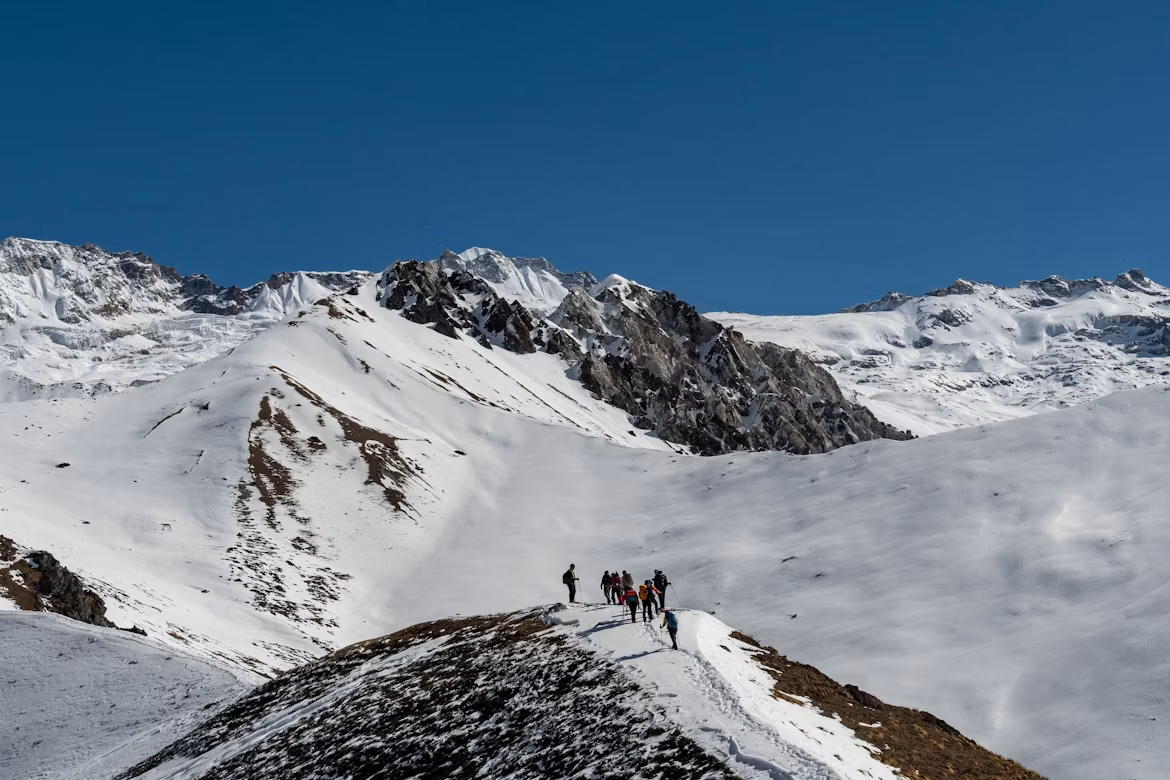
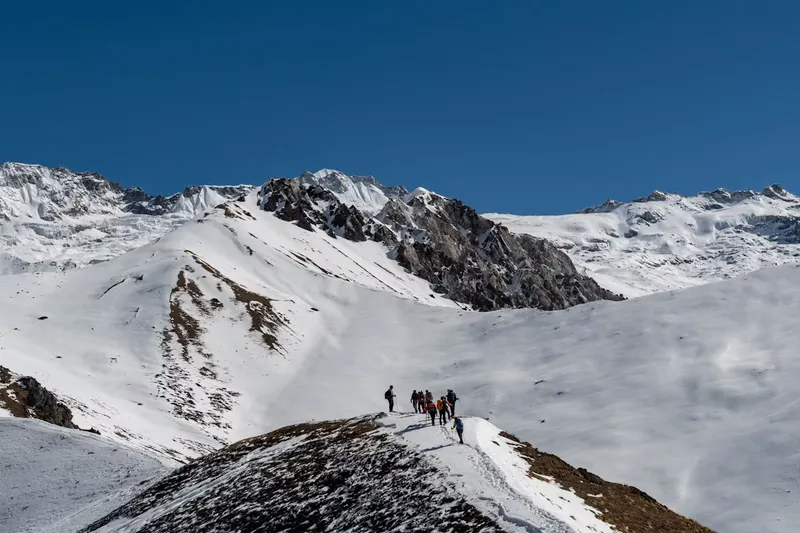
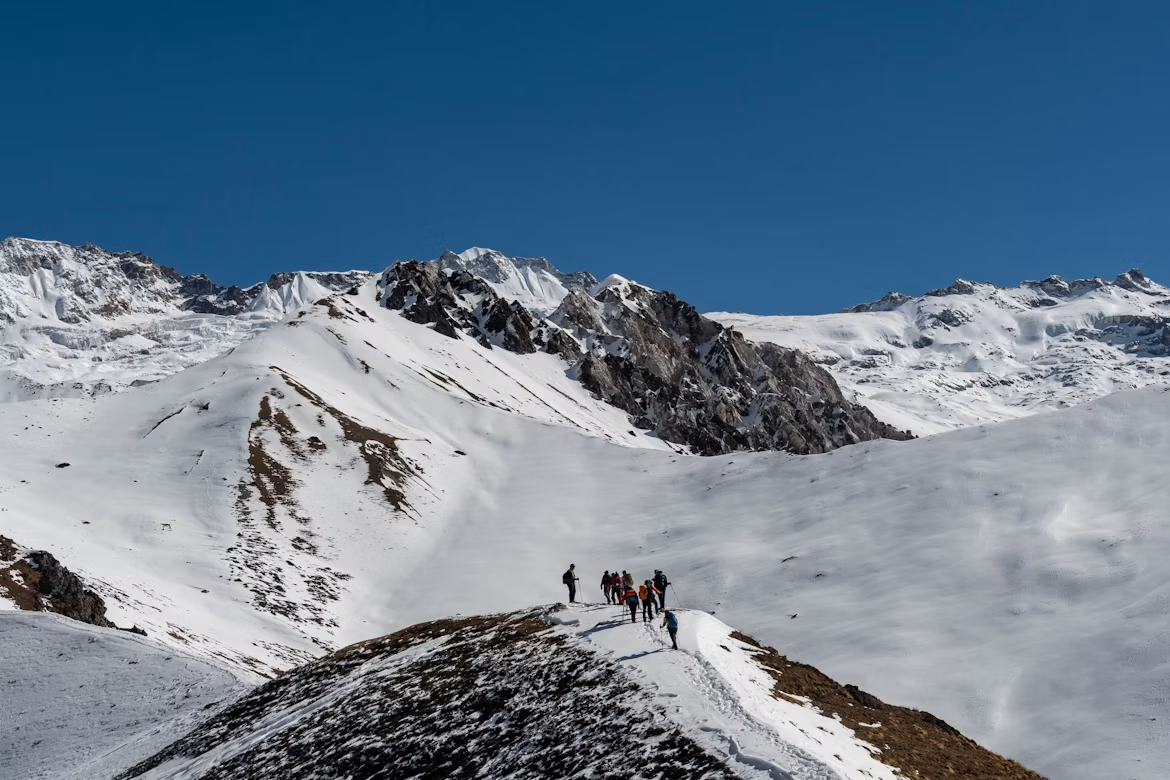
Source: Balaram Thapa / Unsplash, Trekkers walking along a rugged mountain trail in the scenic valley of the Langtang region.
Yes. Nepal's nationwide guide mandate introduced in April 2023 remains in full force in 2026. Although Langtang is not a Restricted Area like Manaslu or Upper Mustang, all national park trekking routes now require a licensed guide booked through a registered Nepali agency. Independent solo trekking on this trail is no longer permitted.
A licensed guide costs roughly USD 25–35 per day, with porters running USD 20–25 per day. One porter can carry up to 20–25 kg, typically shared between two trekkers. Our marketplace verifies guide licenses, insurance coverage, and first-aid training before any listing goes live.
Getting to Syabrubesi: The Trailhead Reality
The drive from Kathmandu to Syabrubesi covers 122 kilometers and takes 7–8 hours on a rough, winding mountain road via Trishuli and Dhunche. Local buses depart from Macchapokhari around 7:00 AM for roughly NPR 800–1,000, while a private jeep costs USD 150–200 split among up to six passengers.
Our field contacts strongly recommend the private jeep option for first-time trekkers. The road has improved since the 2015 earthquake, but landslides during shoulder seasons can add 2–3 hours of unexpected delay. Verify current road conditions and live transport rates through your marketplace agency before locking in dates.
Classic 8-Day Langtang Valley Itinerary
The standard Langtang Valley Trek runs 7 to 8 days from Syabrubesi and back, with an acclimatization day at Kyanjin Gompa. Daily walking averages 5–6 hours, and elevation gain is conservative enough to keep most trekkers below the AMS threshold when paced correctly.
Day-by-Day Breakdown
Day
Route
Elevation
Walking Time
1
Kathmandu → Syabrubesi (drive)
1,470 m
7–8 hours
2
Syabrubesi → Lama Hotel
2,380 m
6 hours
3
Lama Hotel → Mundu/Langtang Village
3,430 m
6–7 hours
4
Langtang Village → Kyanjin Gompa
3,870 m
3–4 hours
5
Acclimatization: Kyanjin Ri or Tserko Ri
4,773 m / 4,985 m
5–7 hours
6
Kyanjin Gompa → Lama Hotel
2,380 m
6–7 hours
7
Lama Hotel → Syabrubesi
1,470 m
5–6 hours
8
Syabrubesi → Kathmandu (drive)
1,400 m
7–8 hours
The Day 3 climb from Lama Hotel into Langtang Village is the emotional core of this trek. You pass the memorial chorten marking the buried original village, please walk silently, and keep the mani stones to your right as you ascend.
Acclimatization and Altitude Safety
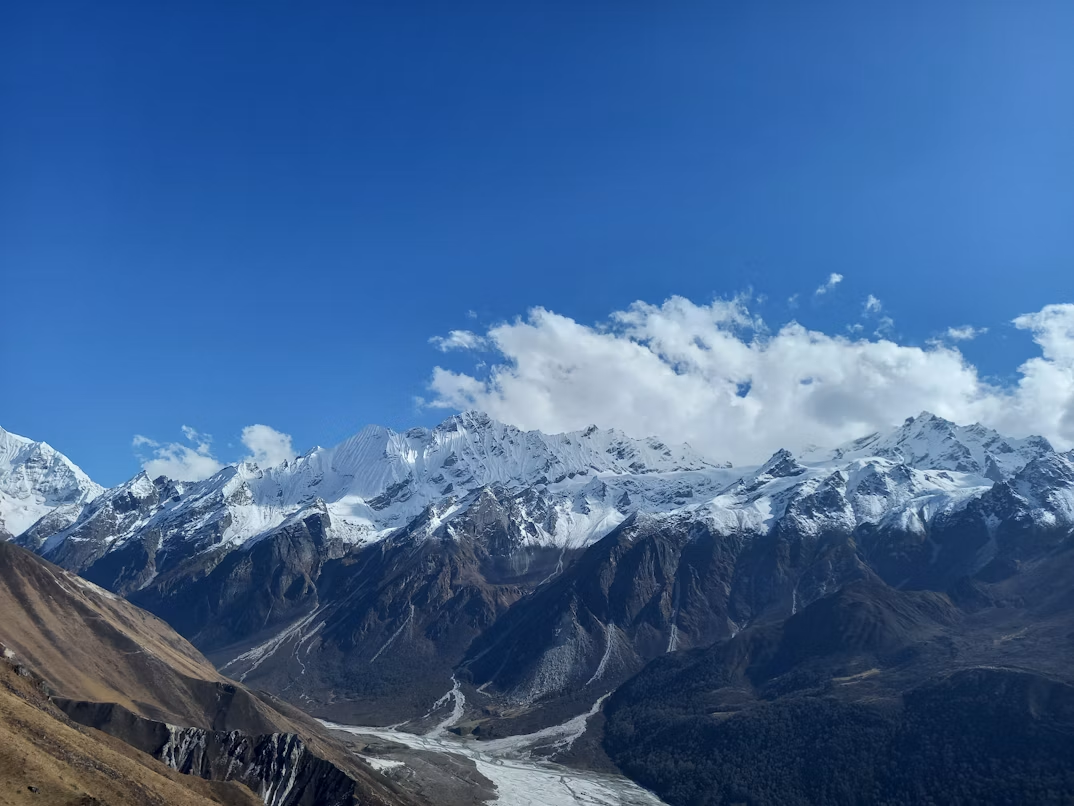
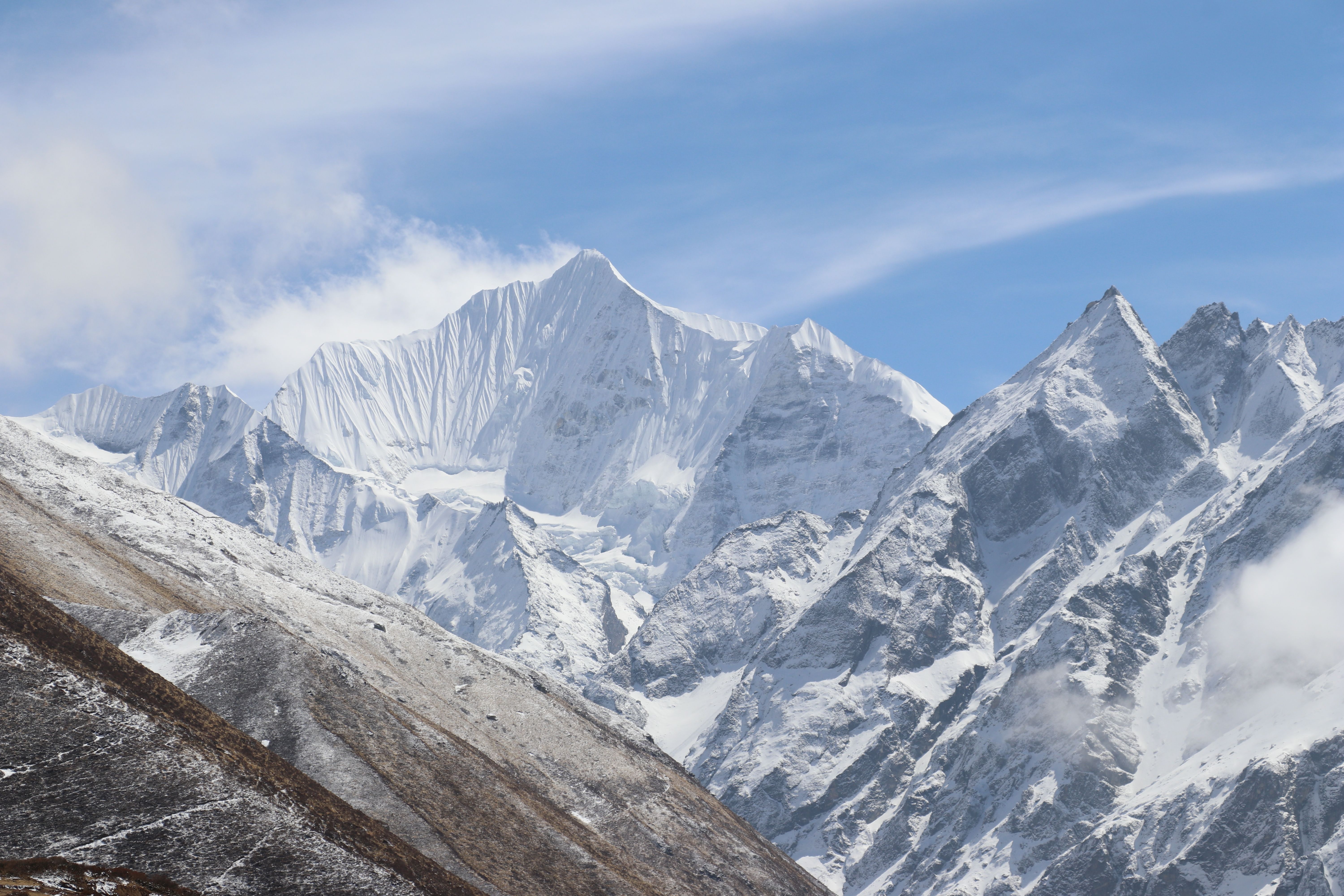
Source: Bijay Chaurasia / Pexels, Breathtaking vistas of snow-capped giants dominating the horizon.
Above 3,000 meters, your sleeping elevation must not increase by more than 300–500 meters per day, with mandatory rest days every 1,000 meters of cumulative gain. The Day 5 acclimatization climb at Kyanjin Gompa is non-negotiable, skipping it dramatically increases your AMS risk.
Kyanjin Ri at 4,773 meters is the standard acclimatization viewpoint, offering panoramic views of Langtang Lirung (7,234 m) and the Langshisha glacier. Stronger trekkers push to Tserko Ri at 4,985 meters, but this should only be attempted if you slept well at Kyanjin and have no headache, nausea, or sleep disturbance.
Symptoms to watch for: persistent headache, loss of appetite, dizziness, dry cough, or difficulty sleeping. Descent, not medication is the only true cure for moderate-to-severe AMS. Diamox can assist acclimatization but does not replace conservative pacing.
Helicopter Evacuation Insurance: Non-Negotiable
Standard travel insurance is not enough. You must carry a policy that explicitly covers high-altitude emergency helicopter evacuation up to 6,000 meters and medical treatment for AMS, HAPE, and HACE. Confirm in writing with your insurer before departure, Langtang Valley sits well above the limit of generic travel cover.
A helicopter rescue from Kyanjin Gompa back to Kathmandu can cost between USD 4,000 and USD 6,000 depending on weather and operator. Without proper insurance, this becomes an upfront cash settlement before the helicopter is dispatched, a situation we've watched unfold too many times.
Total Trip Cost Breakdown (2026 Estimates)
A fully guided 8-day Langtang Valley Trek in 2026 costs between USD 750 and USD 1,200 per person, depending on group size, lodging tier, and inclusions. Budget solo backpacking is no longer legally possible under Nepal's guide mandate.
Cost Components
Item
Estimated Cost
Permits (Park + e-TIMS)
NPR 5,000 (~$38 USD)
Licensed Guide (8 days)
USD 200–280
Porter (optional, shared)
USD 80–100 per person
Transport (private jeep return)
USD 60–100 per person
Teahouse lodging
NPR 500–1,200 per night
Meals on trail
NPR 600–900 per meal
Charging, Wi-Fi, hot showers
NPR 200–700 per service
Insurance (high-altitude)
USD 100–180
Crew tipping (15–20%)
USD 100–200
ATMs do not exist past Dhunche. Carry sufficient Nepalese Rupees in small denominations, most teahouses cannot break a NPR 1,000 note for a single tea.
Best Seasons to Trek Langtang
The optimal Langtang windows are March to May (spring) and late September to November (autumn). Autumn delivers the clearest mountain views and stable weather, while spring brings rhododendron blooms across the lower forests. Winter trekking is possible but cold, and monsoon (June–August) brings heavy rain and leeches.
Cold (-15°C nights), some lodges closed, fewer crowds
If you're locked into summer travel and still want Nepal, consider Upper Mustang or Upper Dolpo instead, both lie in the Himalayan rain shadow and stay dry through monsoon.
Connectivity, Charging, and Trail Economics
Ncell signal weakens significantly past Lama Hotel, while Nepal Telecom (NTC) holds a more consistent signal through to Kyanjin Gompa. Buy an NTC SIM at Kathmandu Airport on arrival, a tourist data pack costs roughly NPR 500–1,000 for 10–15 GB.
Most teahouses now offer paid Wi-Fi via local mesh networks for NPR 200–500 per session. Phone and power bank charging runs NPR 200–400 per device, and gas-heated hot showers cost NPR 300–500. Bring a power bank rated at least 20,000 mAh to minimize daily charging fees.
Food, Water, and Trail Health
Stick to Dal Bhat, lentil soup, rice, and vegetable curry for clean, high-calorie fuel with unlimited refills. Meat at altitude is risky: it's hauled up by foot or mule over multiple days without refrigeration. Vegetarian eating on the trail is both safer and more culturally aligned with the Tamang Buddhist communities along this route.
Skip plastic bottled water entirely. Carry a reusable bottle paired with a Sawyer Squeeze filter, SteriPEN UV purifier, or chlorine dioxide tablets. Refill stations at teahouses cost NPR 50–100 per liter, a fraction of bottled water prices and far better for the valley's waste management.
Cultural Etiquette in Tamang Country
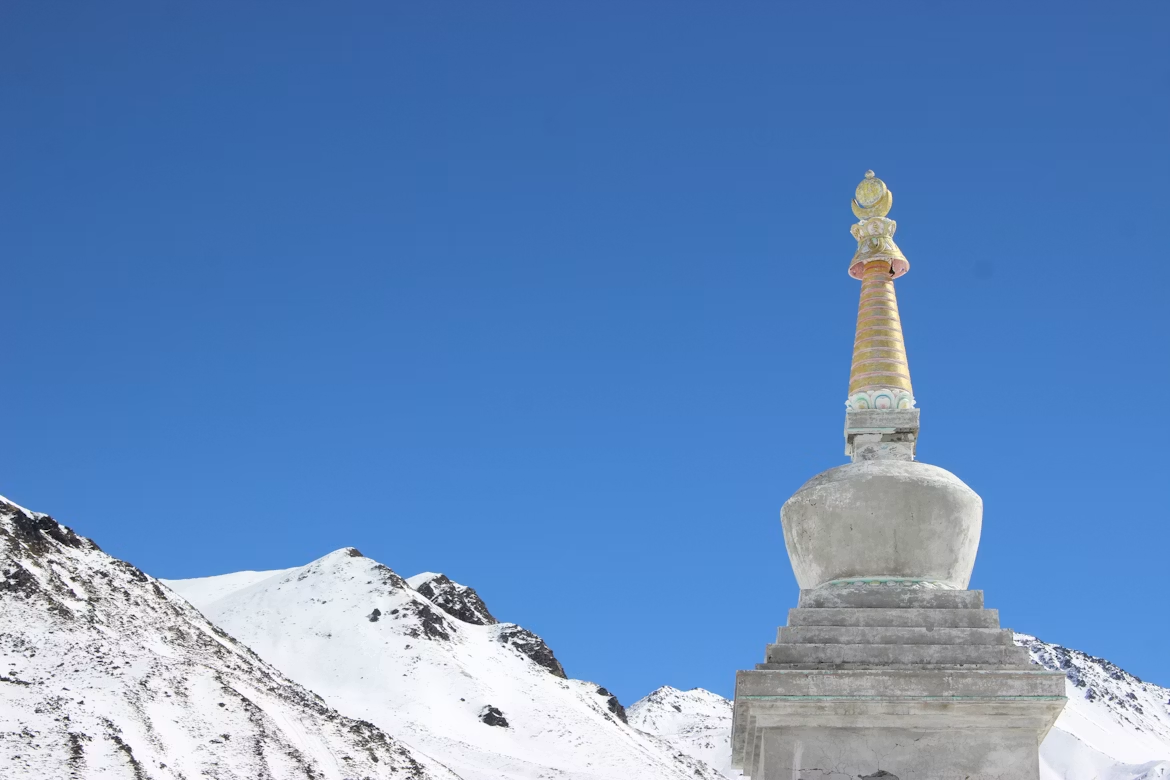
Source: Jayant Chaudhary / Unsplash, Spiritual landmarks and beautiful mountain view guiding the way through Langtang.
Langtang is home to the Tamang people, whose Tibetan-Buddhist heritage shapes every village along the trail. Walk clockwise around chortens, mani walls, and prayer wheels, always keeping them on your right. Remove shoes and hats before entering any gompa, and never photograph monastery interiors without explicit permission from a resident monk.
The Kyanjin Gompa monastery itself was rebuilt with international support after 2015, treat it as a working religious site, not a tourist attraction. A small donation in the offering box (NPR 100–500) is appreciated and helps fund ongoing community projects.
Tipping Your Crew
Tipping is culturally expected and forms a critical part of your guide's and porter's annual income. Plan for 15%–20% of your total trek cost, distributed transparently on the final evening. For an 8-day trek, this typically works out to USD 80–120 per trekker for the guide and USD 60–80 for each porter.
What to Pack: The Essentials
Down jacket rated to -10°C (rentable in Kathmandu's Thamel district)
Sleeping bag rated to -15°C
Waterproof shell jacket and pants
Broken-in mid-ankle trekking boots
Trekking poles (essential for the Lama Hotel descent)
Headlamp with spare batteries
Water filtration system
Sunglasses (UV400), high-SPF sunscreen, lip balm
Personal first-aid kit with Diamox, ibuprofen, electrolytes
Power bank (20,000 mAh+)
Cash in small NPR denominations
Frequently Asked Questions
Can I combine Langtang with Gosaikunda Lakes?
Yes. The Langtang–Gosaikunda combination adds 4–5 days and crosses the Laurebina La pass at 4,610 meters. It's a sacred Hindu pilgrimage site and one of Nepal's most scenic high-altitude lake systems.
Is the Langtang Valley still recovering from the 2015 earthquake?
The valley has been substantially rebuilt, with new teahouses, schools, and the Langtang memorial chorten complete. Trekking here directly supports the local Tamang economy and is widely encouraged by Nepal's tourism authorities.
How fit do I need to be?
Moderate fitness is sufficient. If you can comfortably hike 5–6 hours per day on uneven terrain with a daypack, you'll manage Langtang. Pre-trip cardio training for 6–8 weeks is strongly recommended.
Are there hot showers and Western toilets?
Hot showers (gas-heated) cost NPR 300–500 per use and are available up to Kyanjin Gompa. Western-style toilets are common in larger teahouses; squat toilets dominate at smaller lodges.
Can I drink alcohol on the trek?
It's available but strongly discouraged above 3,000 meters. Alcohol accelerates dehydration and worsens AMS symptoms. Save the celebration for your return to Kathmandu.
What happens if there's a snowstorm or landslide?
Your licensed guide is trained to make route and timing calls. Most agencies build a 1–2 day buffer into Langtang itineraries to absorb weather delays without missing international flights home.