Costs vary by season, group size, and accommodation preference. Budget travelers can manage comfortably on $40–$50 per day excluding flights and permits, while those seeking more comfort should plan for $80–$100 per day. Always carry sufficient Nepali rupees in cash, as ATMs are unavailable beyond Jomsom and card payments are rarely accepted.
Updated Permits Required for Muktinath 2026
Muktinath sits inside the Annapurna Conservation Area, which means specific permits apply regardless of how you arrive.
- ACAP Permit (Annapurna Conservation Area Project): NPR 3,000 for foreign nationals, NPR 1,000 for SAARC nationals. Free for Nepali citizens.
- e-TIMS Card: NPR 2,000 for foreign nationals if trekking the Annapurna Circuit. Not required if you arrive purely by vehicle/flight as a pilgrim.
- Indian Pilgrims: Indian passport holders or those with valid voter ID can enter Nepal without a visa but still require the ACAP permit.
ACAP permit is mandatory for all foreign trekkers/pilgrims entering Mustang via Annapurna Conservation Area. Permits are issued at the Nepal Tourism Board offices in Kathmandu and Pokhara. Carry 4 passport photos and a passport copy.
Check latest NTB/TAAN updates before travel as permit systems are periodically revised.
Nepal offers visa on arrival at Tribhuvan International Airport (Kathmandu). Current 2026 fees:
- 15-day visa: $30 USD
- 30-day visa: $50 USD
- 90-day visa: $125 USD
Indian nationals can enter Nepal visa-free with a valid government-issued photo ID, while all other foreign nationals can obtain a visa on arrival at Tribhuvan International Airport.
Altitude Safety at 3,800 Meters
Muktinath sits well into AMS territory. The danger isn't the altitude itself but the rapid ascent profile most pilgrims follow: Pokhara (820m) → Jomsom (2,740m) → Muktinath (3,800m) within a single day.
Practical Acclimatization Strategy
Above 3,000m, ascend no more than 300–500m per sleeping altitude per day, and plan a rest night in Jomsom or Kagbeni (2,800m) before continuing higher on the Muktinath pilgrimage route. To compensate:
- Sleep one night in Jomsom or Kagbeni (2,800m) before continuing up to Muktinath.
- Hydrate aggressively — minimum 4 liters of water daily.
- Avoid alcohol entirely on ascent day.
- Recognize early symptoms: headache, nausea, sleep disturbance, loss of appetite.
- If symptoms worsen, descend immediately. Do not push through.
Helicopter Evacuation Insurance
Standard travel insurance is not enough. Pilgrims should carry insurance specifically covering high-altitude emergency helicopter evacuation up to 6,000 meters and treatment for AMS, HAPE, and HACE. Helicopter evacuation from Muktinath and the Mustang region is available but subject to weather delays, and requires valid insurance pre-approval or upfront payment before rescue flights can be confirmed.
Where to Stay: Ranipauwa Village
The settlement servicing the temple is called Ranipauwa, located a 10-minute walk below the main temple complex. Lodging ranges from basic pilgrim guesthouses (Hindu Dharamshalas) to mid-range trekking lodges with attached bathrooms and gas-heated showers.
Realistic lodging budget: expect modest per-night rates for twin rooms in trekking lodges, with prices increasing during October-November peak season. Verify live rates with your guide or agency.
Trail upcharges add up quickly. Budget extra for:
- Phone/power bank charging: NPR 200-400 per device
- Hot shower (gas-heated): NPR 300-500
- Wi-Fi access: NPR 300-700
Food and Dietary Protocol
Muktinath is a deeply vegetarian zone. Pilgrim lodges serve traditional Dal Bhat (lentil soup, rice, vegetable curry, and pickles) with free refills. This is the cleanest, highest-energy fuel at altitude.
Avoid meat at this elevation. Refrigeration is inconsistent, meat is mule-portered up for days, and digestion slows above 3,000 meters. Stick to fresh vegetables, lentils, potatoes, eggs, and traditional Tibetan bread.
Cash, Connectivity, and Communications
ATMs exist in Jomsom but become unreliable past that point. Carry sufficient Nepalese Rupees (NPR) cash for your entire Muktinath stay, we recommend NPR 8,000-12,000 per person for 2-3 days including buffers.
For mobile coverage, Ncell provides the strongest signal throughout the Annapurna region including Muktinath. Pick up a tourist SIM at Kathmandu or Pokhara airport.
Cultural Protocol at the Temple
Muktinath is an active site of worship. Behavior matters.
Sacred Trail Geometry
Walk clockwise around the temple, stupas, and chortens. Always pass mani stones and prayer walls on your LEFT side (keeping them to your right). This applies to every Buddhist religious structure throughout Mustang.
Photography and Footwear
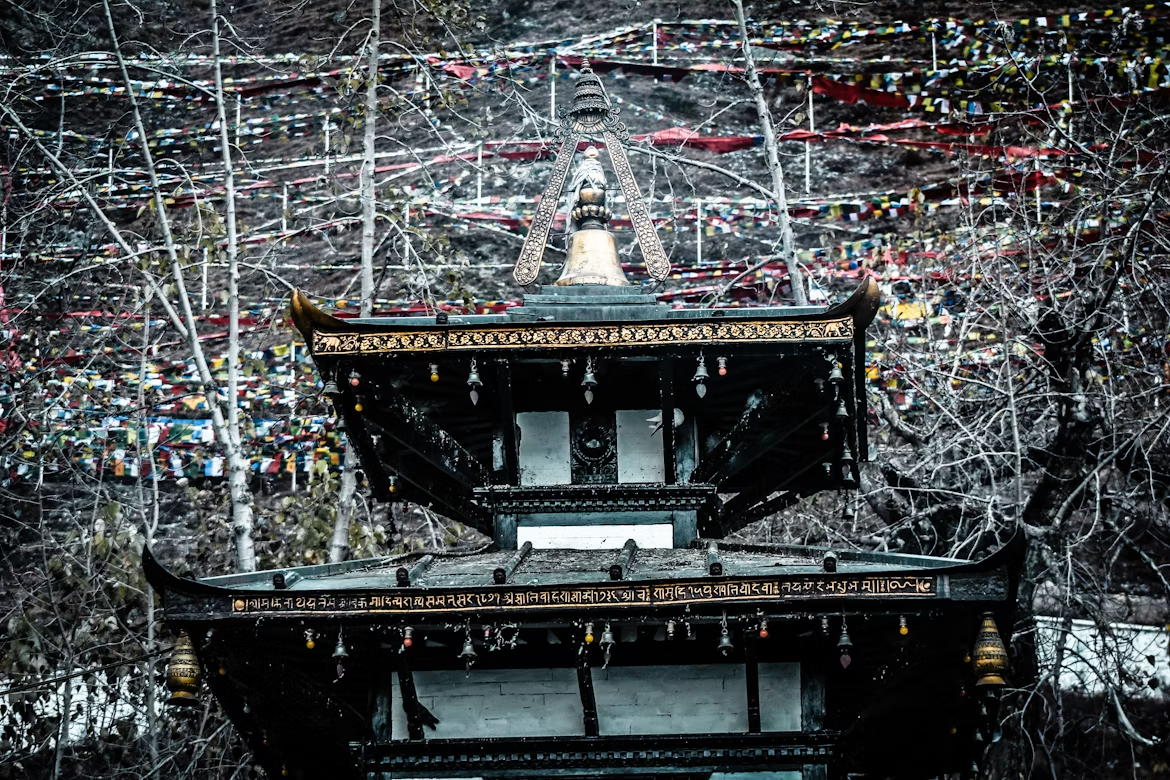
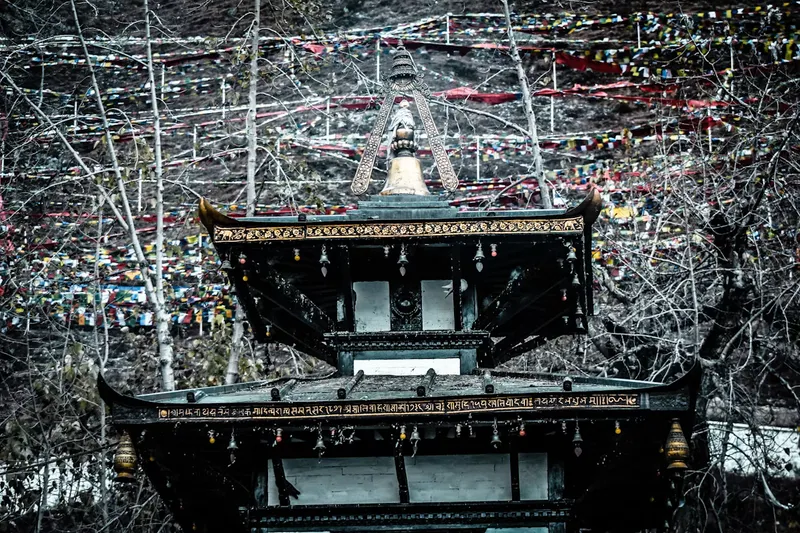
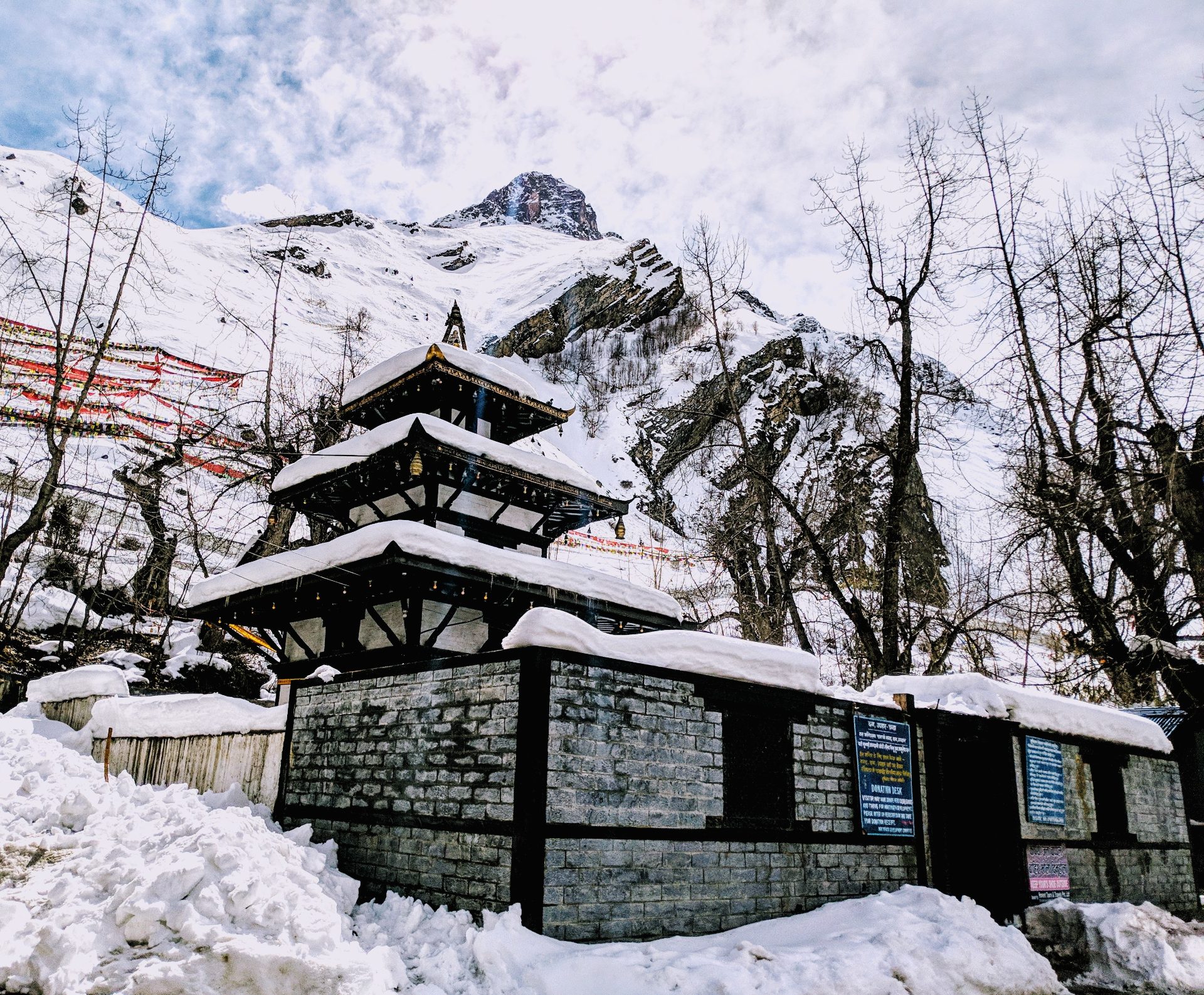
Remove shoes and hats before entering the main temple, the Jwala Mai (Eternal Flame) shrine, and the surrounding Buddhist gompas. Photography inside the prayer halls is prohibited unless a resident monk grants explicit permission. Outside courtyards and the 108 spouts area are open for photos.
The Ritual Sequence
Traditional pilgrims follow this order: bathe in the two stone ponds, walk under all 108 spouts in sequence, enter the main Muktinath temple for darshan of the Vishnu murti, visit the Jwala Mai temple to witness the eternal flame burning above water, then circle the surrounding gompas.
Sustainable Pilgrimage Practices
Mustang is fragile. Plastic waste accumulates at sacred sites with devastating speed. We mandate:
- Carry a reusable water bottle paired with UV purifiers, Sawyer filters, or chlorine dioxide drops.
- Never buy single-use plastic bottles on the trail.
- Pack out all wrappers, batteries, and personal waste.
- Respect local Thakali and Tibetan communities, ask before photographing people.
Cultural Sensitivity at Muktinath Temple: Essential Rules
Muktinath is a deeply sacred site for both Hindus and Buddhists, and respectful conduct is expected from all visitors. Always circumambulate the temple complex clockwise, following the natural flow of other pilgrims and prayer wheels. Remove footwear before entering all temple sanctuaries and sacred inner spaces, even if the ground is cold or wet.
Always ask for explicit permission before photographing locals, sadhus, or religious rituals, many consider cameras intrusive during prayer. Offer donations respectfully at designated boxes or altars rather than directly to individuals, and dress modestly with shoulders and knees covered out of respect for the sanctity of the site.
Tipping Your Crew
If you travel with a guide, driver, or porter, tipping is culturally expected and forms a vital portion of their income. The marketplace standard for a guide is NPR 1,000–2,000 per day (group split or individual), and for a porter, it is NPR 800–1,500 per day of the total trip cost distributed among the crew at the end of the journey.
Monsoon Season: The Rain Shadow Advantage
Most of Nepal becomes difficult during monsoon (June-August), leeches, landslides, and washed-out trails. Muktinath is the exception. Lower Mustang sits firmly in the Himalayan rain shadow, meaning skies stay relatively dry while the rest of Nepal floods. This makes Muktinath one of the rare summer pilgrimage destinations in the country.
Weather & Winds in Lower Mustang: What Travelers Must Know
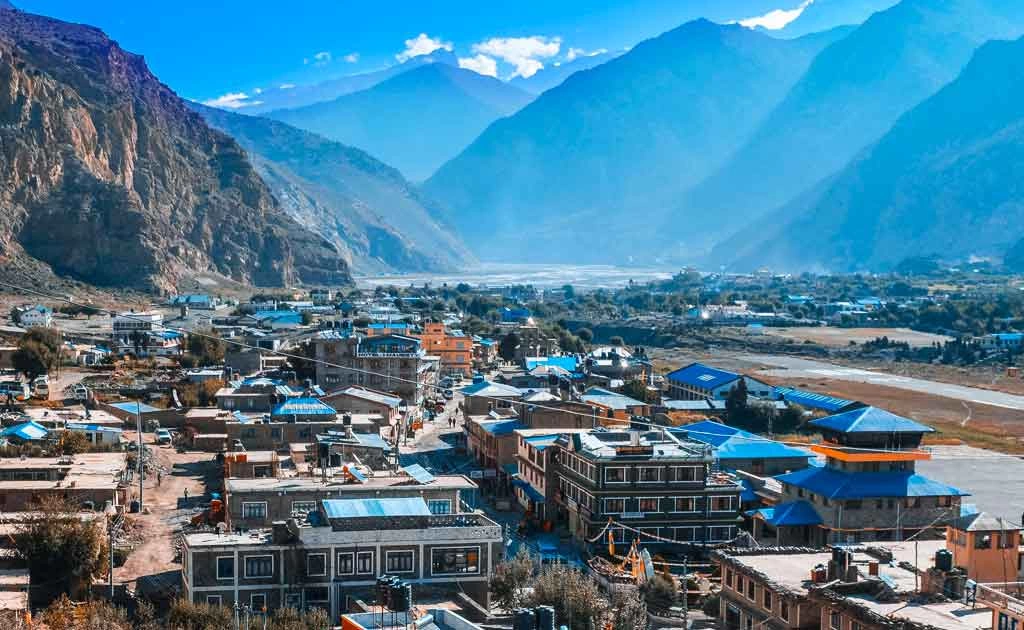
Strong afternoon winds sweep through the Jomsom valley from March to November, making morning flights significantly more reliable, book the earliest available departure whenever possible. Mustang's unique rain shadow location means drier, sunnier skies than the rest of Nepal, but also powerful gusts that regularly ground flights and delay jeep routes. Always build buffer days into your itinerary to account for weather-related disruptions, especially during peak pilgrimage season.
Mobile Network & Power Availability in Mustang
Ncell offers the strongest and most consistent coverage throughout the region, making it the recommended SIM card for travelers. Nepal Telecom signals weaken significantly beyond Jomsom and become unreliable at higher elevations near Muktinath. Most lodges operate on solar power with limited grid backup, electricity availability can vary with weather and season. Expect to pay NPR 50–100 per device for charging, and always carry a power bank as backup for emergencies.
Common Mistakes Pilgrims Make on the Muktinath Trek
Skipping an acclimatization night in Jomsom is the single most common mistake, often leading to altitude sickness before reaching Muktinath at 3,800m. Carrying only cards instead of cash leaves many pilgrims stranded, as digital payments are almost nonexistent beyond Pokhara. Underestimating afternoon wind delays causes missed flights and unplanned extended stays. Packing cotton clothing instead of moisture-wicking, layered insulation is another critical error, temperatures drop sharply after sunset even in summer, and wet cotton accelerates hypothermia risk on exposed mountain trails.
Frequently Asked Questions
Do I need a guide to visit Muktinath Temple?
If you reach Muktinath by jeep or flight via Jomsom (Lower Mustang), a guide is not legally mandatory for pilgrims. However, if you approach via the Annapurna Circuit trek through Thorong La Pass, Nepal Tourism Board regulations strongly recommend a licensed guide for the trekking portion.
What is the best time to visit Muktinath Temple?
March to May and September to November offer the clearest skies and stable weather. Uniquely, June to August is viable because Muktinath sits in the Himalayan rain shadow, making it one of the few accessible Nepal destinations during monsoon.
How much does the Muktinath pilgrimage cost?
Budget pilgrims can complete the trip for roughly $400-600 USD total, including domestic flights, jeep transfers, lodging, food, and the NPR 3,000 ACAP permit. Helicopter day tours from Pokhara cost significantly more.
Can elderly pilgrims handle the altitude?
Yes, with precautions. We've safely guided pilgrims in their 70s and 80s by adding an acclimatization night in Jomsom, arranging private jeeps to minimize physical strain, and carrying emergency oxygen. Pre-trip medical clearance is recommended for anyone with cardiac or respiratory conditions.
Are credit cards accepted at Muktinath?
No. Bring sufficient NPR cash. ATMs are unreliable past Jomsom and lodges, restaurants, and shops in Ranipauwa operate strictly in cash.
Is there Wi-Fi at Muktinath Temple?
Yes, most lodges in Ranipauwa offer Wi-Fi for an additional NPR 300-700 per session. Ncell mobile data is generally more reliable than lodge Wi-Fi.