Upper Mustang doesn't reveal itself easily. The wind cuts through ochre canyons at 3,800 meters, prayer flags fray against a sky so deep it borders on indigo, and the walled city of Lo Manthang appears like something the 15th century forgot to take with it. This is the former Kingdom of Lo, sealed off to outsiders until 1992 and still governed by some of the strictest trekking regulations in Nepal.
If you're planning the trek in 2026, the rulebook has shifted. Our field coordinators in Jomsom and Lo Manthang have tracked the changes, and this guide walks you through the updated Restricted Area Permit framework, real costs, the monsoon advantage almost no one talks about, and the cave monasteries hiding north of the walled city.
Why Upper Mustang Belongs on Your 2026 Shortlist
The Sacred land of Upper mustang
Upper Mustang offers Tibetan-Buddhist culture, desert landscapes, and 4,000-meter passes without the crowds of Everest or Annapurna.Upper Mustang is one of Nepal's premier monsoon trekking regions thanks to its location in the Himalayan rain shadow. While much of Nepal experiences heavy rainfall from June through August, Upper Mustang, Nar Phu, and parts of Dolpo remain comparatively dry and highly trekable.
The trek sits in the former Kingdom of Lo, geographically and culturally Tibetan but politically Nepalese. You walk through eroded sandstone canyons, past sky-caves carved into vertical cliffs, and into villages where the Tiji Festival still summons monks from across the Himalayas every May. The landscape feels closer to Ladakh than to typical green-hilled Nepal.
2026 Restricted Area Permit Rules: What Actually Changed
As of March 2026, single trekkers can now obtain the Upper Mustang Restricted Area Permit, ending the long-standing two-person minimum. However, you still cannot trek independently. A licensed guide booked through a registered Nepali agency remains mandatory, with a maximum guide-to-trekker ratio of 1:7.
This is the single biggest regulatory shift in over a decade. Solo female trekkers, writers, photographers, and researchers no longer need to find a phantom trekking partner to satisfy the old rule. The trade-off is that the guide requirement is now enforced more strictly than ever at the Kagbeni checkpoint, where Upper Mustang officially begins.
Permits You Will Need
You need two permits for Upper Mustang, and they must be arranged in Kathmandu or Pokhara before flying to Jomsom. Neither can be issued on the trail.
Historically, trekkers paid a flat USD 500 permit covering the first 10 days inside Upper Mustang, with USD 50 charged for each additional day. Several trekking operators and 2026 field reports now indicate that Nepal has shifted toward a more flexible USD 50-per-day RAP structure without the old 10-day minimum requirement.
Because permit enforcement and pricing interpretation may still vary depending on the issuing agency and Department of Immigration processing window, always confirm the exact RAP structure with your licensed trekking operator before booking.
Note that Upper Mustang does not use the standard e-TIMS QR card because the RAP supersedes it. Your agency will handle the permit application, but you'll need passport copies, passport-sized photos, and your insurance certificate showing high-altitude helicopter evacuation coverage up to 6,000 meters. This insurance is not optional, it is legally required to receive the RAP.
Real Costs: What a 2026 Upper Mustang Trek Actually Runs
A 12 to 14-day guided Upper Mustang trek typically lands between USD 2,200 and USD 3,500 per person, depending on group size, agency, and whether you fly or drive Pokhara to Jomsom. The RAP alone accounts for a third of the cost.
Here's how our marketplace partners typically break down the budget for a standard 12-day itinerary:
Cost Category
Estimated Range
Upper Mustang RAP (Per Day)
USD 50
ACAP Permit
NPR 3,000
Licensed guide (per day)
USD 30–40
Porter (optional, per day)
USD 22–28
Teahouse lodging + meals
USD 30–45 per day
Pokhara–Jomsom flight (one way)
Variable — verify live rates
Private jeep Pokhara–Jomsom
Variable — verify live rates
Domestic flight and jeep rates fluctuate seasonally, particularly during the spring Tiji Festival window. We recommend confirming live pricing through your booking agency rather than relying on outdated blog figures.
Cash on the Trail
ATMs do not function reliably past Jomsom. Withdraw all your Nepalese Rupees in Pokhara before departure. Plan for approximately NPR 3,000–5,000 per day in extras to cover hot showers (NPR 300–500), phone or power bank charging (NPR 200–400), Wi-Fi (NPR 300–700), and bottled drinks. Tips for your crew at trek's end should also come from this cash reserve.
Getting to the Trailhead: Jomsom Logistics
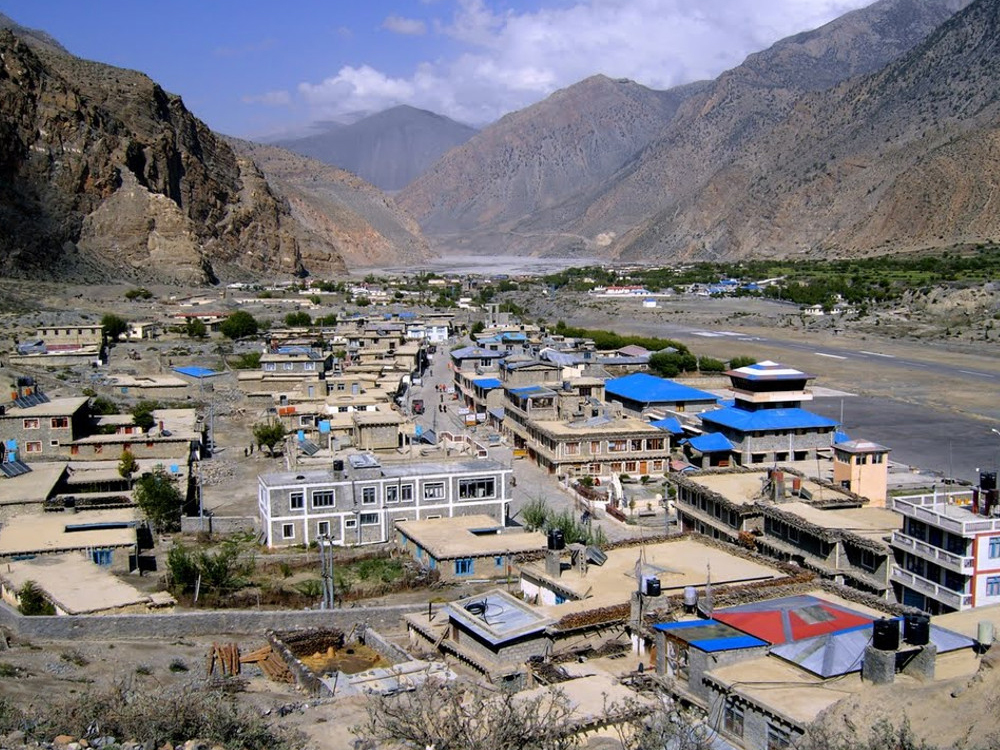
Windy valley landscape of Jomsom with mountain peaks in the Lower Mustang region.
Upper Mustang treks begin in Jomsom (2,720 meters) and end either back in Jomsom or in Pokhara if you drive out. The classic access route is a short flight from Pokhara, though jeep travel along the Kali Gandaki road has become increasingly common.
Flight vs. Jeep
The Pokhara–Jomsom flight takes about 20 minutes and operates only in the early morning before the Kali Gandaki winds pick up. Cancellations from wind or low visibility are common, so we build 1-2 buffer days into every itinerary.
The jeep ride takes 8-10 hours on rough mountain road. It's cheaper but punishing on the body, and the dust through Lower Mustang is intense. Most clients fly in and jeep out, splitting the experience.
The Classic 12-Day Itinerary
Our standard Upper Mustang itinerary follows a measured ascent that respects acclimatization rules while leaving time for cave exploration and a full rest day in Lo Manthang.
Day
Route
Elevation
1
Pokhara to Jomsom (fly), trek to Kagbeni
2,810 m
2
Kagbeni to Chele (RAP checkpoint)
3,050 m
3
Chele to Syangboche via Taklam La
3,475 m
4
Syangboche to Ghami
3,520 m
5
Ghami to Tsarang via Ghami La
3,560 m
6
Tsarang to Lo Manthang
3,840 m
7
Lo Manthang exploration (rest day)
3,840 m
8
Day trip to Chhoser caves and Nyphu monastery
3,840 m
9
Lo Manthang to Drakmar via Lo La
4,325 m pass
10
Drakmar to Ghiling
3,570 m
11
Ghiling to Chhusang
2,980 m
12
Chhusang to Jomsom, fly to Pokhara
2,720 m
Note the acclimatization profile: sleeping elevation never jumps more than 300-500 meters per day above 3,000 meters, and we hold a rest day at Lo Manthang before crossing Lo La. A growing issue in Upper Mustang is rapid altitude gain caused by jeep-supported itineraries.
Travelers who drive directly from Pokhara to Lo Manthang compress acclimatization dramatically and increase their AMS risk despite Mustang's comparatively moderate elevations. Even in Mustang, gradual ascent still matters.The Monsoon Rain Shadow Advantage
Upper Mustang lies in the Himalayan rain shadow behind Annapurna and Dhaulagiri, making June through August one of the best trekking windows. While leeches and landslides plague the rest of Nepal, Mustang stays dry, clear, and green with barley fields in their peak growing cycle.
This is the secret most guidebooks bury. The Pokhara–Jomsom flight becomes less reliable in monsoon, but once you're in Jomsom, the trail is largely unaffected by rain. Temperatures hover comfortably between 15°C and 25°C during the day. We've watched groups land in Lo Manthang in late July under cloudless skies while Kathmandu was flooding.
The Road Construction Reality in Upper Mustang
Upper Mustang is changing fast. Jeep roads now reach Lo Manthang, and sections of the classic trekking trail overlap with dusty vehicle tracks through the Kali Gandaki corridor. Some trekkers arrive expecting a completely untouched wilderness and are surprised by the amount of road access in Lower Mustang.
This does not ruin the experience, but it changes how you should structure the route.
Our coordinators increasingly recommend combining the western and eastern trail systems to avoid long road sections. The eastern return route through Yara, Dhi, and Tangye preserves much more of the remote, old-Mustang atmosphere and dramatically reduces jeep traffic.
Trekkers who prioritize cultural immersion and silence should discuss alternative trail variants with their guide before finalizing the itinerary.
The Kali Gandaki Wind Rule
Upper Mustang operates on a daily wind cycle that shapes everything from flights to walking comfort.
By late morning, powerful winds funnel north through the Kali Gandaki valley, especially between Jomsom, Kagbeni, and Chele. Dust storms become common after 11:00 AM during spring and autumn.
Experienced guides start walking early, often around 6:30 or 7:00 AM — to avoid the worst gusts. Pokhara–Jomsom flights also operate only in the early morning because crosswinds become unsafe later in the day.
If you're sensitive to dust, carry:
a Buff or face covering
wraparound sunglasses
lubricating eye drops
trekking poles for balance in gusty sections
Hidden Secrets Beyond the Standard Trail
The Sky Caves of Chhoser
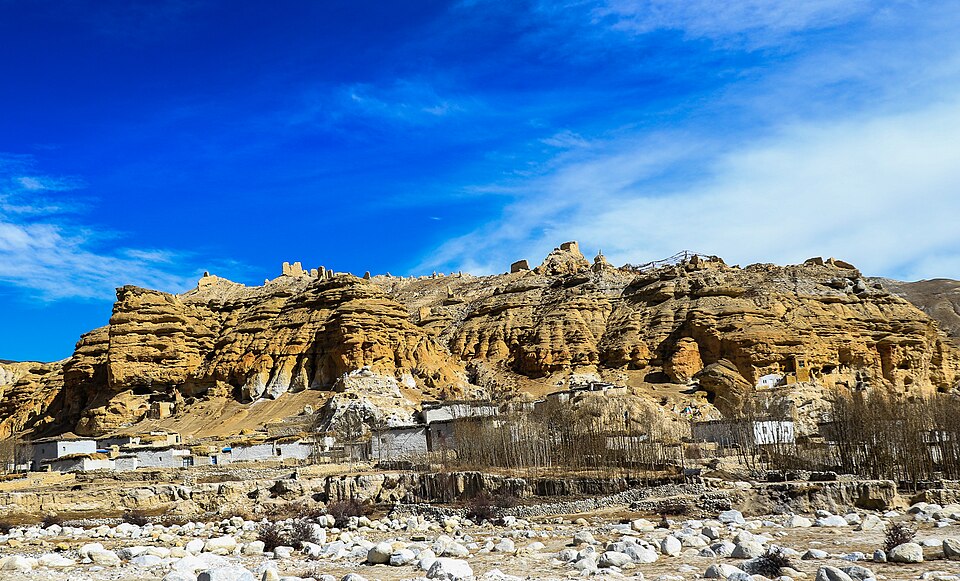
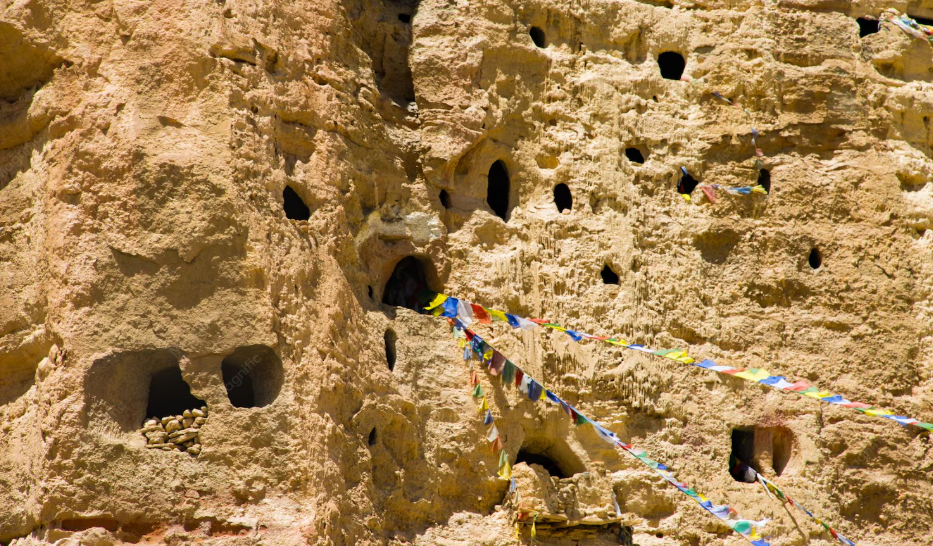
Sky caves of chhoser located in upper mustang
About a 90-minute walk or short jeep ride north of Lo Manthang, the Jhong cave complex at Chhoser is a five-story warren of rooms carved into a vertical cliff. Archaeologists have dated some chambers to over 2,000 years old. You climb wooden ladders through living quarters, meditation cells, and storage rooms used by long-vanished communities. Most agencies skip this. Ask for it specifically.
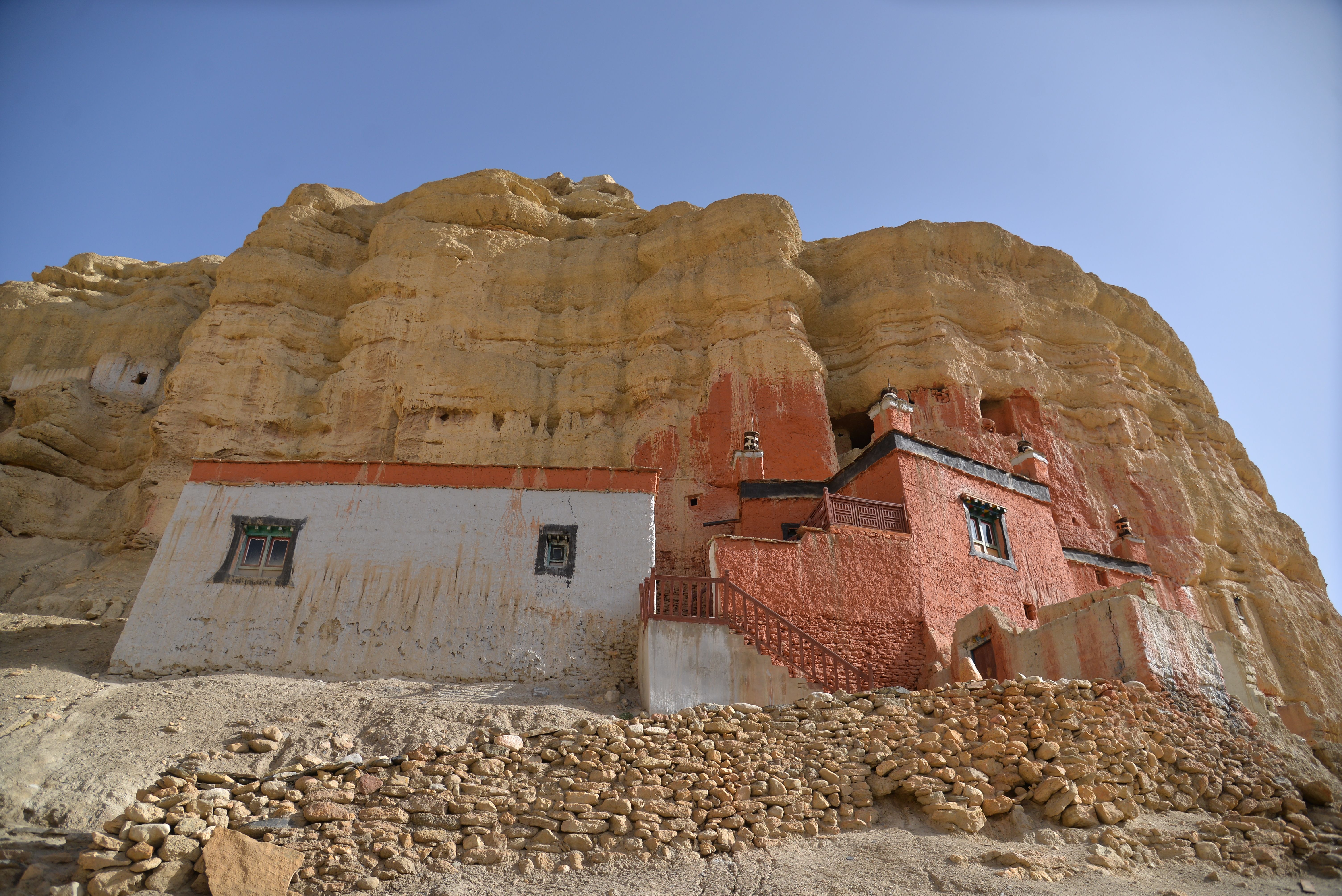
Luri Gompa
Source: Rajan Pun, Ancient monastery built into rocky cliffs of Upper Mustang, Nepal under clear sky.
Deep in a side valley near Yara, Luri Gompa is a cave monastery containing 14th-century chorten murals that rival the painting traditions of western Tibet. Reaching Luri requires a side trip of 2-3 extra days and a willingness to camp or stay in a homestay. It is, in our team's opinion, the single most rewarding detour in all of Mustang.
The Off-Beat Eastern Route
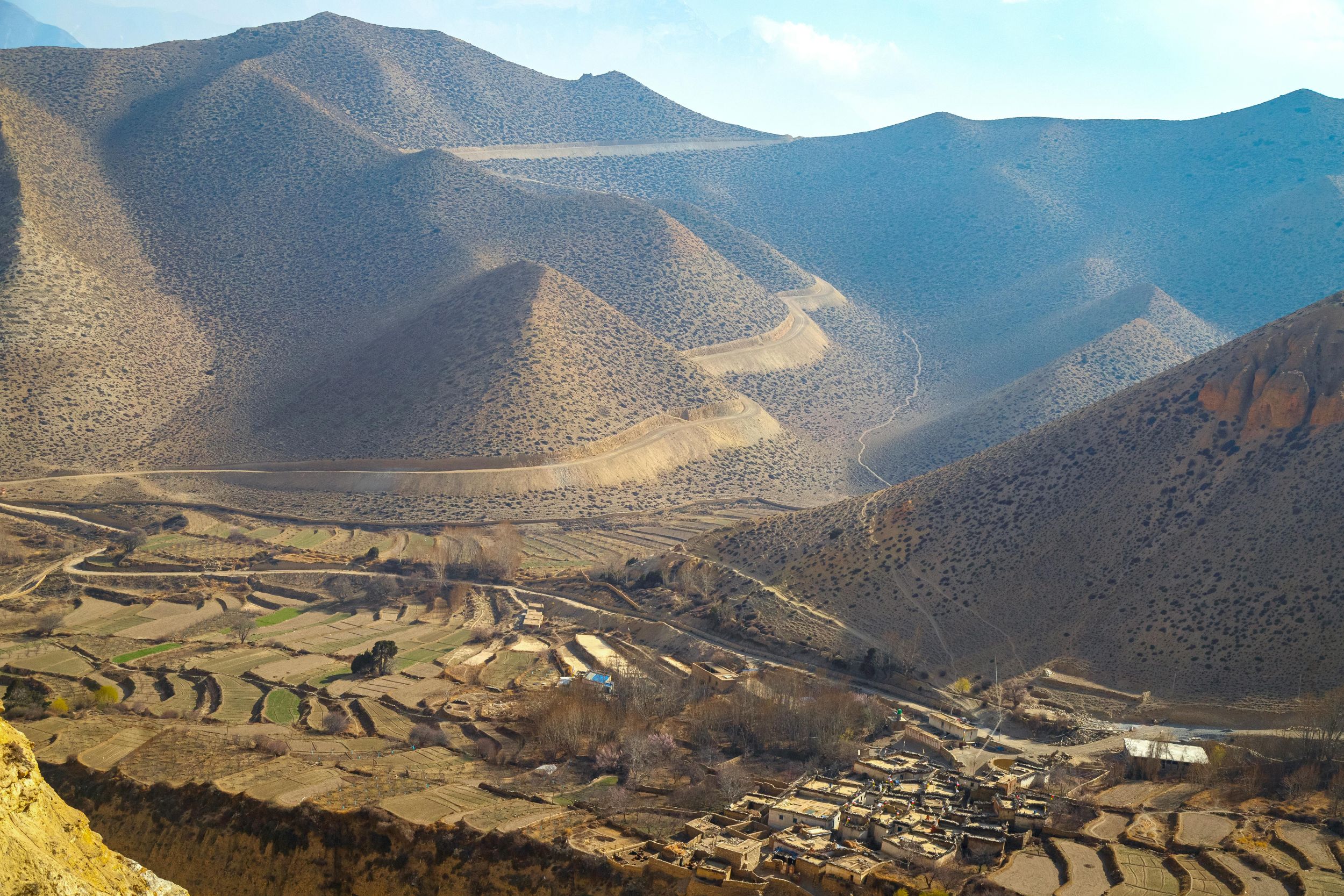
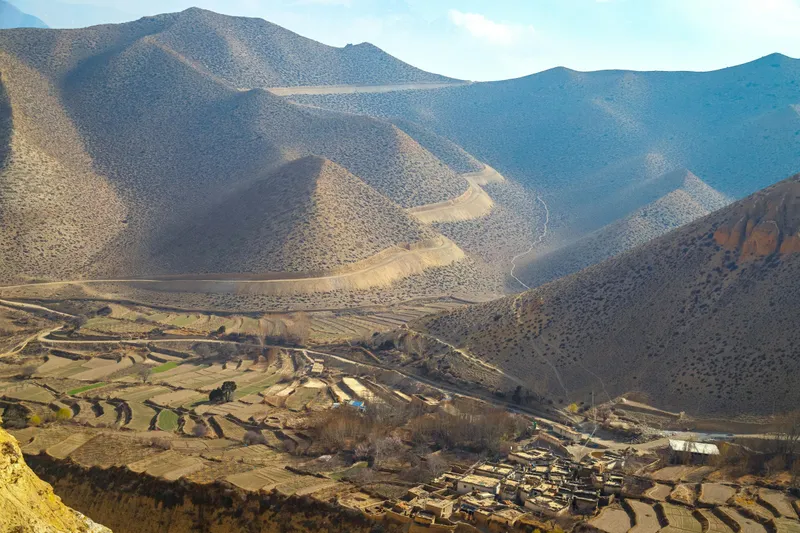
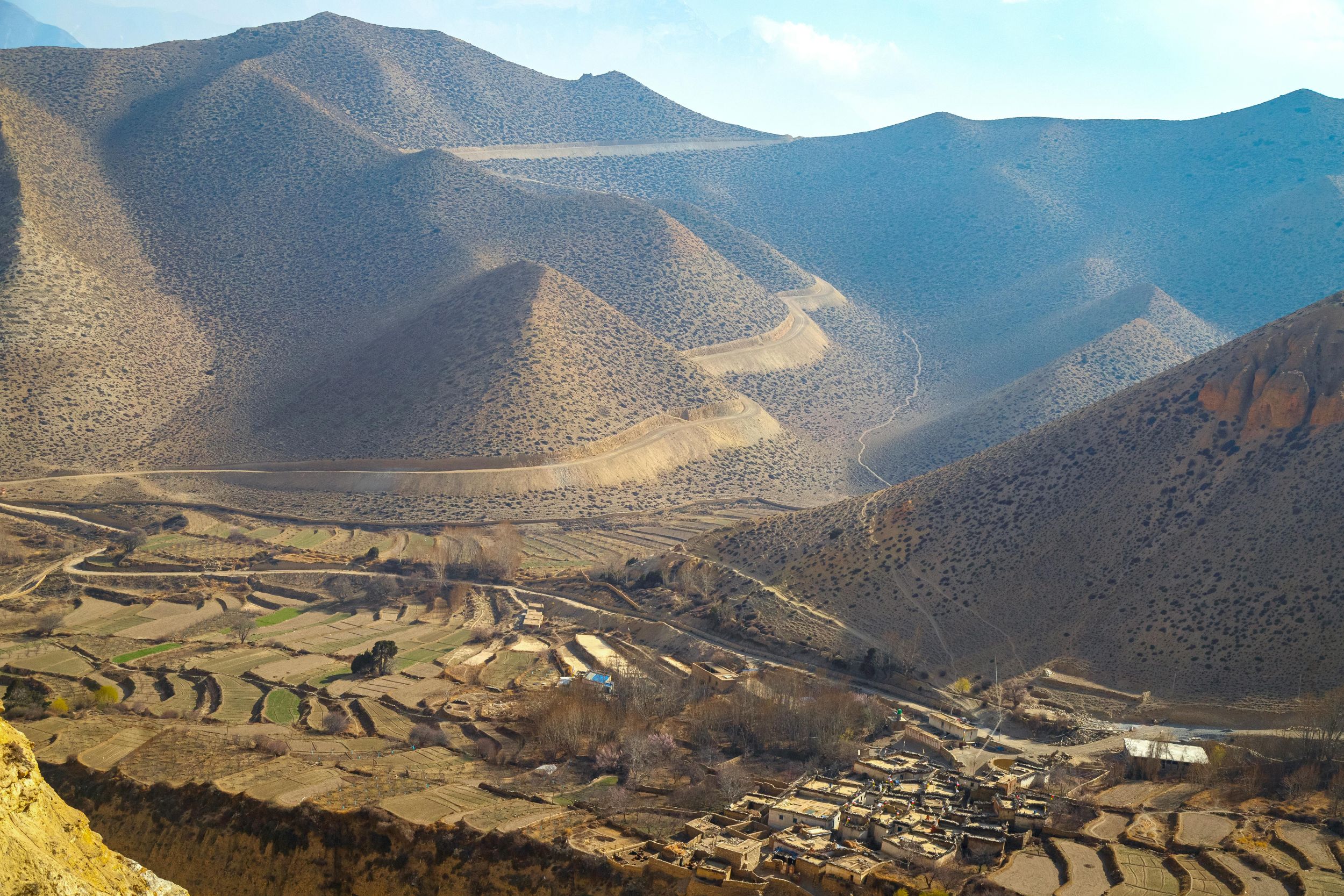
Source: Ashok J Kshetri, Stunning view of the hills and terrains of Upper Mustang, showcasing the unique geography and traditional settlement.
Returning from Lo Manthang via the eastern route through Dhi, Yara, and Tangye avoids the dust and jeep traffic of the main trail. You'll see almost no other trekkers for three full days, and the canyon scenery near Tangye is among the most surreal in Nepal.
Drone Rules in Upper Mustang
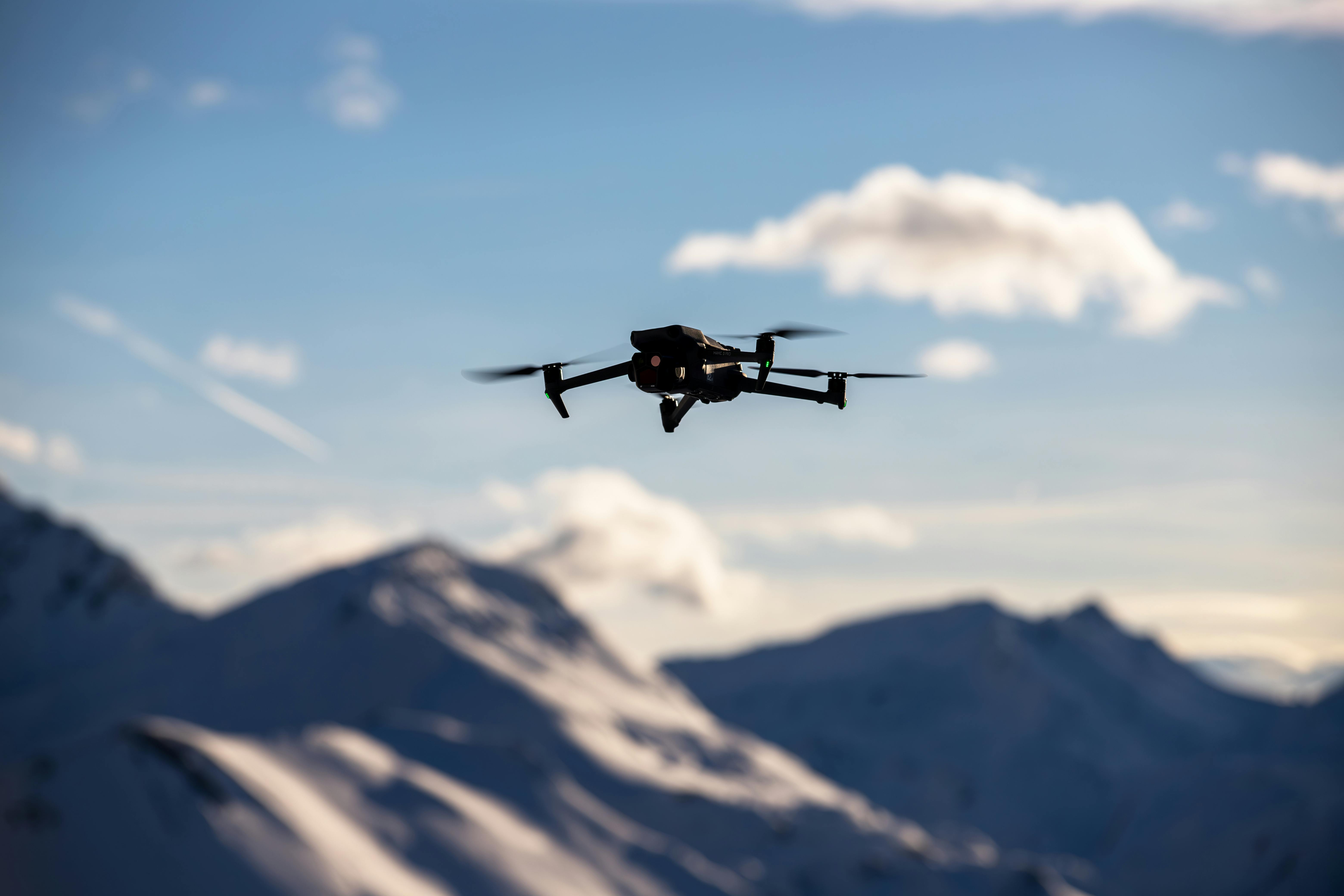
Source: Alan Kabeš, Drone flying in upper mustang with full permit from the authorities.
Drone use in Upper Mustang is tightly controlled because of the region's proximity to the Tibetan border and its restricted-area status.
Flying a drone without official authorization can result in confiscation, fines, or permit complications at checkpoints. Commercial filming requires separate approval from Nepal's Civil Aviation Authority and, in some cases, the Department of Immigration.
If you plan aerial photography, arrange permits well before arrival in Nepal rather than attempting informal use on the trail.
Cultural Etiquette in the Kingdom of Lo
Upper Mustang remains deeply Tibetan-Buddhist, and the local etiquette is non-negotiable. Always pass mani stones, chortens, and stupas on the left side, keeping them to your right. Walk clockwise around all religious structures. Remove shoes and hats before entering any monastery or temple, and never photograph inside prayer halls without explicit permission from a resident monk.
The Mustangi people are gracious but reserved with outsiders. Greet elders with a quiet "Tashi delek." Don't point your feet at altars or shrines while sitting. If you're invited into a home for butter tea, accept at least one cup, refusal is read as cold.
Food, Water, and Health on the Trail
Stick to vegetarian meals throughout. Meat in Upper Mustang is rarely fresh and travels long distances without refrigeration. Traditional Dal Bhat, lentil soup, rice, vegetable curry, and pickle, is your best fuel. Most teahouses offer free refills, and the carbohydrate-protein balance is ideal for high-altitude trekking.
Do not buy plastic bottled water. The waste sits in fragile desert ecosystems for centuries. Bring a reusable bottle paired with a Sawyer squeeze filter, UV purifier, or chlorine dioxide drops. Teahouses sell boiled water by the liter for a modest fee, this is the most sustainable option when filtration fails.
Telecom and Connectivity
Carry an Ncell SIM for the Annapurna and Lower Mustang sections. Once you cross into Upper Mustang above Kagbeni, Nepal Telecom (NTC) provides more reliable coverage. Lo Manthang now has intermittent 4G and basic Wi-Fi coverage in several teahouses, though speeds remain inconsistent and outages are common during bad weather or power interruptions. Nepal Telecom (NTC) generally performs better than Ncell once you enter Upper Mustang.
Tipping Your Crew
Tipping is a vital supplement to your guide and porter's base income. The marketplace standard is 15%–20% of the total trek cost, distributed among the crew at the end of the trip. For a typical 12-day Upper Mustang trek with one guide and one porter, that often translates to USD 180–250 for the guide and USD 120–180 for the porter. Hand the tips directly, in clean Nepalese Rupees or USD, on the final evening.
Best Time to Trek Upper Mustang in 2026
Season
Conditions
Verdict
March–May
Clear skies, Tiji Festival in May, cool nights
Excellent
June–August
Dry rain shadow, warm days, lush barley fields
Hidden gem season
September–October
Crisp visibility, busiest crowds, stable flights
Excellent
November–February
Brutal wind, snow on Lo La, many lodges closed
Not recommended
Helicopter Evacuation Reality in Mustang
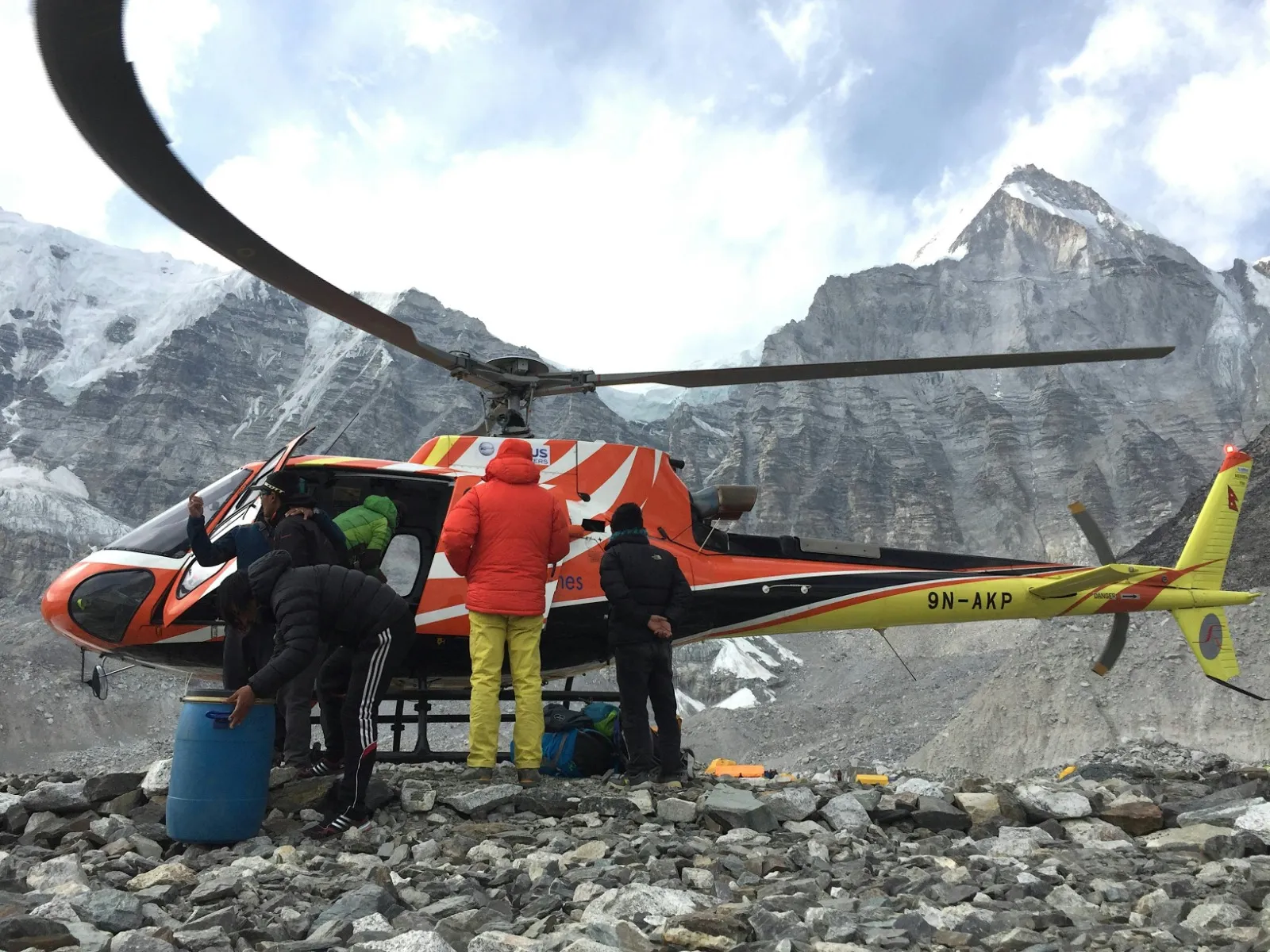
Helicopter used for transfering people and goods in the mountain region
Helicopter rescue in Upper Mustang is possible but weather-dependent. Strong afternoon winds, cloud build-up around Jomsom, and visibility issues through the Kali Gandaki gorge regularly delay evacuations.
This is why experienced operators insist on proper acclimatization rather than relying on evacuation as a backup plan. In serious AMS cases, descending by jeep is sometimes faster than waiting for safe helicopter conditions.
Ready to Trek Nepal?
Upper Mustang rewards travelers who plan early and trek with people who actually know the canyons. Our marketplace connects you directly with licensed, locally-based guides from Mustang, Pokhara, and Kathmandu who run small-group and private departures across every season, including the rain-shadow summer window most agencies ignore.
Browse verified Upper Mustang itineraries, compare guide profiles, and message operators directly to customize your route, festival timing, or Luri Gompa extension. Whether you're a solo traveler taking advantage of the new 2026 RAP rules or a group planning around Tiji, we'll match you with the right team on the ground.
All elevations, permit regulations, and logistical data in this guide have been fact-checked against 2026 Nepal Tourism Board and Department of Immigration frameworks for accuracy and safety.
Frequently Asked Questions
Can I use credit cards in Upper Mustang?
No. Cash only past Jomsom. A few upscale lodges in Lo Manthang occasionally accept cards with high surcharges, but service is unreliable. Bring all your Nepalese Rupees from Pokhara.
Do I need previous trekking experience?
Not necessarily. Upper Mustang is moderate. Daily walking averages 5-7 hours on well-defined trails with one main pass at Lo La (4,325 meters). Reasonable fitness and the ability to walk consistently for 10-12 days is enough.
What happens if the Jomsom flight is cancelled?
You either wait another day, or your agency arranges a private jeep from Pokhara. This is why we mandate 1-2 buffer days on the back end of every Mustang itinerary.
Is the Tiji Festival worth planning around?
Absolutely, if you can secure lodging in Lo Manthang early. The Tiji Festival usually falls in May or early June depending on the Tibetan lunar calendar. Exact dates shift annually, so confirm the official festival schedule before booking around it.
Can I extend my trek into Upper Dolpo?
Yes, but it requires a separate Upper Dolpo RAP and adds 10-14 days. The crossing from Mustang to Dolpo via the Chharka Bhot route is one of the great wild trekking expeditions in Nepal.
How cold does it get at night in Lo Manthang?
Spring and autumn nights drop to -5°C to 5°C. Monsoon nights are mild at 10–15°C. Carry a sleeping bag rated to -10°C as a buffer.