Prabesh Tamang
October is the month every trekking outfit in Pokhara braces for. Our phones ring nonstop from June onward, and by the time the first post-monsoon clouds lift in late September, the trails from Lukla to Larkya are already filling with boots. If you're considering Nepal in October 2026, you're choosing the single most reliable trekking window on the Himalayan calendar, and you're also choosing the busiest. This guide is how we, as a Pokhara-based marketplace of licensed guides and operators, would prep a friend for the trip.
Source: Avel Chuklanov
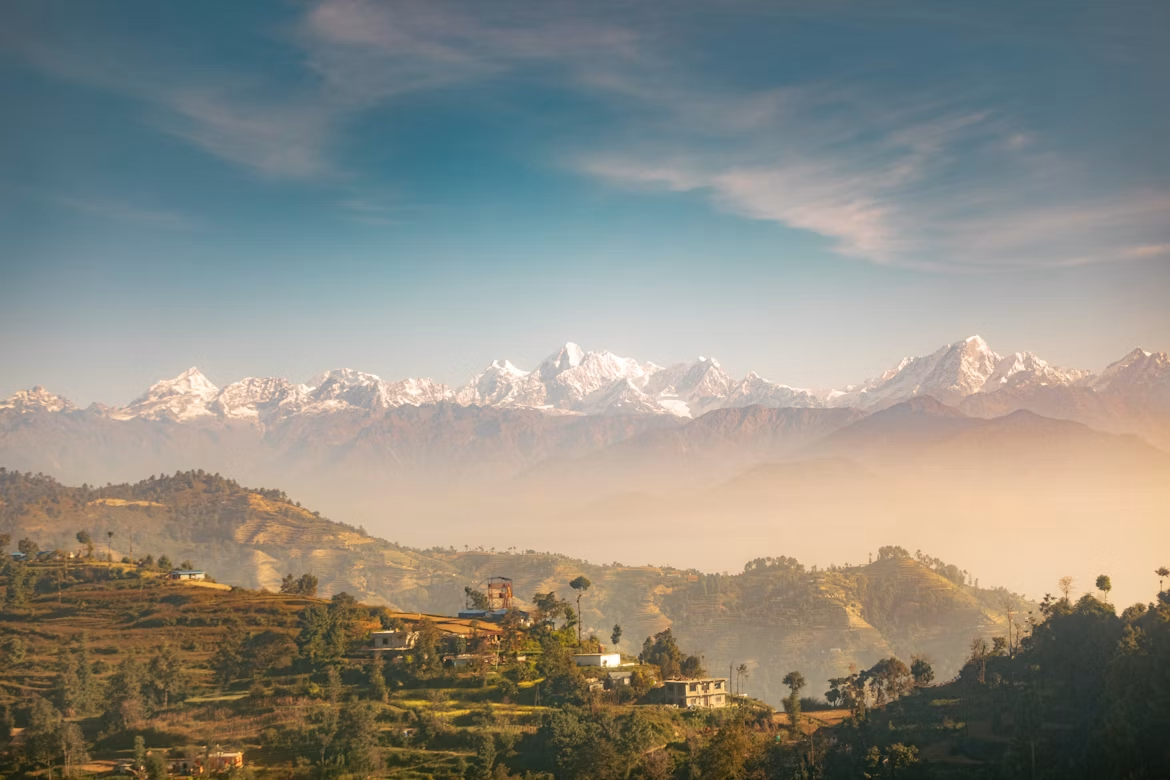
Clear weather seen during the october month in Nepal.
October sits in the sweet spot right after the monsoon rains end and before the high-altitude winter cold settles in. Skies are washed clean, daytime temperatures at trekking elevations hover between 10°C and 20°C, and the Lukla and Pokhara flight reliability improves significantly compared to monsoon months, though weather-related delays still occur. Mountain visibility is consistently the best of the year.
Our field coordinators have tracked this pattern for years: the first 10 days of October still carry residual monsoon moisture, the middle two weeks deliver postcard-perfect conditions, and the final week starts trending colder at altitude. If you can build flexibility into your dates, target October 8 through October 28, 2026.
Trekkers arriving during the first week of October should still expect occasional afternoon cloud build-up and the possibility of delayed mountain flights as the post-monsoon transition fully stabilizes.
Weather varies dramatically by elevation. Lowland Kathmandu and Pokhara stay warm and humid, mid-hills are mild and dry, and above 4,000 meters nights drop below freezing. Plan layered clothing rather than bulk.
The ultimate guide to planning your dream web travel adventure with the experts from myeasyguide.
Spam free. Unsubscribe anytime. We respect your privacy.
By late October, daytime temperatures begin dropping sharply above 4,500 meters, but the trade-off is exceptionally crisp visibility after the last residual post-monsoon moisture disappears from the atmosphere.
October 2026 is dominated by Dashain, Nepal's longest and most important Hindu festival, which falls in early October in 2026, while Tihar is expected in late October to early November. Tihar, the festival of lights, follows from October 30 to November 3, 2026. Both festivals shape staffing, transport, and the cultural atmosphere of your trip.
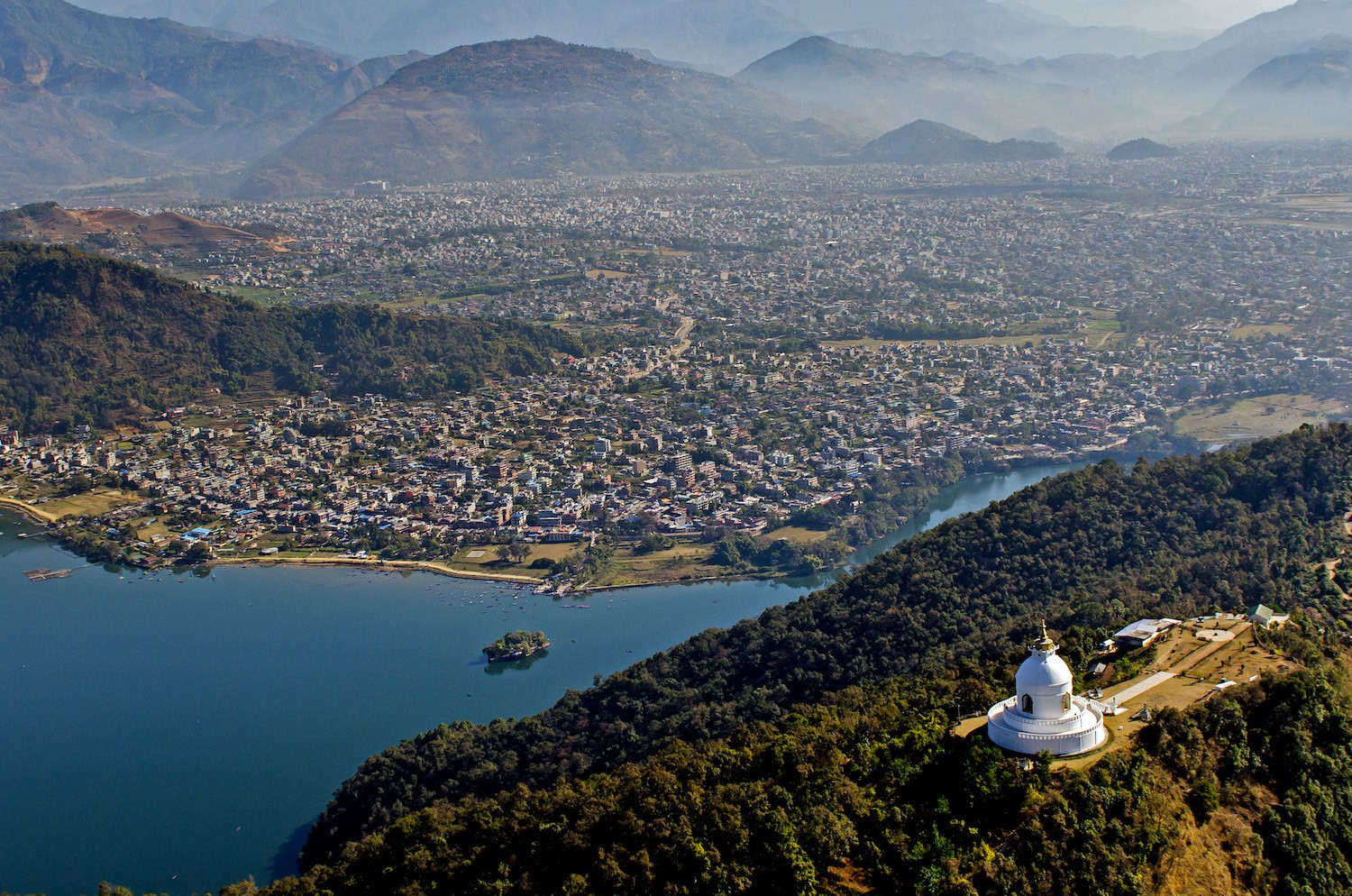
Source: Bishwo Bhandari
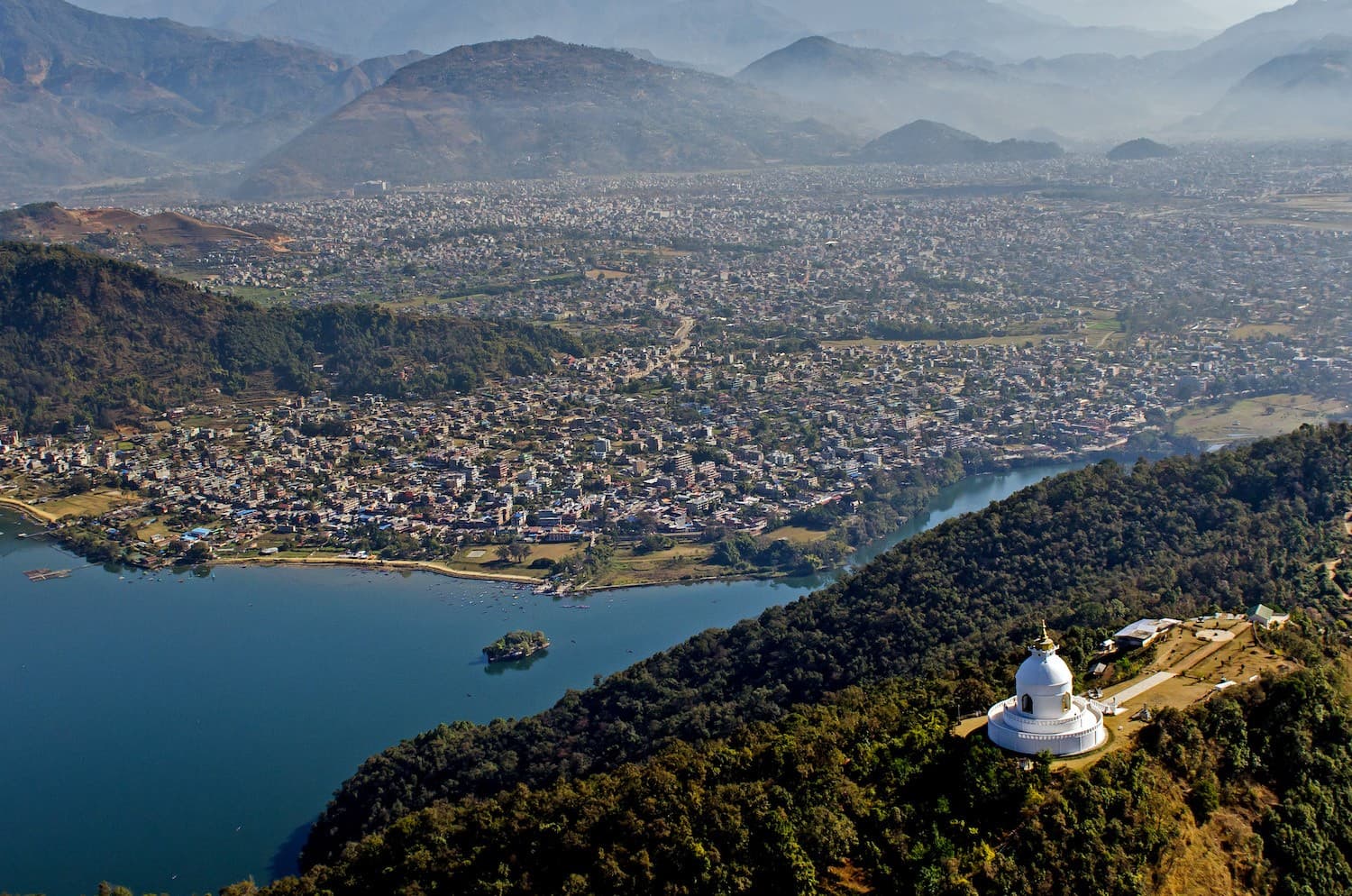
Aerial view of Lakeside Pokhara during the Dashain festival.
During Dashain, Kathmandu empties as families return to ancestral villages. Many government offices, banks, and businesses operate on reduced schedules during the core Dashain period. Domestic flights book out fast, and bus stations are chaotic. On the trail itself, expect quieter lower-altitude villages, kite-flying competitions on hillsides, and lodge owners offering tika (red rice and yogurt blessings) to guests.
Practical takeaway: lock in your permits and domestic flights at least 8 weeks ahead. Our agency partners typically secure Lukla and Pokhara seats by mid-August for October departures.
Source: Yogendra Singh
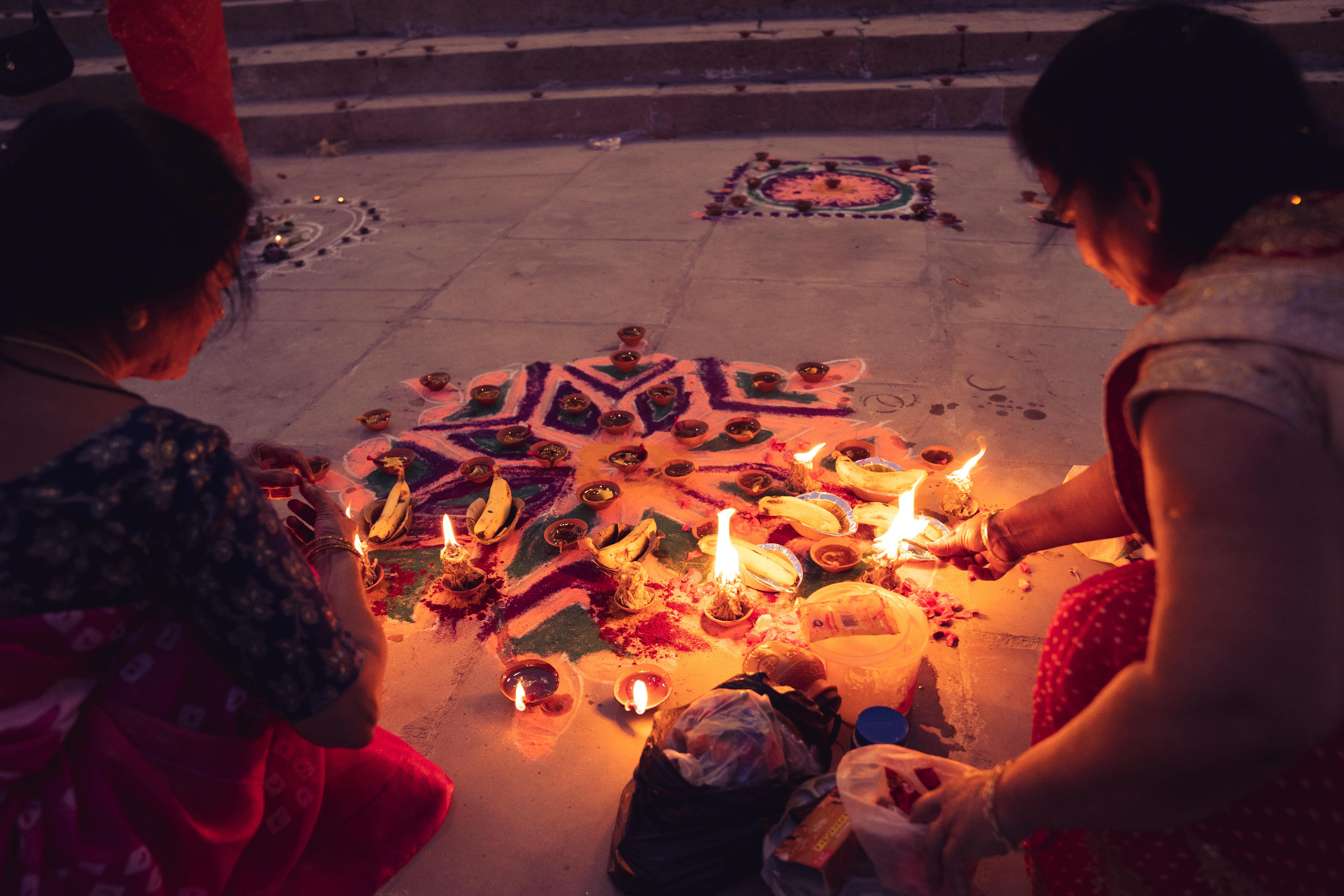
Nepali women creating a colorful Rangoli artwork and lighting oil lamps (diyas) on the ground during the Tihar festival.
Tihar is gentler and more visual. Villages glow with oil lamps and marigold garlands, dogs and cows are worshipped on consecutive days, and you'll often hear Deusi-Bhailo singing groups moving house to house at dusk. Treks finishing in early November frequently catch Tihar in places like Bandipur, Ghandruk, or Namche, a quiet bonus most foreign trekkers miss.
October is consistently Nepal’s busiest trekking month, with a significant concentration of annual trekking traffic arriving during the post-monsoon season. The classic routes, Everest Base Camp, Annapurna Base Camp, Poon Hill, and the Annapurna Circuit, see teahouses operating at or beyond capacity. Advance booking becomes strongly recommended during October, especially on Everest and Annapurna routes.
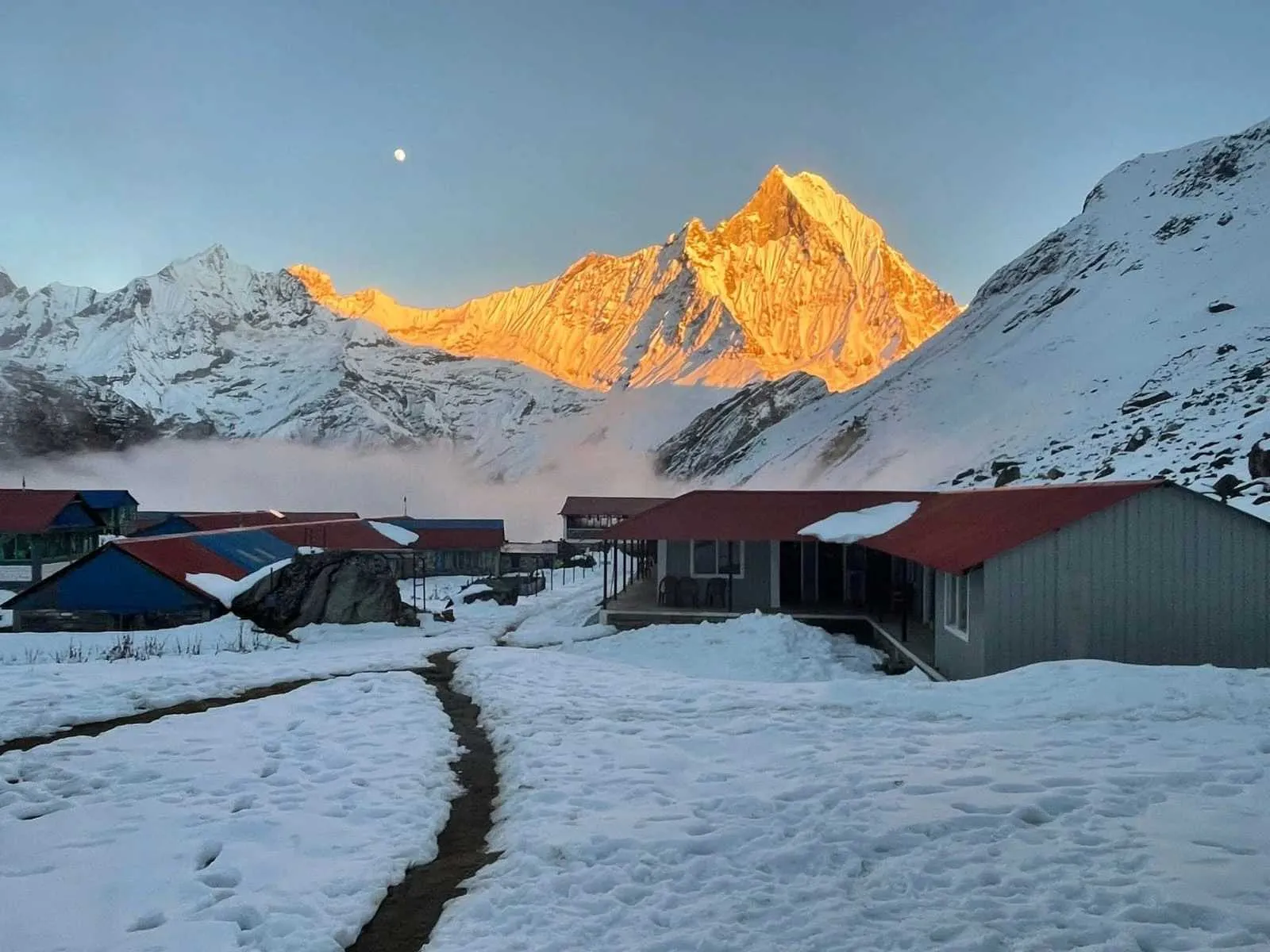
Trekking trails covered in fresh white snow leading up to Annapurna Base Camp.
If solitude matters more than fame, our marketplace consistently routes October clients toward these less-trafficked options:
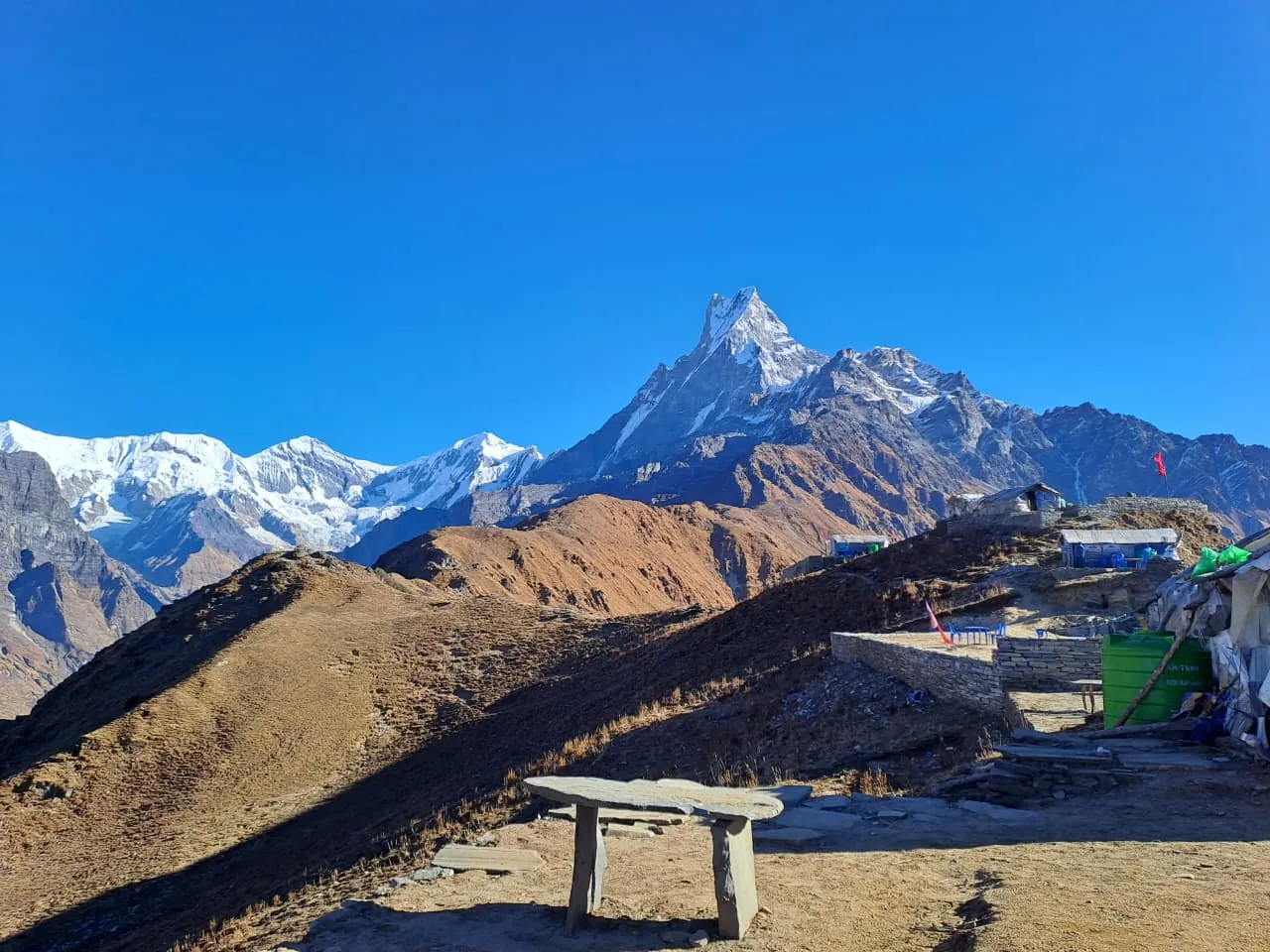
Narrow ridge path toward Mardi Himal High Camp with Machapuchare peak behind.
Guide requirements vary by trekking region in 2026, with restricted areas and much of the Annapurna region applying the strictest enforcement. Most major trekking regions in Nepal now strongly encourage or require licensed guides, particularly in national parks and restricted areas. Enforcement varies by region, with Annapurna and restricted areas applying the strictest oversight. For restricted areas like Manaslu, Upper Mustang, Tsum, and Dolpo, the old 2-person minimum was scrapped in March 2026, a single traveler can now obtain a Restricted Area Permit, but a licensed guide remains mandatory at a ratio capped at 1:7.
Pay in cash at Tribhuvan International Airport. Most major currencies accepted.
Source: Thomas de Fretes
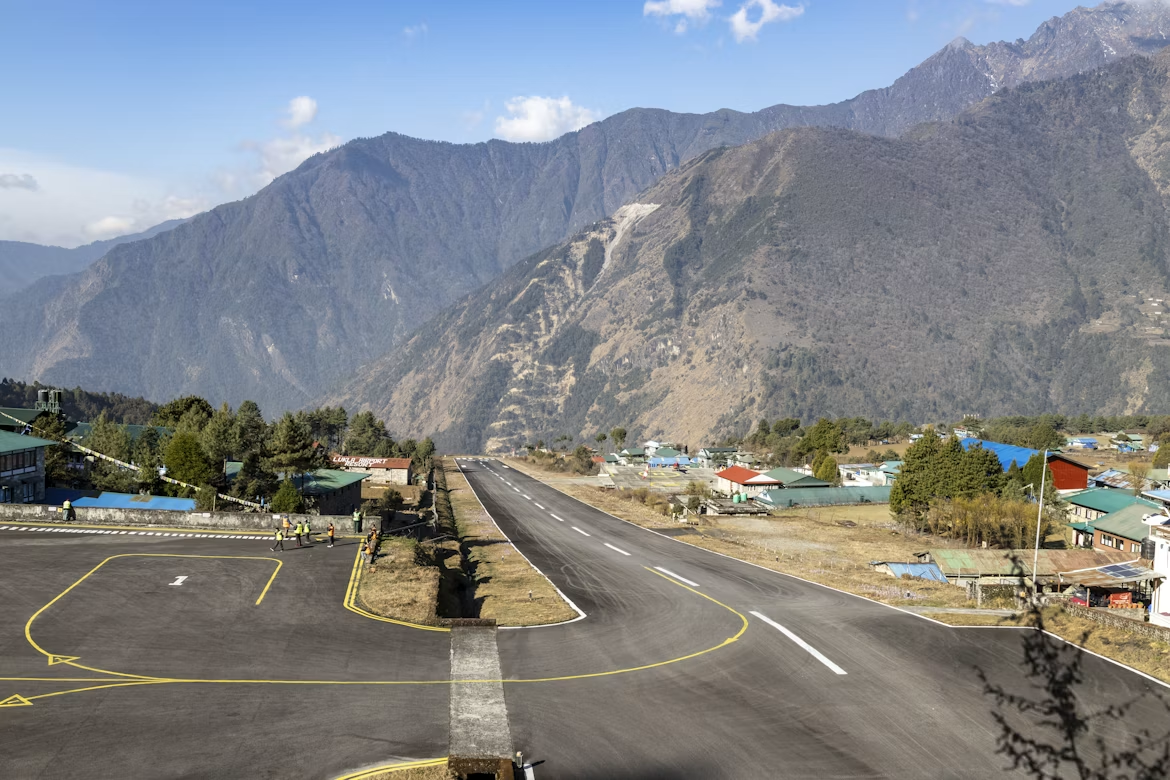
Wide angle shot of the short, angled runway at Tenzing-Hillary Airport in Lukla, gateway to Everest Base Camp.
This is the single most misunderstood logistic for October trekkers. During peak season (March–May and September–November), during peak trekking seasons, most Lukla flights are rerouted through Manthali Airport in Ramechhap due to Kathmandu air traffic congestion. They depart from Manthali Airport in Ramechhap, requiring a 4-5 hour overnight drive from Kathmandu, typically starting around 1:00 AM to catch dawn flights.
Build in 1-2 buffer days on either end of the trek for weather delays. October 2026 should see fewer cancellations than September, but morning fog at Manthali still grounds aircraft. Shared helicopter seats can range widely depending on demand, weather, and passenger numbers, often several hundread USD per seat.
ATMs disappear past Namche Bazaar in Everest and past Jomsom in Annapurna. Manaslu has effectively zero banking infrastructure beyond Soti Khola. Carry sufficient Nepalese rupees from Kathmandu or Pokhara.
Common trail upcharges to budget for:
For SIM cards, Ncell dominates the Annapurna region, while Nepal Telecom (NTC) is essential for Everest, Manaslu, and Upper Mustang.
October's stable weather lulls trekkers into pushing too fast. Don't. Above 3,000 meters, sleeping elevation should not increase by more than 300-500 meters per day, and acclimatization rest days are mandatory at hubs like Namche (3,440m) and Manang (3,540m).
Standard travel insurance is not enough. You need a policy that explicitly covers high-altitude emergency helicopter evacuation up to 6,000 meters and AMS/HAPE/HACE medical treatment. This is also legally required to issue restricted area permits for Manaslu and Mustang.
Stick to vegetarian meals on the trail. In the Khumbu, slaughtering animals is prohibited by local Buddhist law, meat is carried up on foot or mule over days without refrigeration. Lean on Dal Bhat, the traditional lentil-rice-curry plate, which comes with free refills and provides clean carbohydrate fuel. Soups, momos, and fried potatoes are reliable backups.
Bring a reusable bottle plus an active purification method, UV pen, Sawyer squeeze filter, or chlorine dioxide drops. Bottled water creates a plastic waste problem the high villages can't manage, and a filter pays for itself within a week.
Most October treks pass through Buddhist territory. Always pass mani stones, chortens, and stupas on the LEFT side, keeping the structure to your right, and walk clockwise around any religious monument. Remove shoes and hats before entering temples or monasteries. Photography inside monastery prayer halls requires explicit permission from a resident monk.
Tipping is culturally expected at the end of a trek. Our marketplace standard is 15%-20% of the total trek cost, distributed among the guide and porter team. This is a meaningful supplement to their base wages, not a bonus.
A realistic, AMS-safe Everest Base Camp itinerary for October includes two acclimatization days and two flight buffer days.
If you're set on EBC or ABC in October, our coordinators recommend three tactics. First, start daily walks by 6:30 or 7:00 AM, most groups depart between 8:00 and 9:00. Second, sleep in less famous villages (Pangboche instead of Dingboche, Chomrong instead of Jhinu). Third, book lodges 4-6 weeks in advance through a local agency that has standing relationships with teahouse families.
For Annapurna Circuit trekkers, use the NATT trails (New Annapurna Trekking Trails) to walk parallel to the jeep road and escape vehicle dust between Besisahar and Manang.
Yes. October delivers the clearest mountain visibility of the year, dry trails, stable daytime temperatures, and the most reliable Lukla flight window. The trade-off is significantly higher crowd density and the need to book permits, lodges, and flights well in advance.
Dashain (around October 1-10) closes banks and government offices for several days and books out domestic flights early. Mountain teahouses stay open throughout. Tihar (late October to early November) brings beautiful village lighting but minimal logistical disruption on the trail.
Book at least 2-3 months ahead for popular routes like EBC, ABC, and Manaslu Circuit. Upper Mustang and Tsum Valley require even earlier planning due to limited guide availability and government permit processing windows.
No. A licensed guide is mandatory on all national park and restricted area treks under rules enforced since 2023. The 2026 update removed the 2-person minimum for Restricted Area Permits, so solo travelers can now trek Manaslu or Mustang, but only with a licensed guide.
Yes, but inconsistently. Everest Link and AirLink Wi-Fi cards work in most Khumbu lodges for NPR 500-700 per day. Ncell covers Annapurna well; NTC is your best bet in Everest and Manaslu. Expect dead zones above 4,800 meters.
Expect $1,500-2,800 USD for a guided EBC or Manaslu trek, including permits, guide, porter, accommodation, meals, and domestic flights. Upper Mustang runs $2,500-3,800 USD due to the steep restricted area fee. Confirm exact rates with your marketplace operator.