Sandeep Shrestha
Packing for a Nepal trek in 2026 is less about buying every flashy item on a Western gear-shop checklist and more about knowing what actually survives a sub-zero night at Gorak Shep, a dusty jeep ride to Machha Khola, or a windy afternoon crossing Thorong La. Our field coordinators in Thamel and Pokhara have watched thousands of trekkers arrive overpacked, underprepared, or carrying gear that could have been rented for a fraction of the cost.
This guide breaks down exactly what to bring from home, what to rent locally, and what to leave in your hotel locker, calibrated to current trail conditions, permit rules, and the realities of teahouse life above 3,000 meters.
Source: Sherine
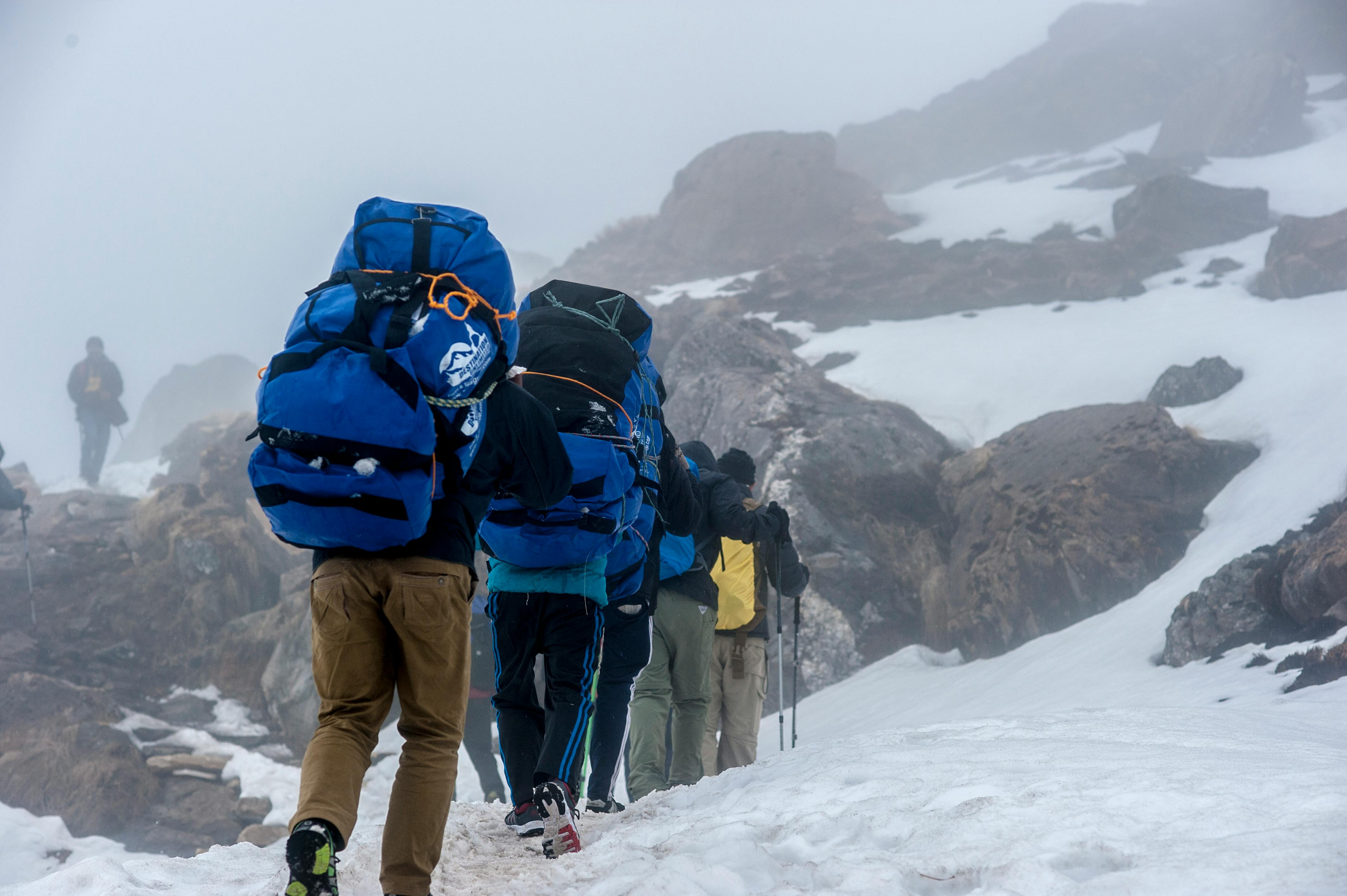
A group of hikers ascending a snowy mountain trail in Ghandruk, Nepal, during a misty day.
Nepal treks demand modular layering, not bulk. A working system uses three layers: a moisture-wicking base, an insulating mid-layer (fleece or light down), and a waterproof shell. This setup handles everything from 30°C lowland heat in Lukla to -20°C windchill at Kala Patthar without overstuffing your duffel.
Porters on most teahouse treks carry a combined 20-25 kg shared between two trekkers, meaning your personal duffel should not exceed 10-12 kg. Domestic flights to Lukla and Jomsom enforce a hard 15 kg total weight cap including your daypack. Overpacking is not just uncomfortable, it is logistically impossible.
Bring gear that touches your skin, supports your feet, or keeps you alive in an emergency. These items are personal, fit-dependent, and not worth the lottery of renting locally.
Waterproof, mid-to-high ankle trekking boots broken in for at least 30 kilometers before arrival are mandatory for any trek above 3,000 meters. Blisters from new boots are the number one cause of itinerary changes on the Annapurna and Everest trails. Bring a second pair of camp shoes (lightweight runners or Crocs) for teahouse evenings.
Cotton is the enemy. It holds sweat, freezes, and never dries on the trail. Every layer touching your skin must be merino wool or synthetic.
These cannot be reliably sourced on the trail. Pack them in your carry-on, not your checked duffel.
Renting high-value cold-weather gear in Thamel or Lakeside saves luggage space, baggage fees, and roughly $400-600 USD in retail costs. Quality is generally good for established shops near the Kathmandu Guest House and Pokhara Lakeside. Expect rental rates of NPR 100-200 per item per day with a passport copy or refundable deposit held as security.
The ultimate guide to planning your dream web travel adventure with the experts from myeasyguide.
Spam free. Unsubscribe anytime. We respect your privacy.
Test every zipper, check the down fill for clumping, and squeeze the sleeping bag, if it doesn't loft back fully, ask for another. Reputable Thamel shops will swap gear without hassle. Avoid the cheapest shops near the New Road; their down jackets are often synthetic knockoffs labeled as down.
Pack mules in your brain, not your duffel. These items waste weight and money.
Source: Arijit Dey
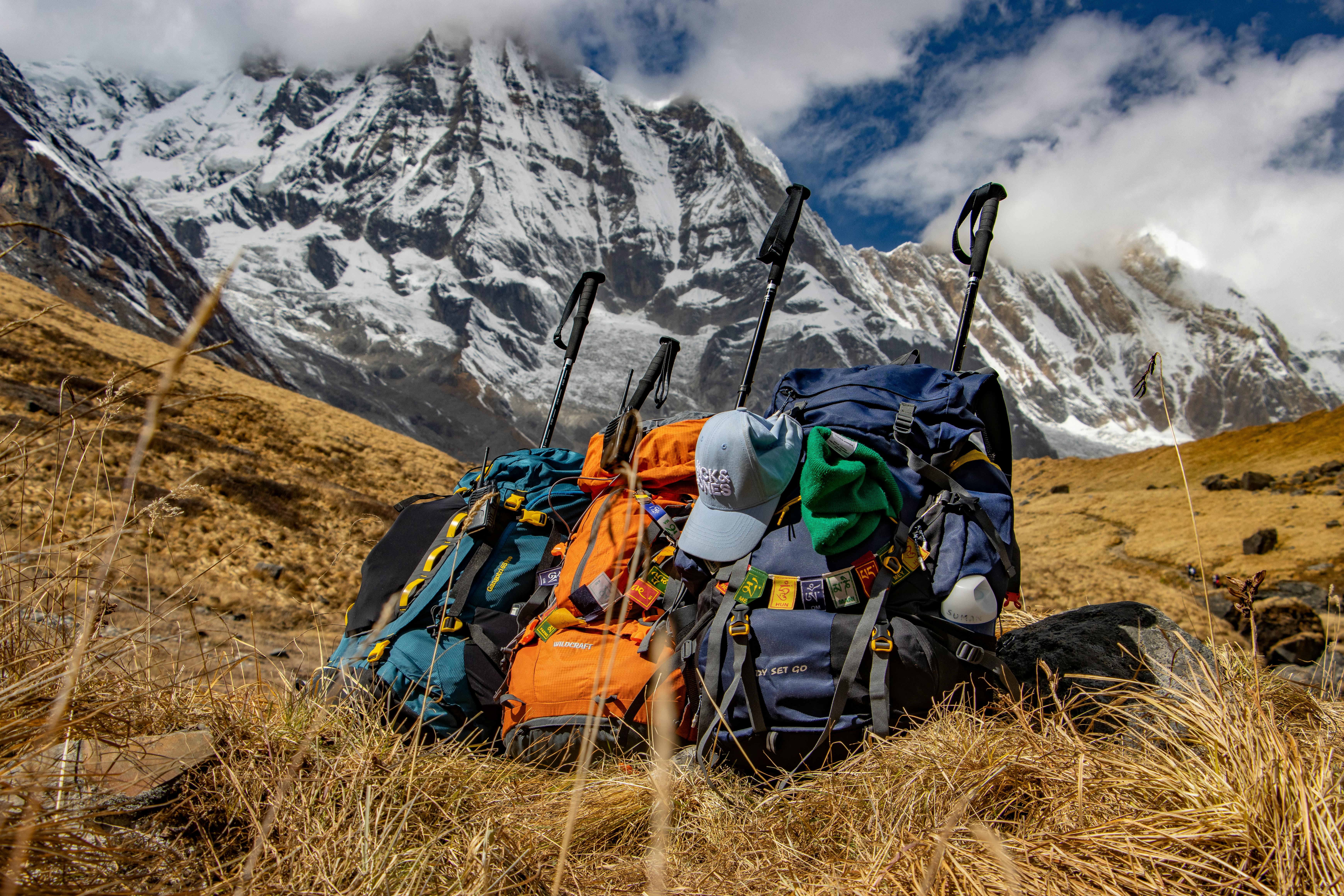
Backpacks rest at Annapurna's base under the snowy peaks, capturing trekking adventure in Nepal.
Your daypack stays on your back every step; the porter carries your duffel. A well-packed 30-35 liter daypack with a hip belt, rain cover, and hydration sleeve is the single most-used piece of gear on your trek.
Nepal has tightened guide requirements significantly since 2023, particularly in restricted areas such as Manaslu, Upper Mustang, Tsum Valley, and Dolpo where licensed guides are mandatory. Enforcement in regions like Annapurna and Everest continues to evolve and may vary by checkpoint and season, but trekking with a licensed guide is increasingly becoming the operational norm across Nepal.
Bring printed copies of your Nepal visa fee receipt ($30 for 15 days, $50 for 30 days, or $125 for 90 days on arrival) and your travel insurance policy. Insurance must explicitly cover high-altitude helicopter evacuation up to 6,000 meters and treatment for AMS, HAPE, and HACE. This is legally required for Restricted Area Permits and saves lives every season.
Power exists on most teahouse treks, but it is rarely free and rarely reliable above 4,000m.
Expect to pay NPR 200-500 per device per charge above Namche or Manang. Charging fees vary by village and lodge. Some teahouses charge per device, others per hour, and prices rise significantly above 4,000 meters where solar power systems struggle in cold weather. Bring a quality 20,000mAh power bank charged before departure and keep it warm inside your sleeping bag at night — lithium batteries lose 30-50% capacity in sub-zero temperatures.
Pick up a local SIM at Kathmandu airport on arrival. Ncell dominates the Annapurna region with solid 4G coverage through Manang. Nepal Telecom (NTC) is essential for Everest, Manaslu, and Upper Mustang, Ncell drops out above Namche. Trail Wi-Fi via Everest Link cards costs NPR 600 for 24 hours of slow connectivity.
ATMs do not exist on the trail past Namche Bazaar or Jomsom. Withdraw enough Nepalese Rupees in Kathmandu or Pokhara before flying out. Plan for NPR 3,000-5,000 per day in cash after your last ATM to cover hot showers (NPR 500-700), device charging (NPR 200-500), Wi-Fi, snacks, and the occasional Everest beer.
Tipping is culturally expected and a vital supplement to base wages. The marketplace standard is 15-20% of your total trek cost, distributed at the end of the trek. A guide typically receives roughly twice the porter's tip. Hand tips directly in an envelope on the last evening, not through a third party.
Single-use plastic bottle restrictions have expanded across the Khumbu and other conservation areas, though enforcement varies between villages and seasons. Regardless of regulation, carrying a reusable bottle with a filtration or purification system is the more sustainable and cost-effective option for Himalayan trekking. Bring two 1-liter wide-mouth bottles plus an active purification method: a SteriPEN UV purifier, Sawyer Squeeze filter, or chlorine dioxide tablets. Boiled water at teahouses costs NPR 200-400 per liter and adds up fast over a 14-day trek.
Stick to vegetarian meals above 3,500 meters. In the Khumbu, slaughtering animals is prohibited by local Buddhist law, all meat is carried up by foot or mule over multiple days without refrigeration. Lean into Dal Bhat (lentil soup, rice, vegetable curry) which comes with free refills, delivers clean carbohydrate fuel, and is freshly prepared at every teahouse.
Toilet conditions vary dramatically by altitude and route. Lower-elevation teahouses often have Western-style toilets, while high camps commonly rely on squat toilets or frozen outdoor facilities.
Always carry:
Most teahouses charge separately for hot showers, and water pipes frequently freeze above 4,500 meters during winter mornings.
Source: Rajan Dahal
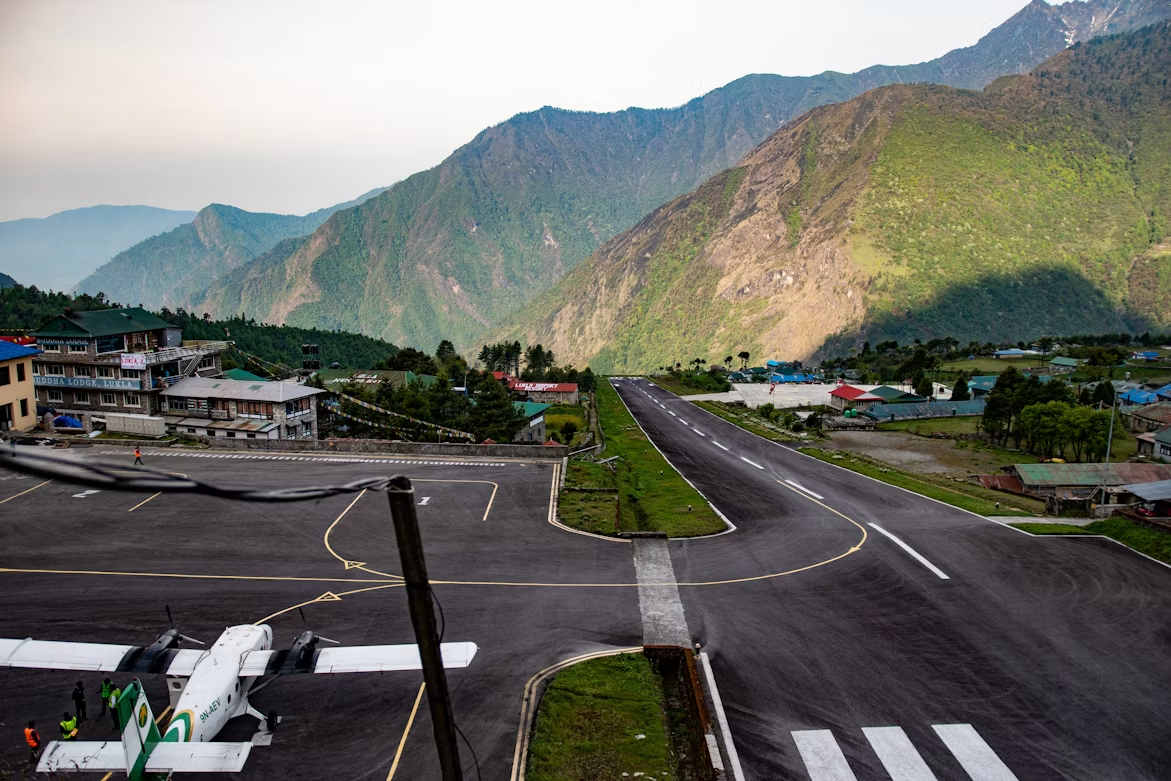
Wide angle shot of the short, angled runway at Tenzing-Hillary Airport in Lukla, gateway to Everest Base Camp.
If your trek starts in Lukla during peak seasons (March-May and September-November), flights operate from Manthali Airport in Ramechhap, not Kathmandu. You will drive 4-5 hours through the night, departing Kathmandu around 1:00 AM to catch your morning flight. Pack snacks, a neck pillow, and motion sickness tablets in your daypack.
Build 1-2 buffer days into your itinerary on both ends. Weather cancellations are routine, and missing your international connection because Lukla fogged in is a frustrating, expensive mistake we see every season.
Respect travels lighter than gear. Walk clockwise around stupas, chortens, and mani walls, always pass them on the LEFT so the structure stays to your right. Remove shoes and hats before entering any monastery, and never photograph inside prayer halls without a resident monk's clearance.
Pack modest clothing for village teahouses: knee-length shorts or trousers, sleeved shirts, and a scarf for women entering temples. A small gift from your home country (postcards, coins) is a warm way to thank host families along the trail.
Do not expect reliable laundry services once you move deep into the trekking regions. While Namche Bazaar, Manang, and a few larger villages offer paid laundry or bucket washing, clothing dries extremely slowly in cold mountain air, especially during October and winter.
Most experienced trekkers rotate:
Quick-dry synthetic or merino fabrics matter far more than carrying extra clothing. Overpacking spare outfits only increases porter weight without improving comfort.
Many rental sleeping bags in Kathmandu are labeled “-20°C” even when their real comfort rating is significantly warmer. The printed number often reflects survival temperature, not comfortable sleeping temperature.
If you trek in late autumn or winter:
Cold nights above 4,500 meters catch far more trekkers off guard than daytime hiking temperatures.
Many Himalayan trails now overlap with jeep roads, especially in Lower Mustang, Manaslu access sections, and parts of the Annapurna Circuit. Fine dust destroys electronics, irritates lungs, and dries eyes quickly during windy afternoons.
Bring:
Trekkers often prepare for cold but underestimate how physically exhausting constant dust exposure can become.
Most trekking injuries in Nepal happen on descents, not ascents. Endless stone staircases in the Annapurna region and steep downhill sections from passes like Cho La or Thorong La place enormous stress on knees and ankles.
Trekking poles are not optional luxury gear for longer Himalayan treks, they are one of the most effective ways to reduce fatigue and maintain balance on loose rock, wet stone, and icy trails.
Note: Diamox (acetazolamide) is commonly used for altitude acclimatization, but it is not suitable for everyone. Discuss dosage, allergies, and side effects with your doctor before traveling to Nepal.
A perfect packing list only gets you to the trailhead, what happens above 4,000 meters depends on the licensed guide walking beside you. Browse verified guides, custom itineraries, and transparent pricing on our marketplace to match your trek with a Nepali expert who knows the trail, the teahouses, and the safest pace for your group. Connect with our coordinators in Pokhara today to design a 2026 trek built around your fitness, season, and bucket-list pass.
Yes. Thamel in Kathmandu and Lakeside in Pokhara have dozens of gear shops renting down jackets and -20°C sleeping bags for roughly NPR 100-200 per item per day, with a refundable deposit or passport copy held as security. Inspect zippers, down fill, and loft before paying.
Yes, trekking poles are strongly recommended for EBC and any trek above 3,000 meters. They reduce knee impact by up to 25% on descents like Namche to Lukla and add stability on icy passes such as Cho La and Kongma La.
Licensed porters carry a maximum of 20-25 kg total, typically split between two trekkers (10-12 kg each). Domestic flights to Lukla and Jomsom enforce a strict 15 kg limit including hand luggage.
Single-use plastic bottles are banned in the Khumbu region above Lukla and discouraged across all conservation areas. Bring a reusable bottle plus a UV purifier, Sawyer filter, or chlorine dioxide tablets for safe, sustainable hydration.
Waterproof mid-to-high ankle trekking boots, broken in for at least 30 km before arrival, are essential for any multi-day Himalayan trek. Running shoes are only suitable for low-altitude day hikes around Pokhara or Kathmandu Valley.
Plan for NPR 3,000-5,000 per day in cash after your last ATM (Namche or Jomsom). This covers hot showers, Wi-Fi, charging, snacks, and tips. For a 14-day trek, carry NPR 35,000-50,000 in mixed denominations.