Arati Dawadi
The question lands in our Pokhara inbox almost daily: I'm a woman planning to trek Nepal alone, is it actually safe? The short, honest answer from our team of local coordinators is yes, with serious caveats that have shifted dramatically under the 2026 trekking regulations. Solo female trekking in Nepal is one of the most rewarding journeys you can undertake, but the rules around what "solo" actually means have changed.
This guide walks you through every practical layer: legal requirements, route selection, cultural etiquette, harassment realities, gear, money on the trail, and how to vet a guide so you arrive in Kathmandu confident rather than anxious. We've coordinated hundreds of female-led treks across the Annapurna, Everest, Langtang, Manaslu, and Mustang regions, and the patterns below come straight from that operational experience.
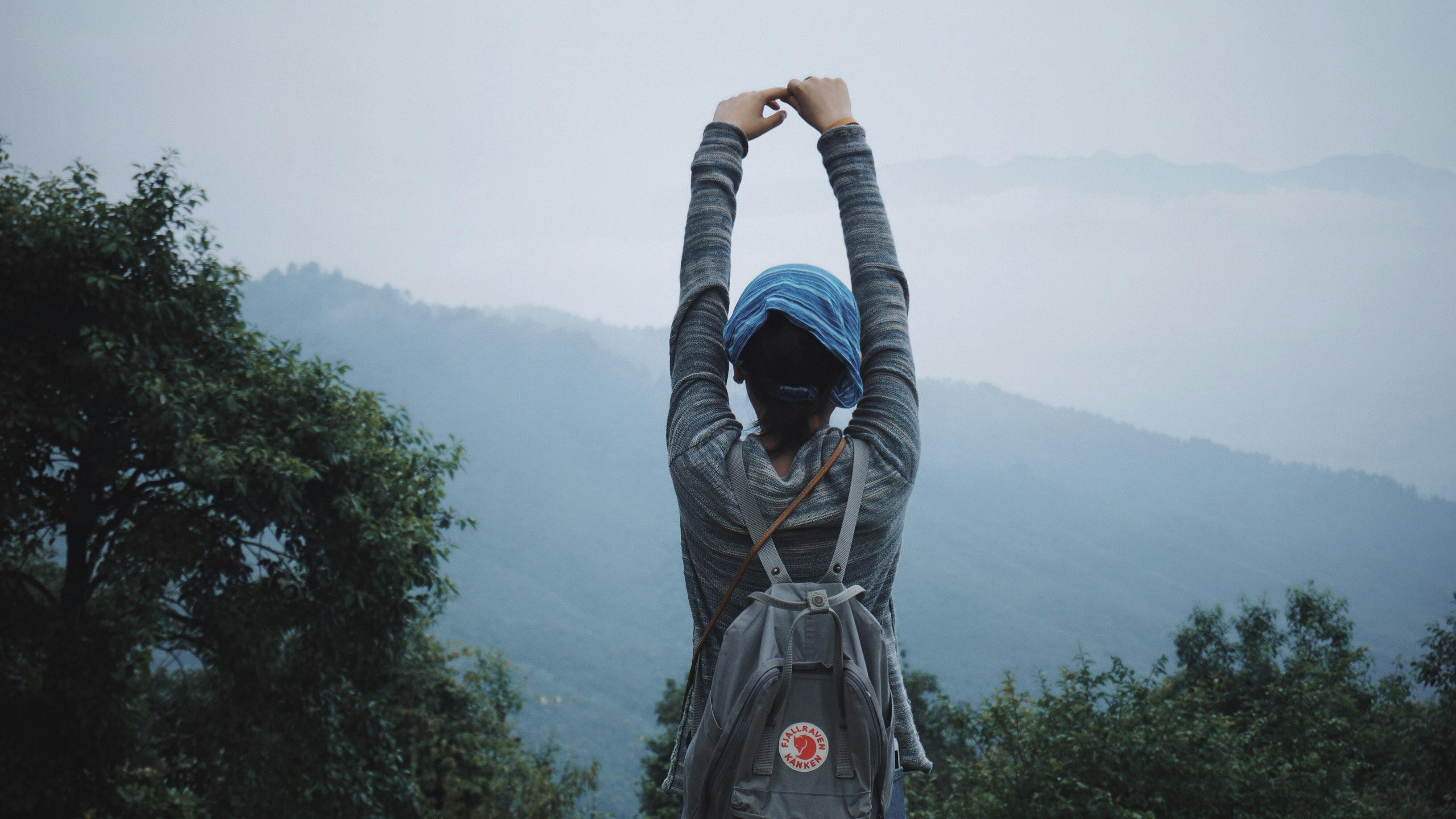
Source: Y Jamyang
Woman stretching with a scenic mountain view in Nepal, capturing a moment of travel serenity.
Since 2023, Nepal has introduced mandatory licensed-guide policies across most major trekking regions, including Annapurna, Langtang, Manaslu, and parts of the Everest region. Enforcement varies by route and checkpoint, but trekking with a licensed guide is increasingly expected and strongly recommended. You can still travel without a tour group, but you cannot walk the trails entirely alone.
For women, this rule is actually a quiet blessing. It eliminates the legal gray zone that used to push budget-minded solo trekkers onto remote trails without backup. The March 2026 update also removed the old 2-person minimum for Restricted Area Permits, meaning a single woman can now obtain a RAP for Manaslu, Upper Mustang, Upper Dolpo, or Tsum Valley, provided she trekks with a licensed guide. The guide-to-trekker ratio in restricted zones is capped at 1:7.
So "solo female trekking" in 2026 means: you, your licensed guide, and optionally a porter. No group, no fixed departure, no strangers. Just your itinerary, your pace, your decisions.
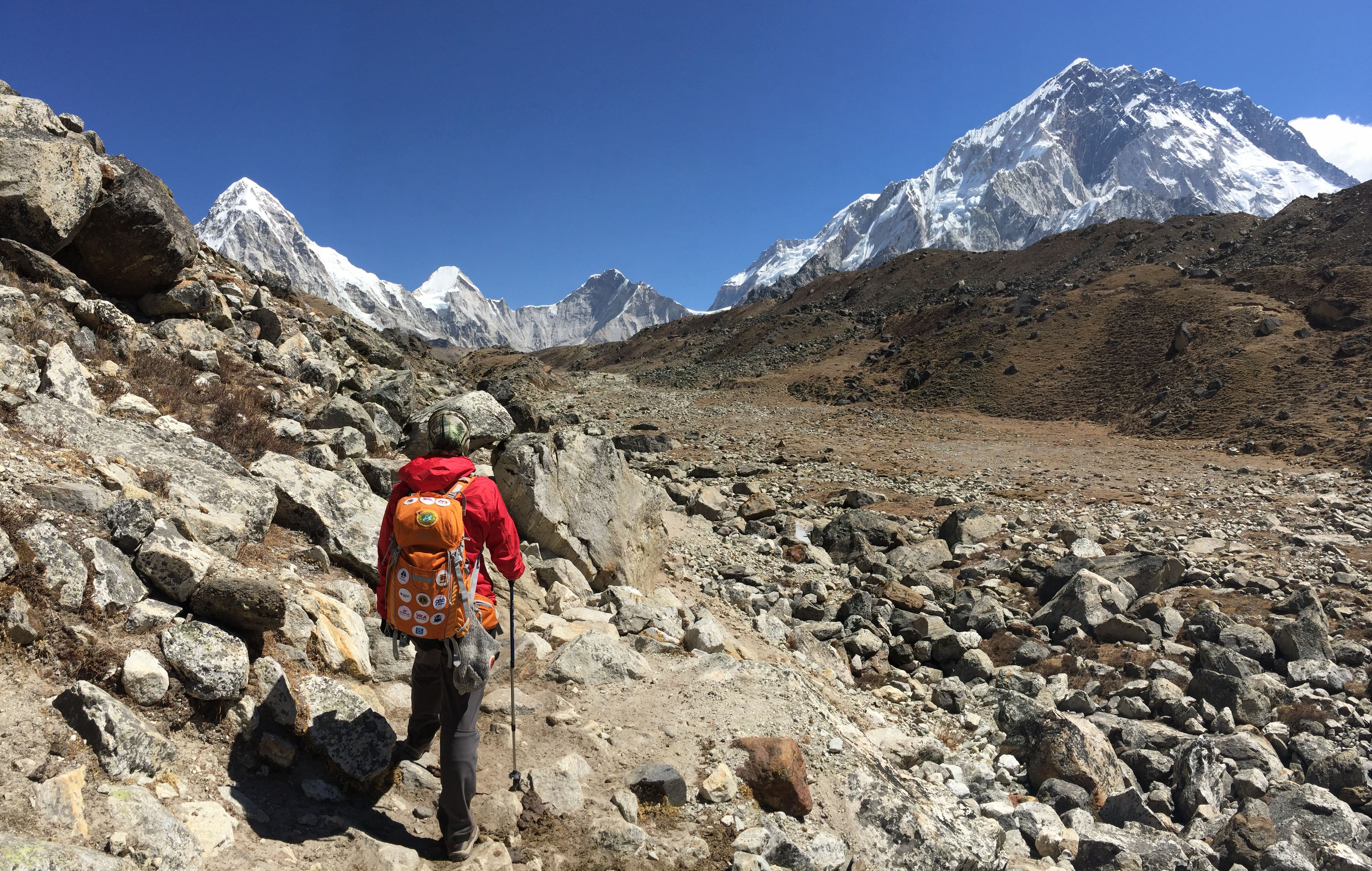
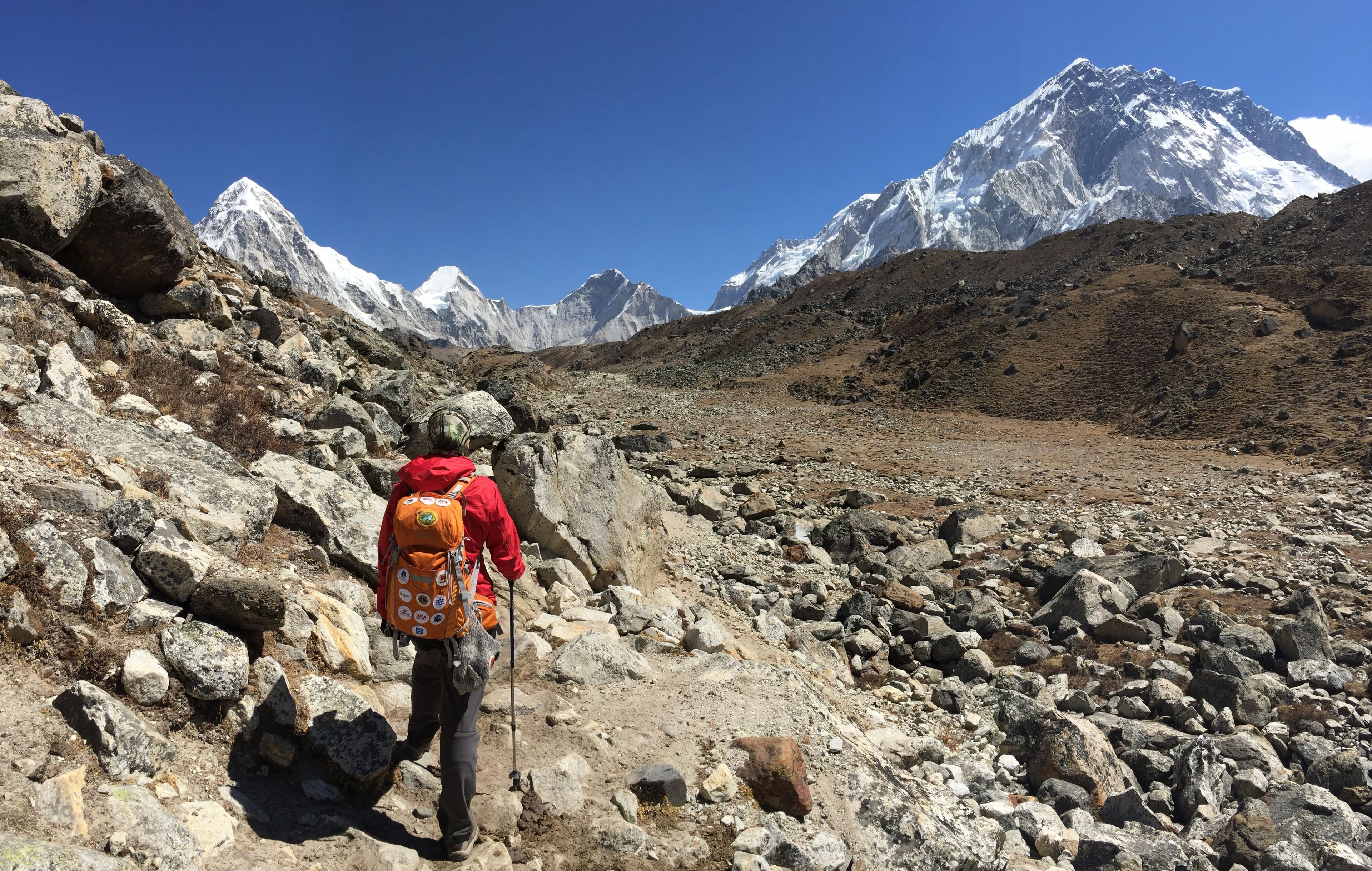
Source: Sherine
Trekker explores rocky Himalayan trail in Khumjung, Nepal with snow-capped peaks.
Nepal ranks as one of the safer Himalayan destinations for female travelers, with violent crime against tourists being rare on mainstream trekking routes. The real risks are altitude sickness, slips on wet stone steps, and occasional verbal harassment in Kathmandu's tourist districts, not assault on the trail. A properly vetted licensed guide significantly reduces logistical, medical, and personal-safety risks on the trail.
That said, we won't paint a fairy tale. Catcalling, staring, and unwanted attention happen in Thamel and Pokhara Lakeside, particularly at night. On the trail itself, the dynamic flips, mountain communities are conservative, family-oriented, and protective of guests. Teahouse owners often look out for solo female trekkers like extended family.
The most documented safety issues we've tracked have involved:
All four are avoidable with basic vetting through a reputable agency or marketplace.
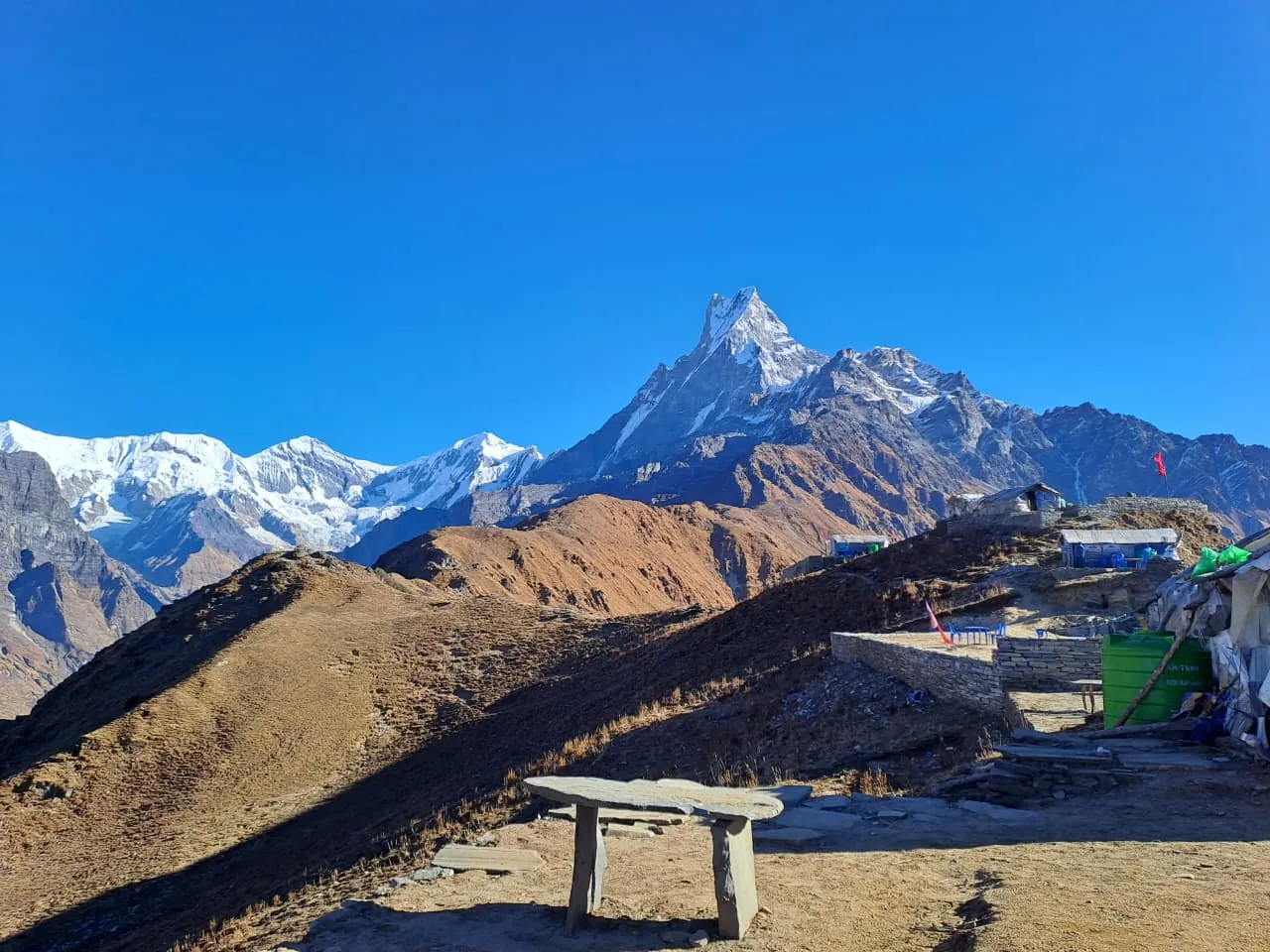
Narrow ridge path toward Mardi Himal High Camp with Machapuchare peak behind.
Beginner-friendly, well-populated routes are your best entry into the Himalayas. Ghorepani Poon Hill (3-5 days), Mardi Himal (5-7 days), and Annapurna Base Camp (7-10 days) from Pokhara offer dense teahouse networks, English-speaking lodge owners, and high foot traffic, meaning you're rarely truly alone on the trail even if your booking is private.
The ultimate guide to planning your dream web travel adventure with the experts from myeasyguide.
Spam free. Unsubscribe anytime. We respect your privacy.
Permit fees in Nepal are fixed by the government and identical regardless of gender or solo status. Depending on the region and current implementation policies, trekkers may require a TIMS/e-TIMS registration alongside regional permits. Restricted Area Permits cost significantly more and are processed only through registered agencies.
TIMS/e-TIMS implementation currently varies by trekking region and agency arrangement. Where applicable, foreign trekkers generally pay around NPR 2,000, while SAARC nationals receive reduced rates.
Source: Sylwia Bartyzel
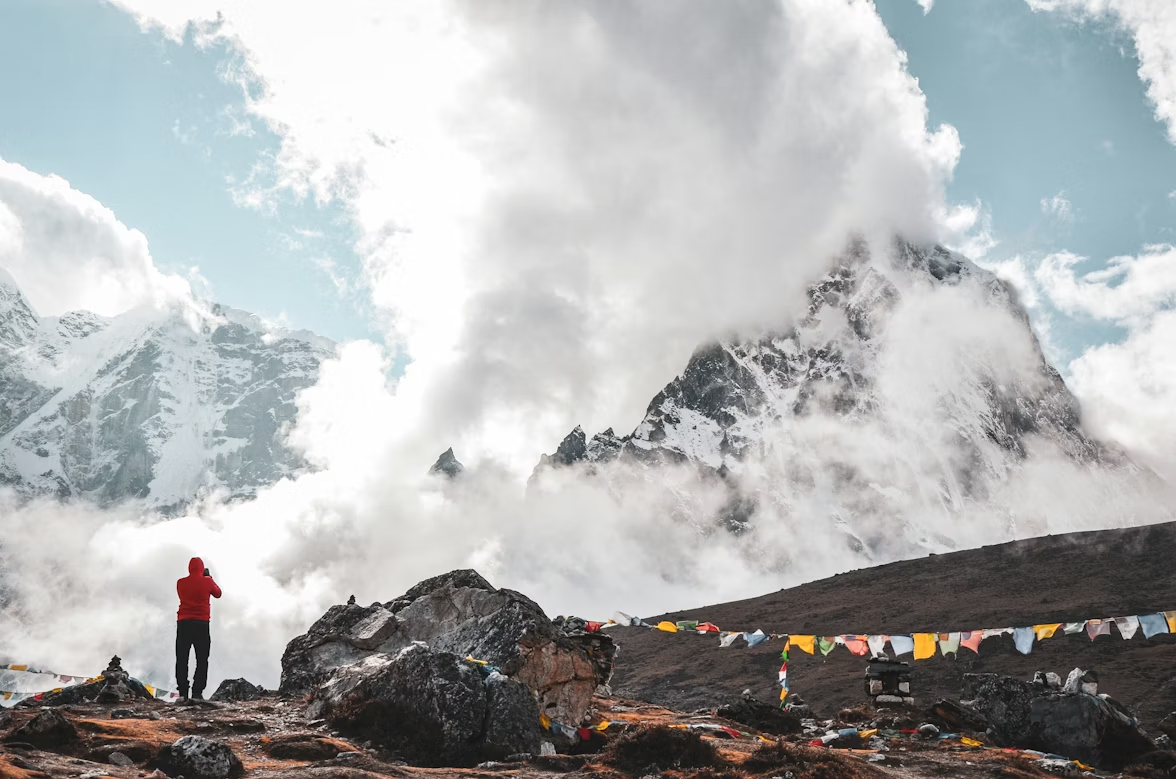
A trekking guide taking picture of the beautiful mountain landscape.
Your guide will be your closest companion for 5 to 16 days. For solo female trekkers, choosing the right person is the difference between a transformative trip and an uncomfortable one. Always book through a registered agency or vetted marketplace, never through a Facebook DM or someone who approaches you in Thamel.
Nepal's female trekking guide community has expanded significantly since 2015. Organizations like the Three Sisters Adventure Trekking and several Pokhara-based cooperatives now train and license dozens of women annually. Booking a female guide is no longer a niche request, but supply tightens during peak seasons (March-May and September-November), so book 4-8 weeks ahead.
Source: Thomas de Fretes
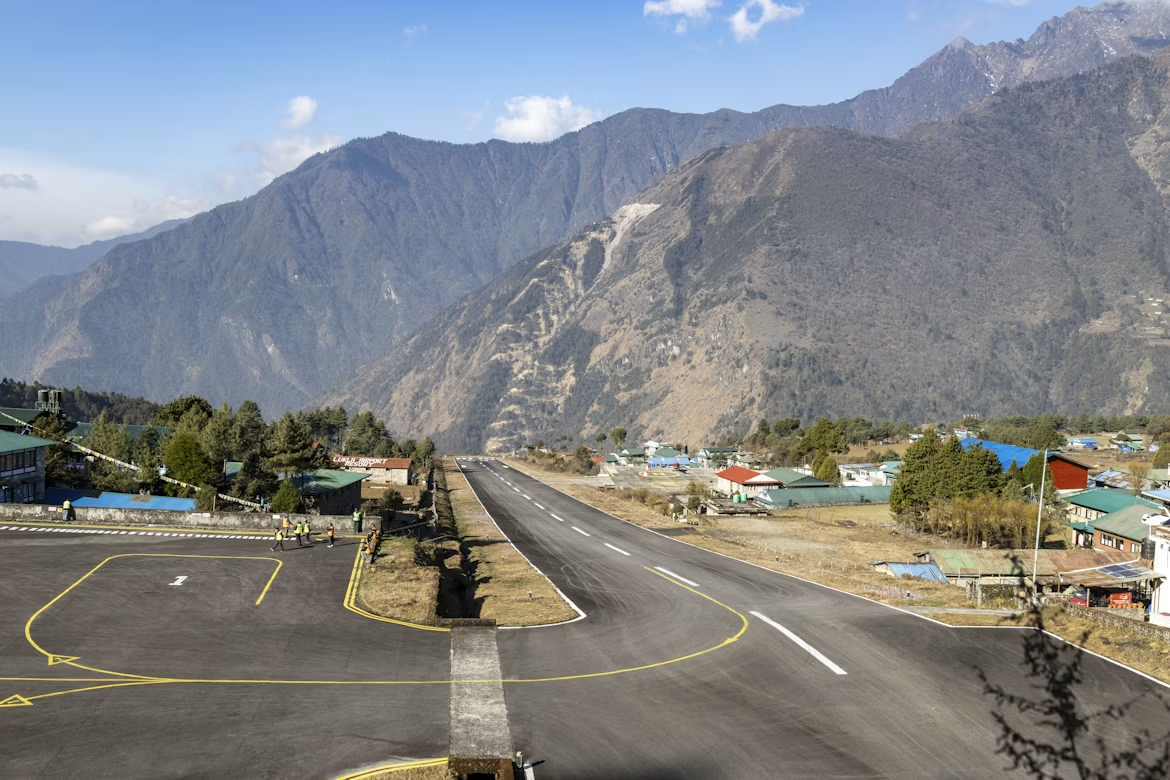
Wide angle shot of the short, angled runway at Tenzing-Hillary Airport in Lukla, gateway to Everest Base Camp.
If your itinerary includes Everest, know that during peak seasons (March-May and September-November) Lukla flights do not depart Kathmandu. They operate from Manthali Airport in Ramechhap, requiring a 4-5 hour overnight drive leaving Kathmandu around 1:00 AM. For solo female trekkers, we strongly recommend booking a private vehicle through your agency rather than a shared jeep — the comfort and safety margin is worth the upcharge. Always build in 1-2 buffer days for weather cancellations.
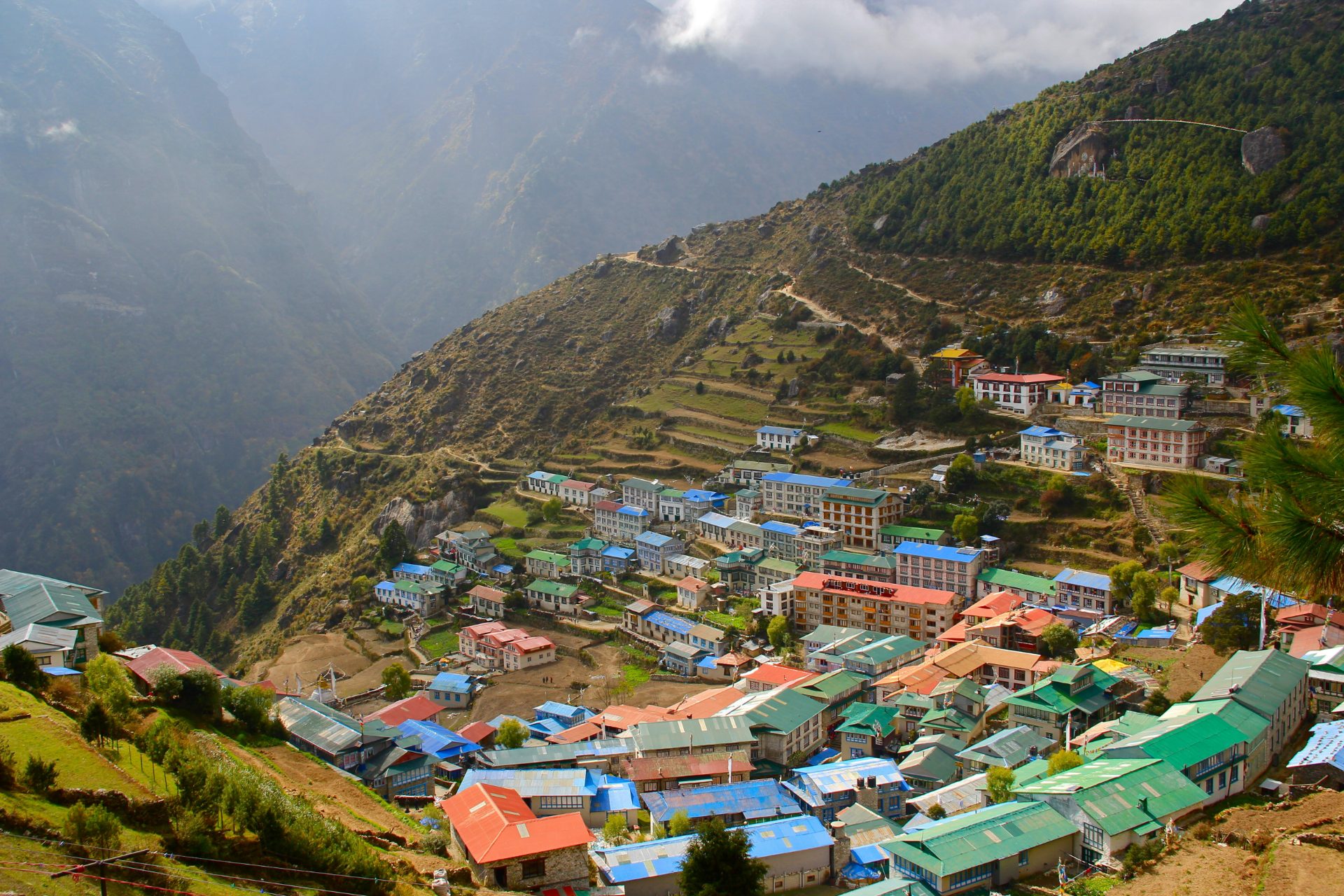
Altitude sickness, not crime, is the genuine threat in Nepal. Above 3,000 meters, your sleep elevation should not increase by more than 300-500 meters per day, with mandatory acclimatization rest days at standard hubs like Namche Bazaar (3,440 m) and Manang (3,540 m).
Symptoms of Acute Mountain Sickness (AMS), headache, nausea, dizziness, loss of appetite, affect women and men equally. Hormonal cycles do not increase altitude risk, but dehydration during menstruation can amplify symptoms, so push fluids harder during your period.
Standard travel insurance is insufficient. You need a policy explicitly covering high-altitude emergency helicopter evacuation up to 6,000 m and medical treatment for AMS, HAPE, and HACE. Most reputable agencies and many Restricted Area Permit applications now require proof of high-altitude evacuation insurance, and agencies and permit offices increasingly verify coverage before departure. Budget $120-200 USD for a comprehensive 30-day policy from providers like World Nomads, IATI, or Global Rescue.
Nepal's mountain villages are deeply traditional. Modest dress isn't about restriction, it's about earning the warm welcome that makes solo female trekking here so rewarding. Loose hiking pants, t-shirts covering the shoulders, and a lightweight scarf for monasteries cover 95% of situations.
Always pass mani stones, chortens, and stupas on the LEFT side, keeping the structure to your right. Walk clockwise around all religious monuments. Remove shoes and hats before entering any temple or monastery. Photography inside monastery prayer halls is strictly prohibited unless a resident monk gives explicit permission.
Source: Kalle Kortelainen
Amphitheater-shaped Sherpa town of Namche Bazaar on the Everest Base Camp trek route.
ATMs do not exist on the trail past Namche Bazaar or Jomsom. You must carry sufficient Nepalese Rupees in cash for the entire trek beyond those points. Charging power banks, hot showers, and Wi-Fi (notably Everest Link) are rarely included in lodge stays and cost NPR 200-700 per use.
Most teahouses on Nepal's trekking routes use shared squat or western-style toilets located outside the sleeping rooms. At higher elevations, nighttime toilet trips can mean walking across icy courtyards in freezing temperatures. Carry a headlamp, toilet paper, hand sanitizer, and sandals or camp shoes for late-night bathroom runs.
If a situation, guide interaction, lodge environment, or transport arrangement feels wrong, trust your instincts immediately. Nepal's trekking community is generally supportive, and changing guides, lodges, or vehicles mid-trip is completely acceptable. Reputable agencies will prioritize your comfort and safety over itinerary rigidity.
Ncell provides strong coverage throughout the Annapurna Circuit and Sanctuary, while Nepal Telecom (NTC) is essential for connectivity in the Everest region and remote zones like Manaslu or Upper Mustang. Buy a tourist SIM at Kathmandu airport with your passport, both networks offer 14-day and 28-day data packages.
Pack everything you need for your cycle from home. Tampons are nearly impossible to find outside Kathmandu. Pads are available in Namche and Jomsom but limited. A menstrual cup is the gold-standard for trekkers, lightweight, reusable, and works for 10-12 hours. Carry sealable bags for used products; never burn or bury sanitary waste on the trail. Mountain communities have no waste infrastructure to process it.
Prioritize vegetarian meals on the trail, especially in the Everest region where slaughtering animals is prohibited by local Buddhist law, meat is carried up by foot or mule over days without refrigeration. The traditional Dal Bhat (lentil soup, rice, and vegetable curry) is your best fuel: hot, fresh, nutritionally complete, and comes with free refills.
Never buy plastic bottled water on the trail. Carry a reusable bottle paired with a SteriPen UV purifier, Sawyer squeeze filter, or chlorine dioxide drops. Most teahouses sell boiled water for NPR 100-300 per liter, cheaper and far more sustainable than plastic.
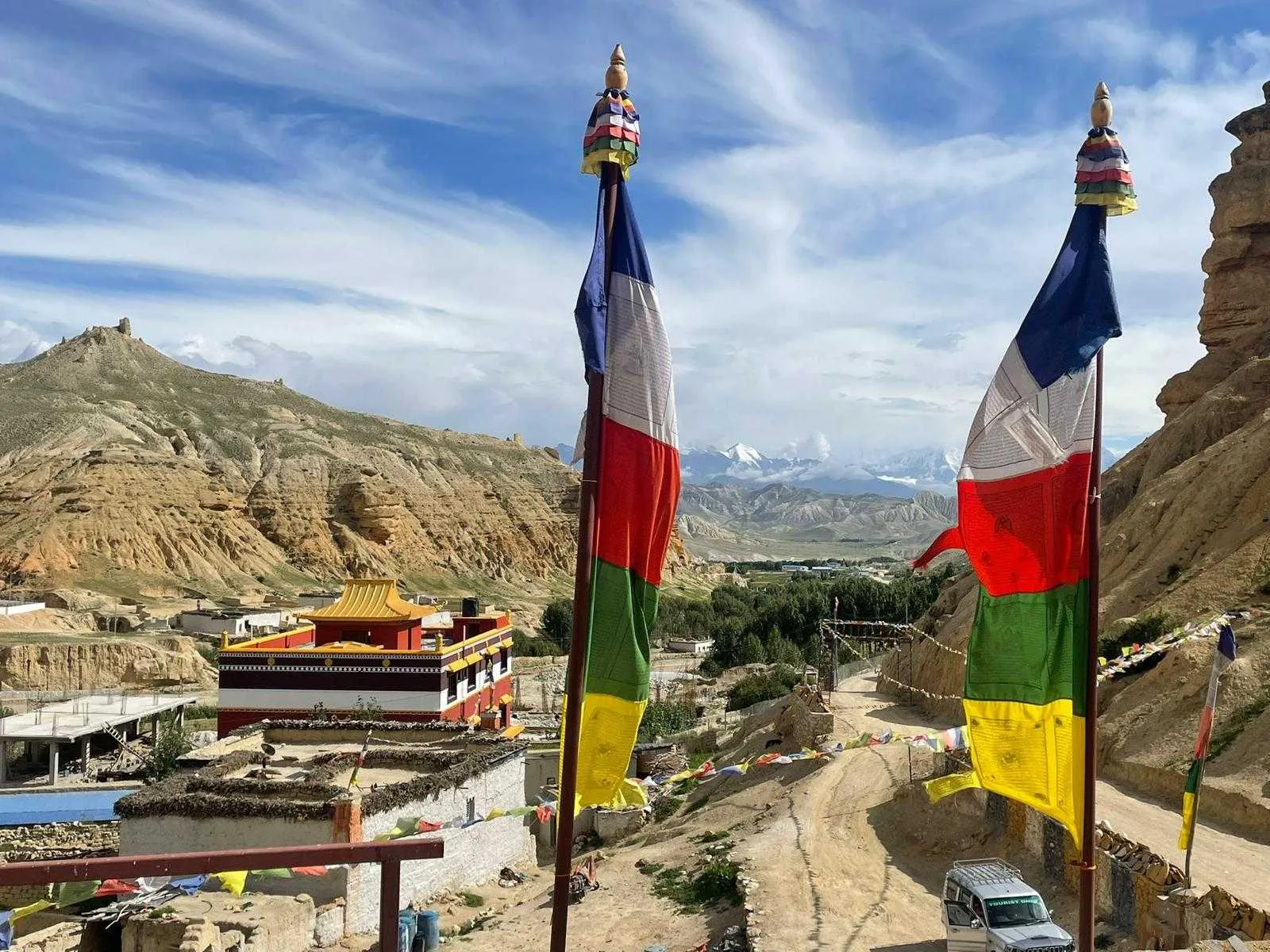
Buddhist prayer flags overlooking mustang village
If your only window is June through August, do not write off Nepal. Upper Mustang and Upper Dolpo sit in the Himalayan rain shadow, making them premier dry trekking destinations during summer months when the rest of Nepal experiences heavy rains and leeches. For solo female trekkers, Upper Mustang in monsoon offers warm days, empty trails, blooming barley fields, and the cultural depth of Lo Manthang's medieval Tibetan kingdom.
Tipping is culturally expected in Nepal and forms a critical part of guide and porter income. The standard guideline is 15%-20% of the total trek cost, distributed among the crew. For a typical 12-day trek with one guide, plan for $120-180 USD for your guide and $80-120 USD per porter, given in cash at the end of the trip in an envelope.
No. Credit cards are accepted only in Kathmandu, Pokhara, and a handful of Namche Bazaar lodges (often with a 4% surcharge). Beyond major hubs, cash is mandatory. Withdraw Nepalese Rupees in Kathmandu or Pokhara before your trek.
Yes, via the Everest Link network at most teahouses up to Gorak Shep. Expect to pay NPR 600-800 per day for a card. Speeds are slow and reliability drops above 4,500 m, especially in cold weather.
October is the gold standard, clear skies, stable weather, busy trails (safety in numbers), and full lodge operations. April is a strong second choice with rhododendron blooms. Both fall within Nepal's two peak trekking seasons.
Stay in reputable Thamel guesthouses with 24-hour reception, use registered taxis (Pathao or InDrive apps), avoid walking alone after 10 PM, and dress modestly outside the tourist core. Verbal harassment is the most common issue and in most cases, firm disengagement and ignoring unwanted attention is effective
Professional licensed guides normally arrange separate sleeping spaces for clients. Professional guides always book separate rooms. If a guide suggests otherwise, that's a major red flag, report to your agency immediately.
Trek normally. Pack out all waste in sealable bags until you reach a town with proper disposal. Hydrate heavily, as altitude already dehydrates you, and your cycle compounds this. Inform your guide if you need an extra rest day, professional guides handle this without awkwardness.