If you are planning to hike anywhere around the Annapurna massif in 2026, the ACAP permit is the single piece of paper that lets you legally step onto the trail. From the gentle ridge walk to Poon Hill to the high-altitude crossing of Thorong La, almost every classic route in this region sits inside the Annapurna Conservation Area Project boundary. We coordinate these permits for trekkers every week, and the questions are always the same: what does it cost, where do I buy it, and what exactly is my money paying for?
This guide answers all of that with current 2026 figures, plus the practical realities of checkpoints, the mandatory TIMS card, and the new guide rules that now apply across the region.
What Is the ACAP Permit and Who Needs It?
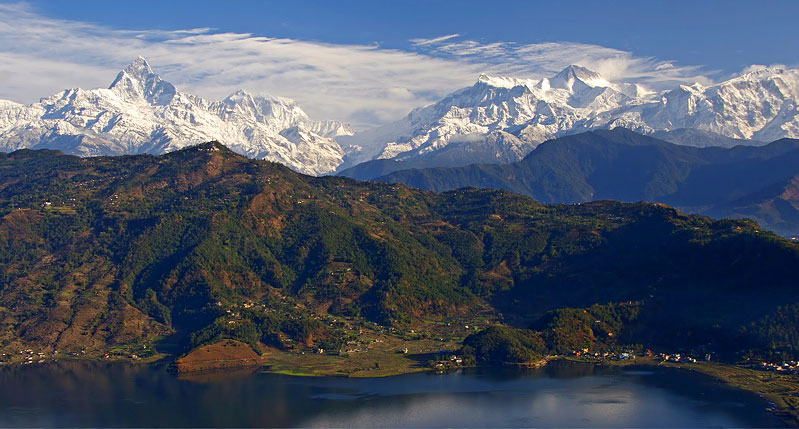
Aerial view of the annapurna conservation area project when it started in 1985.
The ACAP permit is a mandatory conservation entry fee for the Annapurna Conservation Area, Nepal's largest protected region at 7,629 square kilometers. Every foreign trekker entering the area needs one, whether you are walking for two days to Poon Hill or three weeks around the full circuit. The fee is collected by the National Trust for Nature Conservation (NTNC).
The permit covers a long list of popular trails, including the Annapurna Base Camp trek, the Annapurna Circuit, Mardi Himal, Khopra Ridge, Nar Phu Valley, and Tilicho Lake. If your route touches villages like Ghandruk, Chame, Manang, or Jomsom, you are inside the ACAP zone and will be checked.
ACAP Permit Cost in 2026
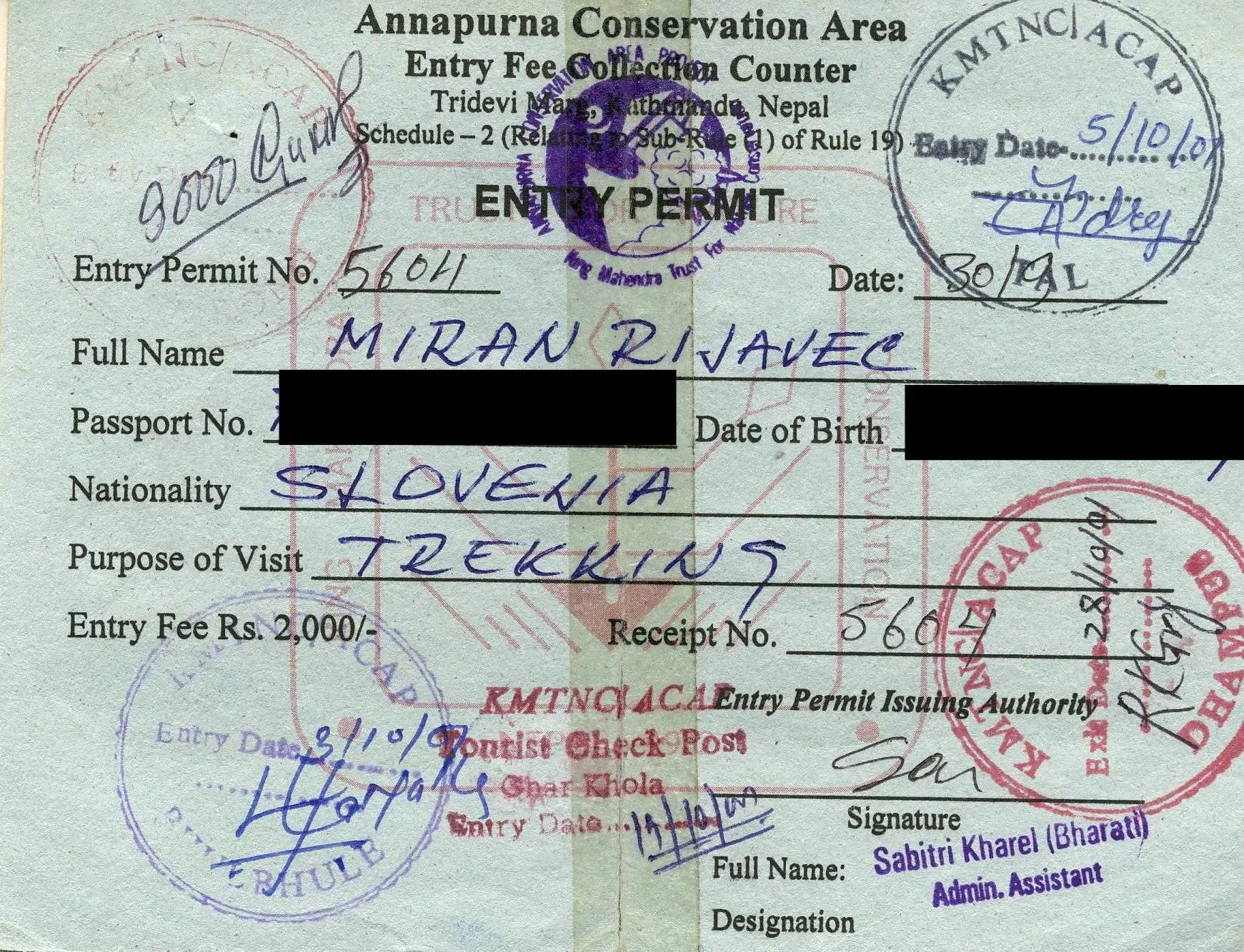
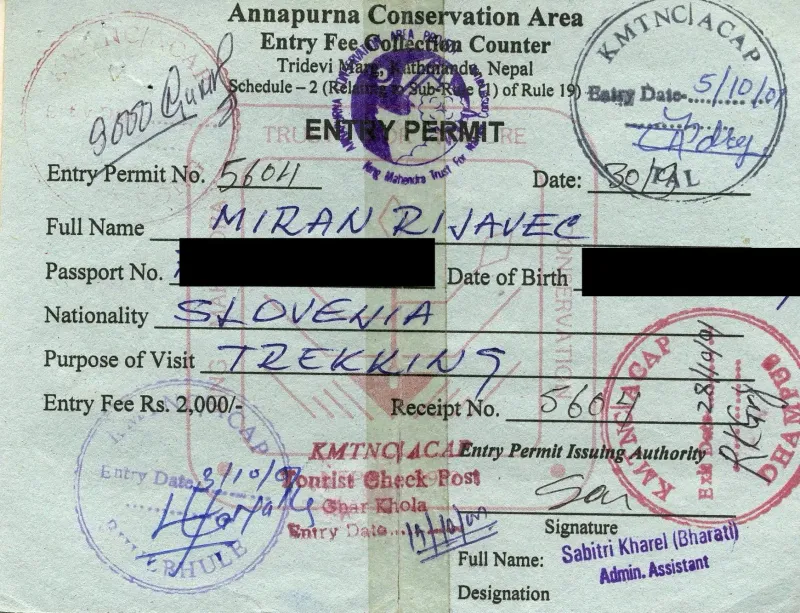
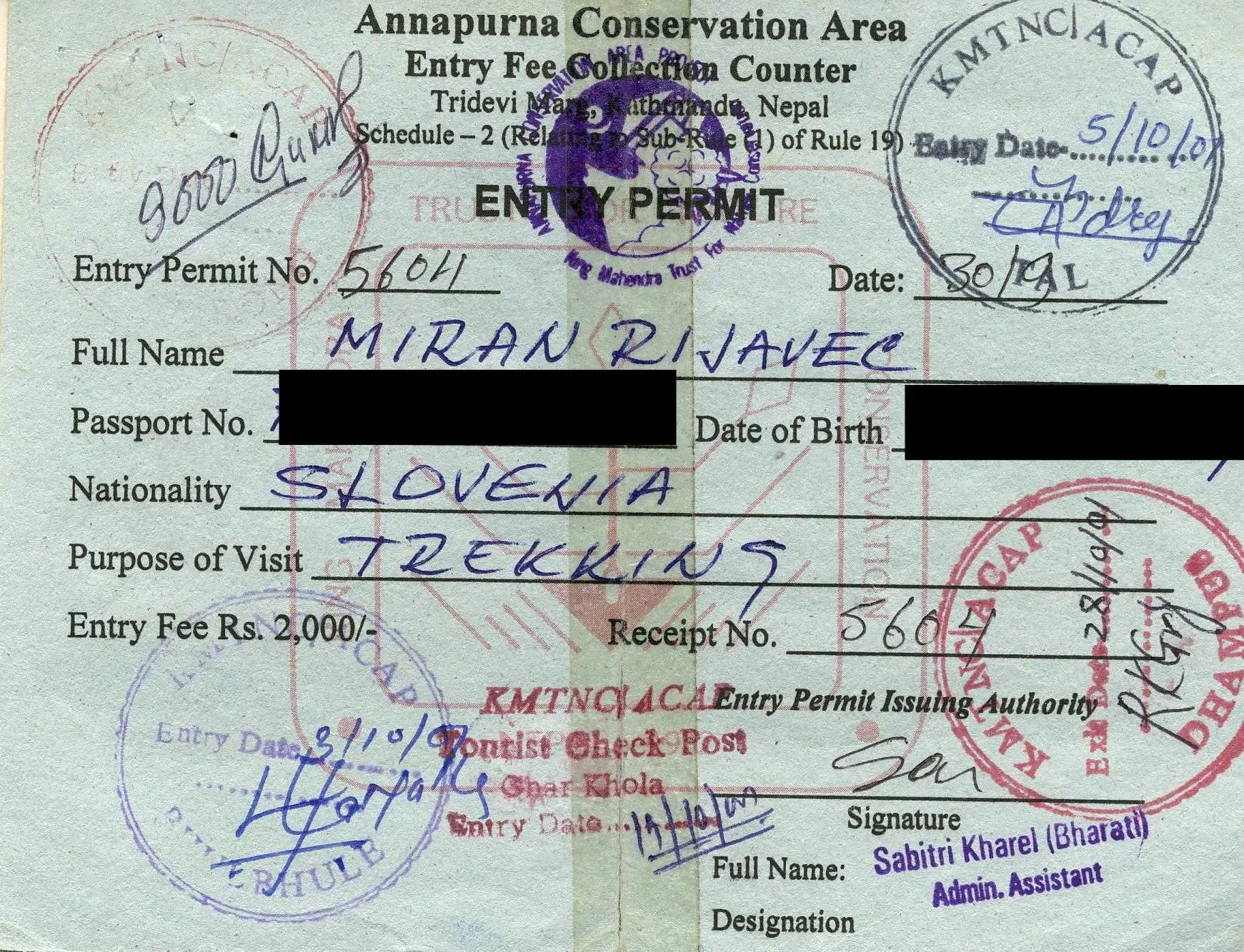
rekking paperwork: A sample of the essential ACAP (Annapurna Conservation Area Project) permit required for all hikers exploring the Annapurna region.
The ACAP permit costs NPR 3,000 (roughly USD 23) for foreign nationals, NPR 1,000 for citizens of SAARC countries, and NPR 100 for Nepali citizens. Children under the age of 10 enter free of charge. These are fixed government-set rates and do not change with season.
A little inspiration for your next trip
Get travel ideas and local experiences from My Easy Guide in your inbox.
Spam free. Unsubscribe anytime. We respect your privacy.
Nationality
ACAP Fee (NPR)
Approx. USD
Foreign nationals
NPR 3,000
~USD 23
SAARC citizens (India, etc.)
NPR 1,000
~USD 8
Nepali citizens
NPR 100
~USD 1
Children under 10
Free
Free
One important warning: if you try to arrange the permit at an entry checkpoint instead of obtaining it in advance in Kathmandu or Pokhara, the process can be more difficult and may cause delays. Getting your permit beforehand in Kathmandu or Pokhara helps avoid uncertainty and saves time at the checkpoints. It is best to complete all permit arrangements before starting your trek.
The TIMS Card: The Permit You Need Alongside ACAP
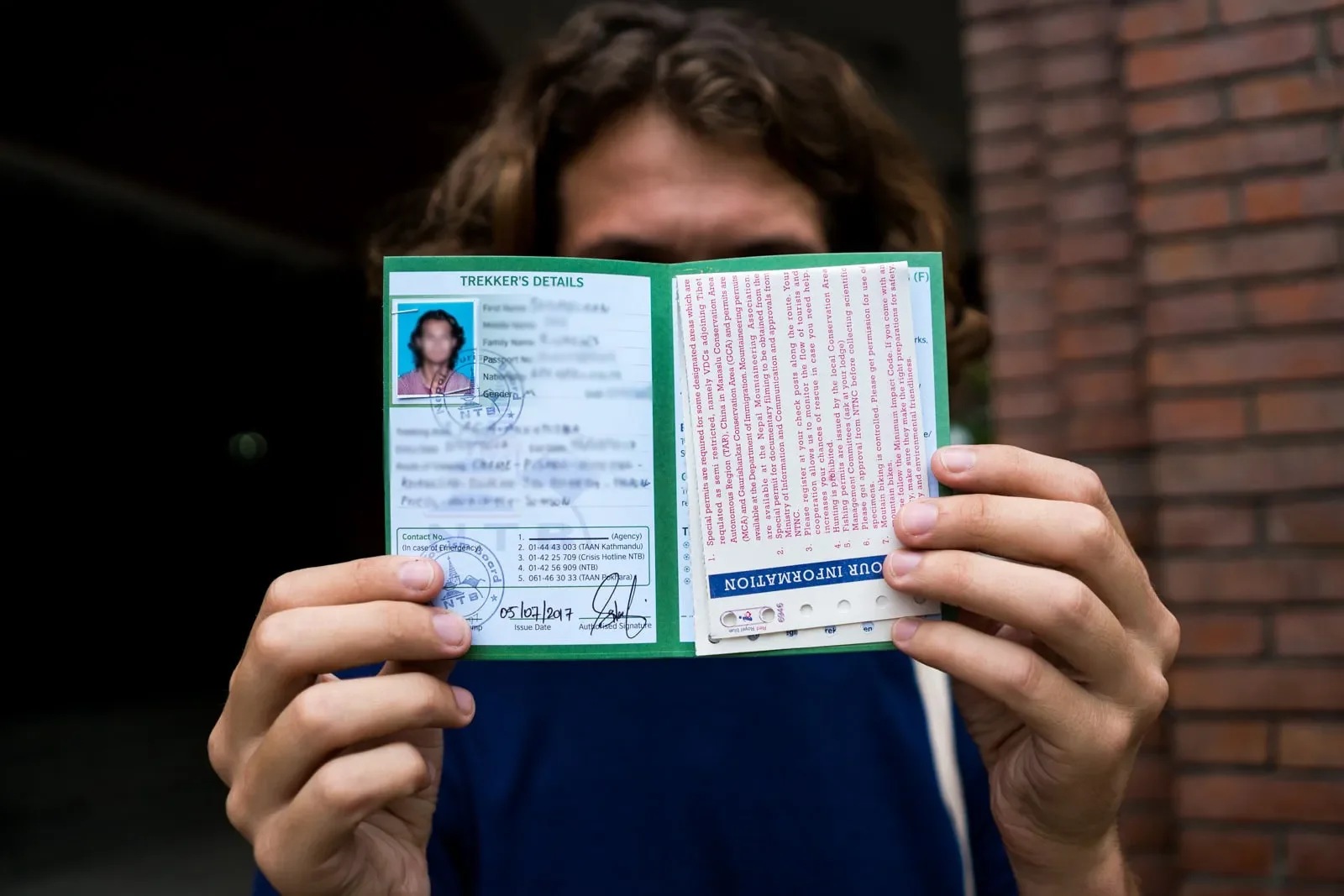
Preparing for the trail: An international traveler displays their officially stamped TIMS card before embarking on a Himalayan trek.
Beyond the ACAP permit, the Annapurna region requires a Trekkers' Information Management System card, or TIMS. The current e-TIMS QR system costs NPR 2,000 for foreign nationals and NPR 1,000 for SAARC citizens when you trek with a licensed guide.
As of 2026, the Nepal Tourism Board's revised TIMS provision makes both a TIMS card and a licensed guide mandatory, not optional, for the Annapurna Circuit, Nar Phu, Mardi Himal, Khopra Ridge, Poon Hill–ABC, and the Mesokanto/Tilicho route. Unguided solo trekking on these named routes is not permitted. A licensed guide is mandatory to obtain the TIMS card for these routes, this is not optional, and the rule is enforced at trail checkpoints.
Where to Buy the ACAP Permit
You can buy the ACAP permit at the Nepal Tourism Board (NTB) offices in either Kathmandu (Bhrikutimandap) or Pokhara (Lakeside). Both offices issue ACAP and TIMS together, which is the smoothest option. Bring your passport, two passport-sized photos, and your insurance details.
If you fly straight to Pokhara, the Lakeside NTB office is the practical choice since most Annapurna treks begin from there. We generally advise picking up the permit a day before your trek starts so you have a buffer if the office is busy. To understand how Pokhara fits into your trip logistics, see our guide on things to do in Pokhara.
Licensed guide details (for the TIMS registration)
What the ACAP Fee Actually Covers
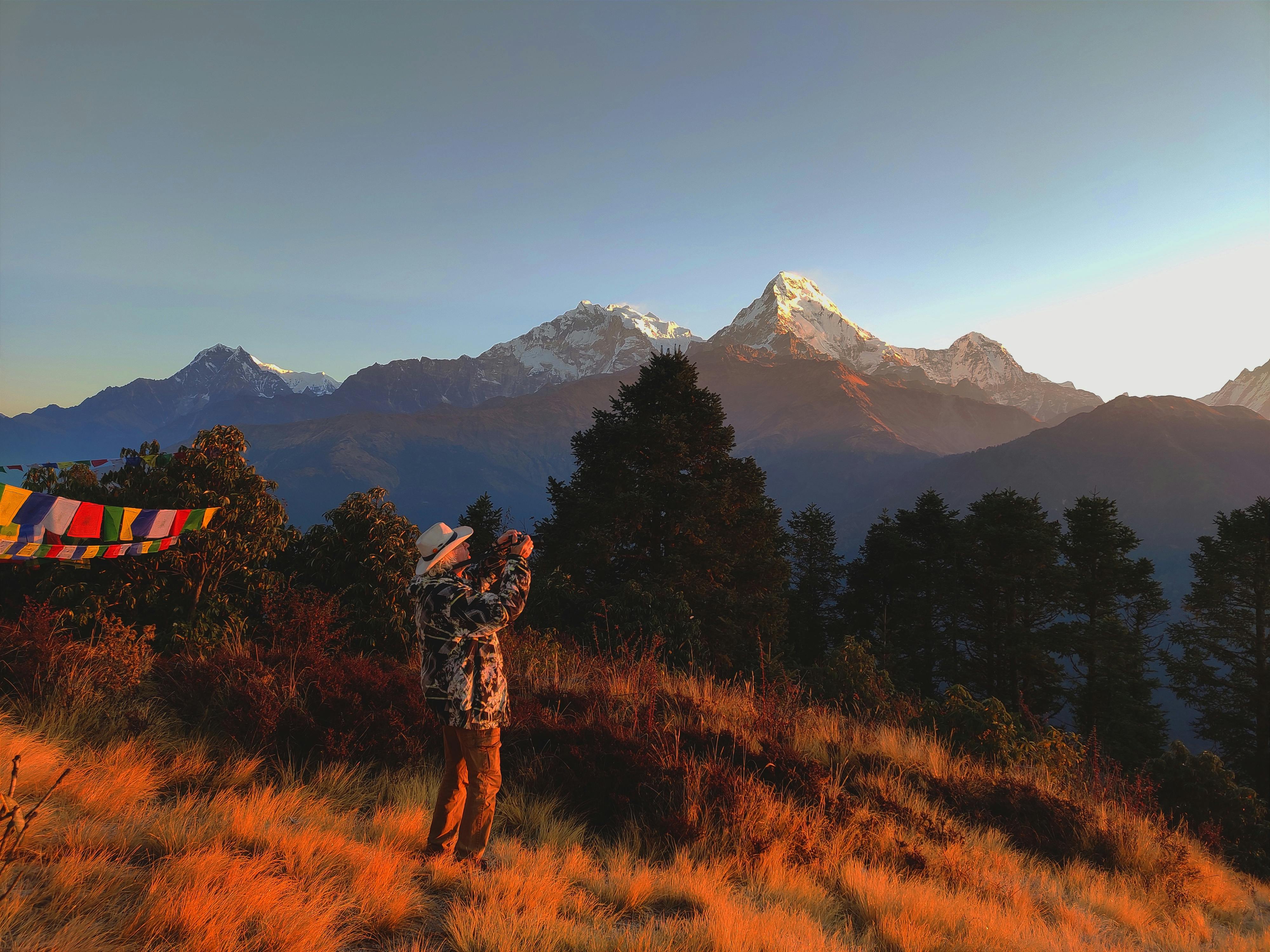
Source: Stshering / Pexels, A spectacular golden sunrise over the majestic Annapurna range from Poon Hill.
The ACAP fee funds conservation and community work inside the protected area, not your trail services. It pays for forest and wildlife protection, drinking water and micro-hydro projects, waste management, trail maintenance, and education programs in mountain villages. Your money directly supports the communities you walk through.
What the fee does not cover is just as important. It is not a guide fee, not a porter fee, and not a lodging or food cost. It also does not include any rescue or helicopter evacuation. Those are separate expenses you must budget and insure for individually.
Permits and Costs at a Glance
Permit / Item
Foreigner Cost
Required For
ACAP permit
NPR 3,000
All Annapurna treks
TIMS card
NPR 2,000
Most Annapurna routes
Restricted Area Permit (Upper Mustang)
USD 50/person/day, no minimum stay
Upper Mustang only
Nar Phu RAP (Manang category)
USD 100/person/week Sept–Nov, USD 75/person/week Dec–Aug, plus USD 15/person/day beyond the first week
Nar Phu Valley only
For routes that cross into restricted zones like Upper Mustang or Nar Phu Valley, you need an additional Restricted Area Permit on top of ACAP. Under the March 2026 Department of Immigration update, a single traveler can now obtain a RAP in most restricted regions, but you still must hire a licensed guide, with the guide-to-trekker ratio capped at 1:7.
Note that some agencies report Nar Phu still applies a two-trekker minimum in practice, confirm current group requirements directly with your registered agency before booking.
The Upper Mustang flat $500/10-day fee was replaced by the Nepal government in late 2025 with this per-day rate. The Nar Phu figures are confirmed directly against the Nepal Tourism Board's official trekking permit fee schedule.
Checkpoints and Where Your Permit Gets Scanned
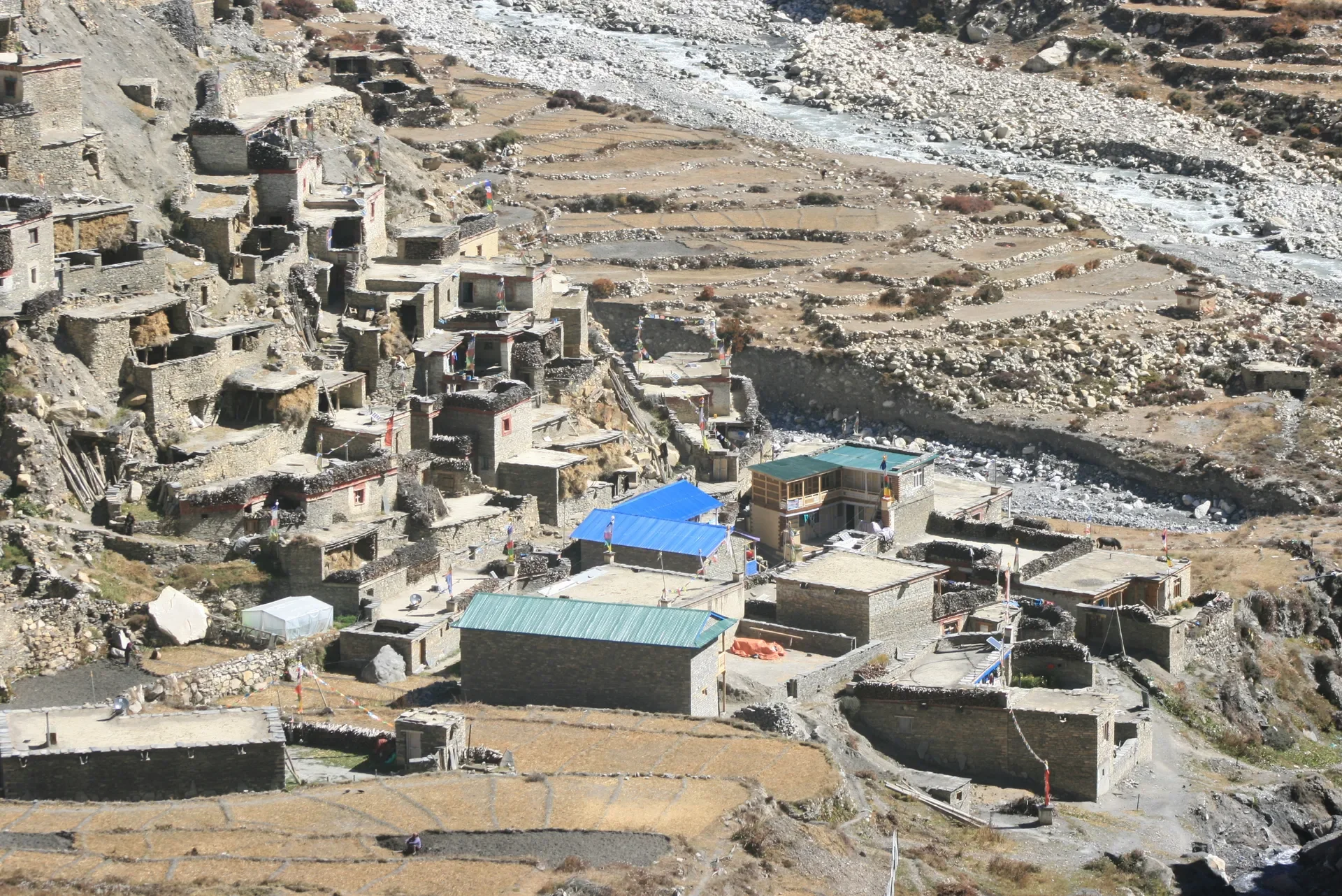
Timeless Himalayan architecture: The unique stone-built fortress village of Phu nestled within a rugged mountain valley.
Your ACAP and TIMS are checked at fixed control posts. On the circuit, the main ACAP checkpoint is at Besisahar/Dharapani, while trekkers heading to Annapurna Base Camp or Poon Hill register at the Nayapul/Birethanti post. Keep both permits accessible; you will sign in at each post for safety tracking.
Carry the physical permit and a photo backup on your phone. Rangers log your entry and exit, which is how rescue teams locate trekkers if something goes wrong on the trail.
Avoiding the Jeep Roads
The Annapurna Circuit now has jeep roads running deep into the valley, which means dust and traffic on long stretches. We strongly recommend using the alternative NATT (New Annapurna Trekking Trails) walking paths wherever possible. These keep you on quiet ridges and old footpaths rather than beside vehicles. Ask your guide to route you onto the NATT trails for a far better experience.
Cash, Connectivity, and Trail Realities
ATMs disappear once you pass Jomsom or leave the lower valleys, so carry enough Nepalese Rupees in cash for your entire trek. Budget extra for trail upcharges: charging a power bank or phone, hot showers, and Wi-Fi are rarely included in lodge stays and typically cost NPR 200 to 700 per service.
For connectivity, Ncell provides strong coverage across the Annapurna Circuit and Sanctuary, making it our preferred SIM for this region. Pick one up in Kathmandu or Pokhara on arrival.
Altitude Safety on Annapurna Routes
Several Annapurna treks climb high. The Thorong La pass tops out at 5,416 meters, and Tilicho Lake sits at 4,919 meters. Above 3,000 meters, never increase your sleeping elevation by more than 300 to 500 meters per day, and build in acclimatization rest days, especially at Manang.
Standard travel insurance is not enough. You must carry insurance that specifically covers high-altitude helicopter evacuation up to 6,000 meters and treatment for AMS, HAPE, and HACE. Read our detailed advice on altitude sickness before you go.
Food, Water, and Trail Etiquette
We advise prioritizing vegetarian meals on the trail. The classic Dal Bhat, lentil soup with rice and vegetable curry, gives clean high-energy fuel and usually comes with free refills. Skip plastic bottled water entirely; carry a reusable bottle with a UV purifier, Sawyer filter, or chlorine dioxide drops to protect the conservation area you just paid to enter.
When walking past mani walls, stupas, and chortens, always pass on the clockwise side, keeping the structure on your right. Remove shoes and hats before entering any monastery, and never photograph inside prayer halls without a monk's permission.
Tipping Your Crew
Tipping guides and porters is culturally expected and forms a vital part of their income. A standard guideline is 10% to 15% of your total trek cost, distributed among the crew at the end of the trip. Hand it over personally as a thank-you for getting you safely through the mountains.
Frequently Asked Questions
How much is the ACAP permit in 2026?
The ACAP permit costs NPR 3,000 (about USD 23) for foreigners, NPR 1,000 for SAARC citizens, and NPR 100 for Nepali nationals. Children under 10 are free.
Where do I buy the ACAP permit?
Buy it at the Nepal Tourism Board offices in Kathmandu or Pokhara. Buying at trail checkpoints usually doubles the fee, so purchase in the city in advance.
Do I need a guide for Annapurna treks in 2026?
Yes. The Nepal Tourism Board's revised TIMS provision names the Annapurna Circuit, Mardi Himal, Khopra Ridge, Poon Hill–ABC, Nar Phu, and the Mesokanto/Tilicho route specifically as requiring both a licensed guide and an agency-issued TIMS card. Unguided solo trekking on these routes is not permitted.
Is the ACAP permit a single entry?
Yes, it is valid for one continuous trek. If you exit and re-enter the conservation area separately, you may need a new permit.
Can I trek the Annapurna Circuit during monsoon?
The lower circuit gets heavy rain and leeches in summer, but Upper Mustang lies in the Himalayan rain shadow and stays dry, making it a premier monsoon trekking option.
How long is the ACAP permit valid?
It is valid for the duration of your trek with no fixed expiry, as long as your trek remains continuous within the conservation area.
Does ACAP cover Upper Mustang?
Yes, you still need the ACAP permit for Upper Mustang, plus a separate Restricted Area Permit. As of late 2025, this RAP costs a flat USD 50 per person per day, with no minimum stay required, replacing the old USD 500-for-10-days structure.
Are credit cards accepted on the Annapurna trail?
Rarely. Carry sufficient NPR cash, as ATMs disappear past Jomsom and most lodges accept only cash.
Is the ACAP fee refundable?
No, the conservation fee is non-refundable once issued, even if your trek is cut short.
Can children get an ACAP permit?
Children under 10 enter free. Older children pay the standard fee for their nationality.