Sandeep Shrestha
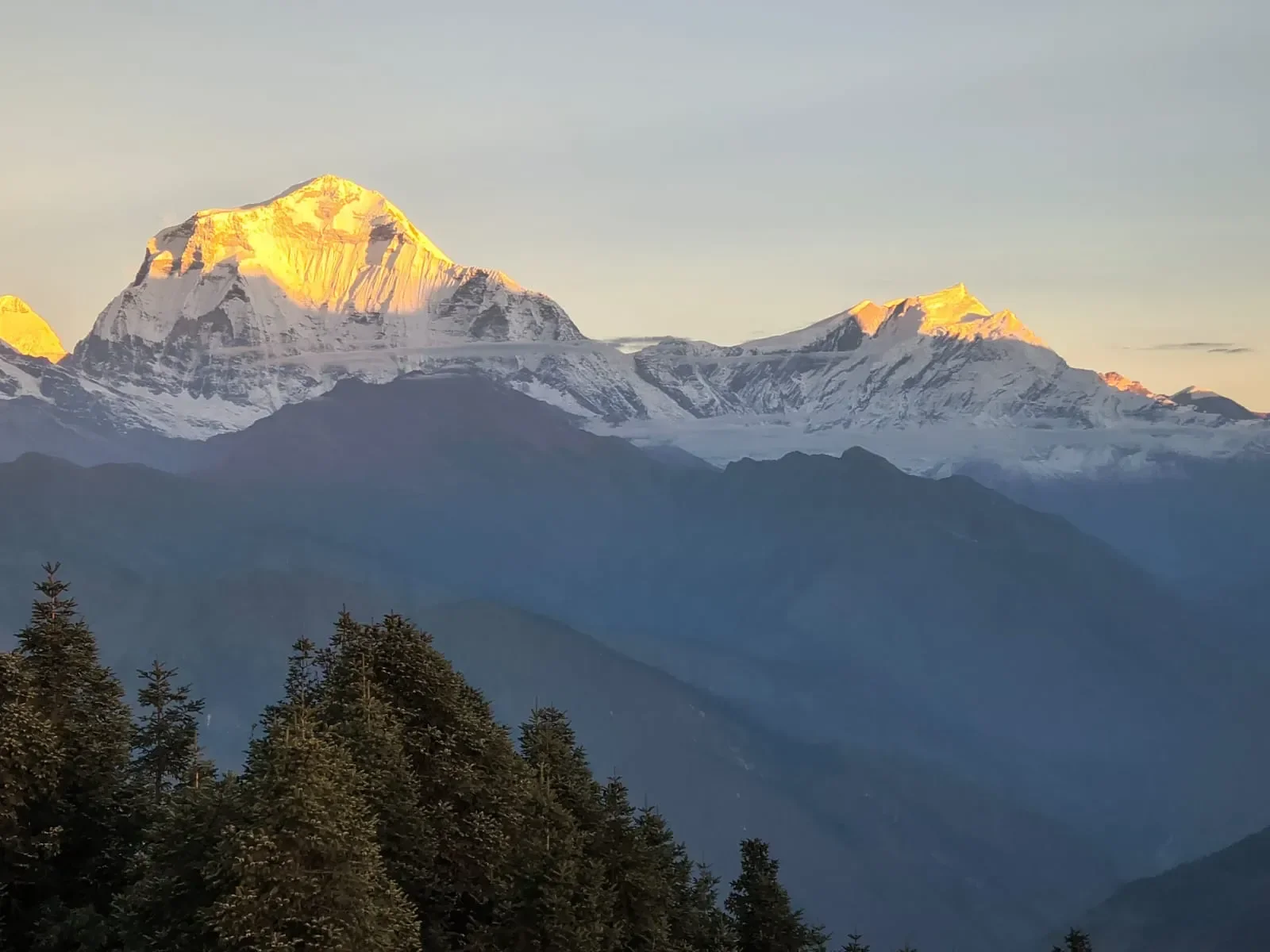
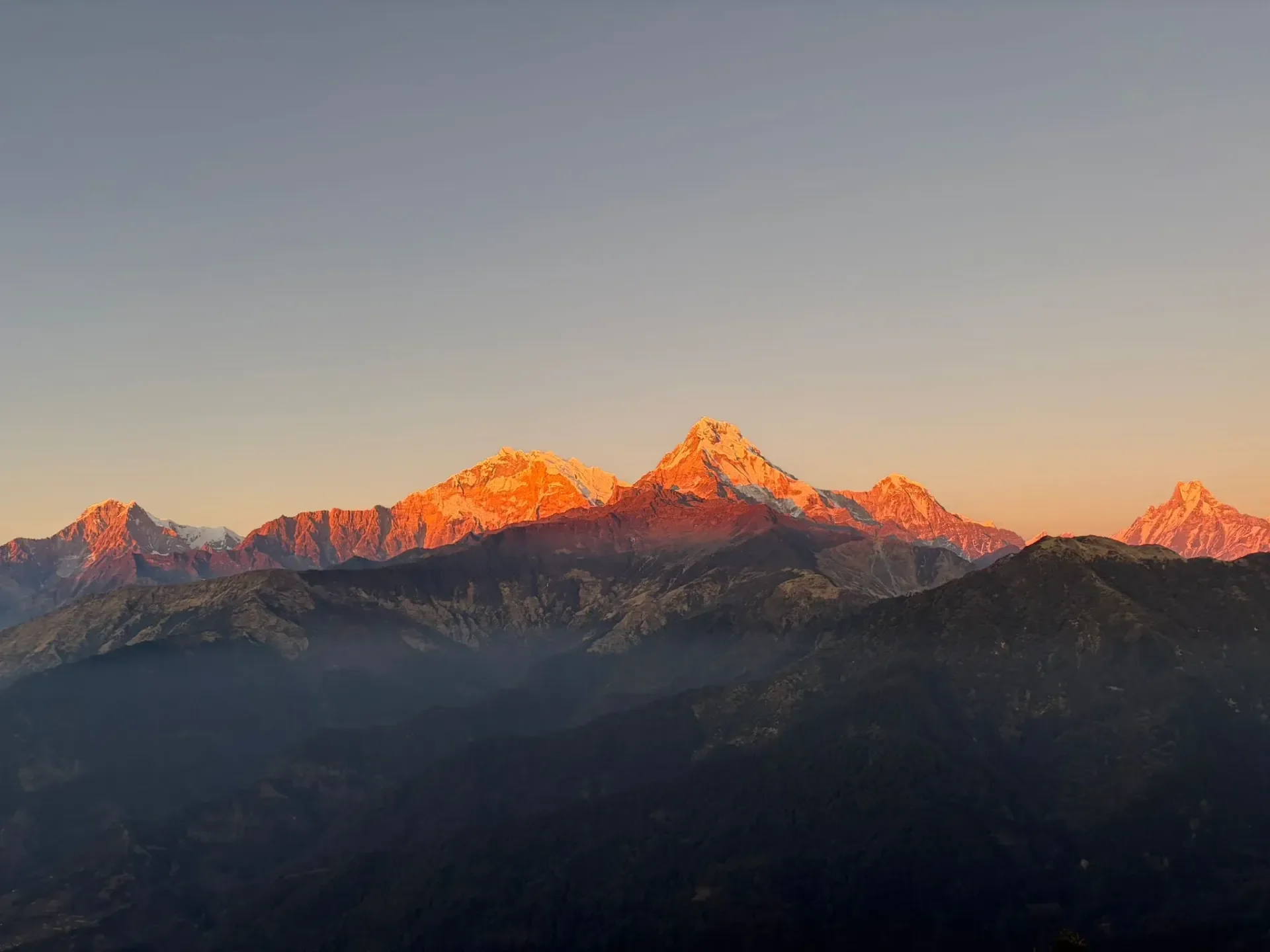
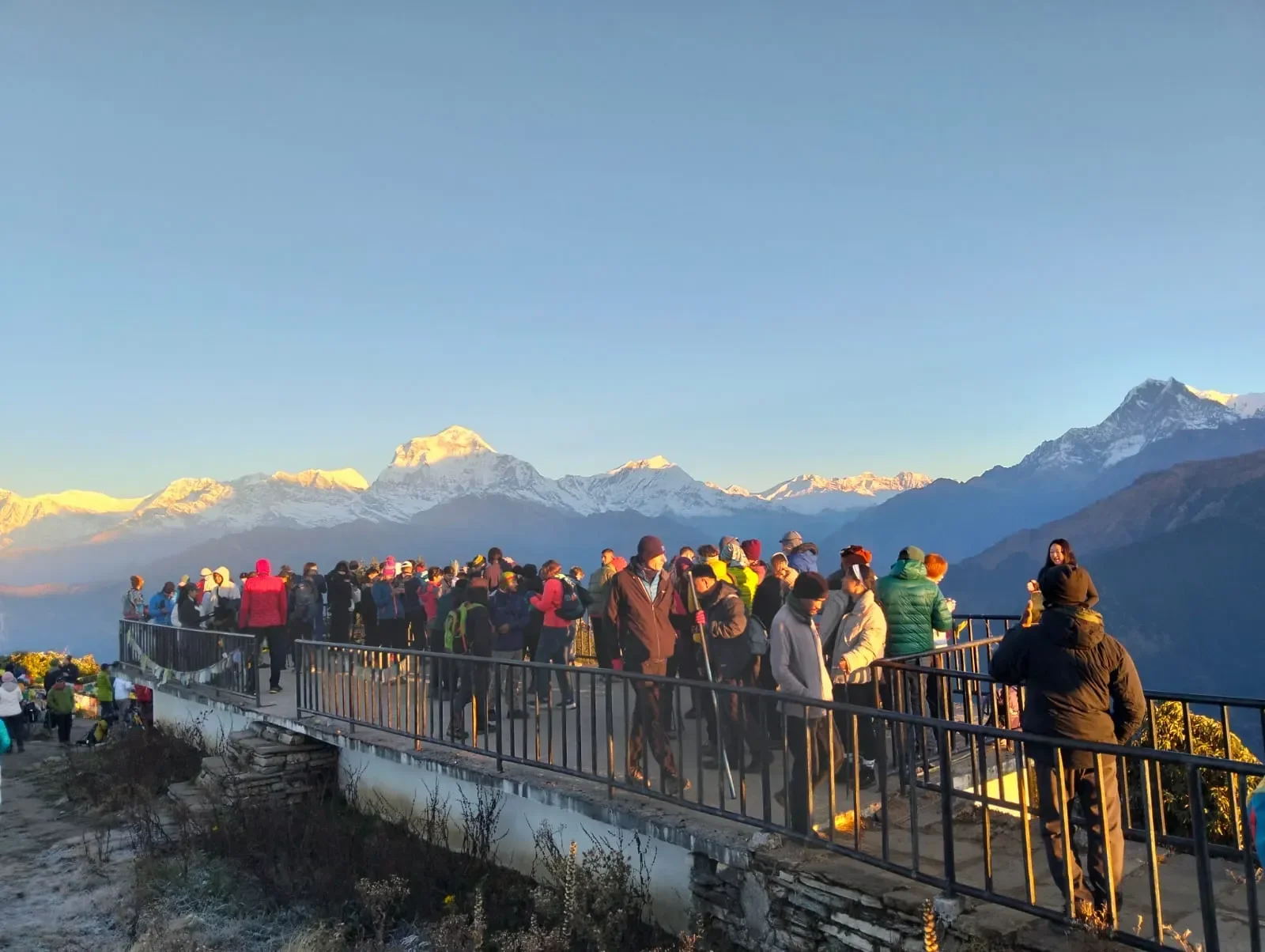
If you want a real Himalayan sunrise without spending two weeks at altitude or draining your savings, the Ghorepani Poon Hill trek is the answer, many local guides recommend Poon Hill to first-time trekkers. You climb stone staircases through rhododendron forest, sleep in warm teahouses, and stand at 3,210 meters watching the sun light up Dhaulagiri and the Annapurna massif. It is one of the most affordable ways to experience Himalayan views in Nepal.
But "cheap" doesn't mean free, and 2026 brought rule changes that affect your wallet. Below, we break down exactly what you'll spend, line by line, with no padding.

A budget Ghorepani Poon Hill trek costs roughly $350 to $650 USD per person for a 4-5 day trip. This covers the mandatory ACAP permit, a licensed guide, round-trip transport from Pokhara, teahouse food, and lodging. Group bookings and shared guides push the per-person cost toward the lower end.
Compared to longer treks, the savings are obvious. The route's lower altitude reduces the likelihood of altitude-related emergencies compared with higher Himalayan treks. That low ceiling is exactly why budget trekkers love it.
The biggest single factor in your final bill is whether you trek solo (with one private guide) or join a small group. Splitting a guide's daily fee across four people changes your budget dramatically.
The Poon Hill trek requires the ACAP permit (Annapurna Conservation Area Permit) costing NPR 3,000 for foreign nationals. SAARC nationals pay NPR 1,000. Permit requirements and TIMS policies can change, so travelers should verify the latest procedures with their operator.
Here is the part that catches budget travelers off guard: as of recent regulation enforcement, the Annapurna region requires you to trek with a licensed guide. Current regulations strongly favor trekking with licensed guides, and travelers should confirm the latest enforcement before departure. This rule directly shapes your budget because a guide is now a fixed cost, not an optional luxury.
You'll show your ACAP permit at the checkpoint in Birethanti near the start. Keep it accessible and never lose it. Keep your permit accessible throughout the trek, as replacing lost documents can be inconvenient.
The ultimate guide to planning your dream web travel adventure with the experts from myeasyguide.
Spam free. Unsubscribe anytime. We respect your privacy.
For the full national framework on what's enforced and why, see our breakdown of Nepal's trekking rules and costs.

A licensed guide on the Poon Hill route runs roughly $25 to $35 USD per day, and a porter adds about $18 to $25 USD per day. These are realistic ranges; verify live rates through your operatorf, since fuel, season, and demand shift pricing.
Because a guide is now mandatory, this is where group trekking saves real money. A solo trekker pays the full guide fee alone. Four friends splitting one guide cut that cost to a quarter each. On a short trek like this, the difference can be over $100 USD per person.
A porter is optional on Poon Hill because daily walking distances are short and the trail is well-maintained. That said, the stone staircases up to Ulleri are punishing on the knees, and many trekkers find a shared porter worth every rupee.
Tipping is culturally expected and forms a vital part of your crew's income. Many trekkers budget roughly 10–15% of total trek costs or tip guides and porters individually based on service.. For a short trek, this often means around NPR 4,000 to 8,000 total depending on group size and service.
Teahouse rooms on the Poon Hill route are affordable, often NPR 500 to 1,500 per night, especially when you eat your meals there. Food is where your daily spending adds up, with meals ranging from NPR 400 to 900 each as you climb higher and prices rise with the altitude.
Our standing advice on every Nepal trek is the same: order Dal Bhat. This plate of rice, lentil soup, and vegetable curry usually comes with free refills, giving you clean, high-energy carbohydrate fuel for the steep climbs. It's the best value meal on the trail by a wide margin.
Stick to vegetarian options. Meat must be carried up by foot or mule over days without refrigeration, and freshness becomes a real food-safety gamble the higher you go. Fresh, locally grown carbohydrates keep your stomach steady and your energy up.

Your teahouse room price almost never includes the extras that quietly drain your cash. Expect to pay NPR 200 to 700 per service for charging phones and power banks, gas-heated hot showers, and Wi-Fi access. These small charges stack up fast over a multi-day trek.
Reliable ATMs are unavailable along the Poon Hill trail, so carry enough cash from Pokhara. Withdraw what you need in Pokhara before you leave. Running out of cash in Ghorepani means awkward conversations and no easy fix.
Mobile coverage is generally good on the Poon Hill route, though signal quality varies between villages. A local SIM is far cheaper than international roaming, and it works in most villages along the way.
Do not buy plastic bottled water on the trail. It's expensive, environmentally damaging, and entirely avoidable. Carry a reusable bottle paired with an active purification system such as a UV purifier, a Sawyer squeeze filter, or chlorine dioxide drops.
This single habit saves you hundreds of rupees over the trek and keeps plastic off the mountain. Teahouses provide boiled or refill water cheaply or free, and your filter handles the rest.
The trek starts and ends near Nayapul or Birethanti, about a 1.5 to 2 hour drive from Pokhara. A shared jeep is the budget option, while a private vehicle costs more. Expect transport ranges around $40 to $90 USD round trip; confirm live rates through your operator.
Most trekkers base themselves in Pokhara first. If you're flying in from Kathmandu, that domestic flight is a separate volatile cost you should price out closer to your travel date. For arrival logistics and what to do with spare time, our Pokhara travel guide is a useful starting point.
[IMAGE PLACEHOLDER: Map of the Ghorepani Poon Hill loop showing Nayapul, Ulleri, Ghorepani, Poon Hill, and Ghandruk]
The classic loop runs from Nayapul through Tikhedhunga and Ulleri up to Ghorepani, with the pre-dawn climb to Poon Hill (3,210 meters) on day three. The route stays low enough that altitude sickness is rare, but the steep gains still demand reasonable fitness.
Even with the gentle altitude here, never rush your ascent on bigger Himalayan treks. Above 3,000 meters, sleep elevation should rise no more than 300-500 meters per day. Poon Hill naturally respects this, which is part of why it's so beginner-friendly. If you want to compare it with a longer option, read our look at the full Ghorepani Poon Hill trek.
Travelers should choose insurance that includes trekking activities and emergency evacuation coverage. You need a policy that specifically covers high-altitude emergency helicopter evacuation and medical treatment for AMS, HAPE, and HACE. While Poon Hill's low elevation makes serious altitude illness unlikely, accidents and illness still happen on remote trails.
The cost of proper coverage is small against the price of a single evacuation. Budget for it as a non-negotiable line item, not an optional extra.
You'll pass mani stones, chortens, and small monasteries through the Gurung and Magar villages along this route. Walk clockwise around mani walls, stupas, and chortens, keeping these sacred structures on your right side.
Remove your shoes and hat before entering any temple or monastery. Outdoor photography is fine, but always ask permission before taking photographs inside monasteries, as rules vary from place to place. These small gestures of respect go a long way in the villages you'll rely on for warmth and food.
No flights, no long acclimatization, no expensive restricted-area permits, and short walking days that keep food and lodging costs low. The Poon Hill trek packs a genuine high-mountain sunrise into a budget and timeframe almost anyone can manage. If you're weighing it against bigger objectives, our comparison of Annapurna versus Everest Base Camp helps frame the trade-offs.
For the gear side of your budget, the trek packing list keeps you from overbuying. And if you're trekking on your own, our notes on solo female trekking in Nepal cover the practical realities under the 2026 guide rules.
The Ghorepani Poon Hill trek typically costs between $350 and $650 USD per person for a 4–5 day trip. This includes permits, guide fees, accommodation, meals, and local transport from Pokhara.
Yes. Poon Hill is one of the most beginner-friendly treks in Nepal. It stays at relatively low altitude, has well-marked trails, and includes comfortable teahouse accommodation throughout the route.
Guided trekking rules in Nepal are subject to enforcement updates. In practice, many trekkers now hire licensed guides in the Annapurna region, especially when traveling through agencies. It is recommended to confirm current requirements before starting your trek.
You need the ACAP (Annapurna Conservation Area Permit), which costs NPR 3,000 for foreign nationals. This permit is checked at entry points such as Birethanti.
The trek is considered easy to moderate. The main challenge is the steep stone staircase sections, especially the climb to Ulleri. However, no technical climbing or high-altitude experience is required.
Most trekkers complete the route in 4 to 5 days, starting and ending near Nayapul or Birethanti and often including Ghorepani, Poon Hill, Tadapani, and Ghandruk.
The highest point is Poon Hill at 3,210 meters, which is famous for sunrise views of Annapurna and Dhaulagiri ranges.
Altitude sickness is rare on the Poon Hill trek because the elevation stays below 3,500 meters. However, proper hydration and steady pacing are still recommended.
A typical package includes:
You should budget for:
Independent trekking policies in Nepal can change. While the route is traditionally accessible, current regulations increasingly encourage or require trekking with a licensed guide, especially through agencies.
The best seasons are:
Yes. It is recommended to have travel insurance that covers trekking activities and emergency evacuation, even though the trek is relatively low altitude.
The final climb to Poon Hill is a steep 45–60 minute uphill hike in the dark (before sunrise), but it is manageable for most fitness levels with breaks.
Yes, but coverage varies. Most villages have mobile signal and paid Wi-Fi, though speed and reliability decrease at higher elevations.