My Easy Guide
Walk into Thamel any morning during trekking season and you will hear the same sound from every doorway: the soft compression hiss of a rental down jacket being stuffed back into its sack. Kathmandu's gear district is one of the best-value outfitting hubs in the world, and for most trekkers, renting the bulky, expensive items here makes far more sense than hauling everything from home or buying it new.
Many trekking agencies in Kathmandu regularly assist clients with gear rentals, and we have tracked the prices, the quality traps, and the deposit games shop by shop. This guide breaks down exactly what to rent, what to buy, where to go, and what it should cost in 2026.

The vast majority of trekking gear rentals happen in Thamel, Kathmandu's tourist core, with a dense cluster of shops along Jyatha and the lanes around the Kathmandu Guest House. A smaller secondary hub exists in Pokhara for Annapurna-bound trekkers. Rentals are cash-based and almost always require a refundable deposit.
Thamel is compact enough to compare five or six shops on foot in under an hour. Prices are negotiable, especially for multi-item, multi-day rentals. We always advise clients to bundle their down jacket, sleeping bag, and trekking poles in one shop to win a better daily rate.
If your trek runs through the Annapurna region, you can also rent in Pokhara before heading to the trailhead. Read our guide to Pokhara to plan that side of the trip.

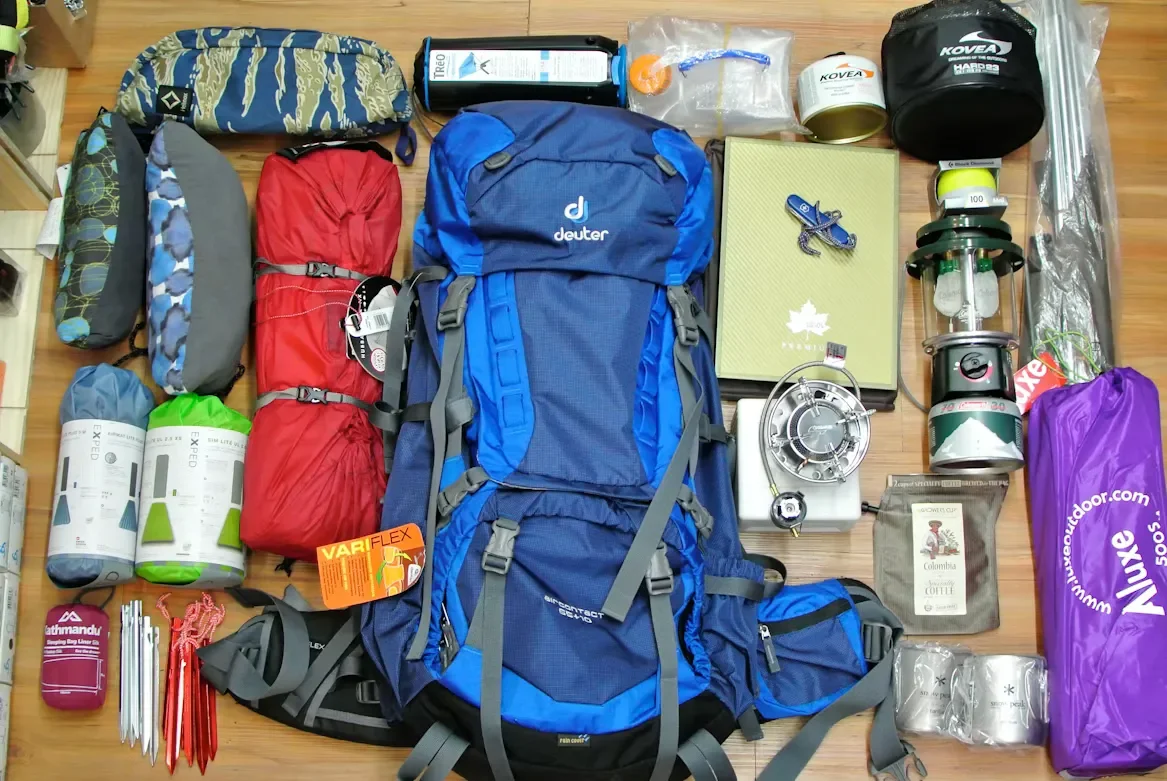
Rent the bulky, expensive, infrequently used items: down jackets, four-season sleeping bags, down booties, and crampons. Buy anything that touches your skin or must fit perfectly: boots, socks, base layers, and a hat. This split saves money without compromising comfort or hygiene on the trail.
The logic is simple. A high-quality down jacket might cost hundreds of dollars to buy but rents for NPR 100 to 200 per day. If you only trek once or twice, renting wins clearly. But blistered feet from rented boots can end a trek, so personal-fit items are non-negotiable purchases.
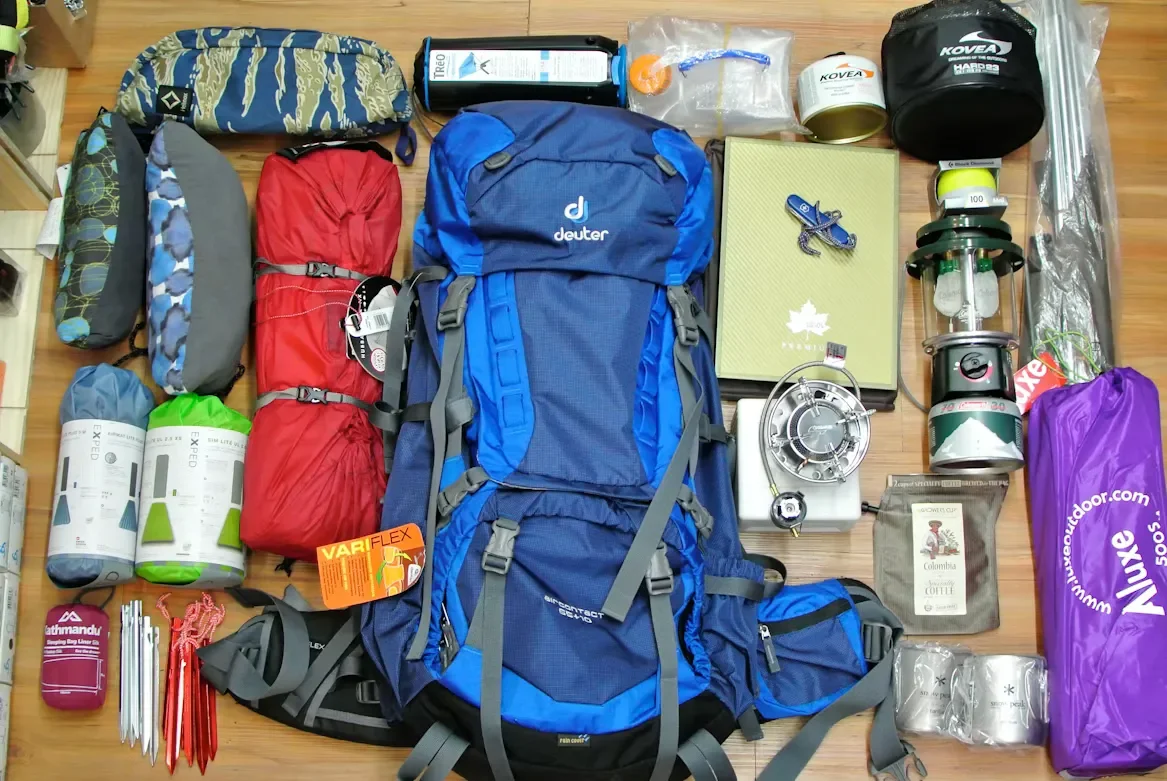
For a full breakdown of what to pack, see our complete trek packing list.
Rental rates in Thamel are charged per item, per day, with a refundable deposit held in cash or via a passport photocopy. As of 2026, expect down jackets and sleeping bags at roughly NPR 100 to 200 per day each. Deposits vary widely by shop and item. Some shops accept only a passport photocopy, while others request refundable deposits ranging from NPR 2,000 to 10,000.
The table below reflects realistic ranges our team sees across reputable Thamel shops. Prices fluctuate with season and demand, so treat these as a planning baseline and confirm live rates in person.
The ultimate guide to planning your dream web travel adventure with the experts from myeasyguide.
Spam free. Unsubscribe anytime. We respect your privacy.
Always count the days carefully. A 14-day Everest Base Camp trek with a rented jacket and bag at NPR 150 per day each works out to roughly NPR 4,200 total, far cheaper than buying. Compare this against full trip budgets in our Everest Base Camp cost guide.

Inspect every rented item under the shop light before handing over a deposit. Check down jackets for genuine loft, intact baffles, and working zips. Test sleeping bag zips end to end, sniff for damp, and confirm the temperature rating tag. Reject anything with broken zips, thin fill, or strong odours.
Many Thamel jackets are locally produced alternatives to international brands, which is fine if the warmth and construction hold up. What matters is function, not the logo. For treks crossing high passes, layer your own insulation under a rented down jacket rather than trusting a single piece to handle 5,000 meters plus.
Crampons deserve extra attention. Fit them to your actual boots in the shop, check the straps and bindings, and confirm they clip securely. Mismatched crampons are dangerous on icy sections of routes like the Three Passes trek.
Most shops hold a cash deposit or a passport photocopy until you return the gear. Always get a written receipt listing each item, the daily rate, the deposit amount, and your return date. Photograph the gear and the receipt before leaving the shop to avoid disputes over pre-existing damage.
The most common issue is a shop claiming damage on return to keep part of your deposit. Your photos settle this instantly. Never leave your original passport as a deposit; a photocopy is standard and sufficient. If a shop insists on your original passport, walk to the next one.
Return gear clean and dry where possible. Some shops charge a small cleaning fee for muddy or wet items, though this is usually minor and negotiable.
Before leaving Kathmandu, buy a reusable bottle and a purification system, withdraw enough Nepalese Rupees in cash, and pick up a local SIM card. Reliable ATMs become scarce beyond Namche Bazaar and Jomsom, so trekkers should carry sufficient cash.
Skip single-use plastic bottled water entirely. A reusable bottle paired with a UV purifier, Sawyer squeeze filter, or chlorine dioxide drops protects both your health and the fragile mountain environment. These purification systems are widely available in Thamel outdoor shops.
For connectivity, buy a SIM in Kathmandu. Ncell generally works well in much of the Annapurna region, while Nepal Telecom (NTC) often provides broader coverage at higher elevations and remote areas. On the trail, expect to pay NPR 200 to 700 extra per service for charging power banks, gas-heated hot showers, and Wi-Fi access like Everest Link.
Sort your route, permits, and guide before you finalize a gear list, because your specific trek dictates exactly what you need. Under the 2026 rules, restricted areas require a licensed guide, and guide requirements vary by region, while restricted areas legally require licensed guides.
As of 2026, for restricted regions like Manaslu, Upper Mustang, Dolpo, and Tsum Valley, many agencies report that solo trekkers can obtain Restricted Area Permits, though travelers should confirm current requirements before booking., but you still must hire a licensed guide, with a guide-to-trekker ratio capped at 1:7. The Everest region uses the Khumbu Pasang Lhamu Municipality fee (NPR 3,000) plus the Sagarmatha National Park Permit (NPR 3,000) rather than the standard e-TIMS card.
You also need insurance covering high-altitude emergency helicopter evacuation up to 6,000 meters and treatment for AMS, HAPE, and HACE. Comprehensive insurance covering high-altitude evacuation is strongly recommended for all trekkers. See our overview of Nepal trekking rules and costs for the full picture.
Your guide will tell you whether your route in your season actually needs crampons, a -20C bag, or just a -10C bag, which can shave days off your rental bill.
No amount of gear replaces sensible acclimatization. Above 3,000 meters, keep your sleep elevation gain to 300 to 500 meters per day and build in rest days at hubs like Namche Bazaar or Manang. The right sleeping bag keeps you warm; smart pacing keeps you safe.
On the trail, lean on the classic Dal Bhat (lentil soup, rice, and vegetable curry) for clean, high-energy fuel with free refills. Prioritise vegetarian meals, especially in Buddhist regions like the Khumbu where slaughtering animals is prohibited and meat is carried up by foot or mule for days without refrigeration.
Respect the trail's sacred geometry too. Always walk clockwise around mani walls, stupas, and chortens, keeping these sacred structures on your right side. Remove shoes and hats before entering any monastery, and always ask permission before taking photographs inside monasteries, as rules vary. At trek's end, many trekkers budget around 10–15% of trek cost or tip guides and porters individually according to service.
Yes, but it is risky during peak season cause the best-quality rental items can become limited during peak trekking months. We advise renting one to two days before departure so you can compare shops, check quality carefully, and swap any faulty item.
Rarely. Thamel rental shops operate almost entirely in cash, including deposits. Withdraw Nepalese Rupees in Kathmandu before you rent, as the trail past Namche Bazaar and Jomsom has no ATMs.
For a typical 12 to 16 day trek, renting a down jacket, sleeping bag, and poles usually totals NPR 4,000 to 7,000. Deposits are refundable on return of undamaged gear.
Yes. Many trekkers prefer this. A guide knows trusted shops, negotiates fair rates, and ensures your gear suits your specific route and season, which is especially useful for restricted-area treks.
Reputable shops launder sleeping bags between rentals, but standards vary. We always recommend renting your own sleeping bag liner or buying one, which adds warmth and keeps you separated from shared bedding.
Pokhara is the main alternative for Annapurna-region treks, with similar prices. For Everest, rent in Kathmandu before flying to Lukla, since Namche shops charge more and stock less.