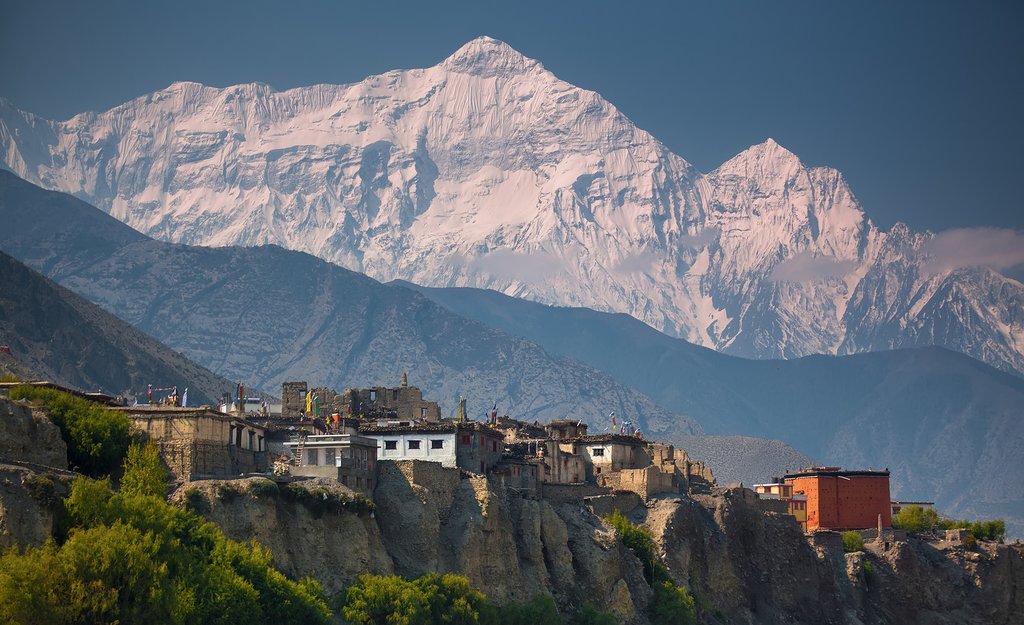
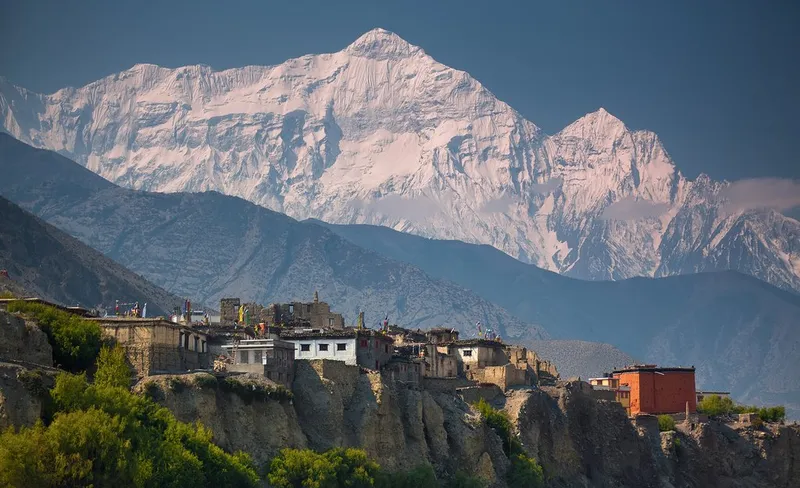
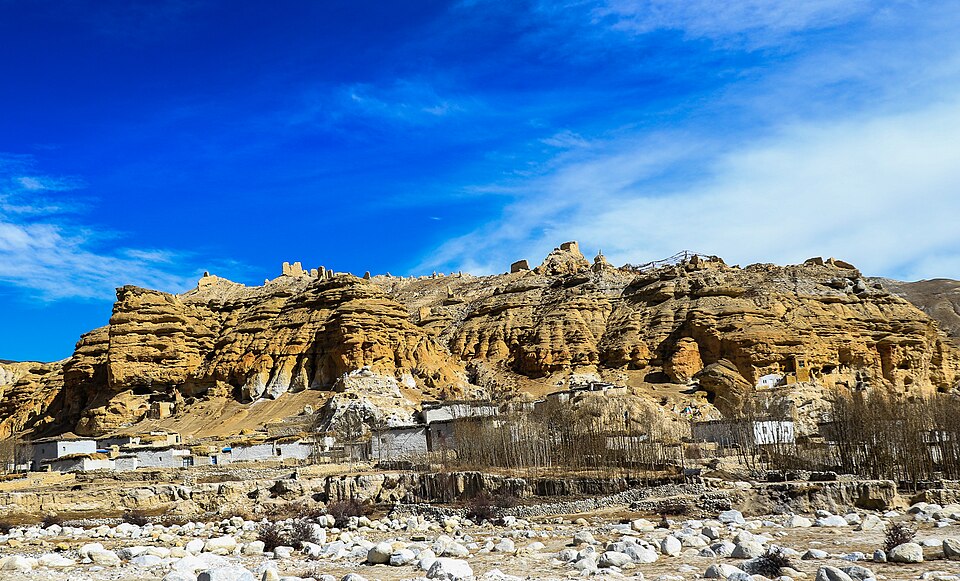
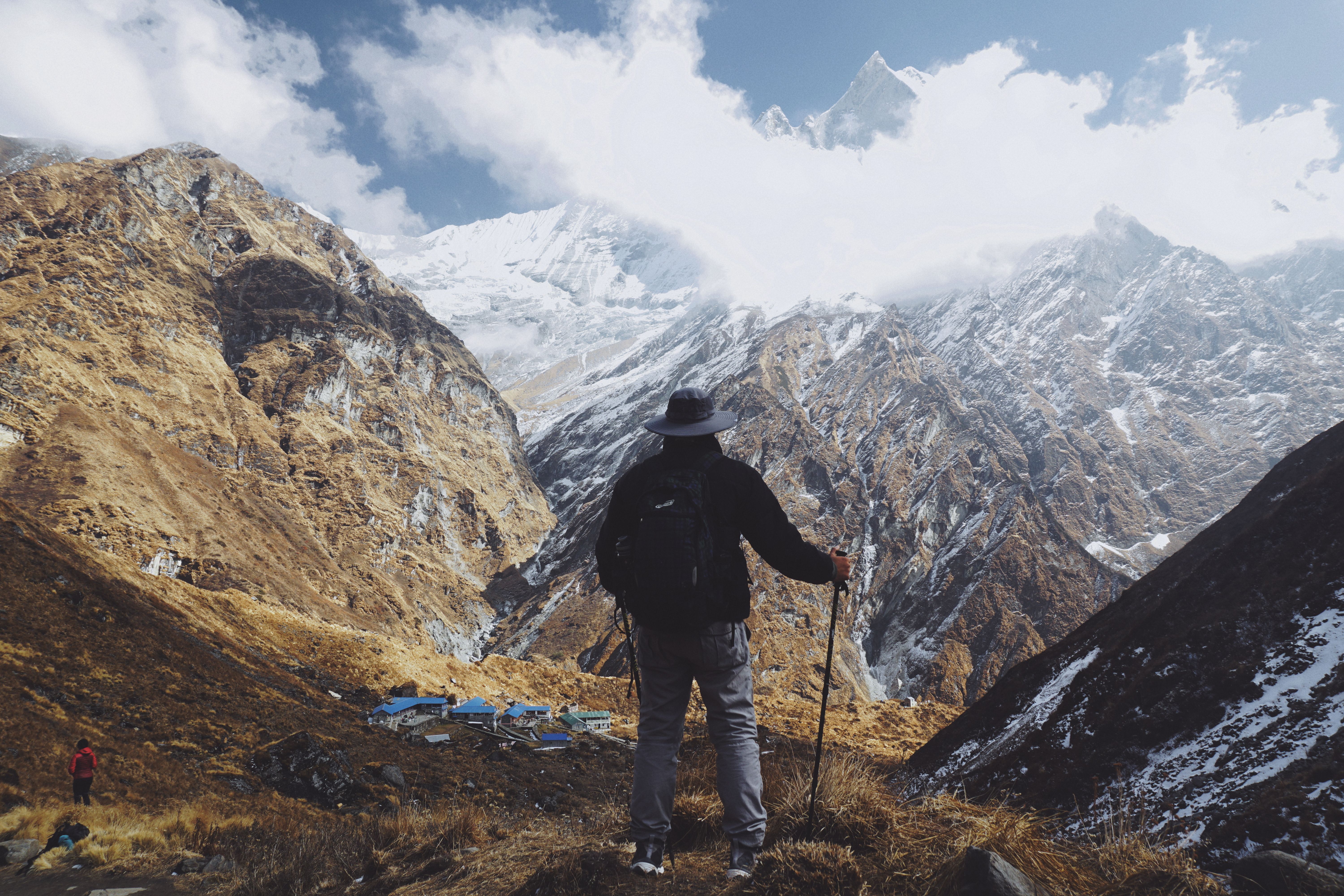
The days of paying a rigid, fixed USD 500 permit fee just to cross Kagbeni are over. In 2026, the Government of Nepal introduced major changes to the Upper Mustang Restricted Area Permit (RAP) system, replacing the old one-size-fits-all 10-day block model with a flexible, pay-as-you-go structure that perfectly accommodates shorter itineraries. For the first time, solo travelers can also visit Upper Mustang without needing to find a second person to build a group.
Upper Mustang is unlike any other trekking destination in Nepal. Known historically as the Kingdom of Lo, this remote trans-Himalayan region remained completely closed to foreign visitors until 1992. Its dramatic high-altitude desert landscapes, ancient cave monasteries, and deeply preserved Tibetan Buddhist traditions make it one of the most culturally significant areas in the world. The permit fees are designed not only to regulate tourism but also to protect this fragile environment and its unique Loba heritage.
The Rule That Has Not Changed
Although group minimum requirements have been completely removed, fully independent, unguided trekking is still strictly prohibited. Every visitor must arrange their documentation through a government-registered Nepali trekking agency and be accompanied by a licensed guide throughout the journey.
Each season, our team helps trekkers navigate the Upper Mustang permit process. It remains one of the most misunderstood aspects of planning a Himalayan trip. Below, we break down the updated 2026 permit fees, the latest restricted-area regulations, where and how permits are issued, and the on-the-ground realities that standard guidebooks miss.
Upper Mustang Permit 2026: The Quick Answer
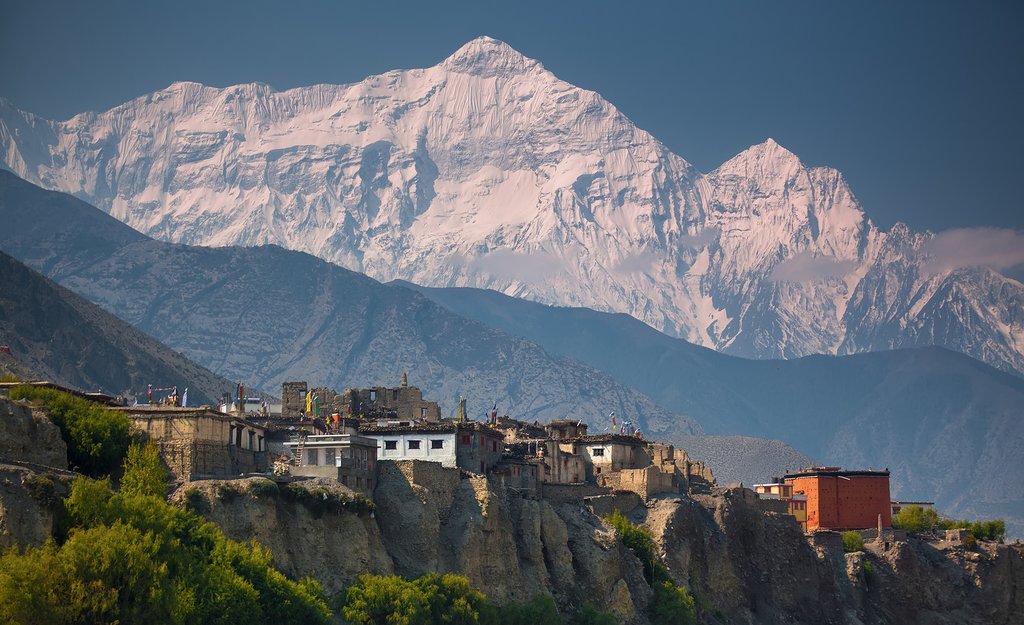
The Sacred land of Upper mustang
The Upper Mustang Restricted Area Permit (RAP) now costs USD 50 per person, per day, with no minimum day requirement. If you choose to enter the region overland via jeep, motorbike, or on foot, you must also hold a TIMS card ($20 USD) alongside an ACAP permit (NPR 3,000) for the wider conservation circuit. A licensed guide is mandatory, and the guide-to-trekker ratio is strictly capped at 1:7.
Why the Rules Changed (And Where the Money Goes)
Upper Mustang is classified as a Restricted Area by Nepal's Department of Immigration. Moving away from the mandatory 10-day block fee lowers the entry barrier for travelers wanting shorter, modern itineraries, such as point-to-point jeep tours or mountain biking trips, while maintaining a sustainable daily rate to filter traffic.
A meaningful share of the permit revenue is directly earmarked for the Upper Mustang region itself to maintain the walled city of Lo Manthang, preserve centuries-old monasteries, and protect vulnerable cave systems carved into crumbling cliffs.
The Three Permits You Actually Need
You cannot enter the restricted territory with a single document. Depending on your mode of transport, your agency will bundle up to three items together before you start.
Permit
Foreigner Fee
Issued By
Upper Mustang RAP (Per Day/Per Person)
USD 50
Dept. of Immigration / Agency
ACAP Permit (foreigners)
NPR 3,000 (~$23 -$30 USD)
NTB / ACAP counter
ACAP (SAARC nationals)
NPR 1,000
NTB / ACAP counter
TIMS Card
NPR 2,000
NTB and TAAN
Note that a TIMS card is mandatory if traveling overland (Jeep/Foot). Waived only if flying both ways via Jomsom.
SAARC Note: SAARC citizens still pay the full USD 50 per day RAP fee. Restricted-area pricing does not offer regional discounts; the price breaks only apply to the ACAP entry card.
Because the mandatory 10-day flat fee has been abolished, your permit cost directly scales with your duration inside the controlled territory. Use this quick-reference table to calculate your baseline Restricted Area Permit (RAP) costs:
Days Inside Restricted Zone
RAP Cost Per Person (USD)
3 Days
$150 USD
5 Days
$250 USD
7 Days
$350 USD
10 Days
$500 USD
12 Days
$600 USD
Note: This baseline budget only reflects the RAP. Standard ACAP conservation fees (NPR 3,000) and transport logistics remain separate.
The 2026 Solo Rule Change: Single Trekkers Welcome
Source: lqx Azmi / Pexels, Finding solitude in the mountains, the unmatched freedom of a solo Himalayan trek.
According to the latest 2026 update from Nepal’s Department of Immigration, a single traveler can now legally obtain a Restricted Area Permit. The old rule requiring a minimum of two foreign trekkers has been completely abolished.
Previously, solo travelers were forced to pay for a "ghost permit" (buying a fake second permit under a random passport copy) or wait around in tea shops hoping to join a group. Now, a genuine solo trekker can legally access Upper Mustang, provided they hire a registered guide for the full duration.
Who Does NOT Need an Upper Mustang Permit?
While international tourists face strict entry fees, certain groups are exempt from the standard USD 50 per day permit cost or enjoy alternative regional pricing structures:
Nepali Citizens: Local travelers do not require a foreign national RAP. They navigate the area using a simplified local administrative clearance paired with a nominal processing fee (typically between NPR 500 to NPR 1,000).
Children Under 10: Young travelers under the age of 10 are completely exempt from permit fees across all nationalities, provided they are accompanied by a parent or legal guardian holding valid permits.
Diplomats & Foreign Residents: Holding a resident visa or formal diplomatic status does not automatically grant a free pass; special diplomatic protocols apply, but processing must still route through the Ministry of Foreign Affairs and the Department of Immigration. Non-Resident Nepalis (NRNs) must present their card for local tier adjustments.
Where and How to Buy the Permit
The RAP cannot be purchased by individuals. It must be issued through a government-registered trekking agency, processed at the Department of Immigration in Kathmandu or the Immigration Office in Pokhara. Your agency submits the application on your behalf with the required documents.
Pre-Arrival Processing (New for 2026)
Agencies can now pre-process your RAP online using your Visa Application Submission ID before you land. You no longer have to lose your first day in Kathmandu waiting around in immigration queues!
To file the paperwork, your agency will need:
A digital copy of your passport (valid for at least six months)
Two passport-sized photos
Your Nepal tourist visa details or online submission ID
Proof of specialized travel insurance covering high-altitude helicopter evacuation up to 6,000 meters
Visa Fees: What You Pay on Arrival
Before any trekking permit, you need a tourist visa. As of 2026, Nepal's on-arrival visa fees are $30 USD for 15 days, $50 USD for 30 days, and $125 USD for 90 days. Upper Mustang itineraries usually run 10 to 14 days plus travel buffers, so the 30-day visa is the practical choice for most trekkers.
Understanding the Restricted Area Boundary
A common point of confusion for travelers is where the restricted zone actually begins. You do not need a costly RAP to visit the lower transit towns of the Mustang district.
Permit Required From:
Kagbeni Checkpoint Onwards: The exact moment you cross the northern boundary of Kagbeni village, you officially step into the restricted territory of the former Kingdom of Lo. Every single day north of this post requires a valid RAP.
Permit NOT Required For:
Jomsom: The regional airport hub and lower administrative transit center.
Muktinath: The famous sacred pilgrimage temple site.
Marpha & Tatopani: The lower valley villages famous for apple orchards and hot springs.
If your itinerary only covers these lower destinations, a standard ACAP permit and TIMS card are all you need.
The Route in Brief: Jomsom to Lo Manthang
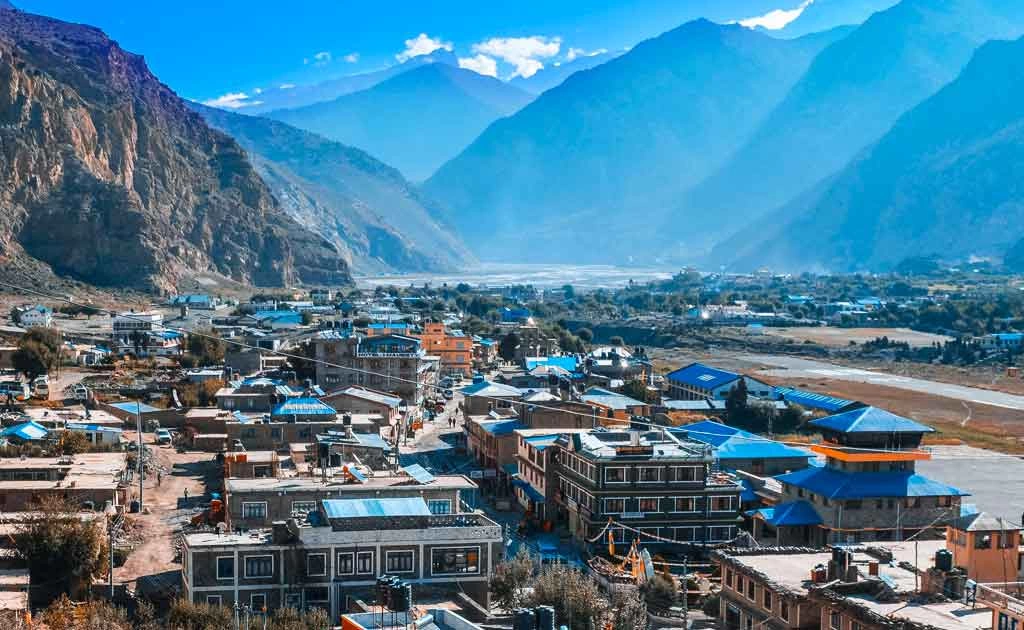
Windy valley landscape of Jomsom with mountain peaks in the Lower Mustang region.
The restricted zone begins at Kagbeni, the gateway village where the checkpoint scans your RAP. Most treks start with a flight or jeep ride to Jomsom (2,720 meters), then walk north into the rain shadow toward Lo Manthang (3,840 meters), the walled capital.
Day
Route
Elevation
1
Jomsom to Kagbeni
2,810 m
2
Kagbeni to Chele
3,050 m
3
Chele to Syangboche
3,800 m
4
Syangboche to Ghami
3,520 m
5
Ghami to Tsarang
3,560 m
6
Tsarang to Lo Manthang
3,840 m
7
Lo Manthang exploration
3,840 m
Because the trail climbs gradually and tops out below 4,000 meters in the main villages, Upper Mustang is significantly gentler on the lungs than the Everest Base Camp or the Thorong La pass trek. Even so, keep your sleep elevation gain under 300 to 500 meters per day once above 3,000 meters and watch for symptoms. Read our notes on altitude sickness before you go.
On-the-Ground Reality: Navigating the Checkpoints
Your documents will be heavily scrutinized at multiple physical stops along the trail. The three primary checkpoints are located at Kagbeni, Chele, and the entrance of the walled city of Lo Manthang.
What Officers Check: Government officials and local police cross-reference your original passport details against your stamped RAP paperwork. They verify your exact entry dates and log the registration details of your mandatory licensed guide.
What Documents are Needed: Your guide must carry the original hard copies of your RAP, ACAP, and insurance documents. Digital files or basic photocopies are strictly rejected at the gates.
What Happens if Dates Don't Match: If unexpected trail delays cause you to stay past your permit's expiration date, you cannot simply pay a casual fee to the gate officer. Your trekking agency must immediately process a formal extension portal update with the Department of Immigration, or you face heavy retroactive fines and severe legal delays at the exit gate. Keep your documents safe and accessible at the top of your pack!
The Monsoon Rain-Shadow Advantage
Source: KimKim, Aerial view of Kagbeni village, the historic entry checkpoint to Upper Mustang.
Here is Upper Mustang's secret. While the rest of Nepal drowns under monsoon rain and leeches from June through August, Upper Mustang sits in the Himalayan rain shadow behind the Annapurna and Dhaulagiri massifs. It stays dry, sunny, and trekkable through summer, making it one of the few premier monsoon-season destinations in the country, alongside our full Upper Mustang trek guide and Upper Dolpo.
Getting There: Jeep Roads and Flights
A motor road now reaches all the way to Lo Manthang, which has changed the character of the lower trail. We strongly recommend choosing walking variants away from the dusty jeep track wherever possible, and many trekkers now combine a jeep section with foot trails to balance time and trail quality.
Flights from Pokhara to Jomsom are short but weather-sensitive and operate mainly in the early morning. Jeep transfers run from Pokhara via Beni and Tatopani. Both options have volatile pricing, so verify live flight and private jeep rates close to your travel dates. See our breakdown of the Pokhara to Muktinath jeep route for the lower section.
Cash, Connectivity and Trail Costs
There are no reliable ATMs once you pass Jomsom, so carry enough Nepalese Rupees for the entire trek plus a margin. Expect common trail upcharges that are rarely included in your room rate: charging a phone or power bank, gas-heated hot showers, and Wi-Fi each typically cost between NPR 200 and 700 per use.
For mobile coverage, Nepal Telecom (NTC) is the stronger network in Upper Mustang and remote zones. Buy a local SIM in Kathmandu or Pokhara and top it up before heading north.
Food and Water on the Trail
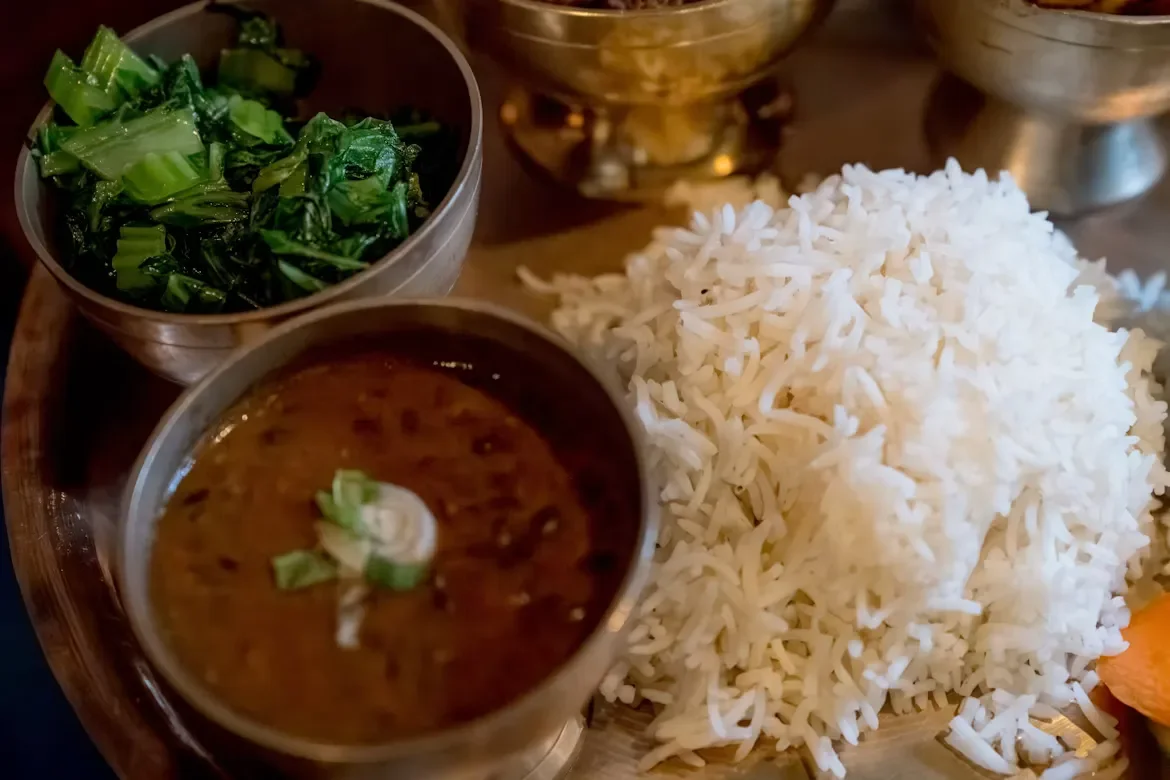
Source: Frederick Shaw / Unsplash, Fuel for the trek: A classic, nutrient-dense Nepalese Dal Bhat platter, the ultimate staple meal for hikers in the Himalayas.
Stick to freshly prepared, locally grown carbohydrates. The traditional Nepalese Dal Bhat (steamed rice, lentil soup, and vegetable curry) is the ultimate fuel for high-altitude endurance and always comes with free refills.
Safety Warning: Avoid meat options at high altitudes. Because slaughtering animals is prohibited by local religious customs in upper Mustang, meat is transported over long distances without refrigeration, creating a substantial food-poisoning risk.
Never buy plastic bottled water on the trail. It ruins the fragile desert ecosystem and gets incredibly expensive. Instead, use a reusable flask paired with a UV purifier, a Sawyer squeeze filter, or chlorine dioxide drops.
Insurance: Non-Negotiable for Restricted Areas
Standard travel insurance is not enough. You need a policy that explicitly covers high-altitude emergency helicopter evacuation up to 6,000 meters and medical treatment for AMS, HAPE, and HACE. This coverage is also a practical requirement when your agency files for the Restricted Area Permit, so confirm your policy details before you arrive.
Sacred Etiquette in the Kingdom of Lo
Upper Mustang’s monasteries (Gompas) are active places of worship, not ancient museums.
Always walk clockwise around mani walls, chortens, and stupas, keeping the structures on your right side.
Remove your shoes and hat before stepping over the threshold of any temple room.
While outdoor photography is perfectly fine, taking photos inside prayer halls is strictly forbidden unless an officiating monk gives you explicit permission.
Tipping Your Crew
Tipping is culturally expected and forms a vital supplement to guide and porter income. A standard guideline is 10% to 15% of your total trek cost, distributed among the crew at the end of the trip. Hand tips over personally on the final day as a gesture of thanks.
Frequently Asked Questions
How much is the Upper Mustang permit in 2026?
The Restricted Area Permit (RAP) costs exactly USD 50 per person, per day. There is no longer a flat $500 minimum fee. You also need an ACAP permit (NPR 3,000) and a TIMS card ($20 USD) if traveling overland.
Can I trek Upper Mustang without a guide?
No. Independent trekking is illegal in all restricted zones. The 2026 update allows solo travelers to get a permit, but you must be accompanied by a licensed guide.
Do SAARC nationals get a discount on the RAP?
No. The USD 50 per day RAP fee applies universally to all foreign passport holders. SAARC discounts apply exclusively to the ACAP permit, which drops from NPR 3,000 to NPR 1,000.
Where can I buy the Upper Mustang permit?
Only through a registered trekking agency at the Department of Immigration in Kathmandu or the Immigration Office in Pokhara. Individuals cannot apply directly.
Can the permit be issued before I arrive in Nepal?
Yes. Under the 2026 updates, registered agencies can use your online Nepal Visa Application Submission ID to pre-file and secure your permit before you fly into the country.
How long does the standard permit cover?
The Upper Mustang Restricted Area Permit costs USD 50 per person per day. The permit duration is calculated based on the exact number of days you spend inside the restricted zone, starting from your entry date at the Kagbeni checkpoint. Unlike the previous system, there is no fixed 10-day minimum fee.
Is Upper Mustang good during the monsoon?
Yes. It sits in the Himalayan rain shadow and stays dry from June to August while most of Nepal sees heavy rain, making it a top summer trekking choice.
Do I need a TIMS card for Upper Mustang?
Yes, if you are traveling overland (by Jeep, motorcycle, or on foot) through the lower Mustang transit sections. It costs $20 USD (~NPR 2,000). The TIMS card requirement is only waived if you fly both into and out of Jomsom airport, avoiding the overland checkpoints entirely.
Are there ATMs in Upper Mustang?
No. Jomsom is your last reliable point for cash machines. You must carry enough Nepalese Rupees cash to cover all meals, tipping, and daily service upcharges.
How high does the trek go?
Lo Manthang sits at 3,840 meters. Most villages stay below 4,000 meters, making altitude gentler than Everest or Annapurna circuit treks.
What is the best way to reach the trailhead?
Fly Pokhara to Jomsom or take a jeep via Beni. Verify live flight and jeep rates close to your dates, as both fluctuate seasonally.
Is travel insurance required for the permit?
You must hold insurance covering high-altitude helicopter evacuation up to 6,000 meters and AMS, HAPE, and HACE treatment. Confirm this before applying.
Can the road be avoided on the trek?
Partly. A jeep road now reaches Lo Manthang, but walking variants away from the dusty track exist and we recommend choosing them where possible.