Travel Guide
Island Peak Climbing 2026: Cost, Difficulty & What Training You Need
PT
Prabesh Tamang
14 min read
Prabesh Tamang
Island Peak, known locally as Imja Tse, is the mountain most trekkers point at when they decide they want more than a base camp. At 6,189 meters, it sits at the head of the Imja valley with the Lhotse wall towering behind it, and it has earned its reputation as Nepal's best introduction to Himalayan mountaineering. You will use crampons, clip into fixed lines, and pull yourself up a genuine ice headwall, all without needing years of prior climbing on your CV.
Our field coordinators in the Khumbu have watched this peak grow busier every season, and we have tracked the permit and guide-rule changes closely for 2026. Below is the honest breakdown of cost, difficulty, training and logistics so you arrive prepared rather than surprised.
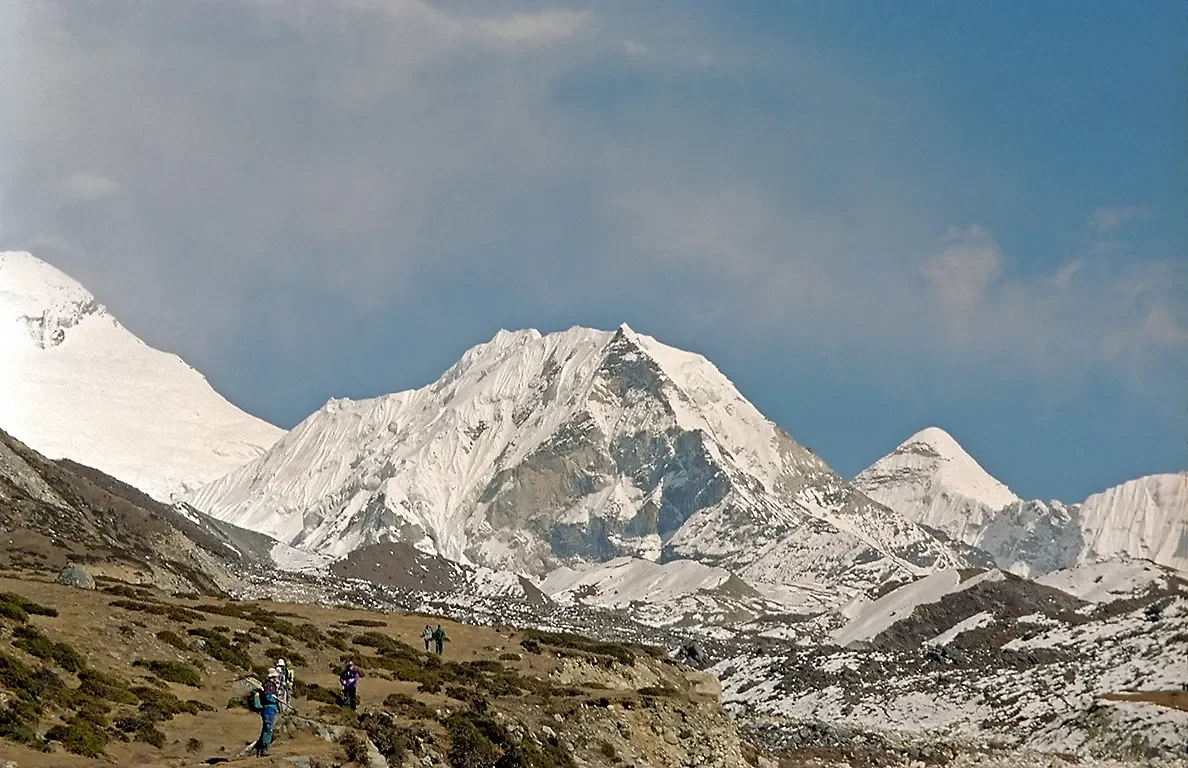
Island Peak is a 6,189-meter trekking peak in the Everest region, graded Alpine PD+. Previous mountaineering experience is not mandatory, but strong trekking experience and basic rope skills are highly advantageous, full acclimatization above 5,000 meters, and competence on crampons, fixed ropes and a 100-150 meter ice headwall. A licensed guide and climbing Sherpa are mandatory in 2026.
Island Peak was first climbed in 1953 by members of the British Everest expedition after the successful ascent of Everest, and that is still exactly what it functions as today. You trek the classic Everest Base Camp approach, branch east into the Chukhung valley, and use the peak as a high-altitude objective with real technical reward.
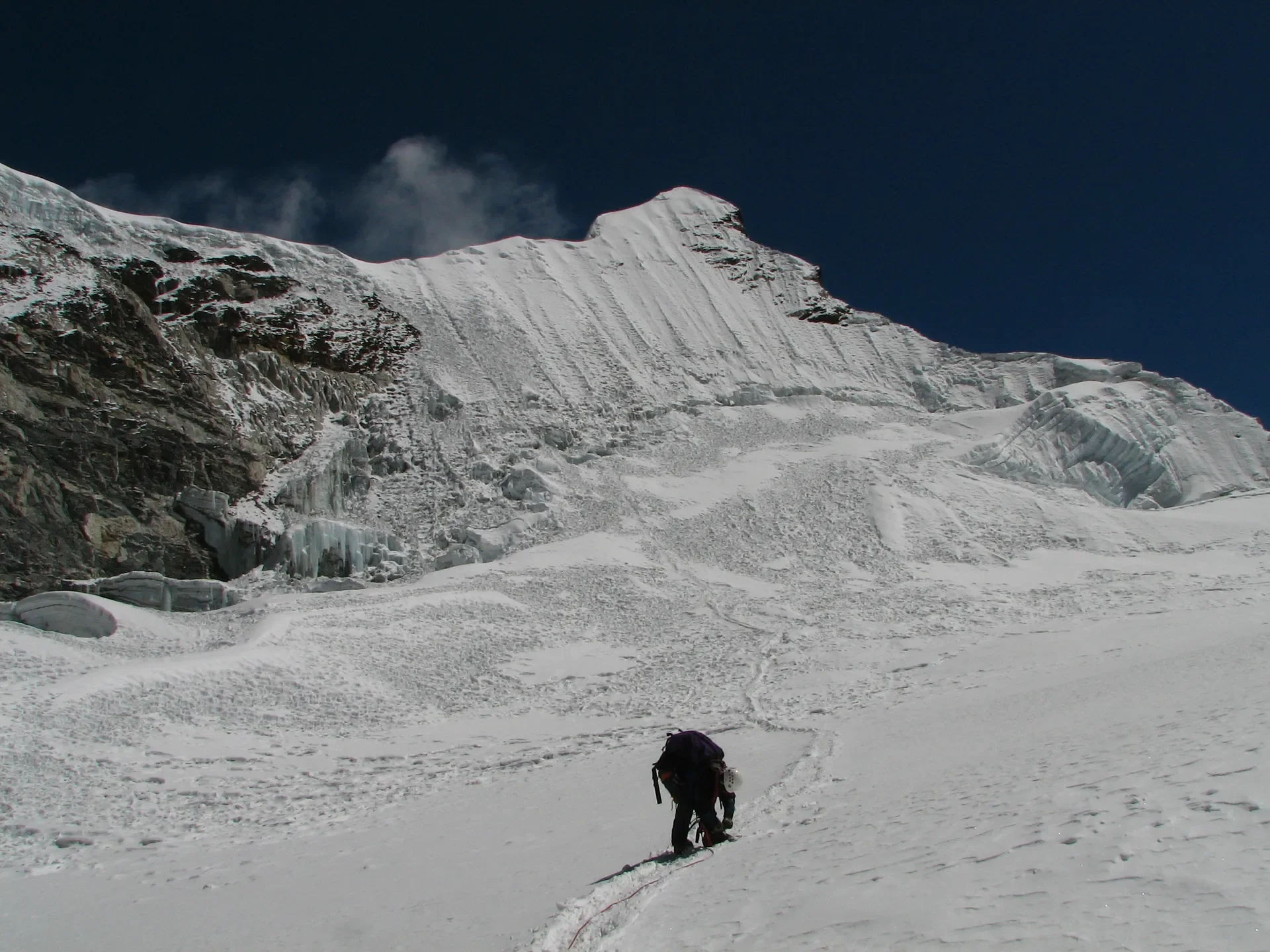
The summit day is the test, not the technical climbing alone. Expect a 1:00 AM to 2:00 AM start, a long rocky and snow approach, the glacier crossing with crevasses, and finally the steep snow-and-ice headwall before a knife-edge ridge to the top. Most climbers are on the move for 10 to 14 hours round trip from high camp.
A complete Island Peak expedition costs roughly USD 2,000 to USD 3,500 per person depending on group size and inclusions. This covers the climbing permit, national park and municipality fees, guide and climbing Sherpa wages, group climbing gear, and the full Khumbu trek logistics. Solo or unguided climbing is not allowed.
Here is how the fixed, government-mandated costs break down. These are the numbers you can rely on; everything else flexes with the market.
Notice that the Everest region does not use the standard e-TIMS card. The Khumbu Pasang Lhamu Municipality fee (NPR 3,000) plus the Sagarmatha National Park Permit (NPR 3,000) are what you pay instead, on top of the climbing permit.
The two genuinely variable costs are domestic flights and your gear rental. Kathmandu to Lukla flights swing seasonally and we will not invent an exact figure. Round-trip air fares generally fall in the rough range of USD 380 to USD 450, but you should confirm live rates through your agency or our marketplace before booking. For a fuller breakdown of regional spending, see our Everest Base Camp trek cost guide.
Note: Refundable garbage deposits are subject to current government regulations and should be confirmed with your operator.
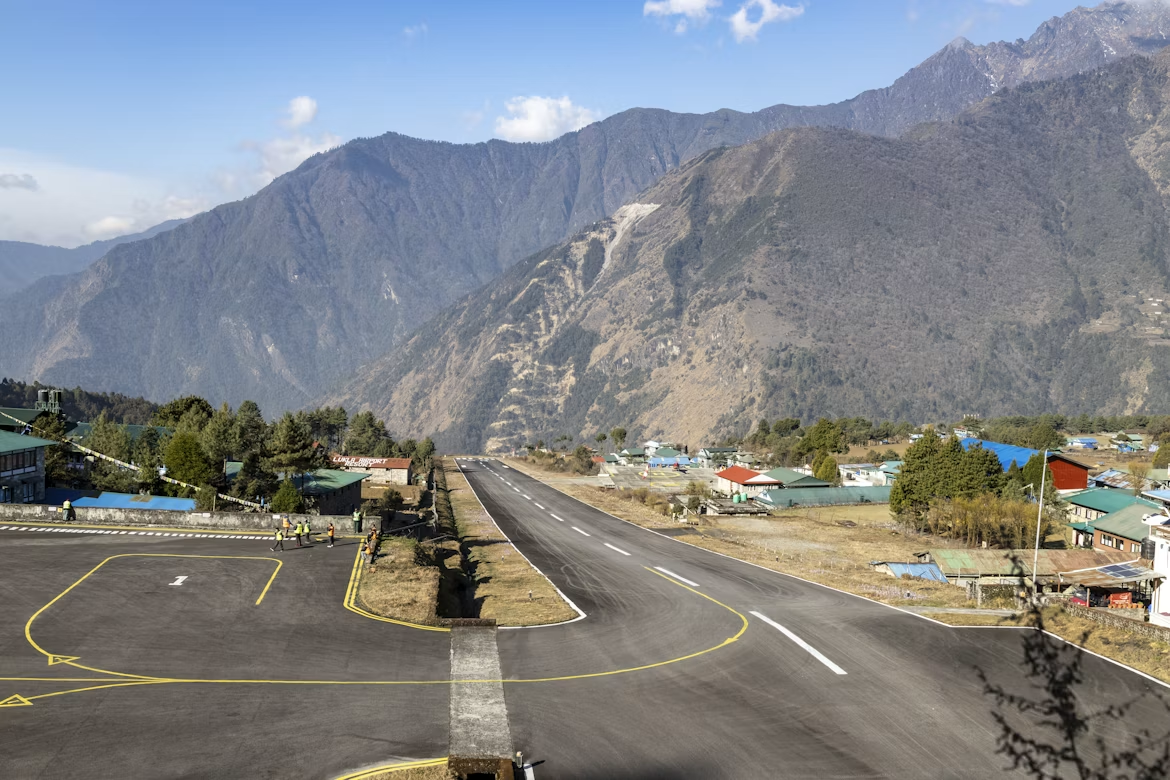
During busy seasons, many Lukla flights are operated from Manthali Airport in Ramechhap. They operate from Manthali Airport in Ramechhap, which means a road transfer of 4 to 5 hours, requiring a very early morning road transfer.
This catches many climbers off guard. Build it into your schedule, sleep on the drive, and treat the early start as the first hard day of the expedition. Read more about the airstrip itself in our Lukla Airport guide.
You must also reserve 1 to 2 buffer days for weather. Lukla flights cancel regularly for cloud and wind, and a missed summit window because of a stuck flight is the most avoidable failure on this trip.
Island Peak is technically modest but physically serious. The crux is a 100 to 150 meter fixed-rope ice headwall at a 45 to 60 degree angle, climbed with a jumar ascender, followed by a narrow summit ridge. The true difficulty is altitude and stamina across a 10 to 14 hour summit day, not rock or ice expertise.
If you can comfortably complete a demanding multi-day trek like the Everest Three High Passes, you have the aerobic base. The climbing skills, crampon work, and fixed-line technique are taught at base camp during a dedicated training day before the summit push.
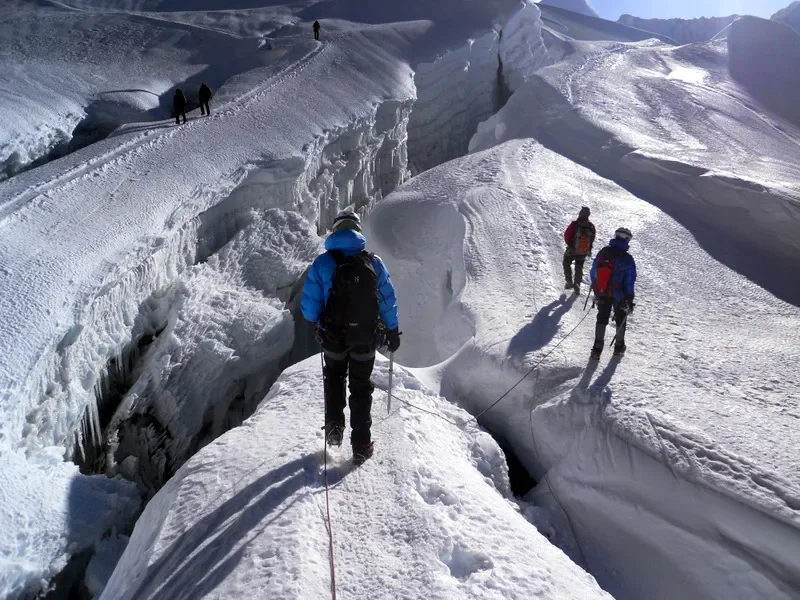
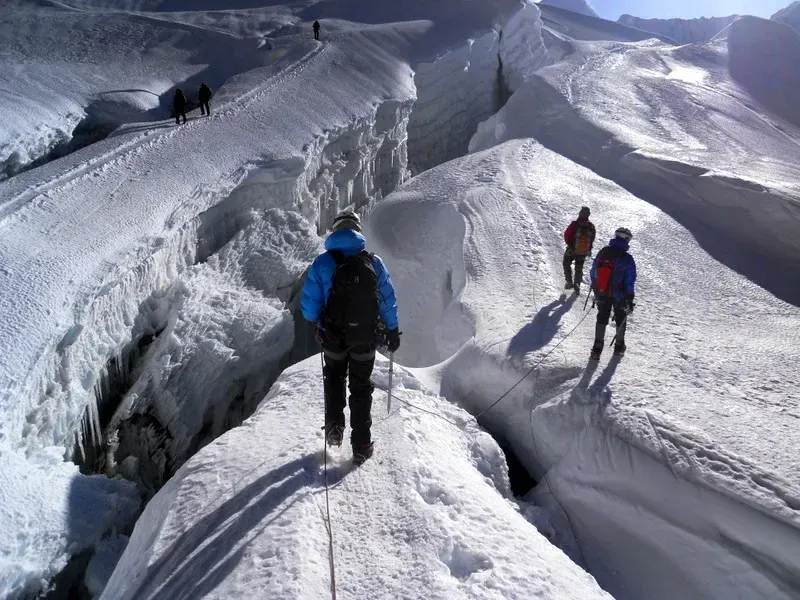
From Island Peak Base Camp at roughly 5,100 meters, the route climbs a rocky gully to the glacier snout. You rope up, navigate crevasses with crampons, then reach the headwall. The fixed lines protect the steep snow and ice section before the airy ridge walk to the 6,189-meter summit.
None of these moves are hard in isolation at sea level. At over 6,000 meters, with cold hands and a heavy pack, every step costs effort. That is why fitness and acclimatization matter more than any single skill.
Effective Island Peak training combines cardiovascular endurance, leg strength and load-carrying capacity. Aim for at least 3 to 6 months of structured preparation, building toward 5 to 8 hour hilly hikes with a 10-12 kg pack. No technical climbing background is required, but aerobic capacity directly determines summit success.
The single most valuable session is repeated stair or hill climbing with a loaded pack. It trains exactly the muscles and breathing pattern you will use on the summit headwall. If you live near mountains, get back-to-back long days into your legs so your body learns to recover overnight at altitude.
For your gear preparation, our detailed trek packing list covers the trekking layers, and your operator will supply or rent the technical climbing kit: crampons, harness, jumar, ice axe, helmet, climbing boots and carabiners.
It is generally recommended to limit sleeping elevation gains to around 300-500 meters above 3,000 meters, with mandatory rest days. For Island Peak this means acclimatization stops at Namche Bazaar (3,440 meters) and Dingboche or Chukhung before ever touching the climbing route. Rushing this causes AMS, HAPE and HACE.
The standard approach gives your body time. You climb high and sleep low, take genuine rest days, and let red blood cell production catch up. Our high-altitude trekking logistics guide explains the physiology in plain language.
Many climbers extend this by reaching Everest Base Camp first for extra acclimatization. If you are weighing routes, our comparison of Annapurna versus Everest Base Camp helps frame the broader region.
In 2026 the Island Peak expeditions are normally conducted with licensed guides and climbing Sherpas. You also need insurance covering high-altitude helicopter evacuation up to 6,000 meters plus medical treatment for AMS, HAPE and HACE. Comprehensive high-altitude rescue insurance is strongly recommended.
Standard travel insurance will not cover a Himalayan helicopter rescue. Confirm in writing that your policy includes emergency evacuation to 6,000 meters and altitude-illness treatment. The recent changes to Restricted Area rules elsewhere in Nepal, where a single trekker can now obtain permits but must still hire a licensed guide with a 1:7 ratio cap, reflect the same direction of travel: independent high-mountain travel is being phased out.
For a wider view of the rules and budgeting, see our overview of Nepal trekking rules and cost.
There are no ATMs past Namche Bazaar. Carry sufficient Nepalese Rupees in cash for the entire trek, including tips. Expect trail upcharges of NPR 200 to 700 for charging power banks, gas-heated hot showers and Wi-Fi access such as Everest Link. These are almost never included in your lodge stay.
For mobile coverage in the Everest region, Nepal Telecom (NTC) is the reliable network and you should buy an NTC SIM in Kathmandu. Ncell performs better on the Annapurna side but is patchy in the high Khumbu. Carry a power bank and budget for the charging fees, because solar lodge electricity is limited above Dingboche.
Prioritize vegetarian meals on the trail. Local Buddhist traditions discourage animal slaughter in the Khumbu. Stick to fresh local carbohydrates and lean on Dal Bhat, the lentil soup, rice and vegetable curry that comes with free refills and clean, high energy.
For water, never buy plastic bottled water on the trail. Bring a reusable bottle and an active purification system, a UV purifier, a Sawyer squeeze filter or chlorine dioxide drops. This protects the fragile Khumbu environment and keeps your stomach safe at altitude.
The route to Island Peak passes through deeply Buddhist villages and the famous Tengboche Monastery. Walk clockwise around mani walls, chortens and stupas, keeping them on your right.
Before entering a monastery, remove your shoes and hat. Outdoor photography is fine, but ask permission before photographing inside prayer halls. These small courtesies matter to the communities whose home you are walking through.
Tipping is culturally expected and a vital supplement to your crew's base income. Tipping practices vary, but guides and climbing Sherpas are usually tipped separately according to group size and service. On a climbing trip the climbing Sherpa, who shares the summit risk with you, deserves particular recognition.
The two prime windows are spring (March to May) and autumn (September to November). Autumn offers the clearest skies and most stable summit windows, while spring brings warmer temperatures and pre-monsoon stability. Winter is possible but bitterly cold, and the summer monsoon brings poor visibility to the Everest region.
If you are still deciding on timing for a Himalayan trip, our September versus October comparison breaks down the autumn nuances in detail.
If you have completed a demanding high-altitude trek, you are fit, and you want a genuine taste of mountaineering without committing to an expedition peak above 7,000 meters, Island Peak is the obvious next step. Pair it with the Everest Base Camp approach and you get the most rewarded effort of any climb in Nepal. Those wanting to understand the elevation challenge first should read our Everest Base Camp elevation guide.
Island Peak is considered a moderately difficult Himalayan trekking peak. The biggest challenges are altitude, long summit days, glacier travel, and the fixed-rope headwall near the summit.
Yes. Previous mountaineering experience is helpful but not mandatory. Many first-time climbers successfully summit Island Peak after proper acclimatization and pre-climb training.
No. Most operators provide instruction on using crampons, harnesses, jumars, and fixed ropes before summit day.
Most expeditions cost between USD 2,000 and USD 3,500 per person, depending on group size, guide ratio, accommodation standards, and included services.
Island Peak (Imja Tse) stands at 6,189 meters (20,305 feet) above sea level.
Most itineraries take 16 to 19 days, including acclimatization and contingency days.
Prepare for at least 3–6 months with:
Yes. Everest Base Camp is a trekking route, while Island Peak involves glacier travel, crampons, fixed ropes, and a summit headwall.
Island Peak is generally more technical, while Mera Peak is higher but physically less technical.
Yes. Many climbers first complete the Everest Base Camp trek for acclimatization before attempting Island Peak.
The best seasons are:
April, May, October, and November usually offer the best conditions.
Essential equipment includes:
Yes. Most technical gear can be rented in Kathmandu or through your expedition operator.
Yes. Choose a policy that covers:
Success rates vary by weather and acclimatization, but properly prepared climbers with adequate acclimatization generally have a high chance of reaching the summit.
For trekkers wanting their first Himalayan mountaineering experience, Island Peak offers one of the best combinations of accessibility, technical challenge, and spectacular Everest-region scenery.
Get travel ideas and local experiences from My Easy Guide in your inbox.
Spam free. Unsubscribe anytime. We respect your privacy.