Sandeep Shrestha
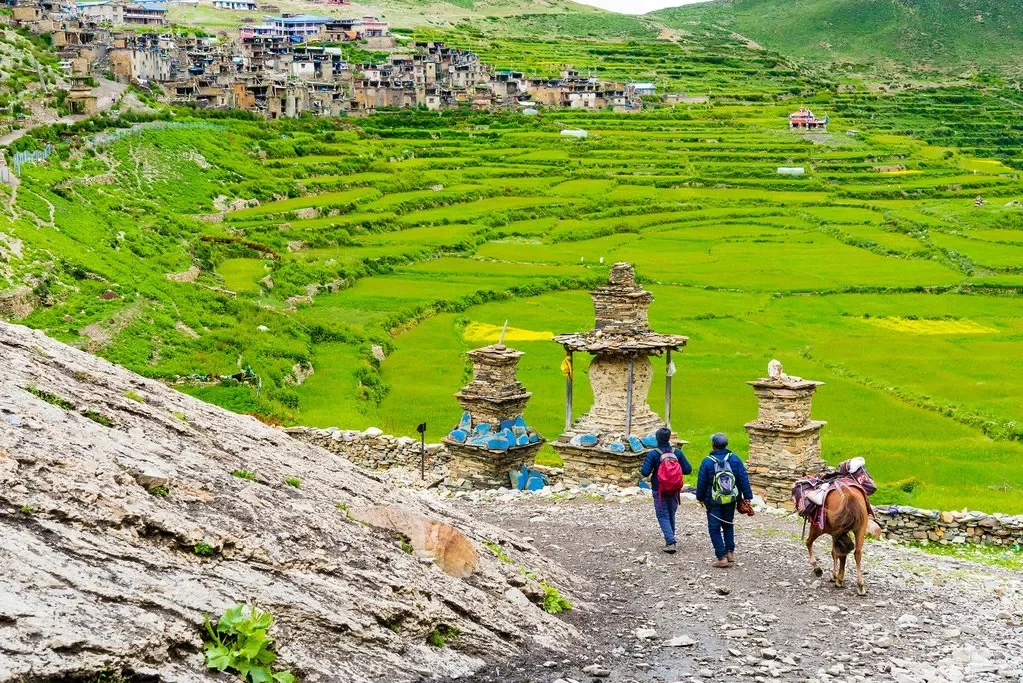
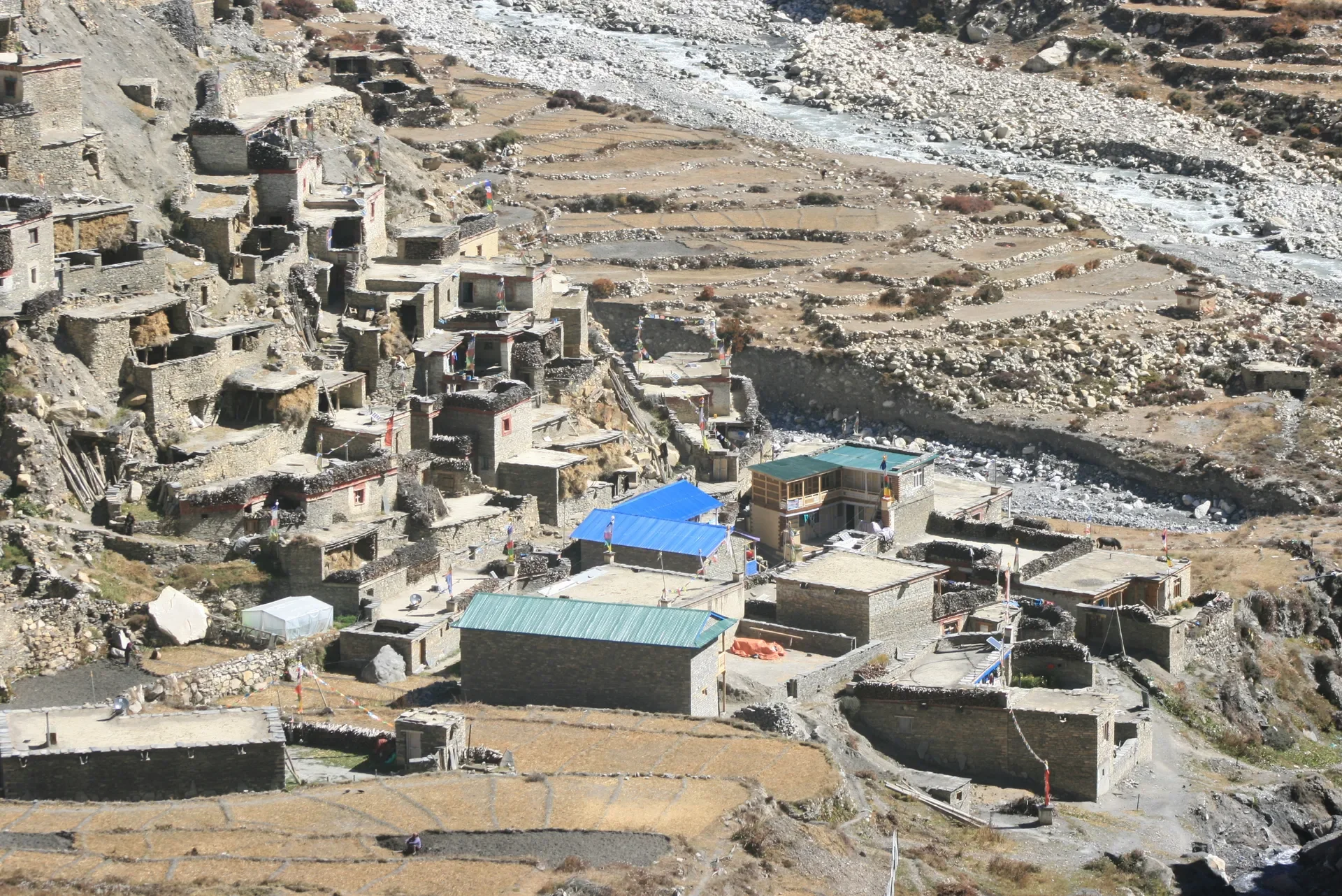
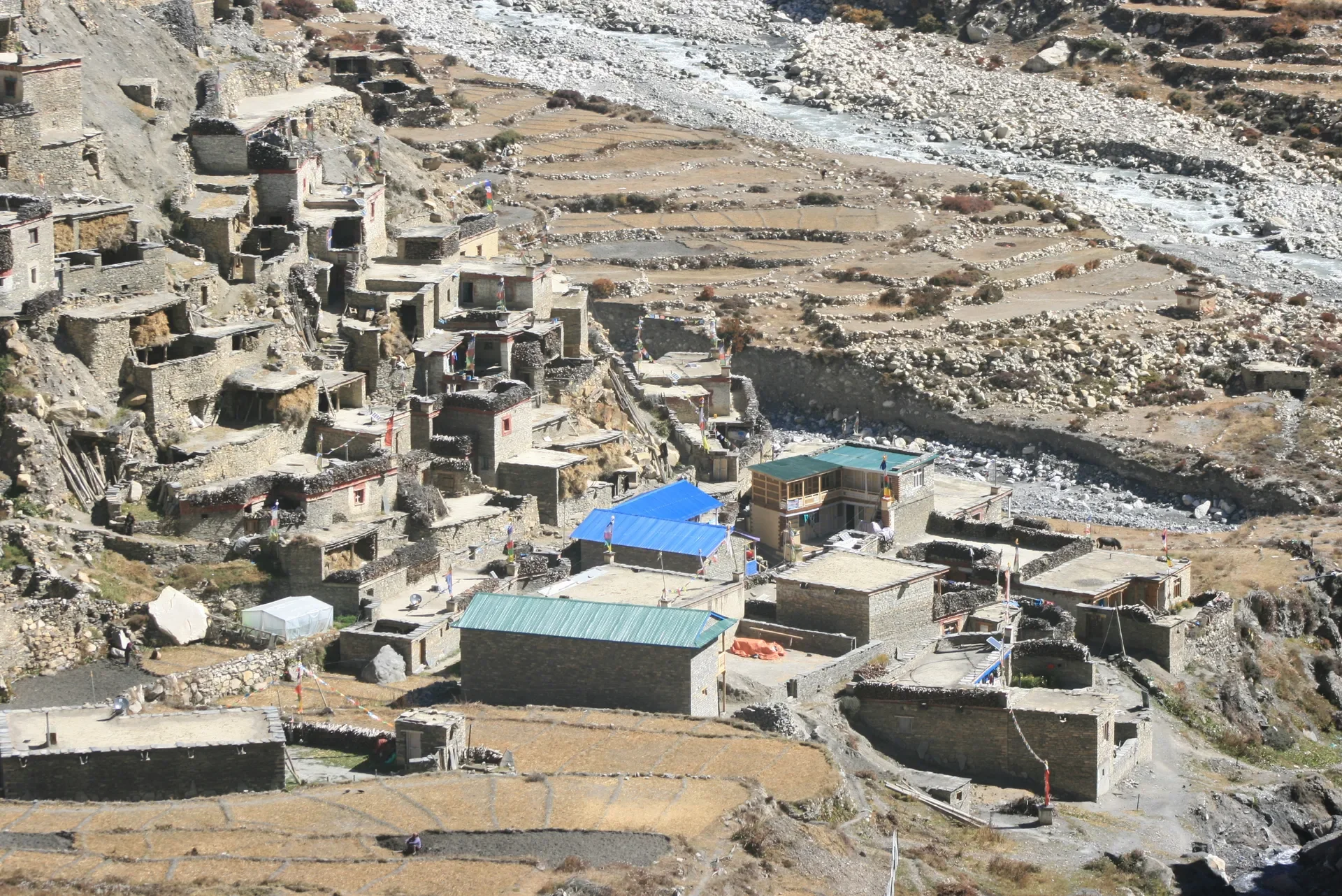
Few trails in Nepal still feel genuinely untouched, but the Nar Phu Valley is one of them. Tucked behind a narrow gorge off the Annapurna Circuit, this restricted pocket of the Manang district stayed closed to outsiders until 2002. Walk in today and you cross suspension bridges over a roaring river, climb through pine forest into a wind-scoured high desert, and reach two medieval Tibetan-Buddhist villages where prayer flags snap above stone houses and yak caravans still move goods over passes.
Our field coordinators rank Nar Phu among the quietest serious treks in the country. You will share the trail with mule trains and the occasional Khampa herder rather than crowds. This guide lays out the 2026 permit rules, the day-by-day route, costs, and the safety and cultural details that keep this trek both legal and rewarding.

Nar Phu is a restricted Tibetan-Buddhist enclave in the Manang district, opened to trekkers in 2002. It combines deep gorges, the high villages of Phu and Nar, ancient monasteries, and a crossing of the 5,322-meter Kang La pass, all with a fraction of the foot traffic seen on the main Annapurna Circuit.
What sets this trek apart is the cultural intactness. The people here trace their roots to Tibet, herding yaks and growing barley at altitudes most farmers would abandon. The Tashi Lhakhang Gompa above Phu, blessed by the late Lama Karma Sonam Rinpoche, is one of the most respected monasteries in the region.
The landscape shifts dramatically as you gain height. You start in green river valleys with waterfalls and end in a stark, Tibet-like plateau where the wind carries dust and the peaks of Himlung, Kang Guru, and Annapurna II hem you in. If you have already done the classic routes, compare your options in our breakdown of Nepal trekking routes.
The Nar Phu trek requires three things in 2026: a Restricted Area Permit (RAP), an ACAP entry permit, and a licensed guide. As a restricted zone, you cannot enter without an authorized agency arranging your paperwork and crew.
The March 2026 RAP update changed the game for individual travelers. The old rule requiring a minimum of two trekkers is gone, so a single traveler can now obtain the permit. However, you still must hire a licensed guide, and the guide-to-trekker ratio in restricted areas is capped at 1:7.
The Restricted Area Permit for Nar Phu is seasonal. ACAP is fixed because the entire valley sits inside the Annapurna Conservation Area. You will also need passport copies and passport-sized photos for processing.
The ultimate guide to planning your dream web travel adventure with the experts from myeasyguide.
Spam free. Unsubscribe anytime. We respect your privacy.
Because most travelers exit through the Annapurna Circuit, your ACAP permit covers both legs of the journey. For a wider view of national permit costs and rules, see our overview of Nepal trekking rules and costs.
Tourists obtain a visa on arrival at Tribhuvan International Airport in Kathmandu. The 2026 fees are USD 30 for 15 days, USD 50 for 30 days, and USD 125 for 90 days. Bring exact cash in US dollars and a passport photo to speed up the counter.
For a 9 to 12-day Nar Phu trek plus travel days, the 30-day visa is the safe choice. It gives you buffer room for weather delays and rest in Kathmandu without scrambling for an extension.

The trek starts with a long drive from Kathmandu to Koto on the Annapurna Circuit, then branches north into the restricted valley. You climb to Phu, cross to Nar, and exit over the Kang La pass toward Ngawal and Manang. The full circuit typically runs 9 to 12 days.
You drive from Kathmandu to Besisahar, then take a rough jeep road to Koto (around 2,600 meters). This is genuinely volatile pricing territory: a shared or private jeep hire varies by season and road condition. Verify live transport rates through your agency or marketplace before locking in your budget.
The road is dusty and bumpy, and landslides can slow things in shoulder seasons. The whole drive can take 9-11 hours split across one or two days.
The climb from Koto to Phu follows the Phu Khola through a tight gorge. You pass the entry checkpoint where your guide presents the permits, then climb past chortens and old kani gateways into a treeless basin. Phu sits below ruined fortresses, and the Tashi Lhakhang Gompa crowns the ridge above.
Always pass mani stones, chortens, and stupas on the left side, keeping them to your right, and walk clockwise around any religious structure. These are not tourist props; they are the spiritual backbone of village life here.
From Phu you backtrack and climb to Nar, a tidier village ringed by four colorful gompas. After an acclimatization day, you tackle the Kang La pass at 5,322 meters, the trek's crux. Start before dawn for stable snow and the best views of Annapurna II, Gangapurna, and Tilicho Peak before the descent into Ngawal.
The pass is non-technical in good conditions but long and exposed to wind. Once you drop to Ngawal, you rejoin the Annapurna Circuit. From here many trekkers continue to Manang and even add the Tilicho Lake trek or the full Thorong La pass crossing.
Above 3,000 meters, sleep elevation should not increase by more than 300-500 meters per day, with mandatory rest days built in. Nar Phu enforces this naturally with acclimatization stops at Phu and Nar before the Kang La crossing. Never skip these to save time.
The Kang La day involves a fast climb to over 5,300 meters, so your body needs to be ready. Watch for headaches, nausea, and dizziness. If symptoms worsen, descend immediately. We cover the broader logistics of staying safe at altitude in our high-altitude trekking logistics guide.

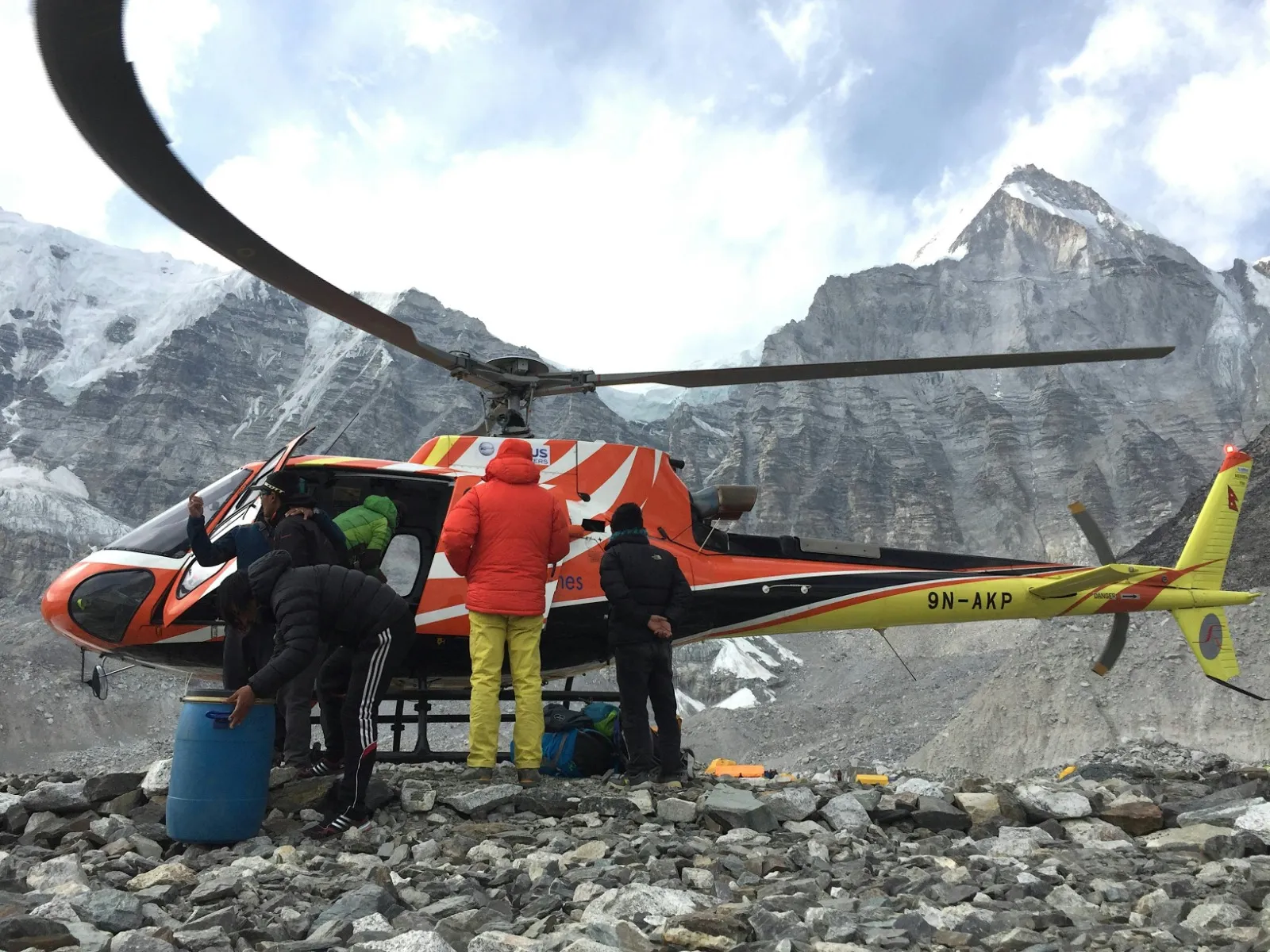
Standard travel insurance is not enough for this trek. You must hold a policy that specifically covers high-altitude emergency helicopter evacuation up to 6,000 meters and medical treatment for AMS, HAPE, and HACE. This coverage is legally required to obtain your Restricted Area Permit.
Carry a printed copy of your policy with the emergency assistance number. There are no roads into the upper valley, so a helicopter is the only fast way out in a serious emergency.
Teahouses in Nar Phu are basic and few. Carry enough Nepalese Rupees in cash because there are no ATMs anywhere in the valley. The nearest reliable ATMs are far behind you in Besisahar or Pokhara.
Budget for common trail upcharges. Charging a phone or power bank, a gas-heated hot shower, and Wi-Fi access typically cost an extra 200 to 700 NPR per service and are rarely included in your room rate. Lodge and meal prices in remote zones shift seasonally, so confirm current rates through your guide.
Prioritize vegetarian meals on the trail. In Buddhist regions like Nar Phu, slaughtering animals is restricted by local custom, so meat is carried up by foot or mule over days without refrigeration. Stick to fresh, locally grown carbohydrates.
The classic Dal Bhat, lentil soup with rice and vegetable curry, is your best fuel. It is filling, clean, high-energy, and usually comes with free refills. Most experienced trekkers eat it twice a day.
Do not buy plastic bottled water on the trail. It harms this fragile alpine environment and there is no proper waste collection up here. Carry a reusable bottle paired with an active purification system such as a UV purifier, a Sawyer squeeze filter, or chlorine dioxide drops.
[IMAGE PLACEHOLDER: Trekker filling reusable bottle at a stone water tap in Nar village]
Spring (March–May) and autumn (September–November) offer the most stable weather and clearest views for the Kang La crossing. Autumn brings crisp skies after the monsoon, while spring adds warmer days and blooming rhododendron lower down. Winter is harsh and snow can close the pass.
Worth noting: while the southern Annapurna valleys flood with monsoon rain and leeches from June to August, the upper Nar Phu region sits partly in the Himalayan rain shadow and stays comparatively dry. It is not as bone-dry as Upper Mustang, but it is a far better monsoon bet than the lower trails. To weigh autumn months, see our comparison of September vs October trekking.
For Nar Phu and the wider Manang region, Nepal Telecom (NTC) is the more reliable network in the remote upper valley. Ncell holds up well on the main Annapurna Circuit once you descend to Manang, but signal in Phu and Nar is patchy at best.
Buy a tourist SIM in Kathmandu with your passport and a photo. Do not rely on a constant connection. Tell family back home that you may go quiet for several days in the restricted zone.
Nar and Phu are living Buddhist communities, not open-air museums. Remove your shoes and hat before entering any monastery or temple. Outdoor photography is generally fine, but photographing inside monastery prayer halls is strictly prohibited unless a resident monk gives you explicit clearance.
Dress modestly, ask before photographing people, and accept butter tea graciously if offered. A respectful traveler earns warmth here that crowds on busier trails rarely experience.
Tipping is culturally expected and forms a vital part of your guide and porter's income. A standard guideline is 15% to 20% of your total trek cost, distributed among the crew at the end of the trip. Hand tips over personally with both hands as a gesture of thanks.
This is a cold, high, and remote trek, so pack for self-sufficiency. Layering is the key system: a warm down jacket, thermal base layers, and a windproof shell for the Kang La pass are non-negotiable. Good broken-in boots and trekking poles save your knees on the long descents.
For a full kit list across seasons, use our detailed trek packing list. Solo travelers, especially women trekking with a guide, can also read our solo female trekking guide for added planning confidence.
Nar Phu is harder to reach and far quieter than the classic routes, but it offers cultural depth that rivals Upper Mustang at a lower permit cost. If you want fewer crowds, intact Tibetan villages, and a serious high pass, it outranks the standard circuits on solitude.
If you are still deciding between famous trails, our comparison of Annapurna vs Everest Base Camp is a useful starting point. Those wanting a Buddhist cultural focus closer to the city might also consider the gentler Langtang Valley trek.
No. Nar Phu is a Restricted Area. Under the March 2026 rules, a single trekker can now obtain the permit, but you must hire a licensed guide. The guide-to-trekker ratio is capped at 1:7.
The Restricted Area Permit costs USD 100 per person per week (Sept–Nov) or USD 75 per week (Dec–Aug). You also need the ACAP permit at NPR 3,000 since the trek sits inside the Annapurna Conservation Area.
No. There are no ATMs in Nar or Phu, so carry enough Nepalese Rupees in cash. Some lodges offer paid Wi-Fi or charging for 200 to 700 NPR per service. Nepal Telecom (NTC) gives the most reliable signal in the upper valley.
Kang La pass sits at 5,322 meters and connects Nar village to Ngawal on the Annapurna Circuit. It is the physical and scenic high point of the trek, usually crossed in a long 7-8 hour day.
Spring (March–May) and autumn (September–November) offer the most stable weather and clearest mountain views. Winter is cold with possible pass closures, and the monsoon brings cloud, though the upper valley stays drier than southern Annapurna.
Most itineraries run 9 to 12 days from Kathmandu, including the drive to Koto, the climb into Phu and Nar, the Kang La crossing, and the exit toward Manang.