If you're planning a trek in Nepal for 2026, the TIMS card is one of the first acronyms you'll run into, and it causes more confusion than almost any other piece of paperwork. People assume it's optional, assume it covers everything, or assume the Everest region uses it. None of those are quite right. According to local trekking agencies in Kathmandu and Pokhara, the permit system has shifted dramatically over the last two years. Checkpoints are now strictly enforcing the digital registration rules.
Here's the honest reality: TIMS is still part of Nepal’s trekking registration system and may be required in some regions, but enforcement and processing now largely happens through registered trekking agencies alongside guide requirements. This guide breaks down exactly what it costs, where it applies, where it doesn't, and how to avoid wasting money or getting turned back at a checkpoint.
What Is the TIMS Card?
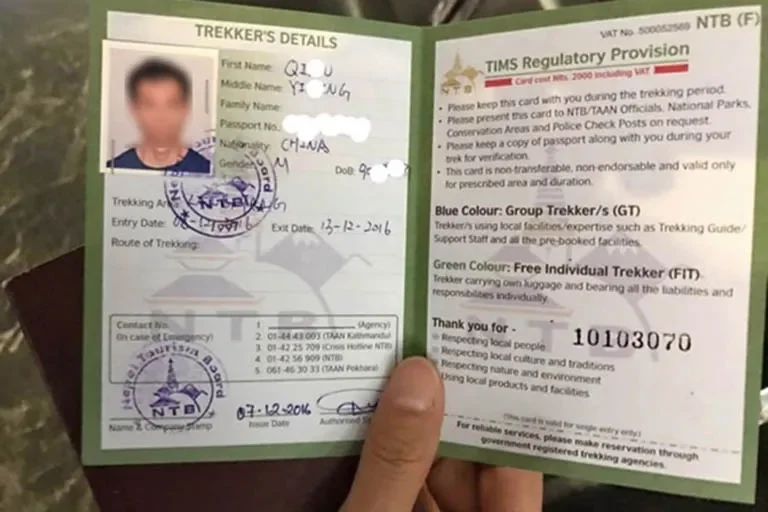
A look inside the standard green TIMS (Trekkers' Information Management System) card, required for tracking and ensuring safety while trekking in Nepal.
The TIMS card is Nepal's Trekkers' Information Management System permit, a registration record managed jointly by the Nepal Tourism Board (NTB)and the Trekking Agencies' Association of Nepal (TAAN). It logs your identity, route, and emergency contacts so authorities can locate and assist trekkers during accidents, natural disasters, or rescue operations.
Think of it less as a sightseeing ticket and more as a safety registry. When a landslide blocks a valley or a trekker goes missing, the TIMS database is what search teams reference. Permits and registration details are checked at trail checkpoints, often alongside conservation or municipal permits, so it's not something you can skip and hope for the best.
The card itself is a physical (and increasingly digital) record tied to your passport. It does not replace national park or conservation area permits, which is where most first-timers get tripped up.
How Much Does the TIMS Card Cost in 2026?
For non-SAARC foreign trekkers, the TIMS card costs NPR 2,000 per person per trek. SAARC nationals (India, Bangladesh, Sri Lanka, etc.) pay NPR 1,000. These are flat government-set fees, not negotiable, and they apply per route rather than per day.
To keep your budget honest, here's how the core costs break down for a standard region like Annapurna or Langtang. Note these are fixed permit fees, separate from guide wages, food, and lodging.
A little inspiration for your next trip
Get travel ideas and local experiences from My Easy Guide in your inbox.
Spam free. Unsubscribe anytime. We respect your privacy.
Permit / Item
Foreigner (Non-SAARC)
SAARC National
TIMS Card
NPR 2,000
NPR 1,000
ACAP (Annapurna Conservation Area)
NPR 3,000
NPR 1,000
Langtang National Park
NPR 3,000
NPR 1,500
Licensed Guide (mandatory)
Variable rate
Variable rate
One thing we always remind our travelers: carry enough Nepalese Rupees (NPR) in cash for permits and the trail. ATMs disappear past Jomsom and past Namche Bazaar, and trail upcharges for charging power banks, gas-heated hot showers, and Wi-Fi typically run an extra 200 to 700 NPR per service.
Who Actually Needs a TIMS Card?
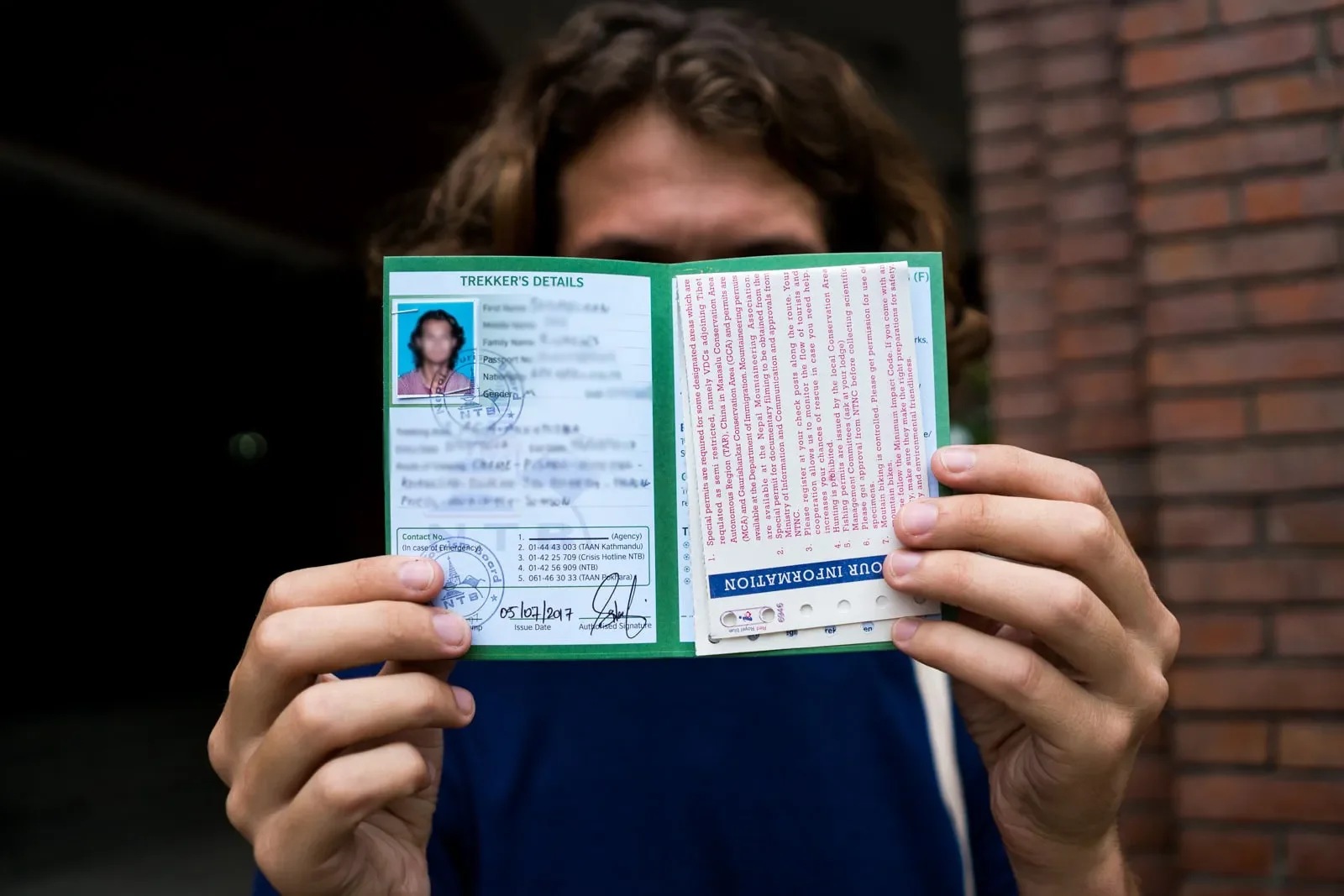
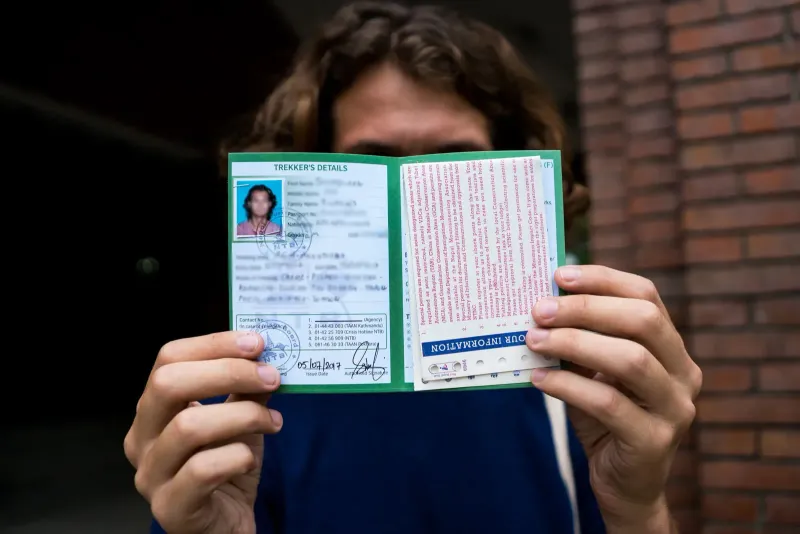
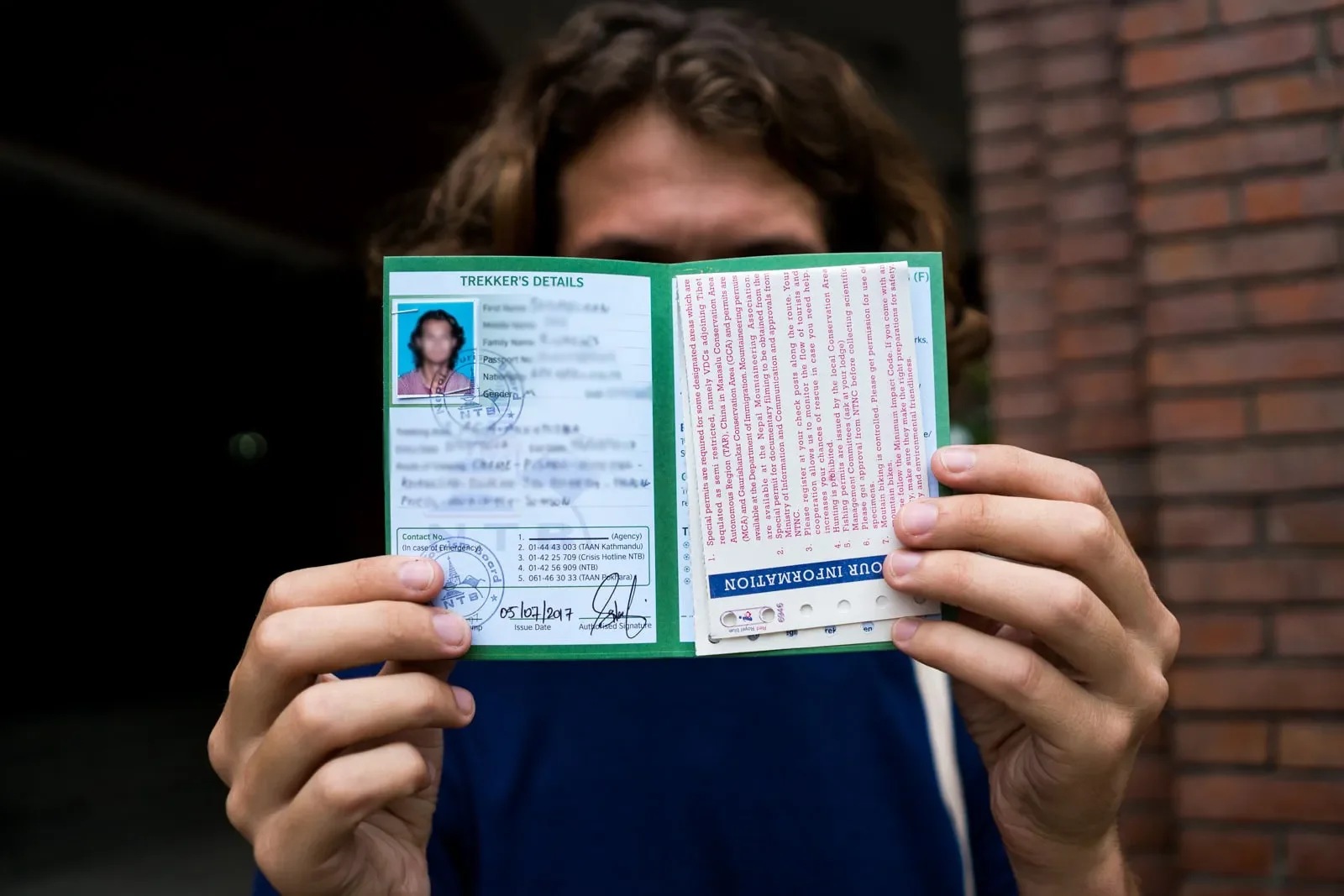
Preparing for the trail: An international traveler displays their officially stamped TIMS card before embarking on a Himalayan trek.
Most trekkers heading into mainstream regions like Annapurna, Langtang, and the lower hill trails need a TIMS card. The major exceptions are the Everest (Khumbu) region, which uses local municipality fees instead, and all restricted areas, which use higher-tier Restricted Area Permits (RAP) that replace TIMS entirely.
This is the part where people overpay or get blocked. Let's be precise about it.
Most lower-altitude and standard teahouse trails not covered by other systems
TIMS may be required in several popular trekking regions, depending on current enforcement and agency processing rules.
Regions That Do NOT Use TIMS
This is the critical correction for 2026. The Everest Base Camp trek does not use a TIMS card. Instead, the Khumbu region charges the Khumbu Pasang Lhamu Municipality fee of NPR 3,000 plus the Sagarmatha National Park Permit of NPR 3,000. Everest region does not require TIMS, so any separate TIMS charge for Everest should be carefully verified.
Restricted areas also skip TIMS completely. Treks like Upper Mustang, Manaslu, Tsum Valley, and Dolpo require a Restricted Area Permit (RAP), which is far more expensive and comes with strict guide rules.
The 2026 Guide Rule That Changes Everything
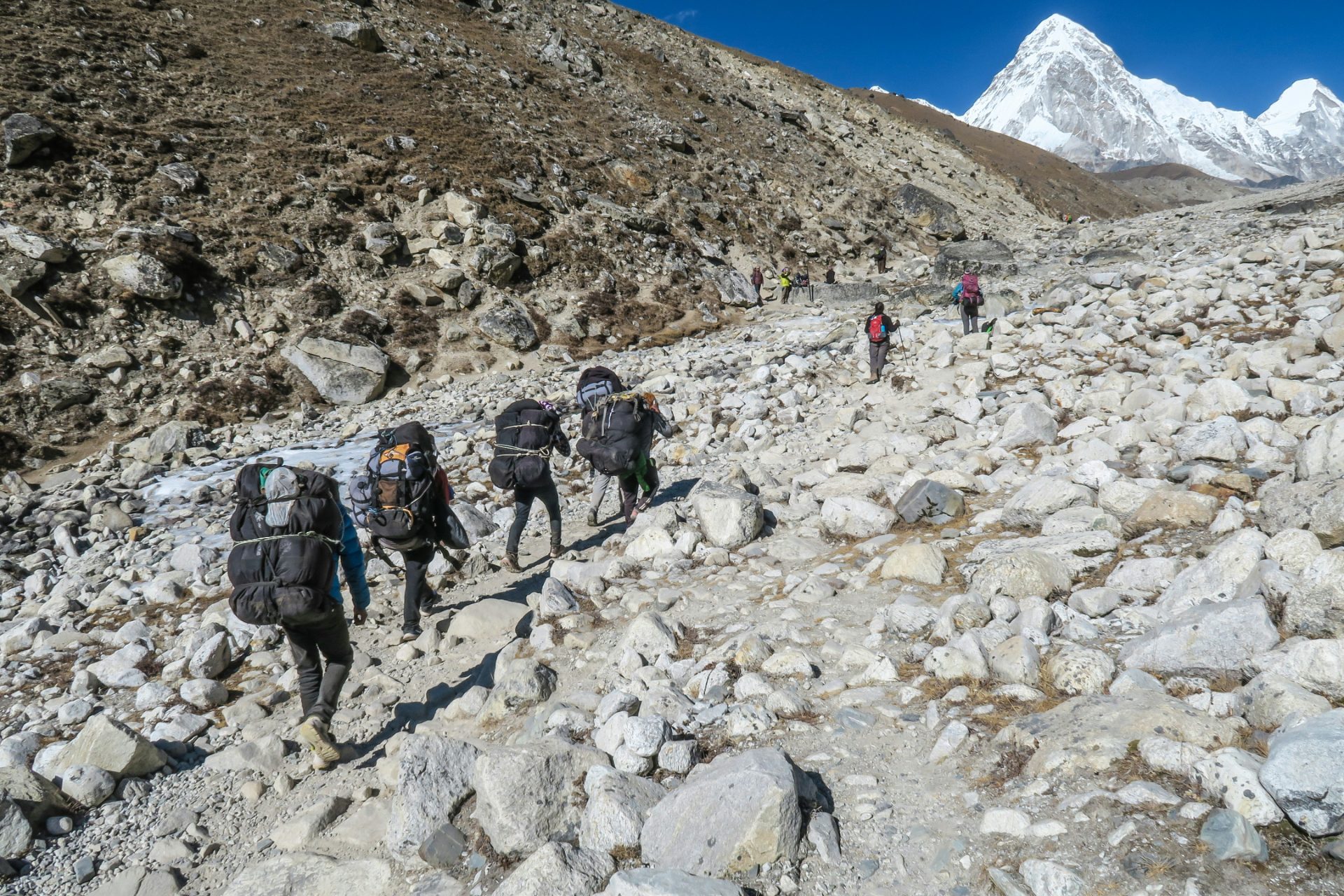
Source: Sebastian Pena Lambarri, Local Sherpa guides carrying load on a rugged mountain pass along a Nepal trekking route.
Since the 2023 rule, fully enforced through 2026, independent trekking is restricted or strongly regulated in several major trekking regions, and many routes now require a licensed guide. You must trek with a licensed guide, which means the TIMS registration is now typically handled through licensed trekking agencies, though NTB offices in Kathmandu and Pokhara still support processing in certain cases.
This reshaped how the whole process works. In the past, independent trekkers could walk into an NTB office and grab a green TIMS card themselves. Now, because a licensed guide is mandatory, your operator handles the registration as part of your trek package.
For restricted areas, the rules tightened further in March 2026. A single solo traveler can now legally obtain a RAP (the old 2-person minimum is gone), but they still must hire a licensed guide. Group size and guide arrangements in restricted trekking areas are regulated by the Department of Immigration, and a licensed trekking guide may lead up to 7 trekkers per group depending on permit conditions and agency approval. You can read more about how these regulations interact in our breakdown of Nepal trekking rules and costs.
How to Get Your TIMS Card: Step by Step
The cleanest route in 2026 is through your trekking operator, who registers your details into the NTB system alongside your guide booking. Independent issuance is largely off the table now because of the mandatory guide requirement. You'll need your passport, passport photos, and your itinerary.
Cards are processed at Nepal Tourism Board offices in Kathmandu (Bhrikutimandap) and Pokhara and through TAAN-registered agencies. The system has been moving toward a digital e-TIMS QR format, so don't be surprised if your record is verified electronically at checkpoints rather than with a stamped card.
Sort out your Nepal visa first, since it's required for registration. Tourist visa fees in 2026 are $30 USD for 15 days, $50 USD for 30 days, and $125 USD for 90 days can be obtained on arrival or through Nepal immigration channels.
Insurance: The Non-Negotiable Pairing
Comprehensive insurance covering high-altitude trekking and helicopter evacuation is strongly recommended and often required by trekking agencies for restricted area permits. You need a policy that specifically covers high-altitude emergency helicopter evacuation up to 6,000 meters and medical treatment for AMS, HAPE, and HACE. This is legally required for obtaining Restricted Area Permits.
We see trekkers buy generic policies that exclude altitude or helicopter rescue, then face crippling bills when a problem hits at 4,500 meters with no road access. Confirm the altitude ceiling and helicopter clause in writing before you fly. For deeper logistics planning, our guide on high-altitude trekking logistics covers this in detail.
Connectivity, Cash & Trail Realities
The TIMS card gets you registered, but staying connected and supplied is on you. For the Annapurna Circuit and Sanctuary, Ncellgives the strongest coverage. For the Everest region and remote zones like Manaslu or Upper Mustang, Nepal Telecom (NTC) is essential.
Carry enough NPR cash from Kathmandu or Pokhara, because card payments rarely work on the trail. And please skip plastic bottled water; bring a reusable bottle with a UV purifier, Sawyer filter, or chlorine dioxide drops to keep the trails clean.
Cultural Etiquette on Registered Trails
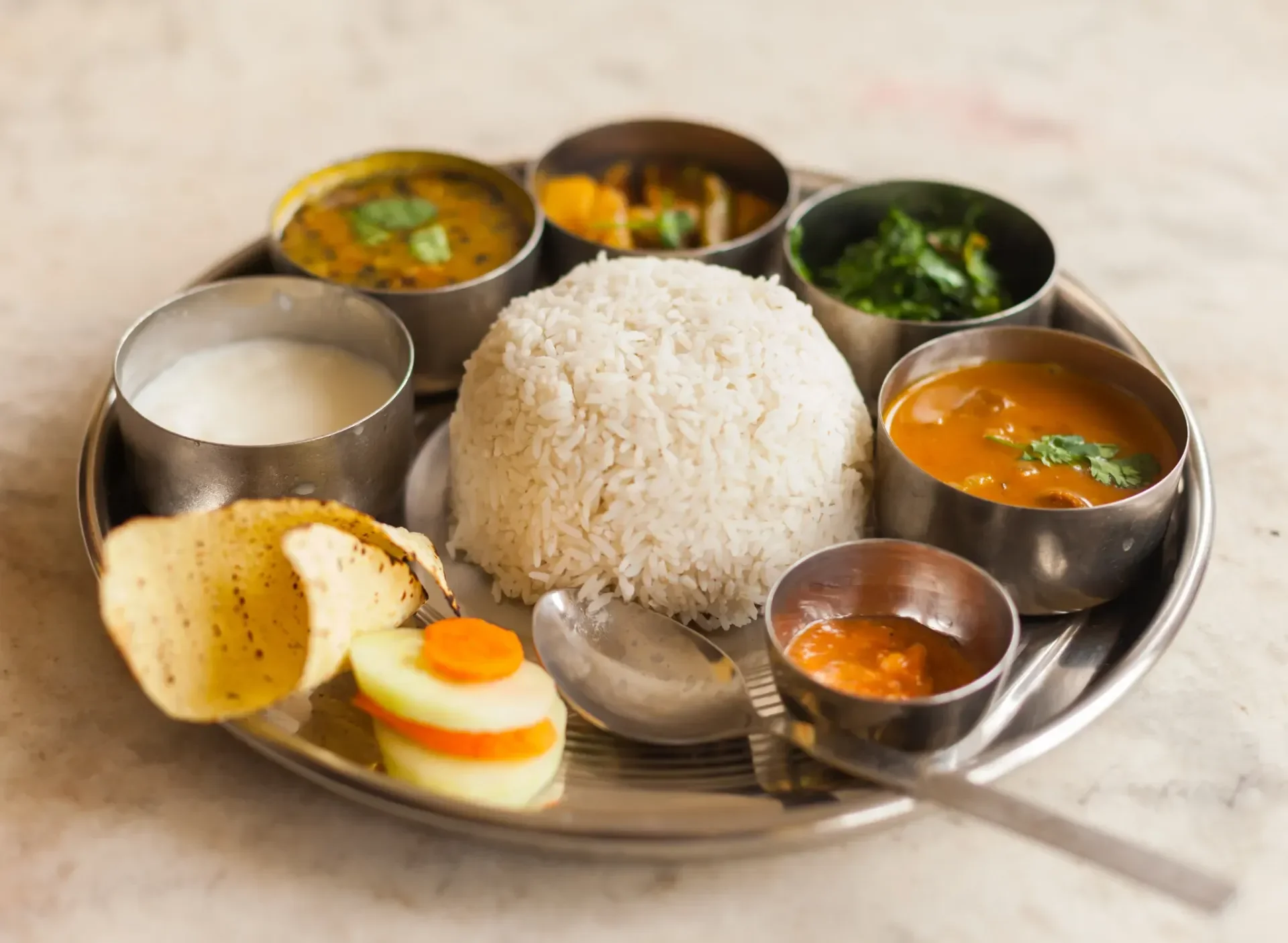
Pure Himalayan comfort: A delicious and authentic Nepalese Dal Bhat platter.
Wherever your TIMS card takes you, the trail passes through living Buddhist and Hindu communities. Always pass mani stones, chortens, and stupas on the left, keeping them to your right, and walk clockwise around religious structures. Remove shoes and hats before entering any monastery.
Outdoor photography is fine, but taking photos inside monastery prayer halls is strictly prohibited unless a resident monk gives you explicit clearance. On the food side, prioritize vegetarian meals at altitude. In Buddhist regions like the Khumbu, slaughtering animals is banned locally, so all meat is carried up by foot or mule over days without refrigeration. The traditional Dal Bhat (lentils, rice, vegetable curry) is your cleanest, highest-energy fuel, and refills are usually free.
Tipping Your Crew
Tipping is culturally expected and forms a vital supplement to your crew's base income. We recommend budgeting around 10% to 15% of your total trek cost for tipping, distributed among your guide and porters at the end of the trip. It's best to hand it over directly and personally, ideally on your final evening together.
The Bottom Line on TIMS for 2026
The TIMS card is mandatory for most standard treks, costs NPR 2,000 for foreigners, and is issued through licensed trekking agencies, though NTB offices in Kathmandu and Pokhara still support processing in certain cases. It does not apply to Everest (municipality fees) or restricted areas (RAP). Get it right, carry cash, insure properly, and you'll clear every checkpoint without drama.
Frequently Asked Questions
What is the TIMS card in Nepal?
The TIMS (Trekkers’ Information Management System) card is a trekking registration system managed by the Nepal Tourism Board (NTB) and TAAN. It records trekkers’ details to help improve safety, monitoring, and emergency response on trekking routes.
How much does the TIMS card cost in 2026?
The TIMS card costs approximately:
NPR 2,000 for foreign nationals
NPR 1,000 for SAARC nationals
The fee is fixed by the government and does not vary by trekking duration.
Is the TIMS card mandatory for trekking in Nepal?
TIMS requirements depend on the region and current enforcement. It is commonly used in several trekking regions such as Annapurna and Langtang, but procedures may vary as many permits are now processed through registered trekking agencies.
Do I need a TIMS card for the Everest Base Camp trek?
No. The Everest (Khumbu) region does not use the TIMS system. Instead, trekkers must pay:
Khumbu Pasang Lhamu Municipality fee
Sagarmatha National Park entry permit
Can I get a TIMS card on my own?
In most cases, TIMS registration is now handled through a licensed trekking agency along with your guide arrangement. Independent walk-in issuance is limited compared to earlier years.
Does TIMS replace trekking permits like ACAP or national park permits?
No. TIMS is a separate registration system and does not replace conservation area permits such as ACAP or national park entry fees.
Where can I get a TIMS card in Nepal?
TIMS registration is processed through:
Nepal Tourism Board (NTB) offices in Kathmandu and Pokhara
TAAN-registered trekking agencies
Most trekkers now receive it through their agency when booking a guided trek.
Do solo trekkers need a TIMS card?
Solo trekking policies in Nepal vary by region. In many popular trekking areas, trekking with a licensed guide is now required or strongly recommended, and TIMS is processed through the agency.
Is TIMS required for Annapurna Circuit and Poon Hill?
Yes, TIMS is generally associated with treks in the Annapurna region, including Annapurna Circuit and Poon Hill, depending on current enforcement and agency processing rules.
What happens if I don’t have a TIMS card?
If TIMS is required for your route and you do not have it, you may be stopped at checkpoints and asked to obtain proper registration or assistance through a licensed agency before continuing.
Is TIMS required for Langtang Valley trek?
Yes, Langtang is one of the common trekking regions where TIMS registration is typically used along with Langtang National Park permits.
Do restricted area treks require TIMS?
No. Restricted area treks such as Manaslu, Upper Mustang, Dolpo, and Tsum Valley use Restricted Area Permits (RAP), which replace the TIMS system.
How long is a TIMS card valid?
A TIMS card is valid for a single trekking route and duration of that specific trek. It is not reusable for multiple independent trips.
Do I need insurance for TIMS registration?
Insurance is not officially part of TIMS issuance, but it is strongly recommended for all trekking in Nepal and often required by agencies—especially for high-altitude routes and rescue coverage.
Can TIMS be checked on the trail?
Yes. TIMS (or its digital equivalent) may be verified at checkpoints along with other permits depending on the trekking region and route.