Travel Guide
Nepal Trekking in October 2026: Why Autumn Is the Golden Season Explained
AK
Asmita Karki
11 min read
Asmita Karki
By the first week of October, the monsoon clouds that hung over the Himalayas for three months finally break apart. The air turns sharp and clean, washed free of dust, and the peaks stand out against deep blue skies yrarely matched at other times of the year. This is why, october is widely considered one of Nepal's best trekking months, alongside November.
If you are planning your 2026 autumn trek, this guide covers everything from the weather and the views to the exact permit fees, the updated guide rules, and the practical realities of cash, connectivity, and altitude safety on the trail.
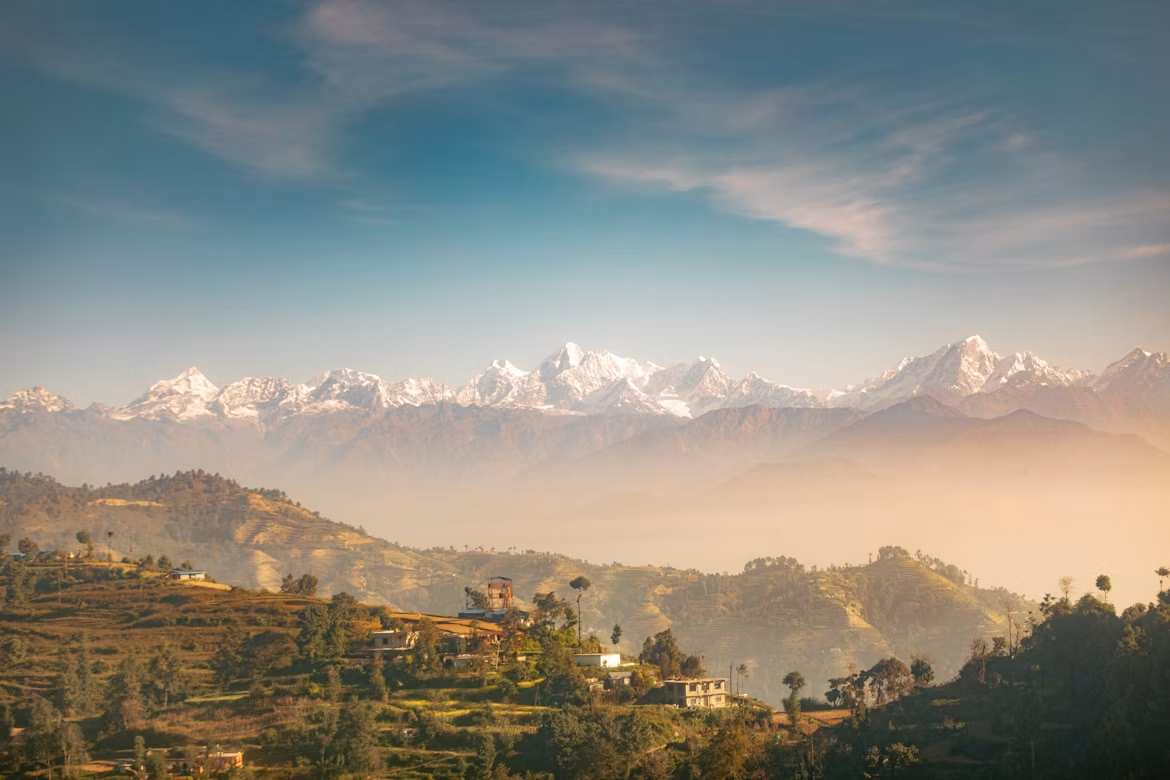
October offers the clearest skies, the most stable weather, and the warmest daytime temperatures of any post-monsoon month in Nepal. Humidity drops, mountain visibility peaks, and trail conditions firm up after the rains. It pairs world-class views with comfortable walking, which is why it draws the largest crowds of the year.
The monsoon ends across most of the country by late September, leaving the air rinsed clean. Forests are still green from the rain, rivers run full, and the high passes are often snow-free early in October, though weather patterns can vary from year to year, and nights are cold but manageable with proper gear.
October also overlaps with Nepal's two biggest festivals, **Dashain** and **Tihar**, so you will pass through villages decorated with marigolds and lit with oil lamps. The cultural texture of the trail in autumn is something special. The trade-off is volume: this is the busiest trekking month, so early booking matters.
October brings stable, dry weather with daytime temperatures around 15–20°C in the mid-hills and below freezing at night above 4,000 meters. Early October can still carry leftover monsoon moisture, while late October trends colder and clearer as winter approaches. Snow on high passes is possible but uncommon early in the month.
Conditions shift dramatically with altitude, so plan your layers around where you sleep, not where you walk during the day.
October suits nearly every classic route in Nepal because the weather is stable nationwide. The most popular choices are Everest Base Camp, the Annapurna Circuit with Thorong La Pass, and the Annapurna Sanctuary. For fewer crowds, the Manaslu Circuit, Kanchenjunga, and Mardi Himal deliver the same clear skies with quieter trails.
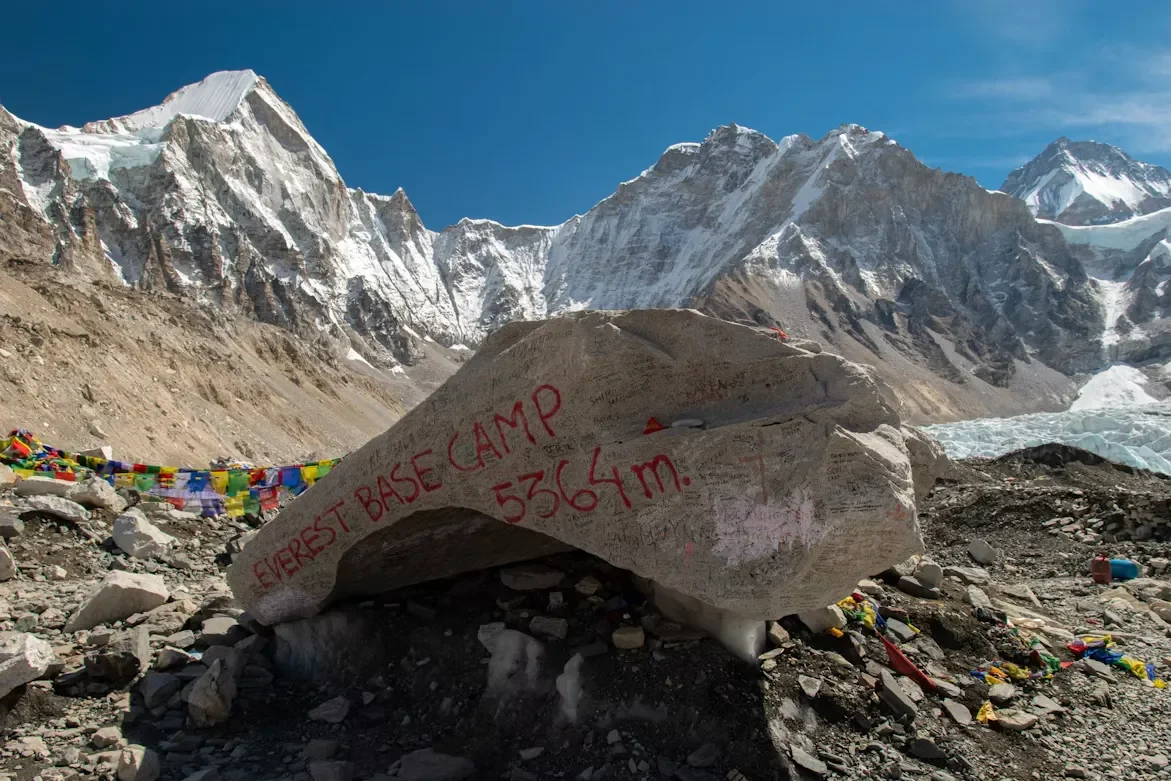
The walk to **Everest Base Camp** tops out at **5,364 meters** at the camp itself, with most trekkers climbing **Kala Patthar at 5,545 meters** for the classic Everest view. October offers the clearest mountain views of Everest, Lhotse, and Ama Dablam. Read our full breakdown of the Everest Base Camp elevation profile before you commit.
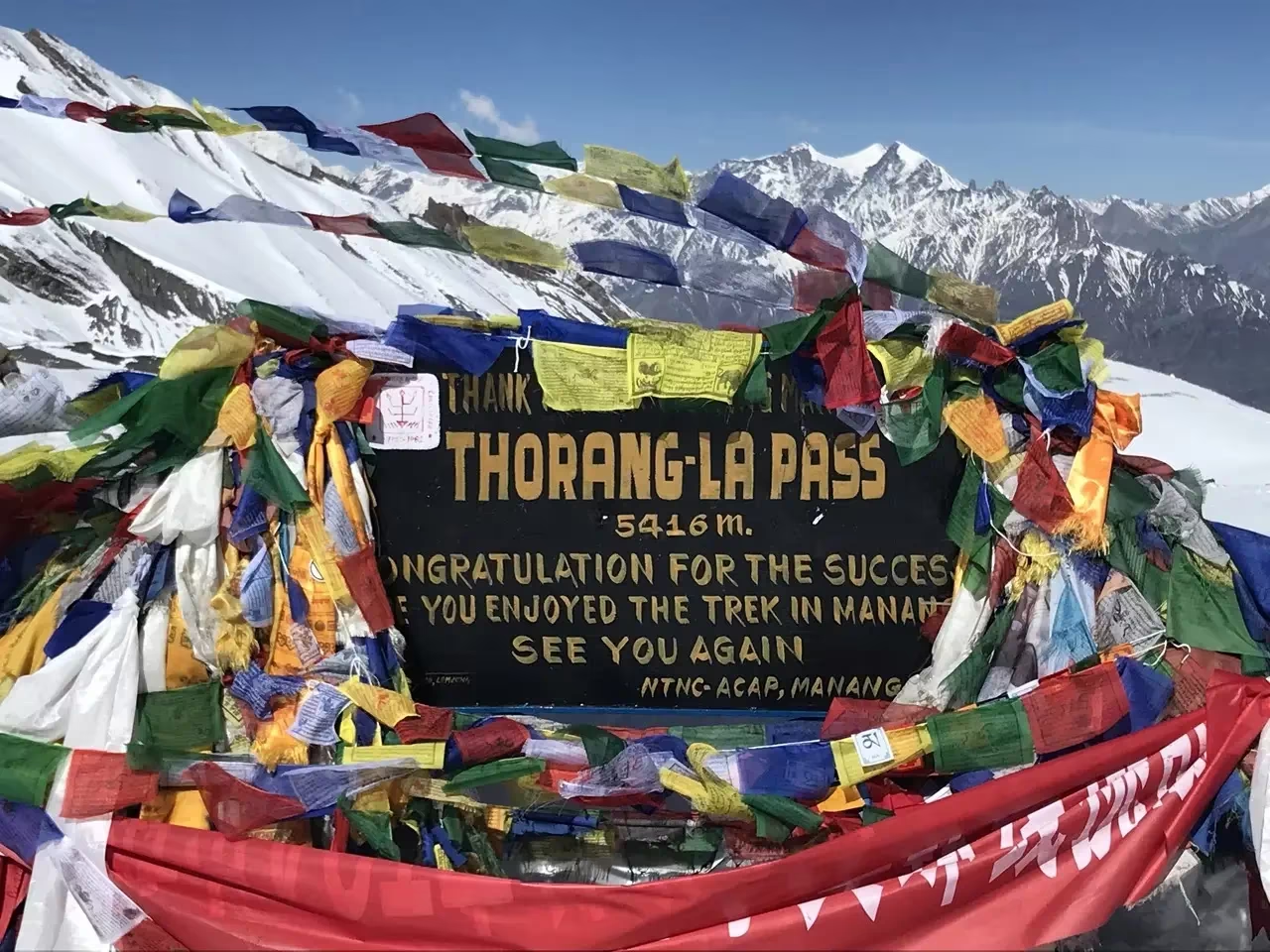
The Thorong La Pass crossing reaches **5,416 meters**, the highest point of the Annapurna Circuit. October is ideal for this route because the pass is usually snow-free early in the month. A worthwhile side trip to Tilicho Lake at 4,919 meters adds spectacular high-altitude scenery.
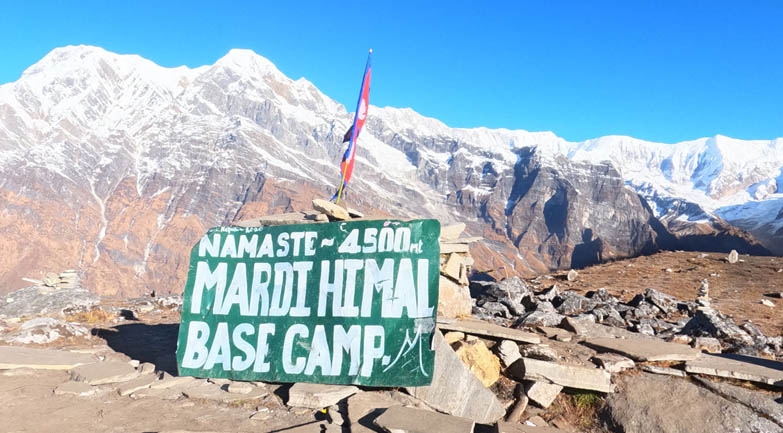
If crowds worry you, the Mardi Himal trek is a short, scenic ridge walk, while the remote Kanchenjunga Circuit and the Langtang Valley offer solitude with the same clear October skies. Compare the two heavyweight routes in our guide on Annapurna vs Everest Base Camp.
Nepal's 2026 framework strongly enforces licensed guides on standard trails and legally requires them in all Restricted Areas. Permit fees are fixed by the government and municipalities, so verify the exact amounts below. Each region has its own permit system, and the Everest region works differently from everywhere else.
For most routes you need the **e-TIMS QR card** combined with a regional conservation permit. The **ACAP permit** for the Annapurna region costs **NPR 3,000** for foreign nationals. Conservation fees for other regions sit in a similar range. Carry printed copies and your QR code at every checkpoint.
The Khumbu region does NOT use the standard e-TIMS card. Instead you pay the **Khumbu Pasang Lhamu Municipality fee of NPR 3,000** plus the **Sagarmatha National Park Permit of NPR 3,000**, totaling **NPR 6,000**.
For Manaslu, Upper Mustang, Dolpo, and Tsum Valley, a major 2026 change applies: a single traveler CAN now obtain a Restricted Area Permit, as the old two-person minimum is gone. However, you STILL MUST hire a licensed guide, and the guide-to-trekker ratio in restricted areas is capped at **1:7**. The **Upper Mustang RAP** costs **$500 USD for the first 10 days**.
On the visa front, the 2026 rates are **$30 USD for 15 days**, **$50 USD for 30 days**, and **$125 USD for 90 days** on arrival. For a deeper look at the rules, see our guide to Nepal trekking rules and costs.
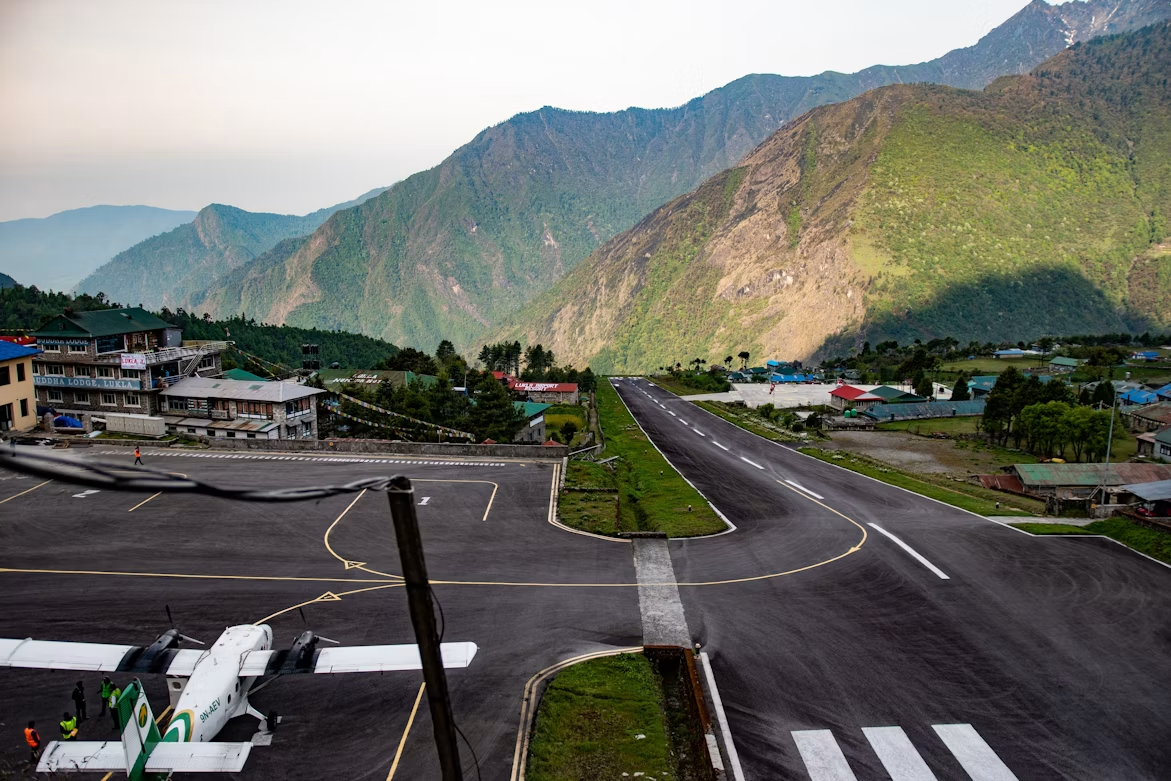
During peak autumn (September–November), most Lukla flights depart from Manthali Airport in Ramechhap, not Kathmandu. Trekkers drive 4-5 hours overnight, leaving Kathmandu around 1:00 AM, to catch early-morning flights. Always build in 1-2 buffer days for weather delays, which are common in the mountains.
This catches many first-timers off guard. The drive is long and dark, the road winds through the hills, and the flight slots are tight. Our field contacts recommend treating the Lukla leg as a flexible window rather than a fixed appointment. Learn more about the airport in our Lukla Airport guide.
Domestic flight prices to Lukla, Pokhara, and other hubs are genuinely volatile and shift with season and demand. We do not quote fixed numbers here. Verify live flight and private jeep rates through your agency or directly on our marketplace before you book.
Reliable ATMs are rare beyond Namche Bazaar and Jomsom, so trekkers should carry sufficient cash for the entire trek. Beyond food and lodging, budget for common upcharges: charging power banks, gas-heated hot showers, and Wi-Fi access each cost an extra **200 to 700 NPR** per use and are rarely included in your room.
These small costs add up quickly over a two-week trek, especially if you charge devices daily. Plan your cash buffer generously.
Buy a local SIM in Kathmandu before you head out. Ncell generally works well in much of the Annapurna region, though signal quality varies between villages, while **Nepal Telecom (NTC)** is essential for the Everest region and remote zones like Manaslu and Upper Mustang. In the high Khumbu, paid networks like **Everest Link** fill the gaps where cellular signal fades.
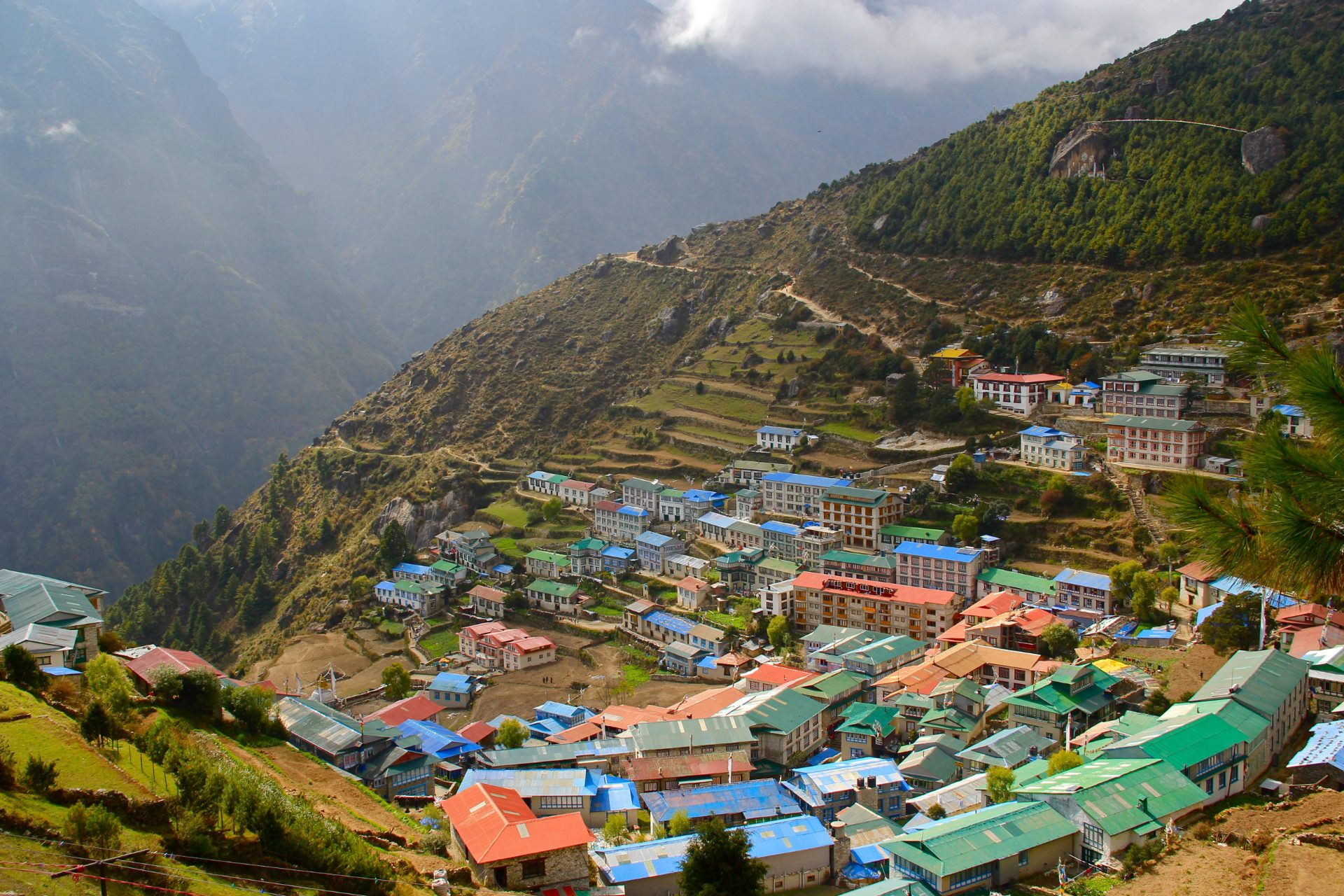
Above 3,000 meters, your sleeping elevation should not increase by more than 300-500 meters per day, with mandatory acclimatization rest days at key points like Namche Bazaar and Manang. Ascending too fast causes Acute Mountain Sickness, which can progress to life-threatening HAPE or HACE. Slow and steady is the only safe pace.
Build rest days into your itinerary at **Namche Bazaar (3,440 m)** on the Everest route and at **Manang (3,540 m)** on the Annapurna Circuit. Use these days for short acclimatization hikes that climb high and sleep low. Our deep dive into high-altitude trekking logistics explains the science in detail.
Standard travel insurance is not enough. You must have specific coverage for high-altitude emergency helicopter evacuation up to **6,000 meters** and medical treatment for AMS, HAPE, and HACE. Comprehensive insurance covering high-altitude helicopter evacuation is strongly recommended for all restricted-area treks.
Prioritize vegetarian meals on the trail. In Buddhist regions like the Khumbu, slaughtering animals is prohibited by local law, so all meat is carried up by foot or mule over days without refrigeration. Stick to fresh local carbohydrates and the classic **Dal Bhat**, lentil soup with rice and vegetable curry, which gives clean energy and usually comes with free refills.
Skip plastic bottled water entirely to protect the mountain environment. Carry a reusable bottle paired with an active purification system such as a UV purifier, a Sawyer squeeze filter, or chlorine dioxide drops. The savings over a long trek are significant, and the waste reduction matters more.
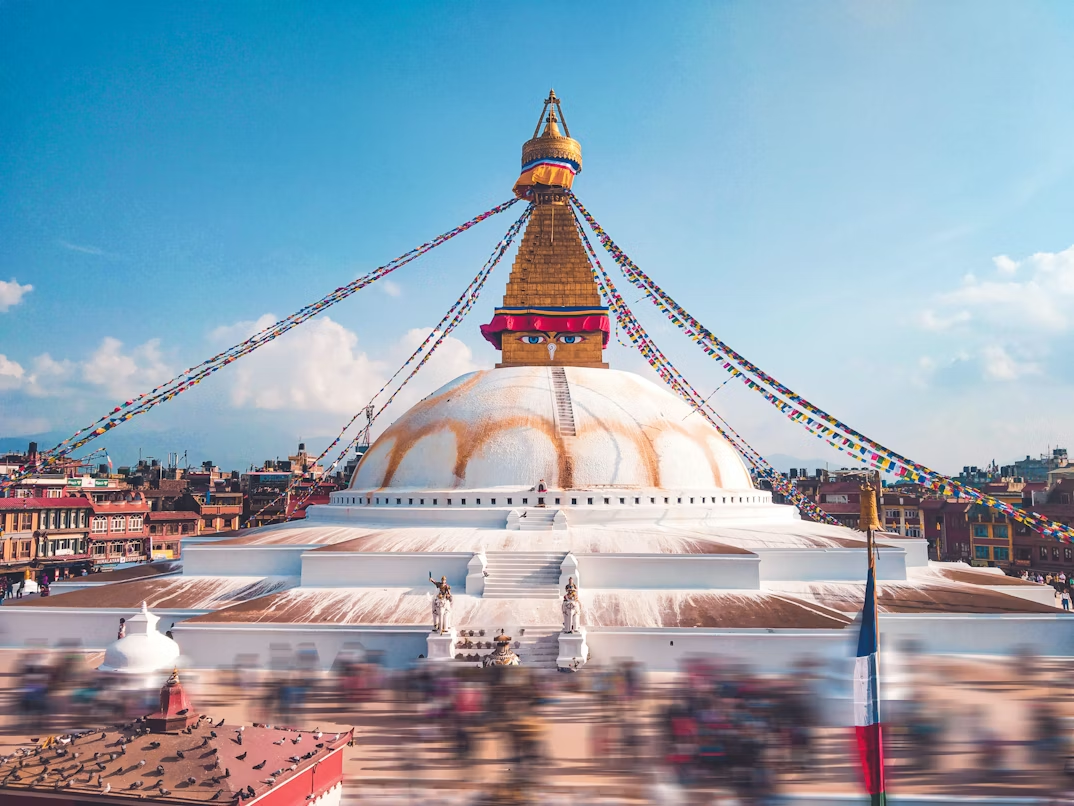
Always pass mani walls, chortens, and stupas clockwise, keeping these sacred structures on your right side. Remove your shoes and hat before entering any temple or monastery. Outdoor photography is fine, but always ask permission before photographing inside monasteries, as rules vary from one monastery to another.
Tipping is culturally expected and forms a vital supplement to your crew's base income. A standard guideline is **10% to 15% of your total trek cost**, distributed among your guide and porters at the end of the trip. Hand it over personally as a thank-you for getting you up and back safely.
October requires a layering system that handles warm sunny days and freezing nights. The temperature swing between midday walking and a high-altitude evening can exceed 25°C, so versatility beats bulk. Our full trek packing list covers everything in detail.
October remains the month our coordinators recommend above all others for a first Himalayan trek. The skies are at their clearest, the festivals are in full swing, and the trails, while busy, are alive with energy. Book early, walk slowly, and let the mountains do the rest.
October is widely considered one of the best months for trekking in Nepal because of its stable weather, clear mountain views, and comfortable daytime temperatures. It is also the busiest trekking season, so advance booking is recommended.
Temperatures vary by altitude. Kathmandu and Pokhara remain warm at around 20–25°C during the day, while high-altitude regions above 4,000 meters can experience nighttime temperatures below freezing.
Most monsoon rainfall ends by late September. Early October may occasionally receive leftover showers, but the majority of the month is dry with excellent visibility.
Yes. October is one of the most beginner-friendly seasons because trails are generally dry, weather conditions are stable, and teahouses are fully operational across popular routes.
Popular October treks include:
Yes. October is Nepal's peak trekking season, especially on the Everest and Annapurna routes. Booking flights, guides, and accommodation in advance is highly recommended.
Guide requirements depend on the trekking region. Restricted areas such as Manaslu, Upper Mustang, Dolpo, and Tsum Valley require licensed guides. Regulations for standard trekking routes can change, so travelers should confirm the latest rules before departure.
Most mountain villages operate on a cash-only basis. Since reliable ATMs are limited outside major towns, trekkers should carry enough Nepalese Rupees to cover food, accommodation, charging fees, Wi-Fi, and personal expenses.
Yes. October is the busiest season, and nearly all teahouses and lodges along popular trekking routes are open and fully operational.
Essential items include:
Altitude sickness can occur in any season and depends more on ascent speed than weather. Proper acclimatization, rest days, and gradual elevation gain are essential for safe trekking.
During peak autumn months, many Lukla flights are often shifted to Manthali Airport (Ramechhap) to reduce congestion at Kathmandu Airport. Flight arrangements can vary, so confirm your departure airport before traveling.
Yes. Trekking during Dashain and Tihar offers a unique cultural experience with decorated villages and festive celebrations. However, transportation and domestic services may be busier during holiday periods.
Comprehensive travel insurance covering high-altitude trekking and emergency helicopter evacuation is strongly recommended for all trekkers in Nepal.
Adding one or two buffer days to your itinerary is recommended, especially for treks involving mountain flights such as Everest Base Camp. Weather conditions can occasionally delay flights and transportation.
Get travel ideas and local experiences from My Easy Guide in your inbox.
Spam free. Unsubscribe anytime. We respect your privacy.