Travel Guide
What's the Food Like in Nepal Teahouses? (Full Trek Menu Guide with Real Prices)
AK
Asmita Karki
11 min read
Asmita Karki
Walk into almost any teahouse along Nepal's trekking trails and you'll find a remarkably similar laminated menu, often a dozen pages long, listing everything from yak steak to apple pie. After thousands of trekking days across the Annapurna, Everest, Langtang, and restricted regions, our team can tell you the truth behind that menu: most of it is the same handful of fresh, local ingredients cooked a dozen different ways. Knowing what to order, what to avoid, and what it actually costs will keep you healthy, well-fueled, and out of the bathroom at 4,000 meters.
This guide breaks down the real food experience in Nepal teahouses, with current price ranges, altitude safety advice, and the small hidden charges that catch first-timers off guard.
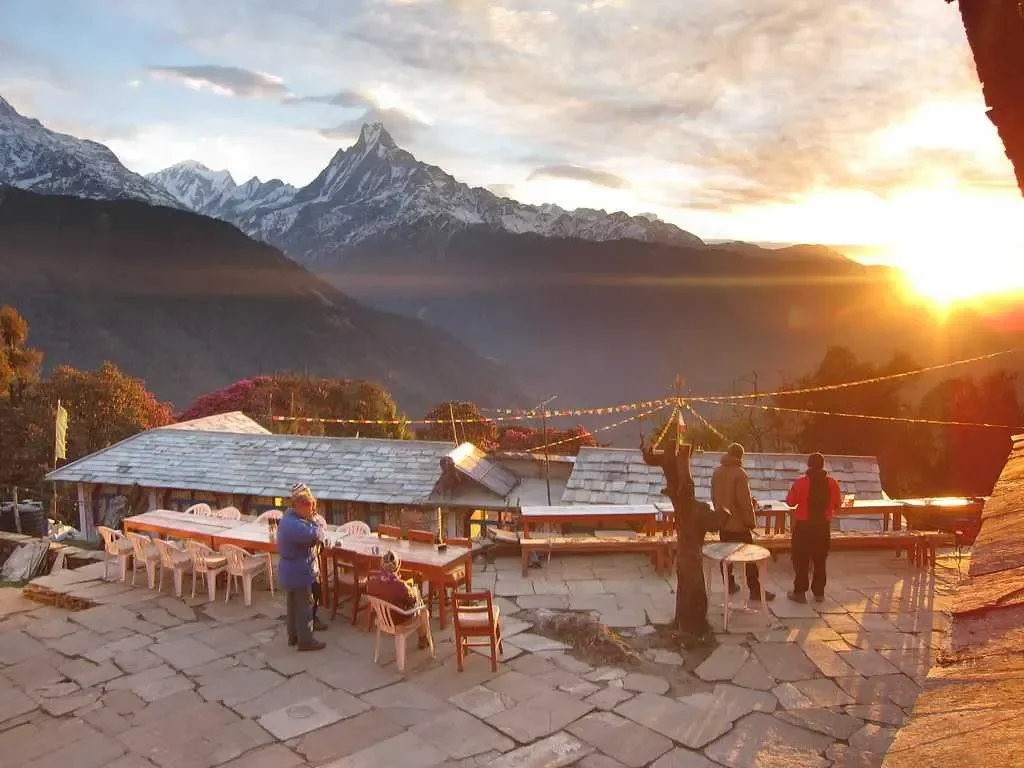
A teahouse is a family-run lodge offering basic rooms and a communal dining hall heated by a central stove. The kitchen cooks fresh to order from a shared menu. You are generally expected to eat dinner and breakfast where you sleep, which is how owners keep room rates low and earn their living from food sales.
The dining room is the social heart of the trek. The stove fires up in the late afternoon, trekkers cluster around steaming bowls, and the smell of garlic and frying onions drifts from the kitchen. Order your dinner early, because cooking for a full room over a single gas burner takes time.
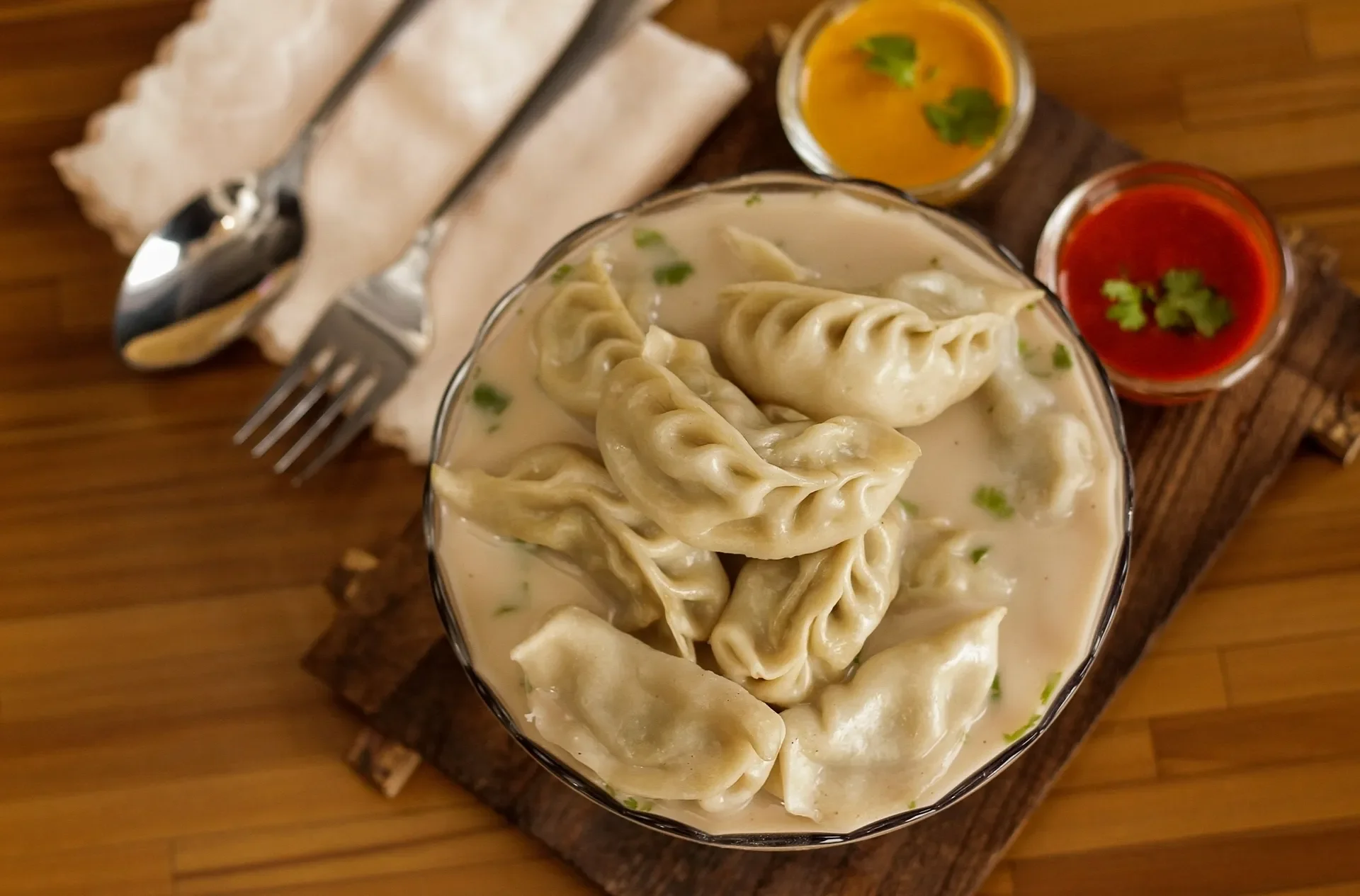
Teahouse menus look enormous but draw from the same base ingredients: rice, lentils, potatoes, flour, eggs, seasonal vegetables, and dairy. The reliable core is Dal Bhat, fried rice, noodles, momos, soups, potato dishes, porridge, and Tibetan bread. Anything exotic is usually a creative spin on those staples.
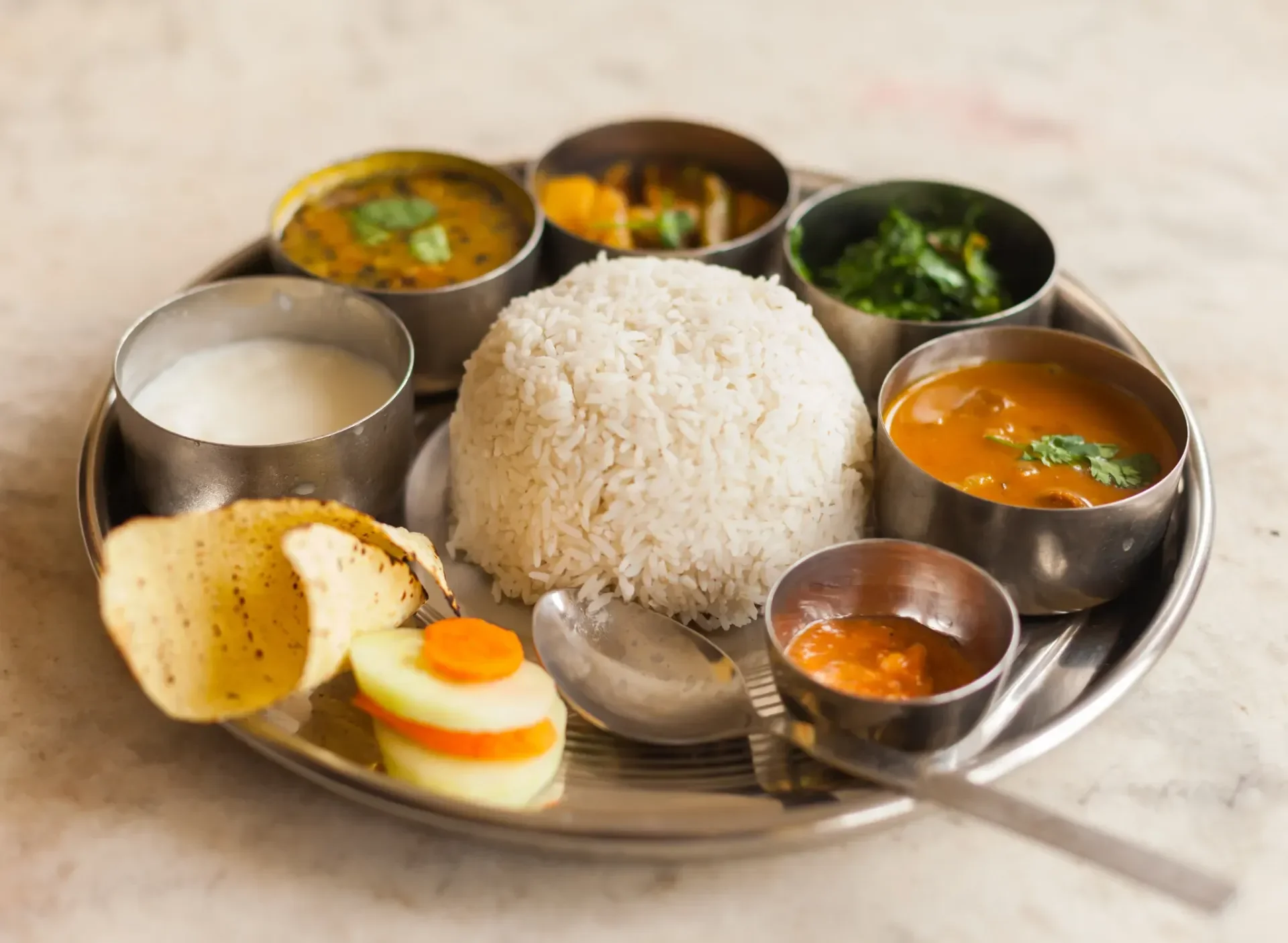
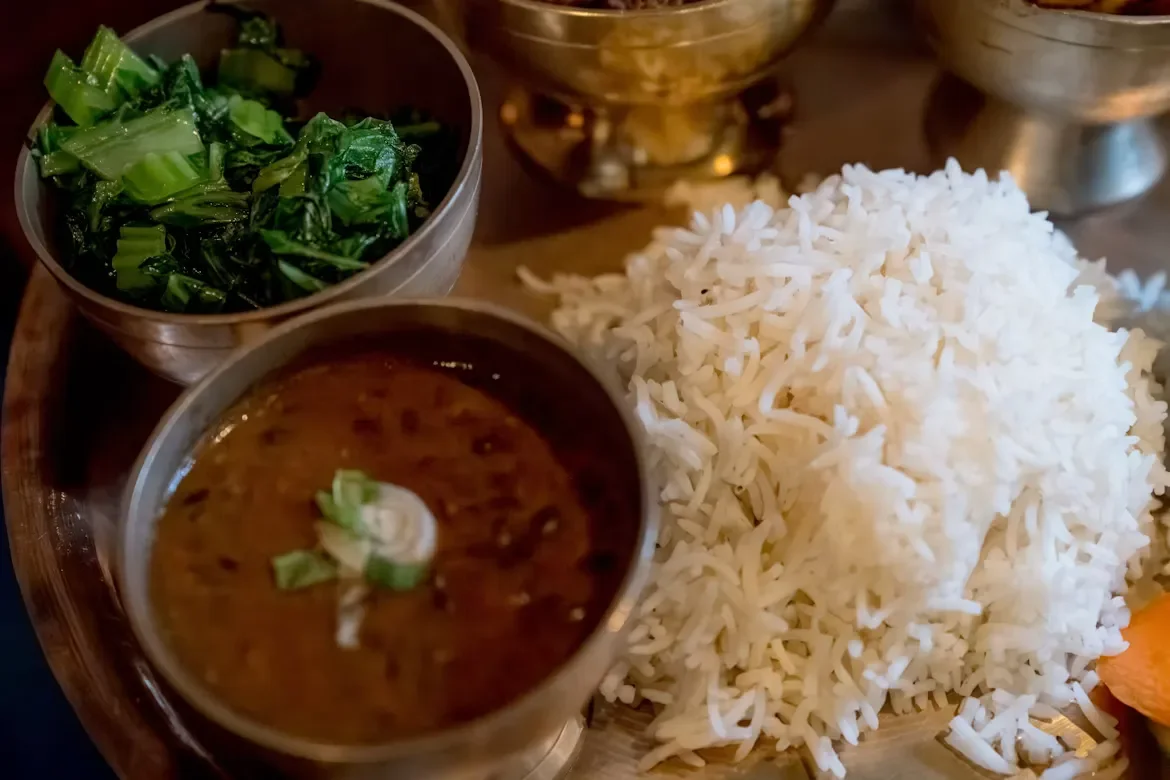
If you order one thing on a Nepal trek, make it Dal Bhat. This is lentil soup, steamed rice, vegetable curry, and often a small pickle or papad. It is freshly cooked, packed with clean carbohydrates, and almost always comes with free refills. There's a well-worn trail saying: "Dal Bhat power, 24 hour."
Because it's made from locally grown lentils, rice, and vegetables rather than ingredients hauled up for days, it's both the cheapest filling meal and the safest. We recommend it for at least one meal a day, especially at altitude.
Expect to budget roughly NPR 2,500 to NPR 5,000 (about $19 to $38 USD) per person per day for three meals plus hot drinks. Prices are fixed by local committees in some regions, but they rise sharply with altitude because everything is carried up by porter or mule. Treat the table below as a realistic guide and verify current rates on the trail.
For a deeper look at trekking budgets overall, see our breakdown of the Everest Base Camp trek cost and the Annapurna Base Camp trek cost.
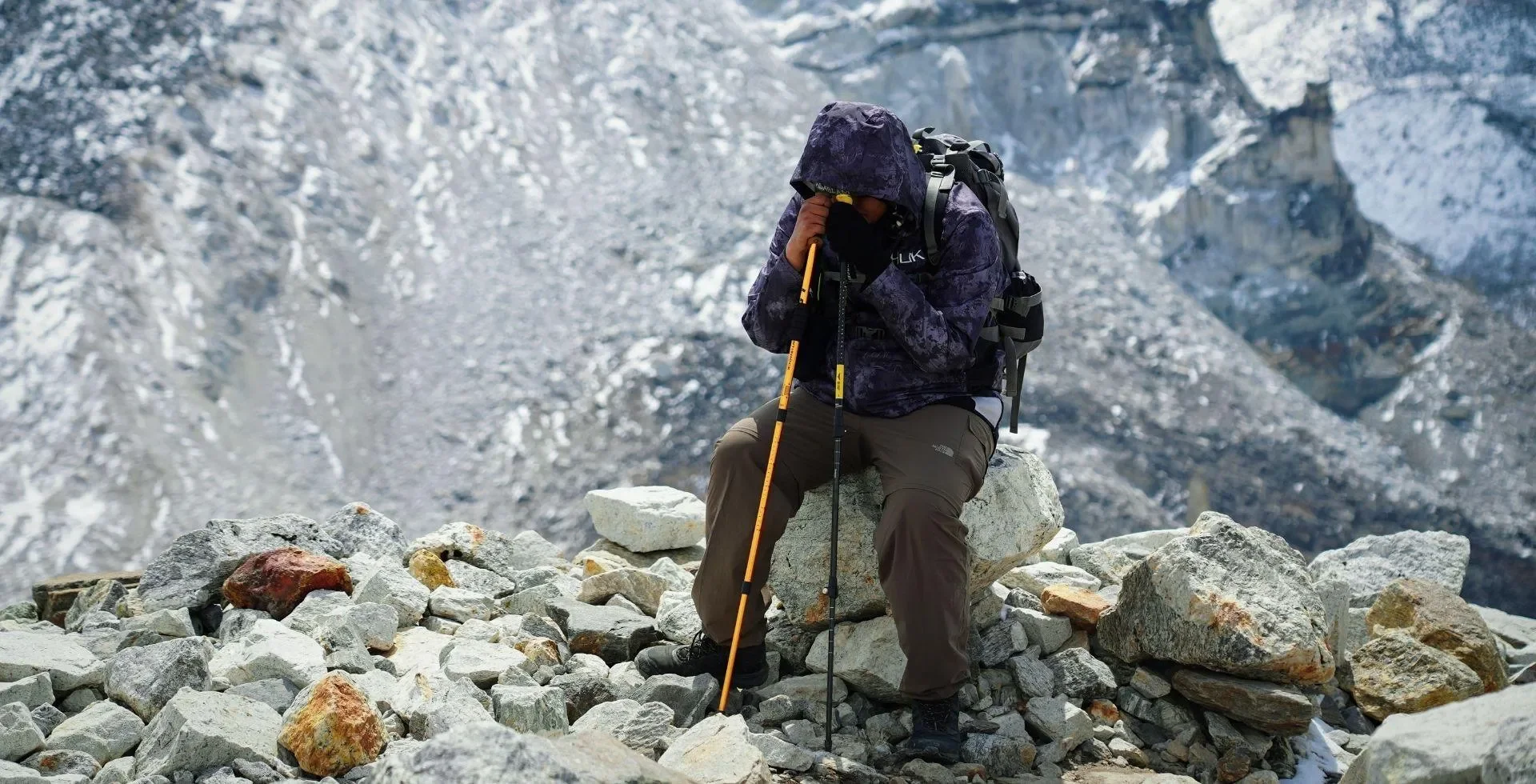
Above roughly 3,000 meters, prioritize fresh vegetarian meals. In Buddhist regions like the Khumbu, slaughtering animals is prohibited by local law, so every piece of meat on the menu has been carried up by foot or mule over several days without refrigeration. That's a serious food-poisoning risk far from any hospital.
Stick to freshly cooked, locally grown carbohydrates. Dal Bhat, potatoes, and vegetable dishes are your safest, highest-energy fuel. Your appetite often drops at altitude, so eat regularly even when you don't feel hungry, and lean on warm soups and ginger lemon honey tea to stay hydrated. Poor eating and dehydration make altitude sickness far more likely.
If you're researching medication for prevention, read our guide to Diamox (acetazolamide) for trekking before your trip and discuss it with a doctor.
Do not buy plastic bottled water on the trail. It litters fragile mountain environments and gets absurdly expensive at altitude. Instead, carry a reusable bottle and an active purification system, a UV purifier, a Sawyer squeeze filter, or chlorine dioxide drops. Teahouses sell boiled and filtered water for a small fee, which is the next best option.
This single habit saves money, cuts waste, and protects you from the waterborne bugs that ruin so many treks. The trash problem is real, as we cover in our look at trash on Everest.
Beyond food, teahouses earn from add-on services, and these are rarely included in your room or meal cost. Budget for them in cash.
Carrying a power bank and a local SIM saves both money and frustration. Ncell gives strong coverage across the Annapurna Circuit and Sanctuary, while Nepal Telecom (NTC) is essential for the Everest region and remote zones like Manaslu or Upper Mustang.
There are no reliable ATMs past Namche Bazaar in the Everest region or beyond Jomsom in the Annapurna region. Teahouses run on a cash micro-economy and do not accept credit cards. Withdraw enough Nepalese Rupees in Kathmandu or Pokhara to cover meals, drinks, charging, showers, snacks, and tips for your entire trek.
We suggest carrying a daily food and services budget plus a buffer for delays. A weather-grounded flight at Lukla Airport can add unplanned days, and every one of them needs feeding. For a fuller view of trekking expenses, our cost of living guide is a useful reference.
The core menu repeats nationwide, but flavor and choice shift by region. The Everest and other Buddhist zones lean into Tibetan-influenced dishes, while the Annapurna lower valleys offer more variety thanks to road access bringing in fresh produce.
Expect strong potato dishes, Sherpa stew, thukpa, and yak cheese. Strictly vegetarian above Namche is the wise call. Compare route options in our Annapurna vs Everest Base Camp comparison.
Lower Annapurna villages offer the widest menus and freshest vegetables. Higher up toward Thorong La Pass and into Upper Mustang, you'll see Tibetan staples and apple products from Marpha's famous orchards.
In Manaslu, Tsum Valley, Dolpo, and Upper Mustang, the menu narrows and prices rise. Under the latest 2026 Department of Immigration rules, a single traveler can now obtain a Restricted Area Permit, but you still must hire a licensed guide, with a guide-to-trekker ratio capped at 1:7. Your guide also helps coordinate meals and dietary needs with remote kitchens.
Teahouse kitchens are family homes. A few simple courtesies go a long way. Order meals in advance so the cook can manage one stove for a full room. Eat what you order to reduce waste, since ingredients are hard-won at altitude.
On the trail itself, always walk clockwise around mani walls, stupas, and chortens, keeping these sacred structures on your right. Remove shoes and hats before entering any monastery, and never photograph inside prayer halls unless a resident monk gives you clear permission.
Tipping the trekking crew is culturally expected and a vital supplement to their income. A standard guideline is 10% to 15% of your total trek cost, distributed among guides and porters at the end of the trip. Teahouse staff appreciate small gestures too, though it's less formalized than crew tipping.
This rhythm keeps energy steady, stomachs happy, and budgets predictable. Pair it with a solid trek packing list that includes your water filter, snacks, and a power bank.
Teahouse food won't win culinary awards, but it does something more important: it keeps you healthy, warm, and strong enough to walk another high pass. Trust the Dal Bhat, treat your water, carry enough cash, and respect the families feeding you in some of the toughest kitchens on earth. Do that, and food becomes one of the quiet pleasures of trekking in Nepal rather than a worry.
Budget roughly NPR 2,500 to NPR 5,000 (about $19 to $38 USD) per person per day for three meals and hot drinks, with prices rising sharply at altitude.
It's freshly cooked, rich in clean carbohydrates, locally grown, and comes with free refills, making it the safest and most filling fuel for long days.
We advise vegetarian meals at altitude. In Buddhist regions, meat is carried up over days without refrigeration, raising food-poisoning risk far from medical help.
Yes. Menus are heavily vegetarian-friendly. Vegans should avoid yak cheese, butter tea, and eggs, and state dietary needs clearly when ordering.
Yes. Showers, charging, and Wi-Fi like Everest Link typically cost an extra 200 to 700 NPR per service and are rarely included.
No reliable ATMs exist past Namche Bazaar or Jomsom. Carry enough Nepalese Rupees in cash for your whole trek.
Treat all water with a UV purifier, Sawyer filter, or chlorine dioxide drops, and avoid buying plastic bottled water to protect the environment.
Everything is carried up by porters or mules, so labor cost is built into each plate. A Dal Bhat can rise from NPR 400 to over NPR 900 near base camps.
Black tea, milk tea, lemon and ginger honey tea, hot lemon, coffee, and hot chocolate. Ginger lemon honey tea is a trekker favorite at altitude.
Tip your crew around 10% to 15% of total trek cost at the end. Teahouse staff appreciate small tips but it's less formalized.
The core menu is similar but choice narrows and prices rise. Expect more Tibetan dishes like thukpa and butter tea, and remember a licensed guide is mandatory under 2026 rules.
Get travel ideas and local experiences from My Easy Guide in your inbox.
Spam free. Unsubscribe anytime. We respect your privacy.